 Free Delivery in Batumi


Blog
From the workshop: materials, care, gifts and the stories behind the pieces.
-
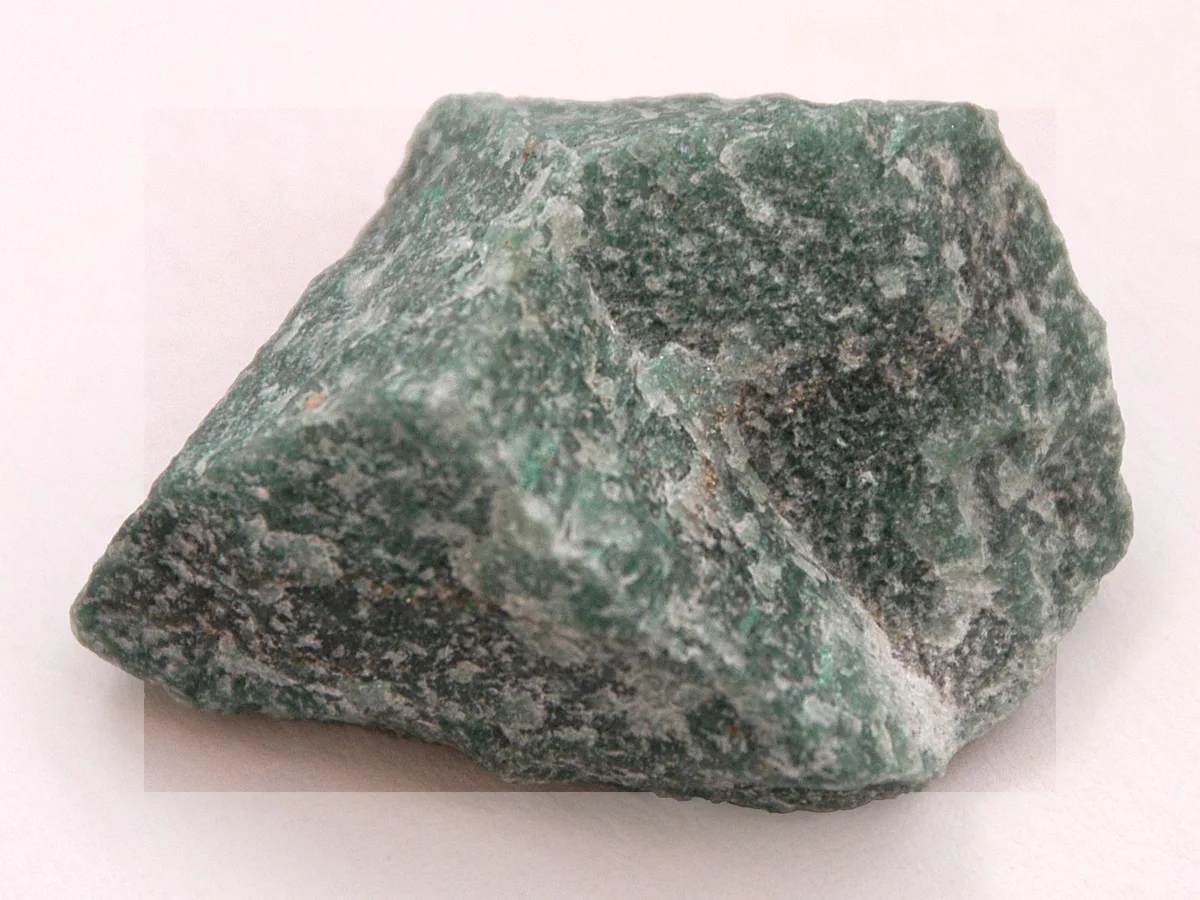
Aventurine
Chemical formula – SiO₂
Hardness – 7
Colour – green, yellow, red, blue, white, carrotAventurine belongs to the quartz family. Its signature is a scatter of tiny golden or silvery sparks inside the stone — small mineral inclusions that catch the light and make the gem look lit from within. Green is by far the most common colour, though nature also offers yellow, red, blue, white and carrot-orange versions. Colour is what decides which of them is rare and which is an everyday stone.
The name comes from the history of Venetian glass. Glassmakers called their accidentally sparkling glass "avventurina" — Italian for "by chance", "by luck". Later the name stuck to the natural stone with the same look.
Prices sort themselves out simply: ordinary polished beads are cheap, a large clean green stone with dense sparkle costs more, and the blue and red versions are noticeably pricier because they are rare. Specimens with a cat's-eye effect sit at the top.
Origins
Aventurine is mined in many parts of the world, but the finest material comes from Brazil, Chile, India, Austria, Russia and Tanzania.
Properties
Tradition treats aventurine as the stone of prosperity and wellbeing. It is said to strengthen a sense of leadership and to wake compassion in someone who is usually cold. The stone is believed to stir persistence, creativity and intuition.
Esoteric writers count aventurine among the strongest stones of luck and link it to money. It is said to help at a job interview, a business meeting, a promotion or a first date. Traditionally it is recommended to people who enjoy change.
Traditional healing properties
Lithotherapists connect aventurine with the nervous system and with the gland behind the breastbone. It is said to even out blood pressure, support metabolism and help with speech problems. In the past it was also used for skin complaints and headaches.
This describes traditional practice, not medical advice. A stone does not replace a doctor.
Chakras
Green aventurine is linked to the fourth, heart chakra – anahata. White — the seventh, blue — the fifth, carrot — the second and third, red — the first, violet — the sixth.
Zodiac
Tradition ties aventurine to Aries, a sign that moves and starts things by nature. It also suits Leo and Taurus, whose character matches the stone's reputation for abundance.
In Charcho jewellery
We do not have a ready-made piece in green aventurine in the catalogue yet, but we make them to order — you choose the bead size and shade. Catalogue: necklaces.
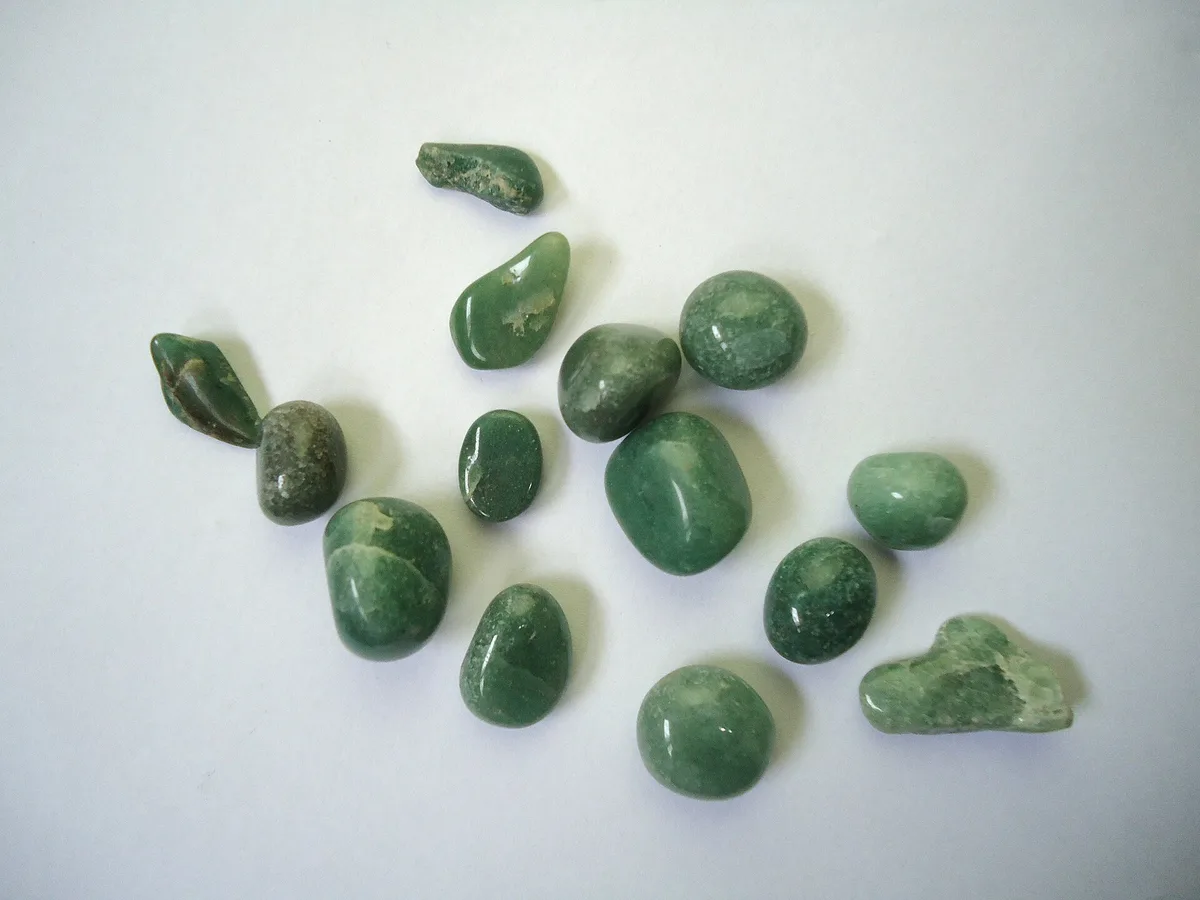
Real or fake
- "Love stone" is not natural aventurine but Venetian glass, often sold as the real thing. It is brighter and usually comes in deep blue or gold.
- In a natural stone the sparks gather unevenly, in clouds; in glass they are all the same size and spread evenly through the volume.
- Natural pieces almost always carry fine cracks and slight shifts in colour — a perfectly uniform shade should make you suspicious.
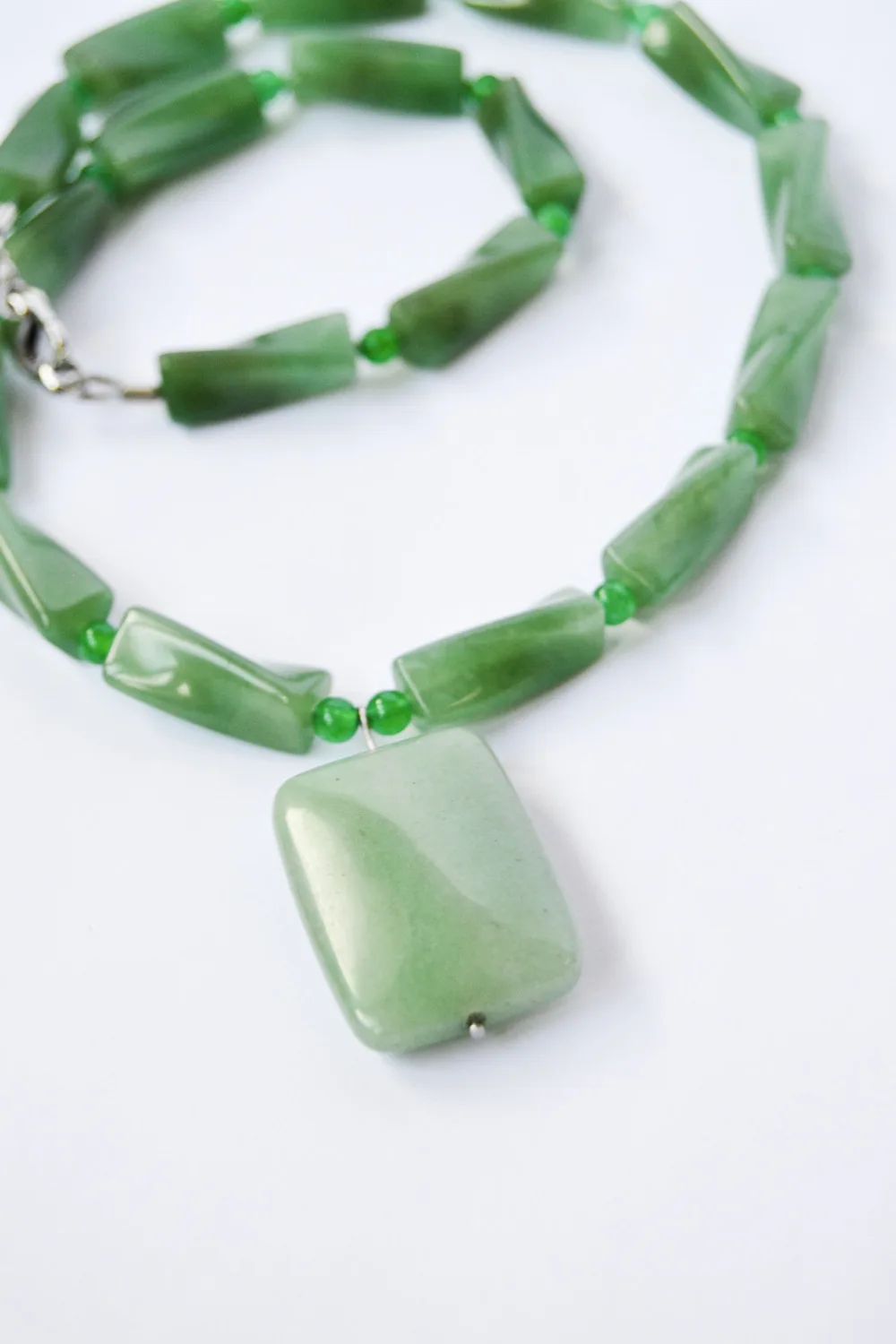
Care
Hardness 7 lets you wear the stone daily, but pieces with cracks are easily damaged by sharp edges. Warm water, a soft cloth and mild soap are enough; it needs no steam or ultrasonic cleaning.
See also
-
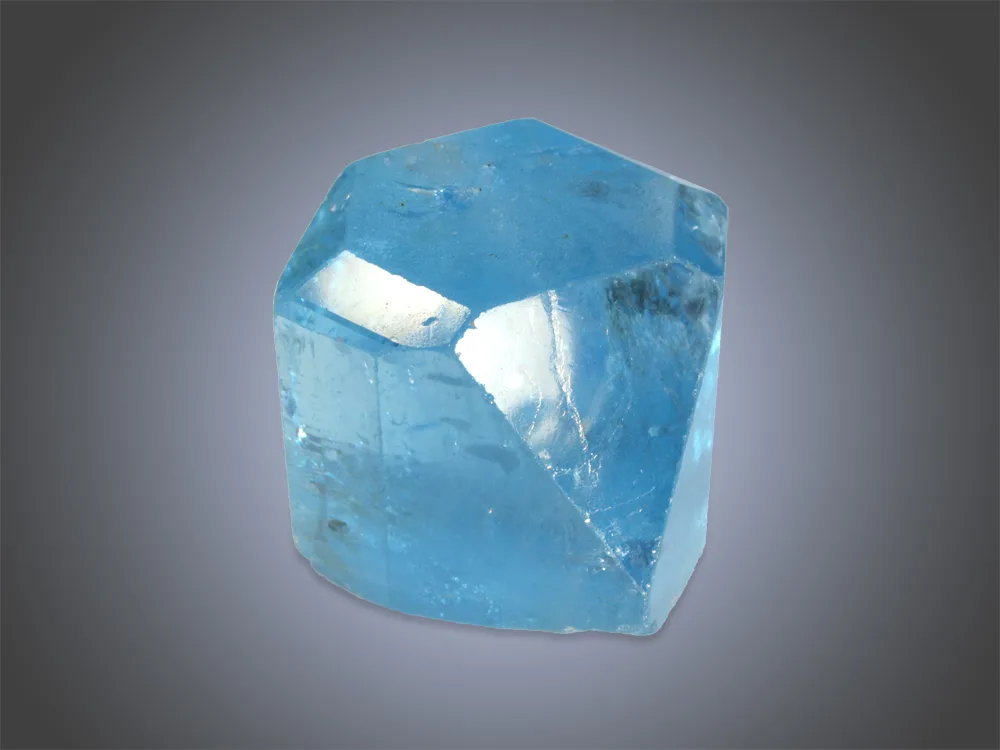
Topaz
Chemical formula – Al₂SiO₄(F,OH)₂
Hardness – 8
Colour – colourless, yellow, orange, brown, blue, pink, red, violet, light greenTopaz has about 2,000 years of history behind it. Traces of its use lead back to Egypt, where people believed yellow topaz was the stone of their sun god Ra.
The name is linked to Latin "Topazus" or Greek "Topazios", meaning to seek. Scholars do not rule out a Sanskrit root either: "tapas", fire.
Origins
The largest suppliers are Brazil, Afghanistan, Australia, Burma, China, Germany, Japan, Madagascar, Mexico, Namibia, Nigeria, Pakistan, Russia, Zimbabwe, Sri Lanka, Ukraine and the United States.
Colour
Without impurities topaz is colourless, yet in nature it appears in many colours: yellow, orange, brown, red, pink, blue, violet, green.
Blue topaz is the most popular, and it is also the one most often treated to reach a deeper blue. London blue, Swiss blue and Sky blue are mostly dyed; natural topaz is lighter and softer in tone. Treatment does not spoil the stone and often raises its price.
Properties
Topaz is said to be as strong as quartz. It is often used to release stress and to calm an irritable person.
In esoteric circles it is called the stone of success and luck, and a strong guard against the evil eye and envy. It is said to bring true love, hope and calm, and to strengthen creativity and individuality.
Traditional healing properties
Lithotherapists use topaz to balance circulation, for hormonal imbalance, poor appetite, tissue regeneration and endocrine problems.
This describes traditional practice, not medical advice. A stone does not replace a doctor.
Chakras
Different colours of topaz relate to different chakras: blue to the throat, golden to the solar plexus.
Which zodiac sign it belongs to
It is the stone of November, so it belongs to Scorpio first of all: depth and clarity are the shared theme.
It also suits Sagittarius, whose subject is optimism and a wider horizon, and Leo, who needs creativity and self-expression.
In Charcho jewellery
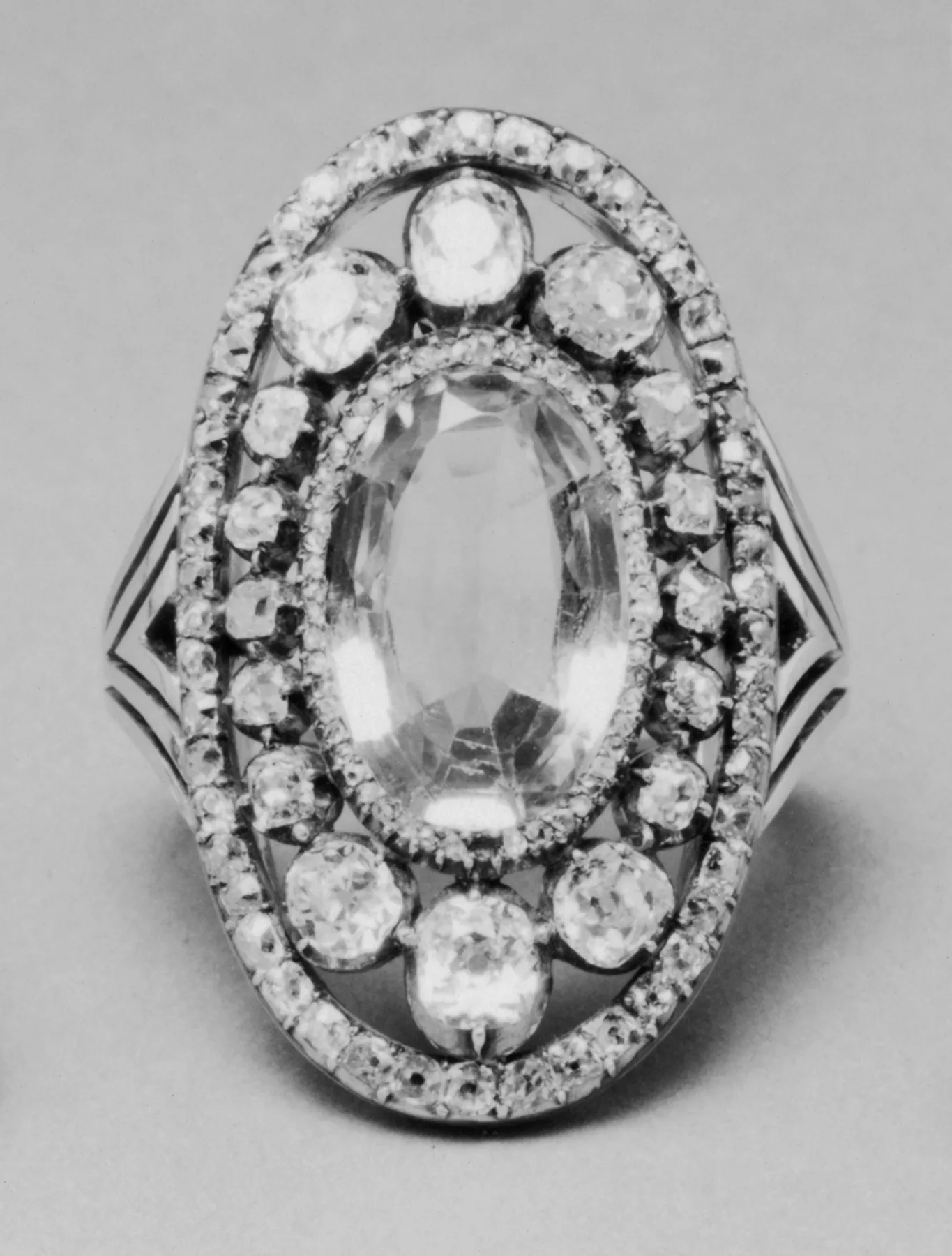
We have no finished piece with topaz yet, but the work is handmade and we take custom orders: a necklace or ring with topaz is possible. Catalogue: necklaces.

Real or fake
- Natural topaz often has uneven colour and visible inclusions.
- Glass is uniform and contains bubbles.
- Topaz is heavy and cool; hardness 8 means it holds up in a ring, though a diamond will still scratch it.
- If the price of "London blue" is suspiciously low, it is almost always glass.
Care
Hardness 8 allows daily wear. Keep it from long sun, ultrasonic cleaners and sudden temperature swings, which damage a stone with cracks.
See also
-
Emerald
Chemical formula – Al₂Be₃Si₆O₁₈
Hardness – 7.5–8
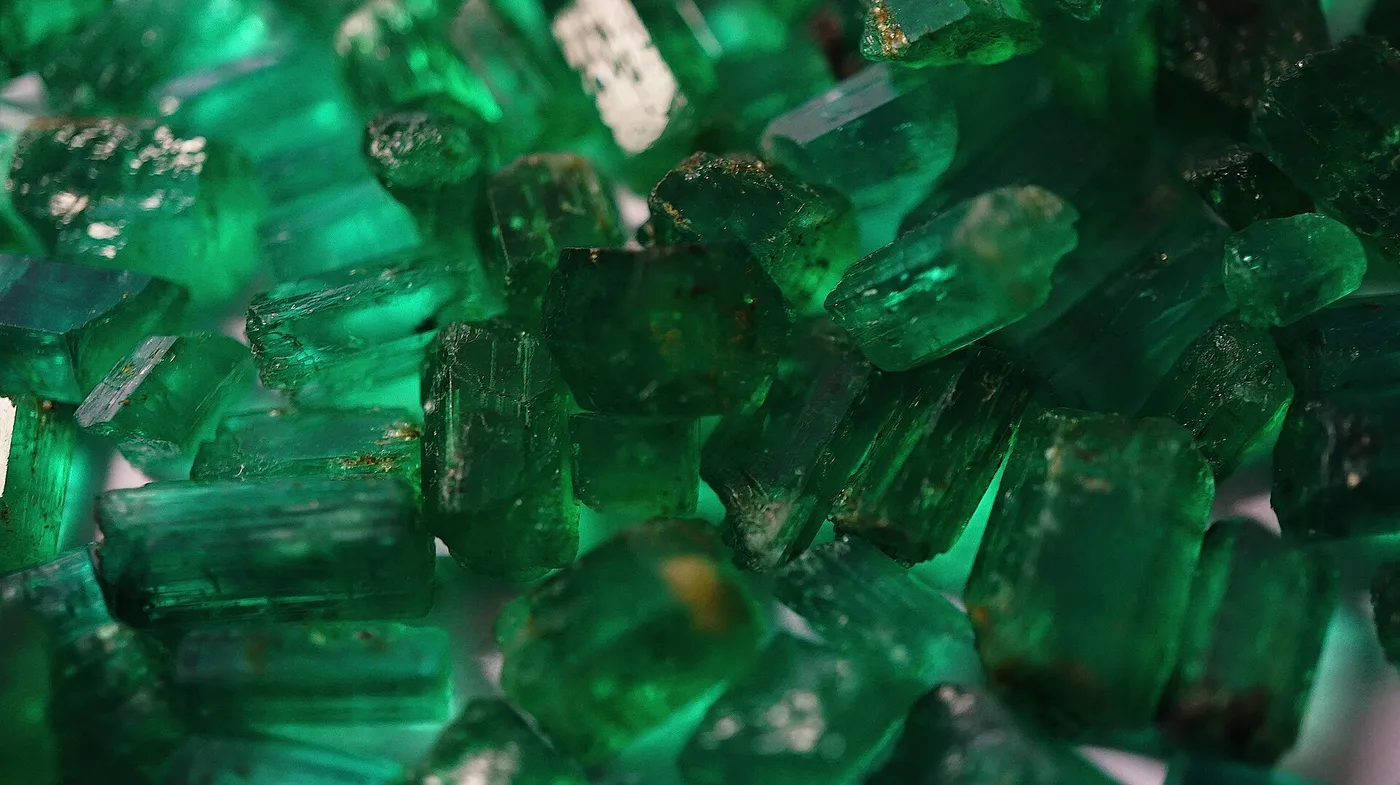
Colour – greenEmerald is the most expensive stone in the beryl family and one of the four precious gems. The name comes from Old French "esmeralde", which goes back to Greek "smaragdos", green stone.
Rarity aside, an emerald with inclusions is relatively easy to find: the clear, clean stone is what costs. Sakartvelo has no emerald deposits, so it was always imported, which pushed the price up. Finds from ancient Mtskheta include many pieces set with emerald.
Origins
Colombia is effectively the monopolist. Emeralds are also mined in Brazil, Africa, Zimbabwe and Russia.
Properties
In older times emerald was used to deepen intuition and in meditation. It is treated as one of the strongest protective stones. In several cultures it is also the stone of money and abundance: people once believed even a small stone drew wealth to its owner.
Traditional healing properties
In traditional lithotherapy emerald is linked to eyesight and the heart, and treated as a stone of calm.
This describes traditional practice, not medical advice. A stone does not replace a doctor.
Chakras
Associated with the fourth, heart chakra – anahata.
Which zodiac sign it belongs to
It is the stone of May, so it belongs to Taurus first of all: an earth sign that values stability and plenty.
It also suits Cancer, whose subject is family and emotional calm, and Libra, for whom harmony matters most.
In Charcho jewellery
We have no finished piece with emerald yet, but we take custom orders. If you want a necklace or ring with emerald, write to us. Catalogue: necklaces.
Real or fake
- Almost every emerald, even top quality, has inclusions and micro-cracks, which makes telling it from green glass fairly easy.
- Green tourmaline and dyed stones are often sold as emerald.
- Lab-grown emerald exists and is not cheap: a stone that is too clean raises questions.
Care
Hardness 7.5–8 is good, but inclusions make the stone brittle, so a sharp knock is dangerous. Skip ultrasonic and steam: liquids seep into the cracks.
See also
-
Sapphire
Chemical formula – Al₂O₃
Hardness – 9
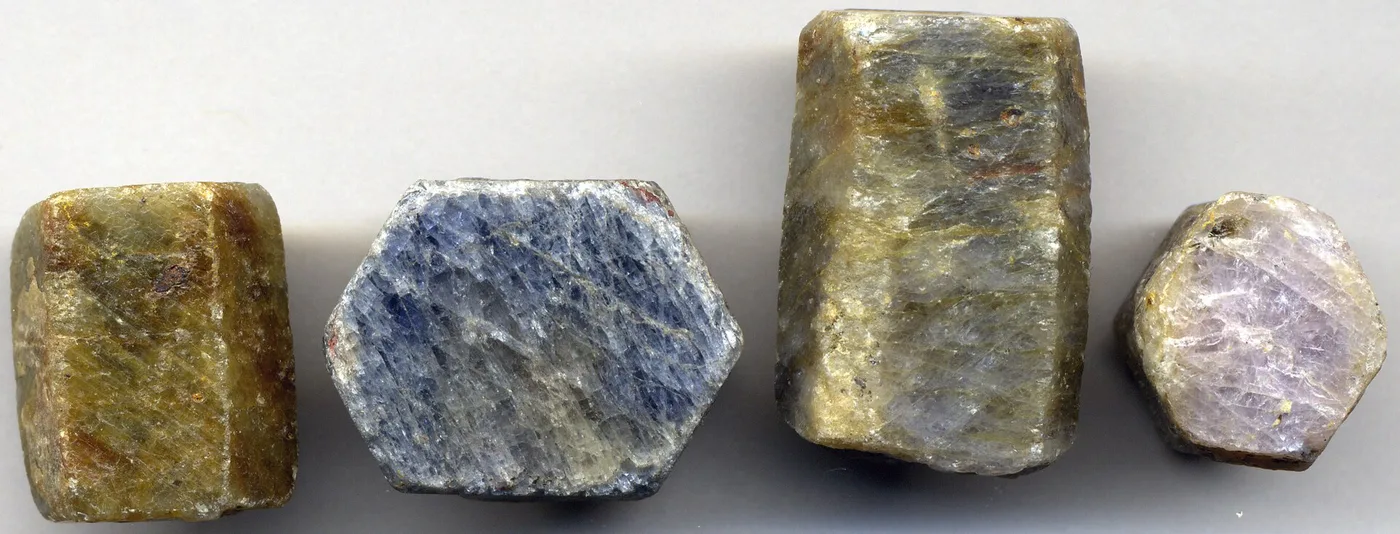
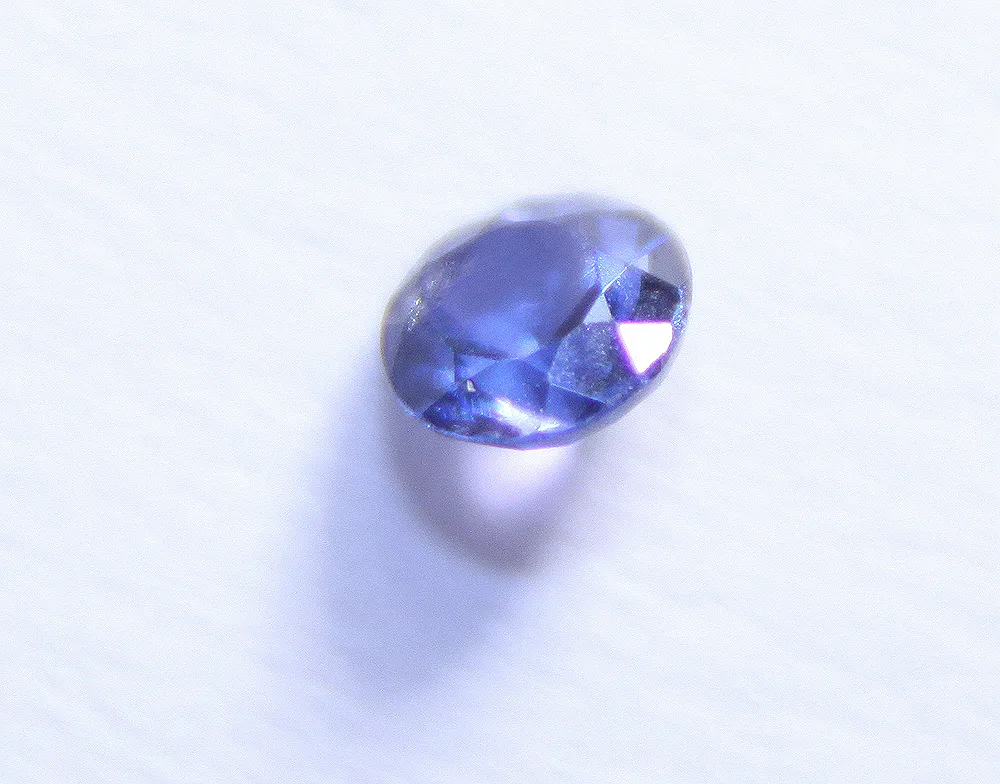
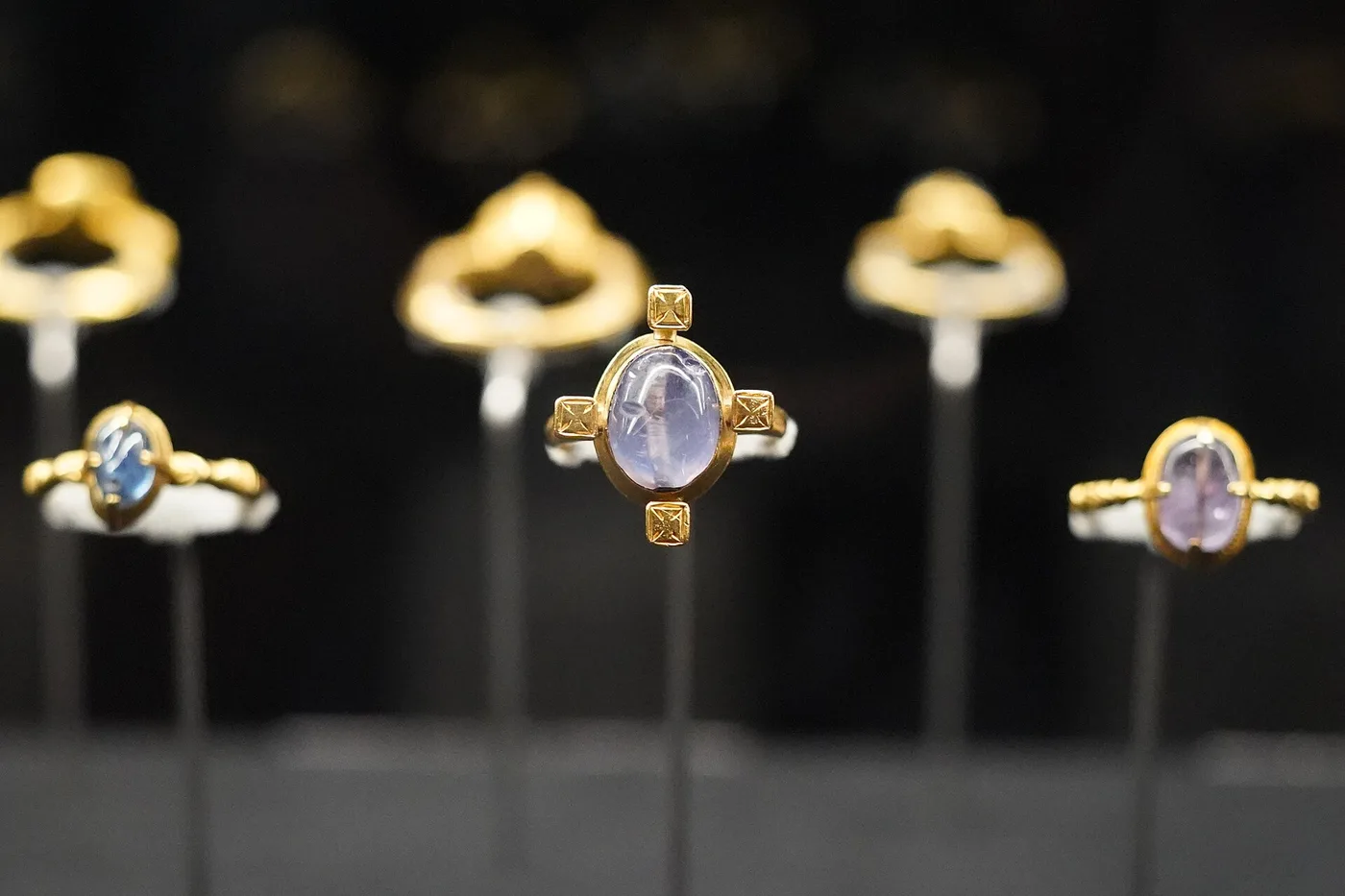
Colour – blue, sky blue, pink, green, yellow, violetSapphire is a variety of corundum and the second hardest stone on earth after diamond. Corundum itself is common; gem-grade corundum is hard to find.
The name comes from Greek "safir", blue. In the Middle Ages the word referred to lapis lazuli; by the early nineteenth century it settled on sapphire.
Origins
Sapphire comes from a handful of regions. The three best known are Kashmir, Burma and Sri Lanka. Since 2007 Madagascar has led supply.
Colour
Blue is the famous colour, but nature also produces yellow, greenish, violet and pink sapphires, which are named after their colour: yellow sapphire, pink sapphire.
Natural blue sapphire is scarce, so the colour is often intensified by heating and irradiation. Price depends on colour and clarity.
Properties
Esoteric practitioners say that anyone who needs focus and more discipline should wear sapphire daily. The grade does not matter; being natural does.
Sapphire is called the stone of wisdom. It is said to help with difficulties in communication and expressing emotion, and with depression and low self-esteem.
Traditional healing properties
In traditional lithotherapy sapphire is the stone of eyesight, circulation and the nervous system.
This describes traditional practice, not medical advice. A stone does not replace a doctor.
Chakras
Blue sapphire is associated with the fifth, throat chakra – vishuddha.
Which zodiac sign it belongs to
It is the stone of September, so it belongs to Virgo first of all: precision and clarity are the shared theme.
It also suits Libra, whose subject is balance and fairness, and Taurus, which is drawn to stability.
In Charcho jewellery
We have no finished piece with sapphire yet, but we take custom orders. Catalogue: necklaces.
Real or fake
- Natural sapphire usually shows inclusions and bands.
- Glass is uniform, has bubbles and scratches easily.
- Hardness 9 means sapphire scratches almost everything except diamond.
- Lab-grown sapphire is cheap and often sold as natural: ask for a certificate.
Care
Hardness 9, the toughest stone after diamond. Ultrasonic and steam are usually safe unless the stone has been fracture-filled, in which case use a soft cloth only.
See also
-
Heliotrope (bloodstone)
Chemical formula – SiO₂
Hardness – 6.5–7
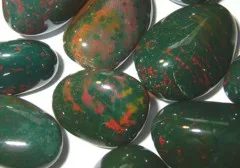
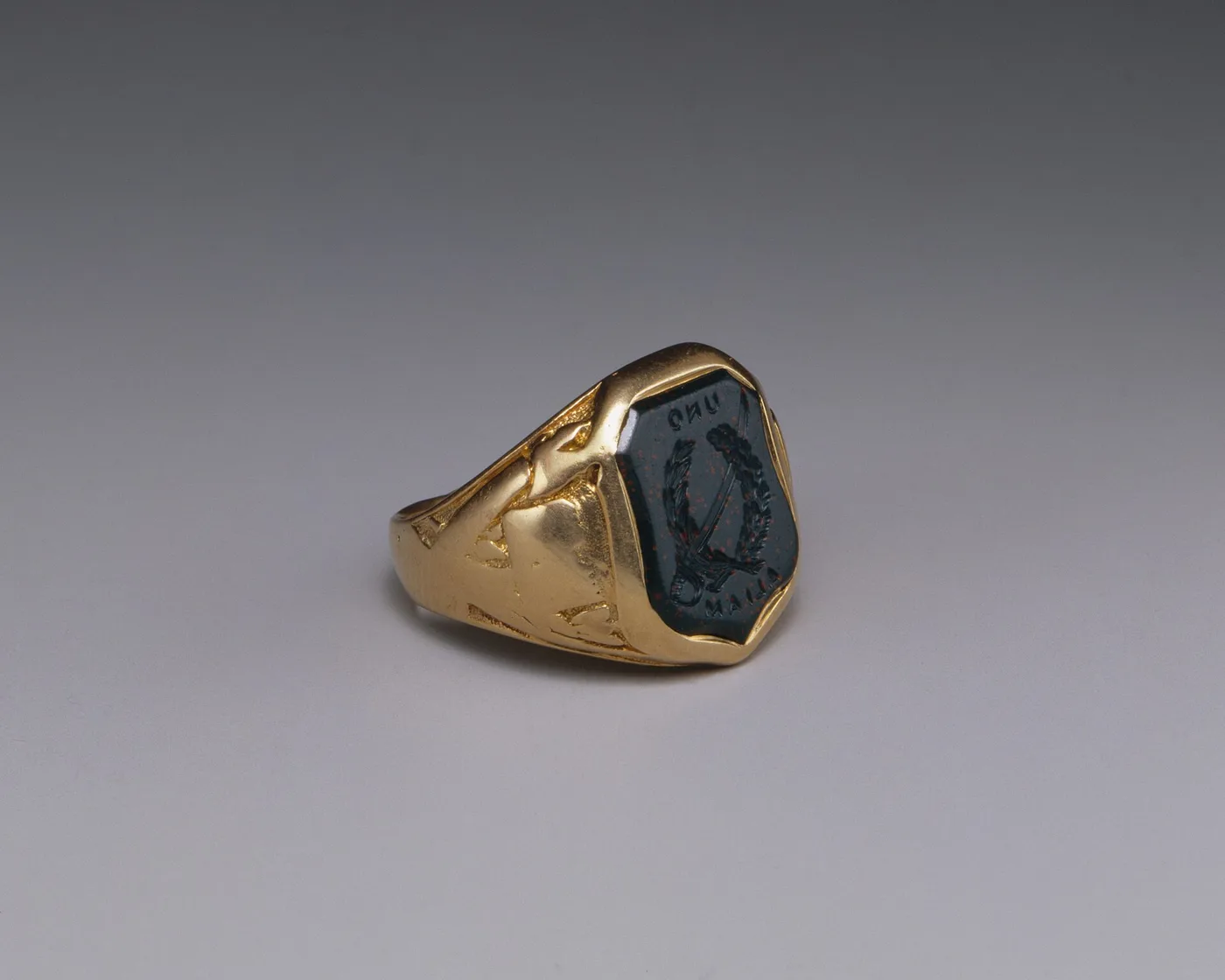
Colour – dark green, swamp green, grey, redHeliotrope is a semi-translucent variety of chalcedony. It has red flecks on a dark green ground, which is why it is called bloodstone or bloody jasper.
In Christian tradition heliotrope has a long history: it is one of the most frequently mentioned stones in scripture. A legend holds that heliotrope formed from the blood of Christ at the crucifixion. In older times it was called the martyr's stone.
Origins
The largest suppliers are India, Madagascar, Australia, Germany, Brazil and China. It is also mined in the United States, in California.
Properties
In the ancient world heliotrope was treated as the stone of earth and life. It was called the sun stone, and later the stone of Christ. Tradition credits it with strength, vitality, the energy of birth and courage, and treats it as one of the strongest protective stones, one that supports personal growth.
In many cultures heliotrope was placed in cold water and then laid on a sick person's body. That is why it was a favourite among warriors. It was believed to bring its owner respect, success and wealth.
Traditional healing properties
In ancient times a paste of earth, heliotrope powder and honey was used for tumours, bruises and venomous bites. It was even said that looking at heliotrope protected the eyes from disease. Lithotherapists say it strengthens the immune system.
This describes traditional practice, not medical advice. A stone does not replace a doctor.
Chakras
Associated with the first, root chakra – muladhara.
Which zodiac sign it belongs to
Traditionally it belongs to Aries first of all: both share the same beginning, courage, drive and forward motion.
It also suits Scorpio, whose subject is depth and endurance, and Pisces, for whom a protective stone matters especially.
In Charcho jewellery
We have no finished piece with this stone yet, but the work is handmade and we take custom orders. If you want a bracelet or ring with heliotrope, write to us. Catalogue: bracelets.
Real or fake
- In natural heliotrope the red flecks are unevenly distributed and sit slightly above the green.
- Painted or dyed jasper looks uniform and turns lighter on a scratch.
- The stone is heavy and cool in the hand; plastic feels light.
- Price. A real stone is not cheap, but heliotrope is not a precious gem, so an inflated price is a warning too.
Care
Hardness 6.5–7 lets you wear it daily. Keep it from long sun, ultrasonic cleaners and chemicals. A soft damp cloth and a proper dry are enough.
See also
-
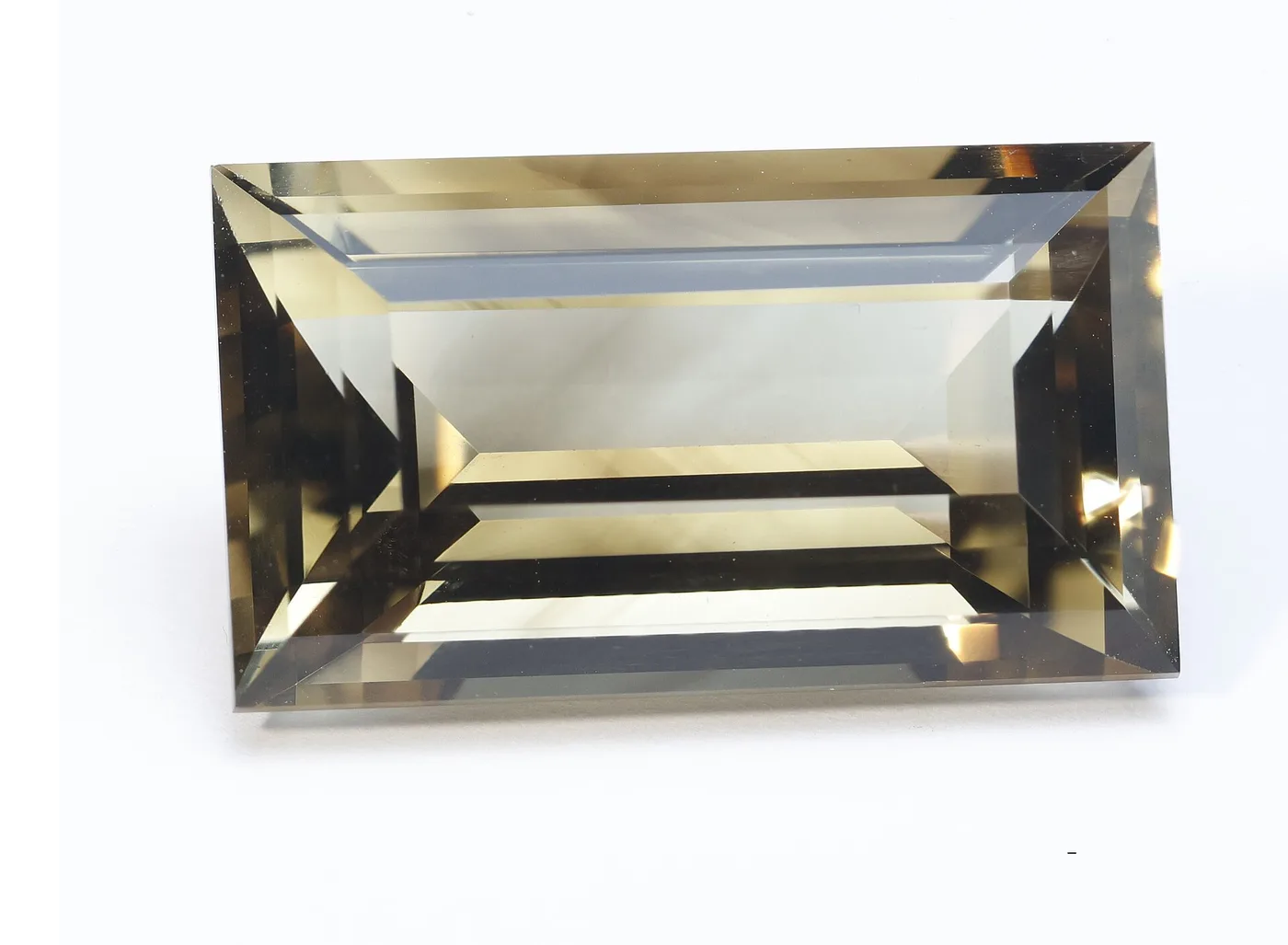
Citrine
Chemical formula – SiO₂
Hardness – 7
Colour – yellow, golden, brownCitrine is the yellow variety of quartz. The name comes from the French "citron", lemon, though the colour runs from lemon yellow to gold and brown.
Natural citrine is one of the rarest varieties of quartz. That is why the market mostly offers heat-treated or dyed stones. The most common is heated amethyst, which carries a more reddish-brown tone.
Origins
Brazil is the largest supplier. Citrine is also mined in Argentina, Ethiopia, Bolivia, France, Uruguay and Zambia.
Properties
Esoteric tradition treats citrine as the stone of success and money, hence the nickname merchant's stone. It is said to bring luck in several directions at once. Traditionally it is kept in a wallet or a till to grow income. It is said to bring generosity and to strengthen the owner's inner energy and sense of purpose.
According to esoteric practitioners, citrine is one of the few stones that does not absorb negativity and therefore needs no cleansing. Because of its link to the solar plexus, it is treated as a confidence booster: it is said to dissolve the fear of judgement and ridicule.
Traditional healing properties
Lithotherapists say citrine stabilises brain function and helps the nervous system. It is used for fatigue, endocrine problems, allergies, and liver and gallbladder conditions.
This describes traditional practice, not medical advice. A stone does not replace a doctor.
Chakras
Associated with the solar plexus chakra – manipura.
Which zodiac sign it belongs to
Traditionally it belongs to Aries: energy and forward motion are the shared theme.
It also suits Leo, for whom confidence and ambition come naturally, and Sagittarius, who often lacks financial steadiness and optimism.
In Charcho jewellery
We have no finished piece with citrine yet, but we take custom orders: a necklace or bracelet with citrine is possible. Catalogue: necklaces.
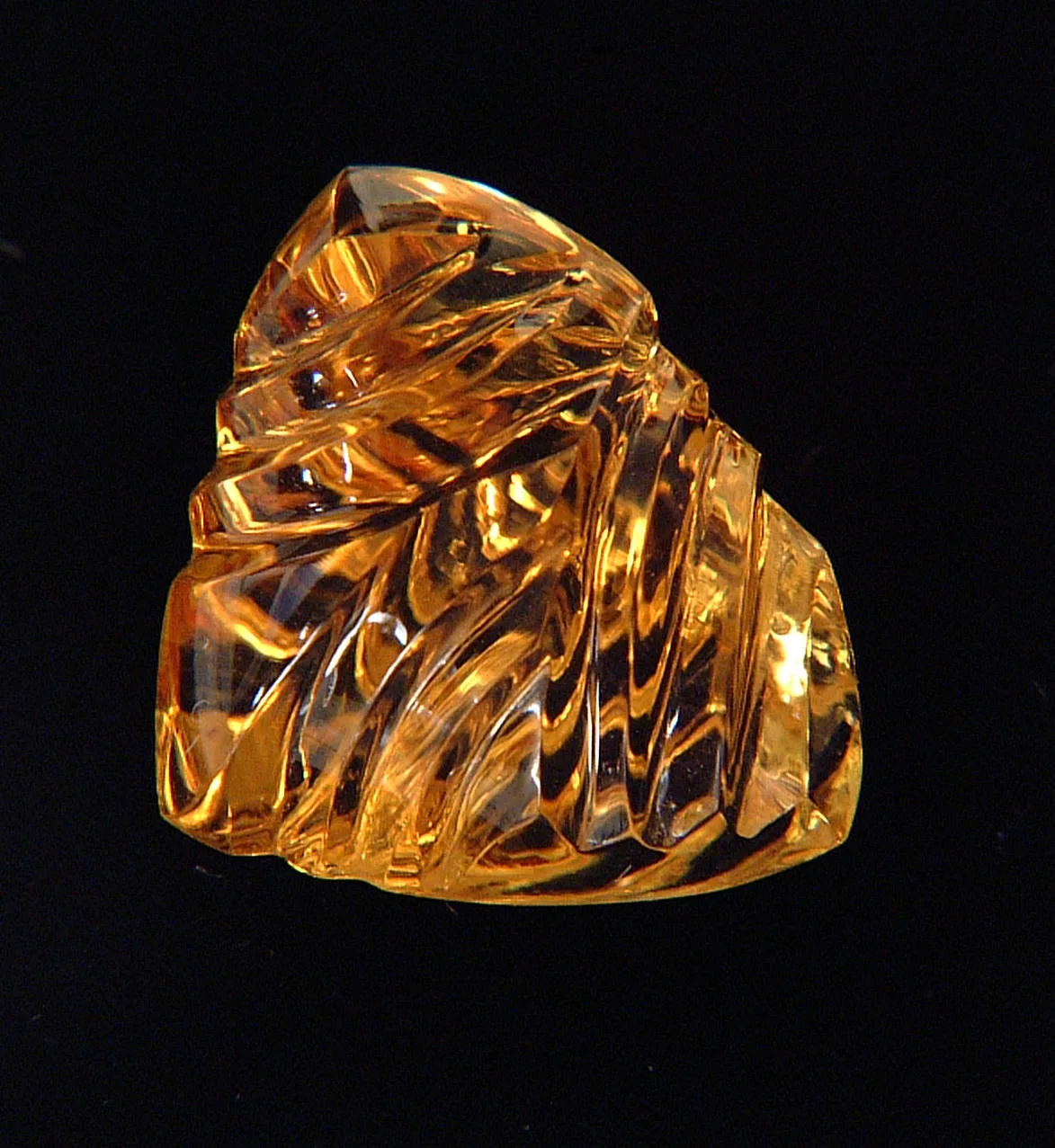
Real or fake
- Natural citrine is yellow-gold and often uneven, with a darker core.
- Heated amethyst is redder and browner, often with a pink cast.
- Glass is uniform, with bubbles and a flat shine.
- The stone is cool and warms slowly in the hand.
Care
Hardness 7 allows daily wear. Keep it from long sun, ultrasonic cleaners and chemicals. Warm water, a soft cloth and a proper dry are enough.
See also
-
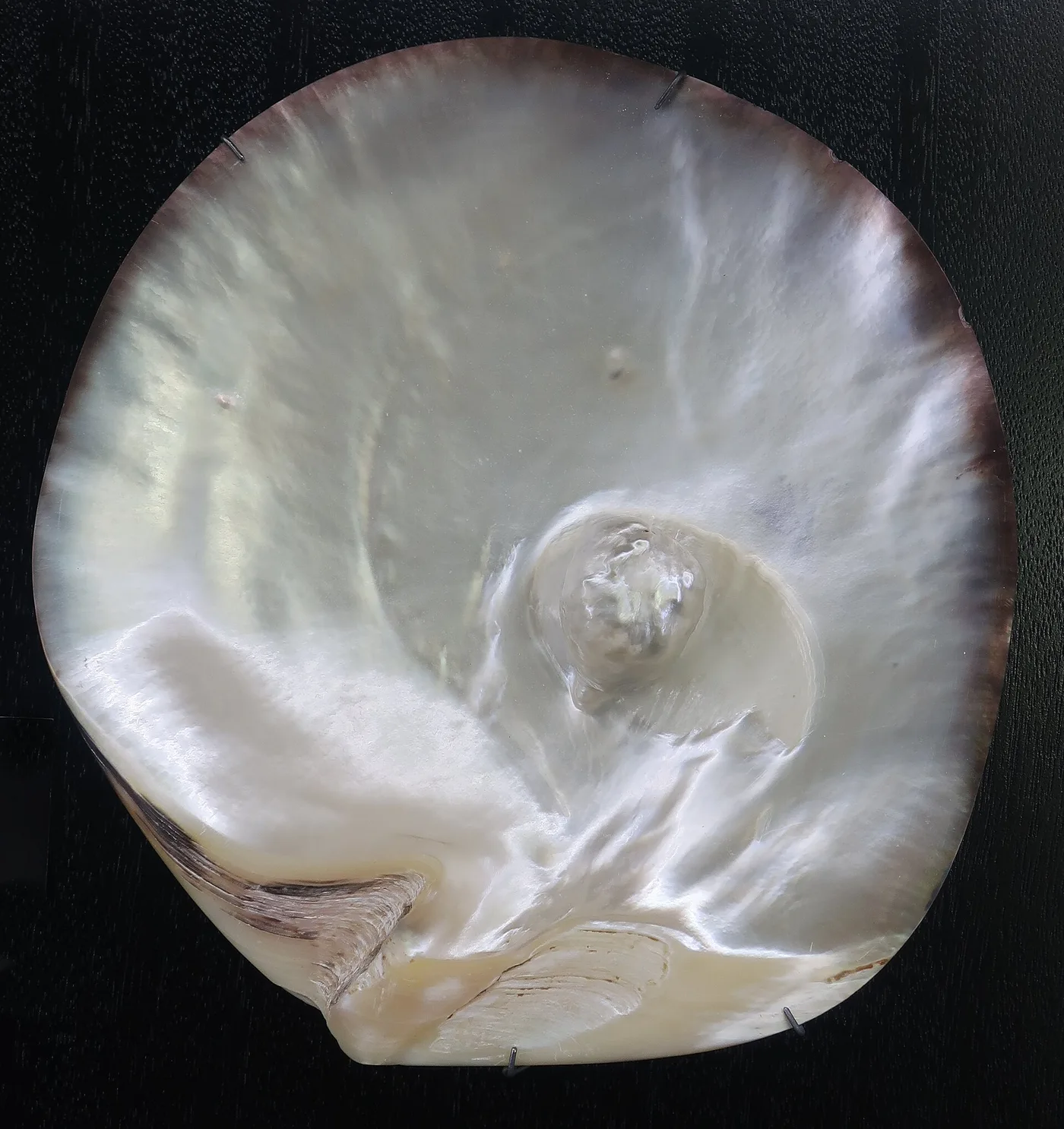
Pearl — the living stone
Chemical formula – CaCO₃ (aragonite) + conchiolin
Hardness – 2.5–4.5
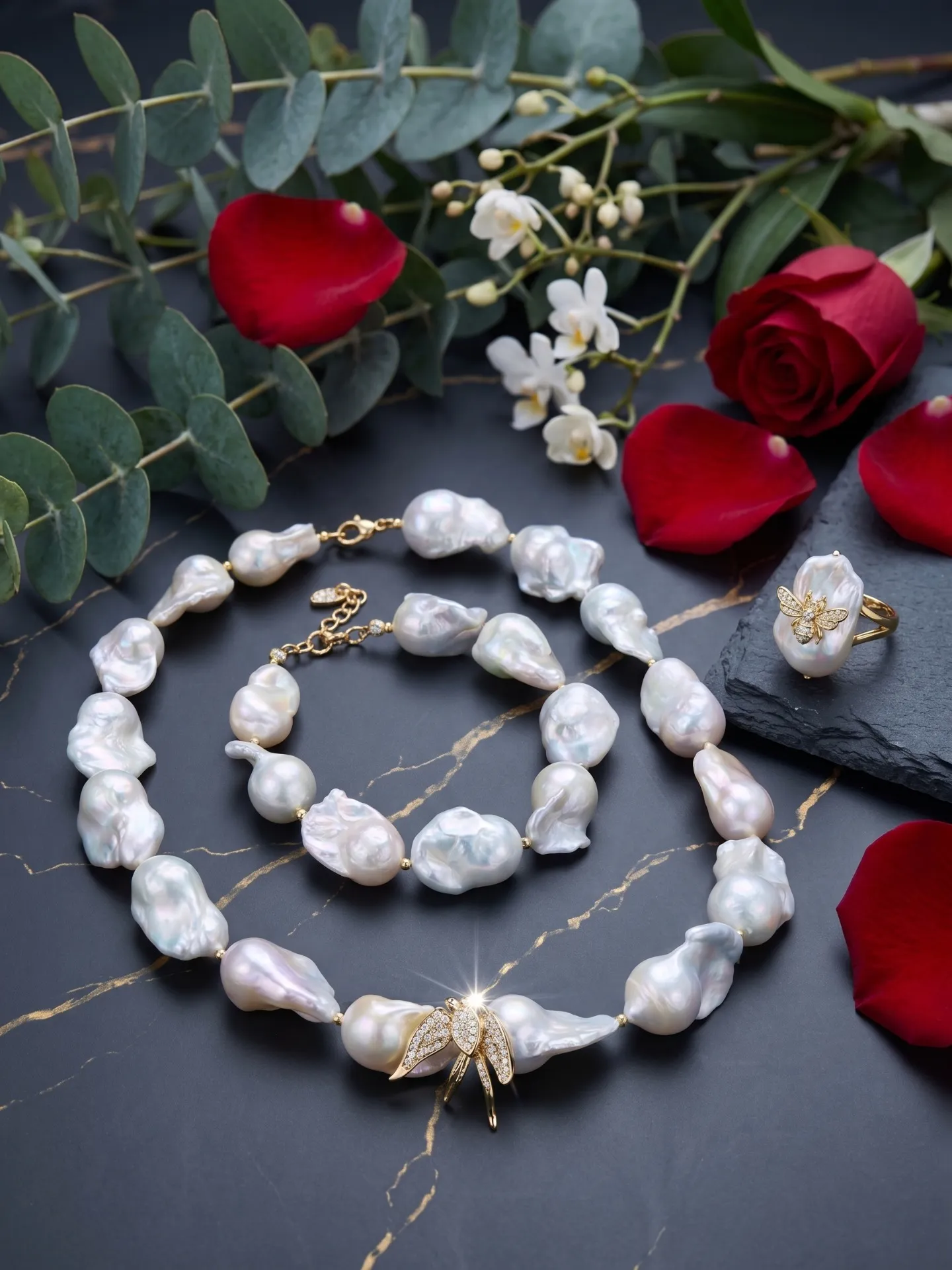
Colour – white, cream, pink, gold, grey, blackPearl is the only gemstone born inside a living organism. That gives it properties other stones simply do not have: it is soft, warm in the hand, and it changes over time.
A pearl grows inside the shell of a mollusc. Something foreign gets in, and the mollusc builds nacre around it, layer upon layer, like growth rings in wood. Three years at minimum, sometimes five. The name comes from the Latin "perna", a leg, after the shape of the bivalve.
Natural pearl, grown without human help, is rare, expensive and small today. Almost everything on the market is cultured, and cultured is not fake: the mollusc still builds real nacre, the difference is that people start the process. The oldest written record of a pearl is about 7,500 years old.
Origins
Pearl is harvested in almost every warm sea. Natural pearls turn up in Australia, Japan, Central America, Madagascar, the Philippines and South America; historically the Persian Gulf beds were the most prized of all.
Today the market is supplied by cultured farms: Japan (Akoya), Australia and Indonesia (South Sea), French Polynesia (Tahitian black) and China (freshwater). Origin shapes quality to a degree — water temperature and salinity affect how thick the nacre grows.
Properties
For centuries pearl has been the stone of purity and sincerity. Tradition gives it a calm, settling character: it is said to smooth out emotional swings and to help a person be more honest with themselves.
In energy work pearl is said to push away negativity and stress, and to bring truth and loyalty into relationships. It is also said to help a person find themselves.
There is a charming older belief too: a pearl grows attached to its owner very quickly, so it should not be given away. Once it is yours, it stays with you.
Traditional healing properties
Lithotherapists say pearl balances the body's natural rhythm and restores hormonal balance.
In traditional practice it was used for lung complaints, asthma, bronchitis and tuberculosis. It is said to quiet headaches and allergies and to soothe the skin.
This describes traditional practice, not medical advice. A stone does not replace a doctor.
Chakras
Linked to the fifth and seventh chakras – vishuddha and sahasrara.
Zodiac
It is the stone of June, which makes it Cancer first of all, and the fit is exact: Cancer is about emotion, family and care, and pearl works on those very themes.
It also suits Pisces, a water sign living on intuition, and Gemini, as a stone that eases inner division. Libra wears it well for its quiet elegance.
In Charcho jewellery
Baroque pearl is our bestseller: the irregular, living shape makes every necklace different. See the baroque pearl necklace and the heart-shaped earrings.
Pearl reads best close to the skin, so for necklaces we choose larger but light beads that stay comfortable all evening.
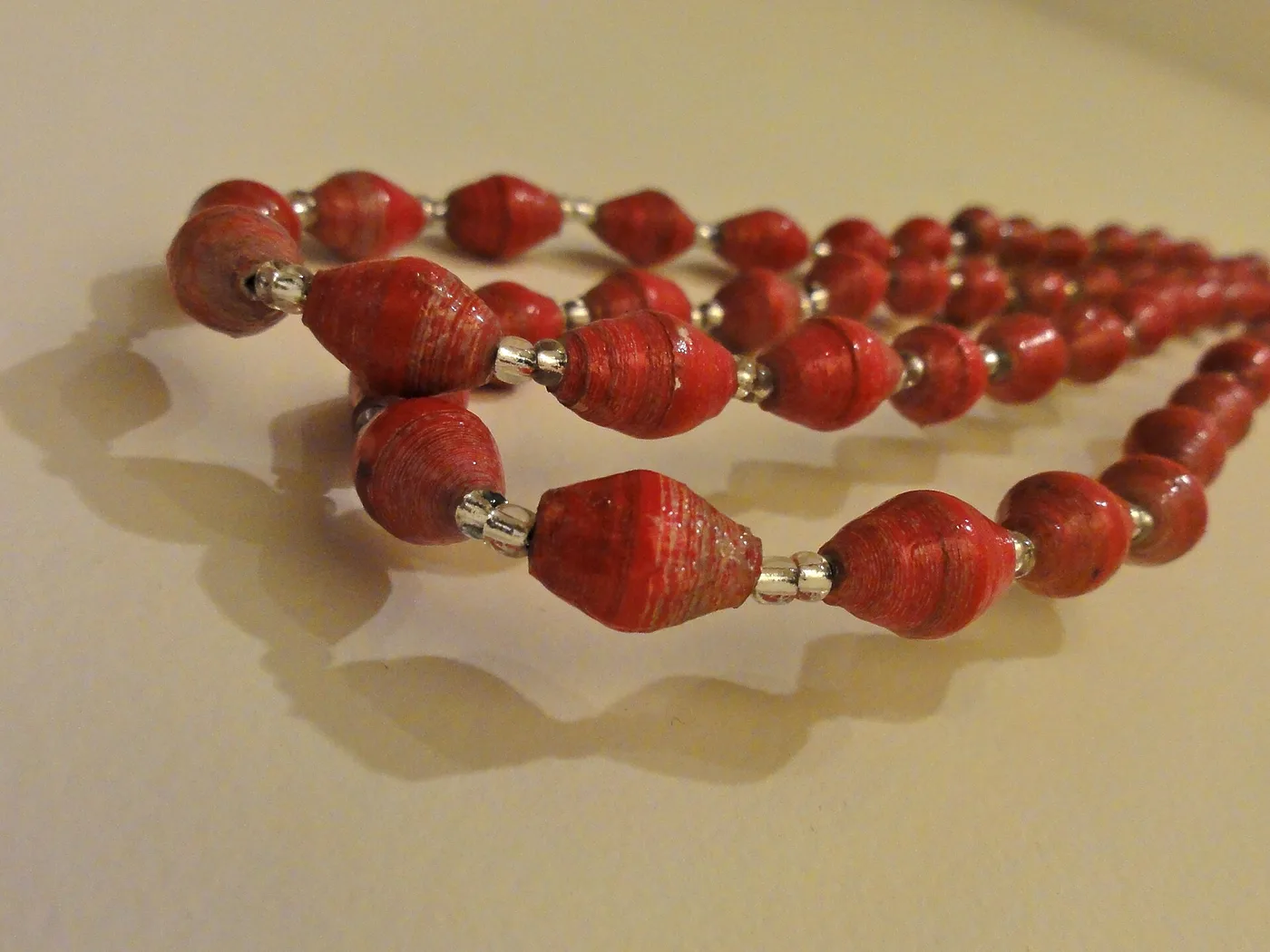
Real or fake
A fake is glass, plastic or coated beads. Three quick tests:
- Rub the pearl gently against a tooth. Real feels slightly rough, fake slides.
- In the hand real warms slowly; plastic takes on body heat immediately.
- Rub two pearls together. Real ones squeak, plastic sounds dull.
Look at the edge of the drill hole too: on a real pearl it is clean and layered, on a fake you often see a line of dye. Dyed pearls are common enough — sellers usually admit the colour, but they should not charge natural prices for it.
Care
- Perfume, hairspray and cream damage nacre and are the pearl's enemies. Perfume first, jewellery after.
- No ultrasonic cleaning, no steam.
- Wipe with a soft, slightly damp cloth after wearing, then dry.
- Store separately in soft cloth, never in plastic.
- If you wear it often, restring every year or two. The thread always breaks first.
See also
-
Amethyst — the purple quartz
Chemical formula – SiO₂
Hardness – 7
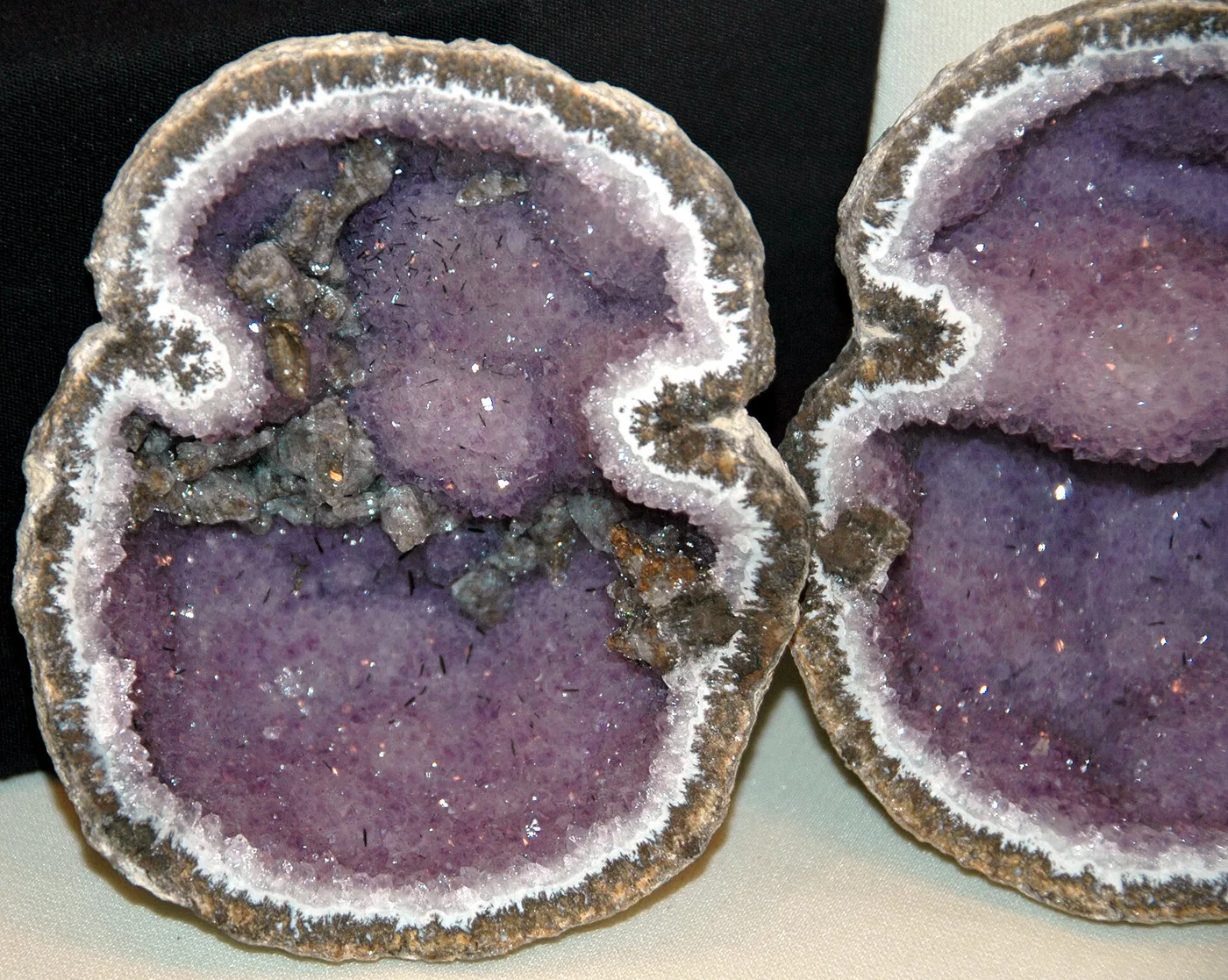
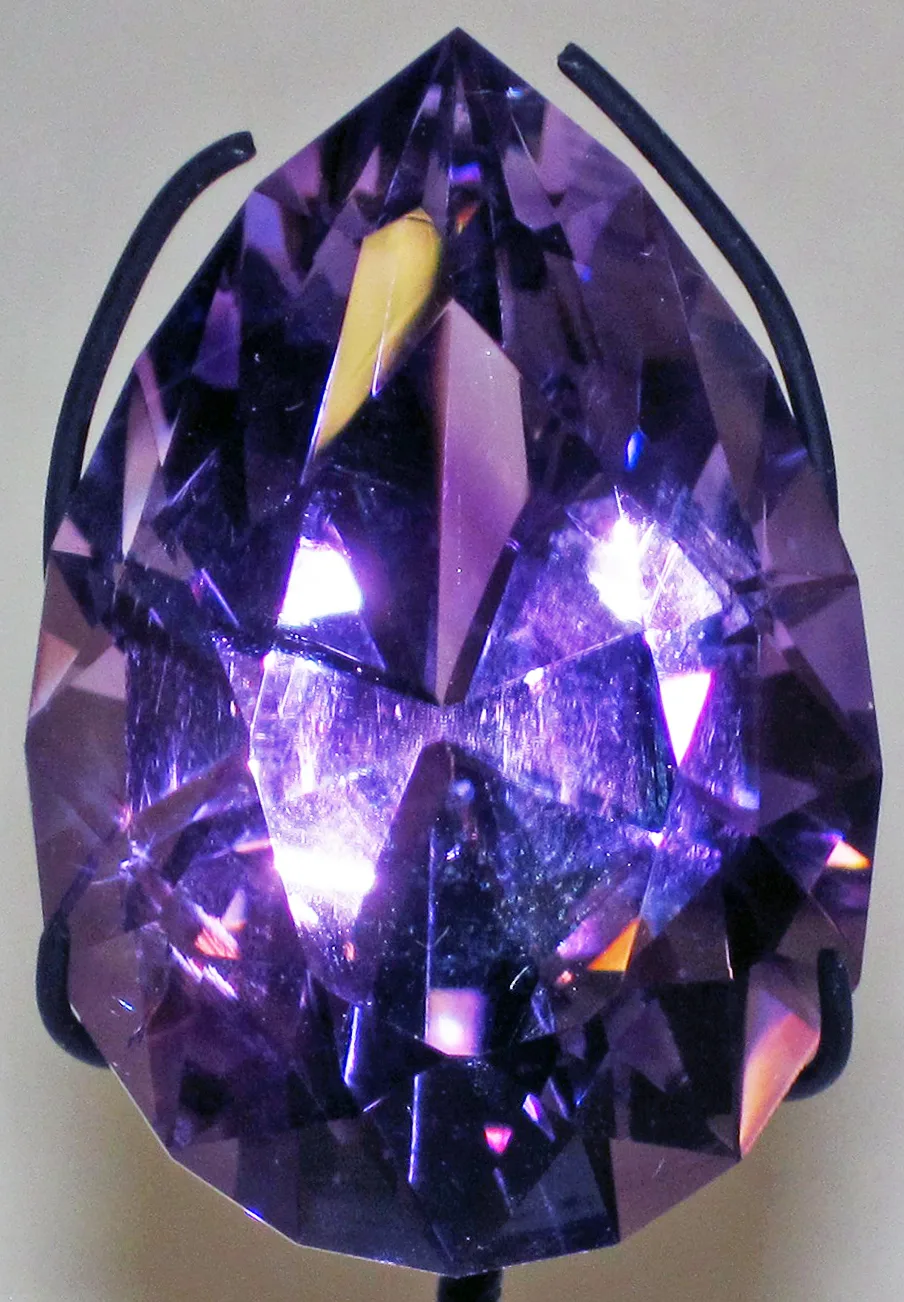
Colour – pale to deep violet, sometimes with a pink castAmethyst is the purple variety of quartz and one of the best known stones in that family. It belongs to the large-crystal branch, hardness 7, more than enough for daily wear. The one thing that genuinely harms it is sunlight.
The colour comes from iron impurities and natural irradiation; without them the stone would be plain clear quartz. The shade is often uneven — a dark core, lighter edges — and that zoning is a good sign the stone is natural.
The name is Greek: "amethystos" means "not drunk". People once believed the stone kept them sober, and not only from wine but sober in thought. It is still called the stone of sobriety.
Grades are simple: opaque pale stone is affordable, while transparent and deeply coloured pieces cost noticeably more. Amethyst is common enough that buying a real one is easy — the attention belongs on treated stones, not fakes.
Origins
The largest deposits are in Brazil, where the stone runs lighter and cleaner. Uruguay produces dark, saturated violet, and Uruguayan material commands the highest prices.
It is mined too in Bolivia, Canada, Mexico, Madagascar, Burma, Namibia, Russia, Sri Lanka, Zambia and the United States (Arizona). Zambian amethyst has gained real ground on the market over the past decade.
Properties
Tradition treats amethyst as the stone that clears away noise and brings a person back to themselves. For centuries it was held to help people let go of addictions and bad tendencies.
A stone kept in the bedroom is said to bring calm sleep and good dreams, which is why amethyst was long linked to sleep. Esoteric writers call it a strong but undemanding protector: anyone can use it, and it asks for no special preparation.
More broadly, amethyst is counted as the stone of the mind, creativity, calm and balance. In various cultures it has also stood for love and fidelity.
Traditional healing properties
Lithotherapists say amethyst supports metabolism and the immune system. It is said to ease headaches and relieve migraine.
Traditionally it was used to curb dependence. Amethyst is believed to improve circulation and to help with speech problems.
This describes traditional practice, not medical advice. A stone does not replace a doctor.
Chakras
Linked to the sixth, third-eye chakra – ajna.
Zodiac
It is the stone of February, which makes it Pisces first of all: a water sign that lives on intuition and often rides emotional waves, exactly what amethyst evens out.
It also suits Aquarius, whose subject is independent thought and a clear head, and Sagittarius, who often needs focus. Aries wears it well too — the stone takes the edge off a fire sign's hurry.
In Charcho jewellery
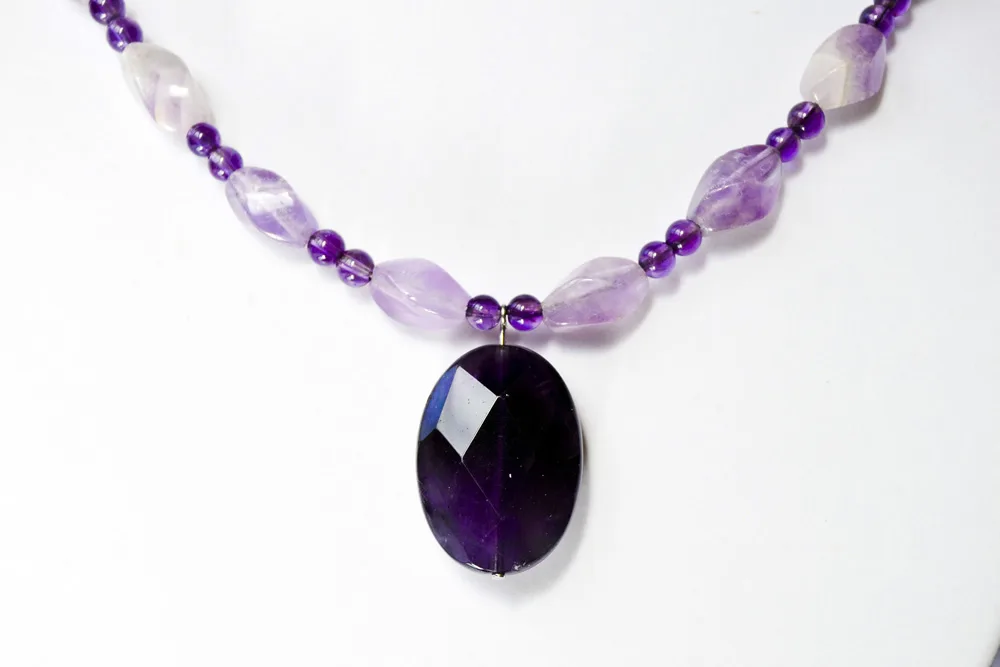
Amethyst necklaces are in the catalogue: necklaces. If you want a particular shape, write to us. The work is handmade and we take custom orders.
The stone is hard enough and holds its colour, so it works confidently in rings and earrings. In necklaces we favour the lighter tones, which sit more naturally against the skin.
Real or fake
Amethyst is inexpensive, so fakes are rare. Treated stones are more common:
- Heated. At around 500 °C the colour leaves and the stone becomes citrine. That is legal and widespread.
- Irradiated. Produces a darker colour than nature would.
- Dyed. Rare, but it happens, and a scratch shows it.
Glass imitations give themselves away with perfectly even colour and bubbles. In natural stone the colour is always distributed in zones — if you cannot see a transition of shade, you are most likely looking at glass.
Care
- Sun. Long direct sun dulls the colour, so a windowsill is a bad home for it.
- Ultrasonic and steam are usually safe, but skip them on a stone with a crack.
- Warm water and a soft cloth are enough; it needs no heavy chemicals.
- Store it dark and in its own pouch, and the colour stays unchanged for years.
See also
-
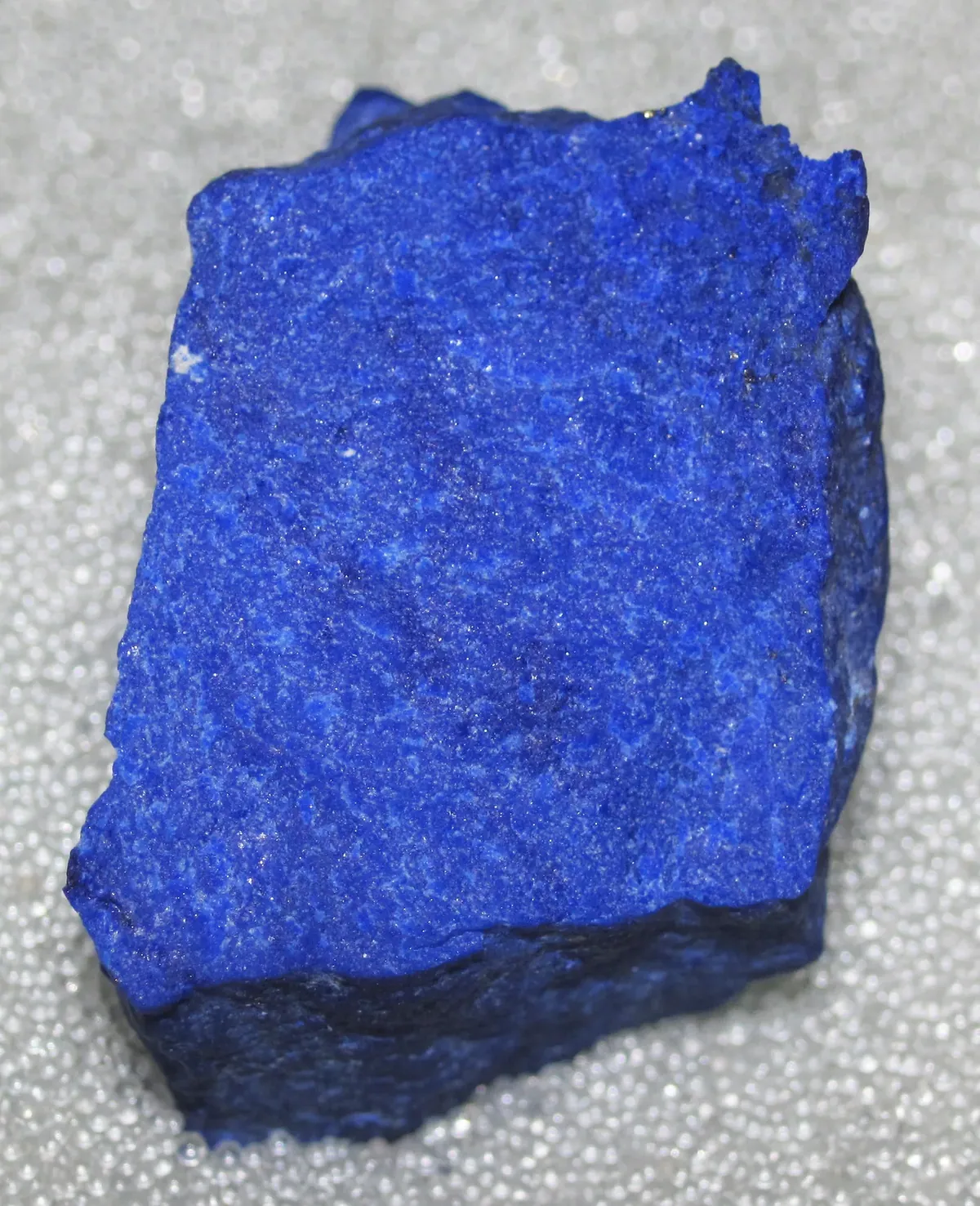
Lapis lazuli — the stone of truth and quiet
Chemical formula – (Na,Ca)₈(AlSiO₄)₆(S,SO₄,Cl)₂
Hardness – 5–6
Colour – pale blue to deep blueLapis lazuli is the deep blue around the eyes on Tutankhamun's burial mask. For centuries it was called the royal stone, and not only in Egypt: excavations in the Caucasus turned up lapis beads in burial sites there too.
One detail worth knowing up front: lapis is not a single mineral but a rock. It has three parts — blue lazurite grains, white calcite and golden pyrite. That trio is what gives the stone its familiar look.
The name comes from two languages: Latin lapis means "stone", Arabic lazaward means "blue". The Georgian name for it, ლაჟვარდი, comes from the same Arabic root.
Price follows colour and clarity. An even light blue costs the most, a greenish tint the least. Gold pyrite flecks raise the price when they sit evenly and attractively.
Origins
The oldest lapis deposit is Sar-e-Sang in Afghanistan's Badakhshan mountains, roughly 6,000 years old. Afghan stone is still considered the best: dark, clean and dense.
Chile, Argentina, Canada, India, Italy, Russia and the United States come close on quality. Chilean lapis tends to be paler and richer in calcite, while African material sometimes shows a reddish or violet cast.
Properties
Tradition treats lapis as the stone of truth and calm. It is said to help you say what you actually think, and to settle the mind when thoughts refuse to line up. That is why it is often named one of the best stones for meditation.
Esoteric writers count lapis as a strong protector: they say it turns away "energy vampires" and hostile attention. Put more practically, it is called the stone of communication — useful for organising the day, for business conversations, and for finding the right word at the right moment.
It is also credited with mental and emotional courage, depth of intuition and a creative streak. In older sources lapis was said to keep a person in touch with their guardian angel; today that reads more simply as inner quiet and hope that hardens into confidence over time.
Traditional healing properties
In the past lapis was used for headaches, general weakness, poor sleep and eyesight.
Modern lithotherapists link it to the nervous system, speech problems, low mood, immunity, bones, eyes and the reproductive organs. Tradition holds that the stone releases tension held in the throat.
This describes traditional practice, not medical advice. A stone does not replace a doctor.
Chakras
Linked to the fifth, throat chakra – vishuddha.
Zodiac
It suits Sagittarius first of all, a sign built around truth and the search for a wider horizon, which is exactly what lapis emphasises.
It also works for Libra, whose subject is balance and fairness, and for Aquarius, which values independent thought. Pisces suits it too, since it sharpens intuition.
In Charcho jewellery
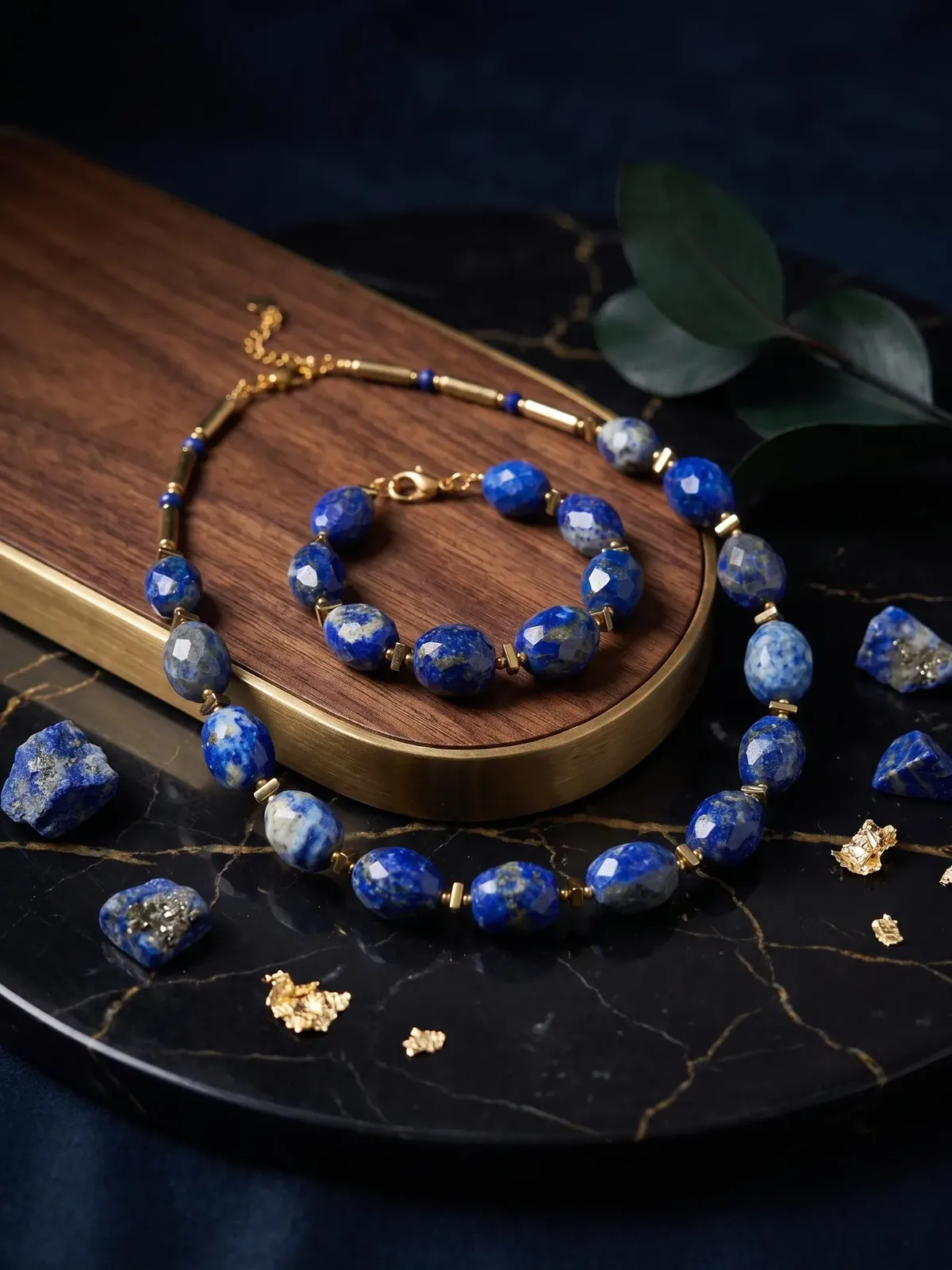
Our lapis necklace is set with natural pyrite inclusions; deep blue with gold flecks looks remarkably alive. See the lapis lazuli necklace; other lengths and shapes are made to order.
Real or fake
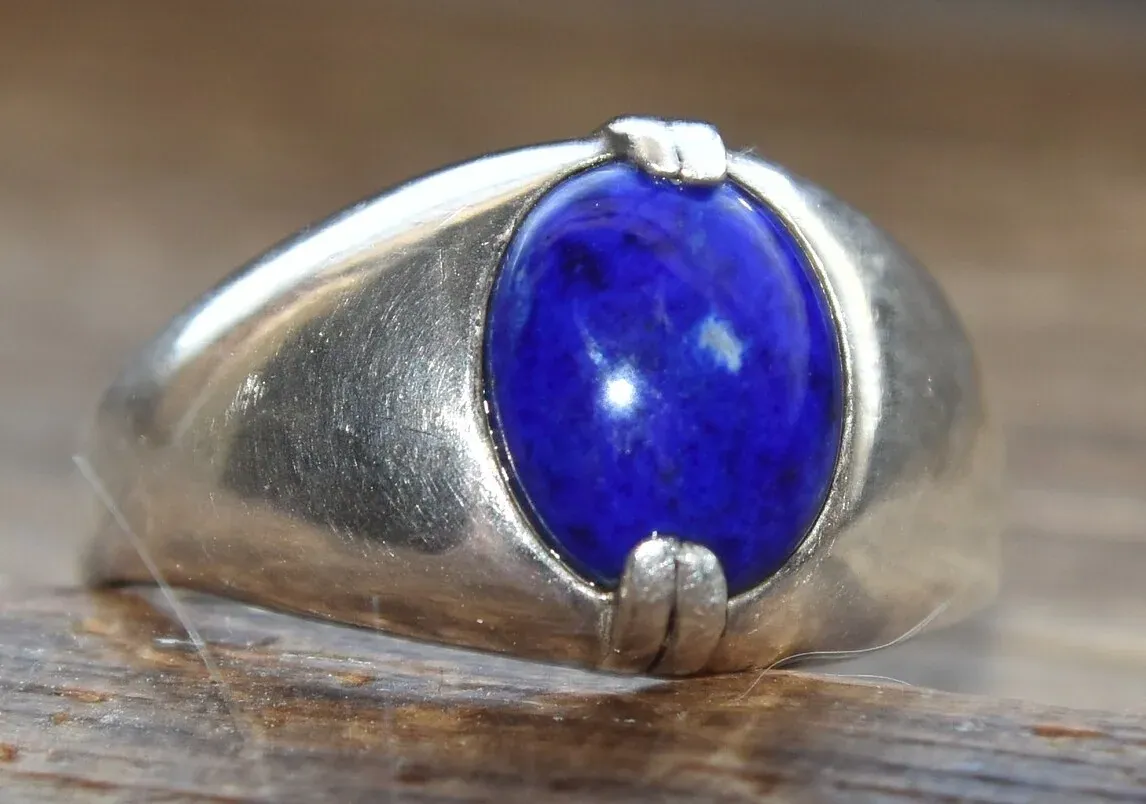
The most common fake is dyed jasper, sold as "Swiss lapis" though it has nothing to do with Switzerland. What to check:
- Natural pyrite flecks are gold and sparkle. In dyed stone they are blue as well.
- White patches are calcite, and in natural stone they sit unevenly, not in clean bands.
- A scratch on dyed stone shows a lighter colour underneath.
- Price. Real dark lapis is never cheap.
Care
Lapis is porous. Water, soap and alcohol get inside, and pyrite oxidises over time, turning the gold flecks greenish-brown. So do not wash or soak it, and skip the ultrasonic cleaner.
A dry soft cloth after wearing is enough. Keep perfume and hairspray away from the stone. Store it in its own soft pouch — lapis scratches softer stones such as pearl.
See also
-
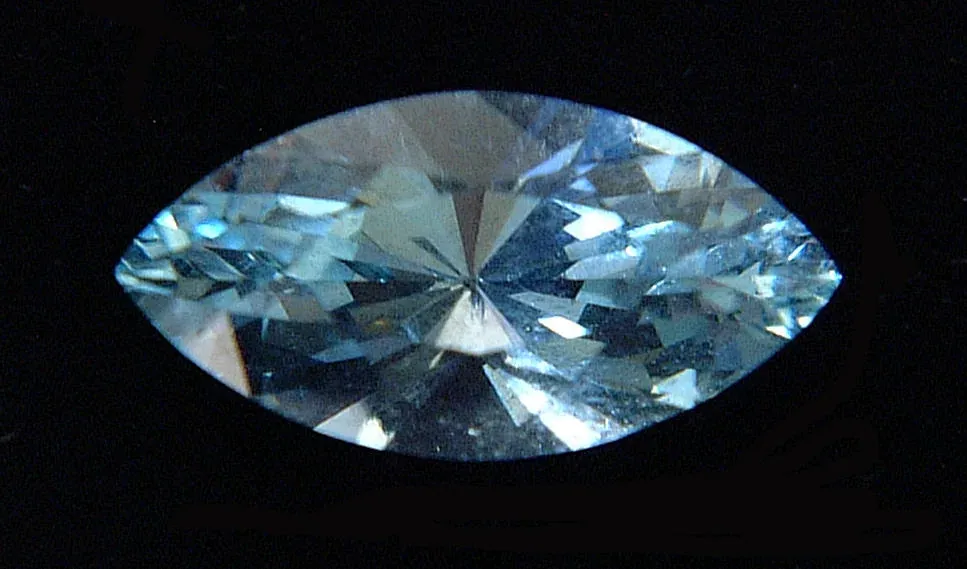
Aquamarine
Chemical formula – Al₂Be₃Si₆O₁₈
Hardness – 7.5–8
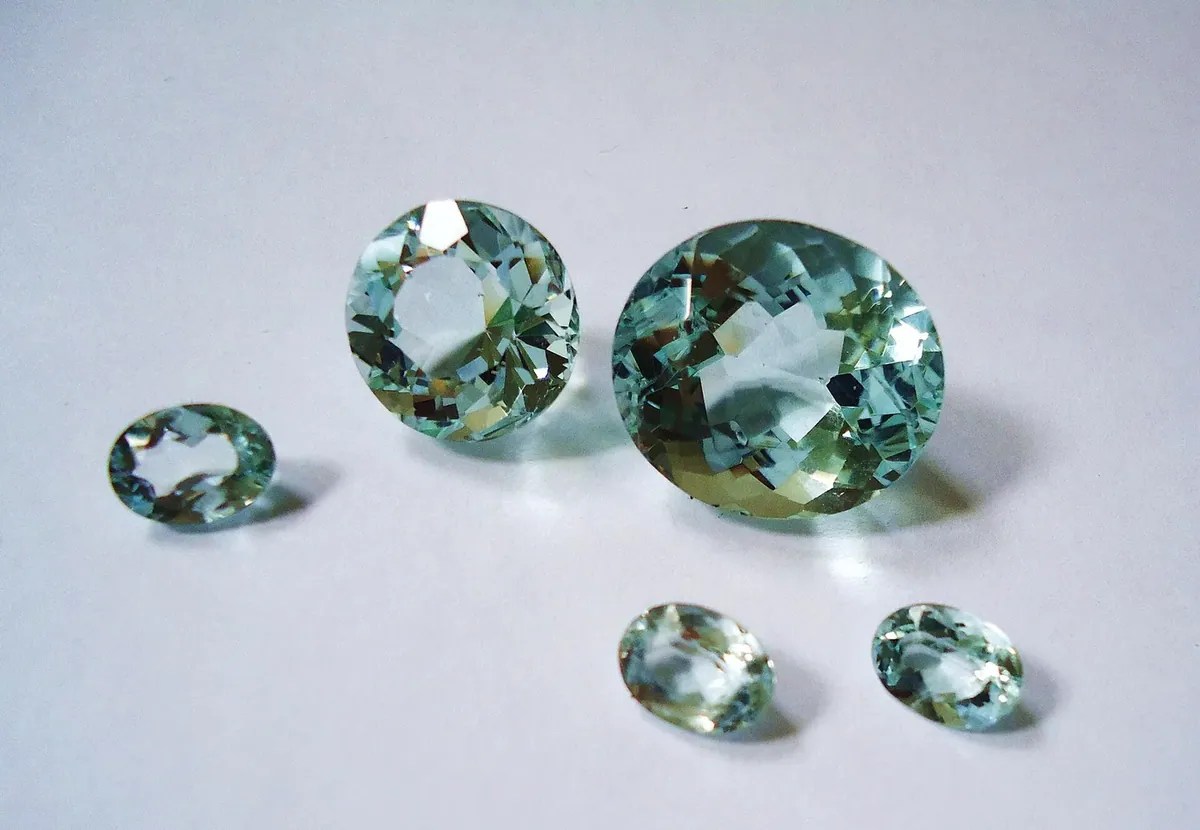
Colour – blue, greenish blueAquamarine is one of the best-known members of the beryl family. Stones in this group are known for their rich inclusions, and aquamarine gets its colour from iron. Without it, the stone would simply be colourless.
The name comes from Latin: aqua marina, seawater. The colour keeps the promise, from pale blue to greenish blue.
There are several varieties. Clear stone costs the most; included and semi-translucent material is far cheaper yet no less beautiful, which is why buyers get confused when aquamarine is described only as a transparent gem.
Origins
Brazil is the main supplier today. It is mined too in Australia, Pakistan, India, Kenya, Madagascar, Mozambique, Namibia, Nigeria, Zambia and Zimbabwe. Pakistani stone tends to be darker and more saturated, Brazilian lighter.
Properties
In ancient times various cultures believed aquamarine carried the energy of the ocean and brought its owner closer to nature. Sailors always carried it so the voyage would be safe. The old stories claim the stone changes colour before a storm.
It is said that aquamarine helps people overcome complexes and speak their mind freely. It is also used for concentration: according to esoteric practitioners it suits students and anyone who needs to focus on their work. It is said to calm people who are overly critical.
Traditional healing properties
Lithotherapists use aquamarine for throat conditions, for normal thyroid function and for liver problems. It is said to be good for people with allergies.
This describes traditional and alternative practice, not medical advice. A stone does not replace a doctor.
Chakras
Associated with the fifth chakra – vishuddha.
Which zodiac sign it belongs to
It is the stone of March, so it belongs to Aries first of all, and precisely because it cools the temperament of a fire sign.
It also suits Pisces and Gemini: for both it is a stone of communication. For Libra it helps hold the balance.
In Charcho jewellery
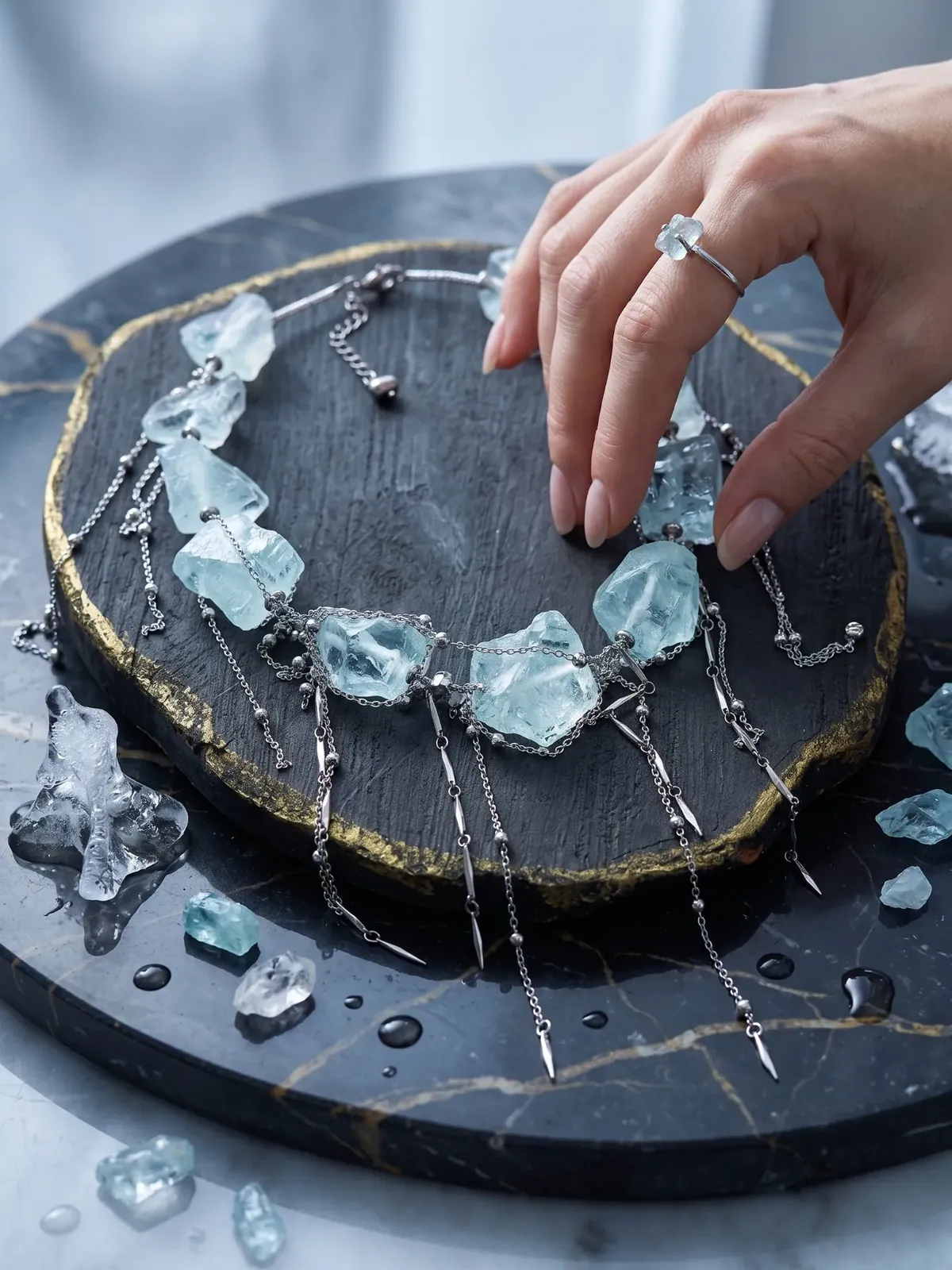
Our necklace is built from natural pale blue stones on a silver-toned frame. See the aquamarine necklace.
Real or fake
Aquamarine is often sold as "blue topaz", though the two are different stones. What to check:
- Natural colour is rarely perfectly even.
- The lustre is glassy and lively; glass and plastic reflect light flatly.
- The stone stays cool in the hand for a while.
- Inclusions and clouds are normal, and they are what makes it look natural.
- Price. Real aquamarine is not cheap.
Only a lab gives a final answer.
Care
The stone is tough, but three things damage it: long sun, ultrasonic cleaning and chemicals. A soft dry cloth after wearing is enough. Do not store it next to diamonds.
See also

Have an idea? We will make it.
Write or call us - together we will choose the material, colour and size, and make the piece to order.