 Free Delivery in Batumi


Blog
From the workshop: materials, care, gifts and the stories behind the pieces.
-
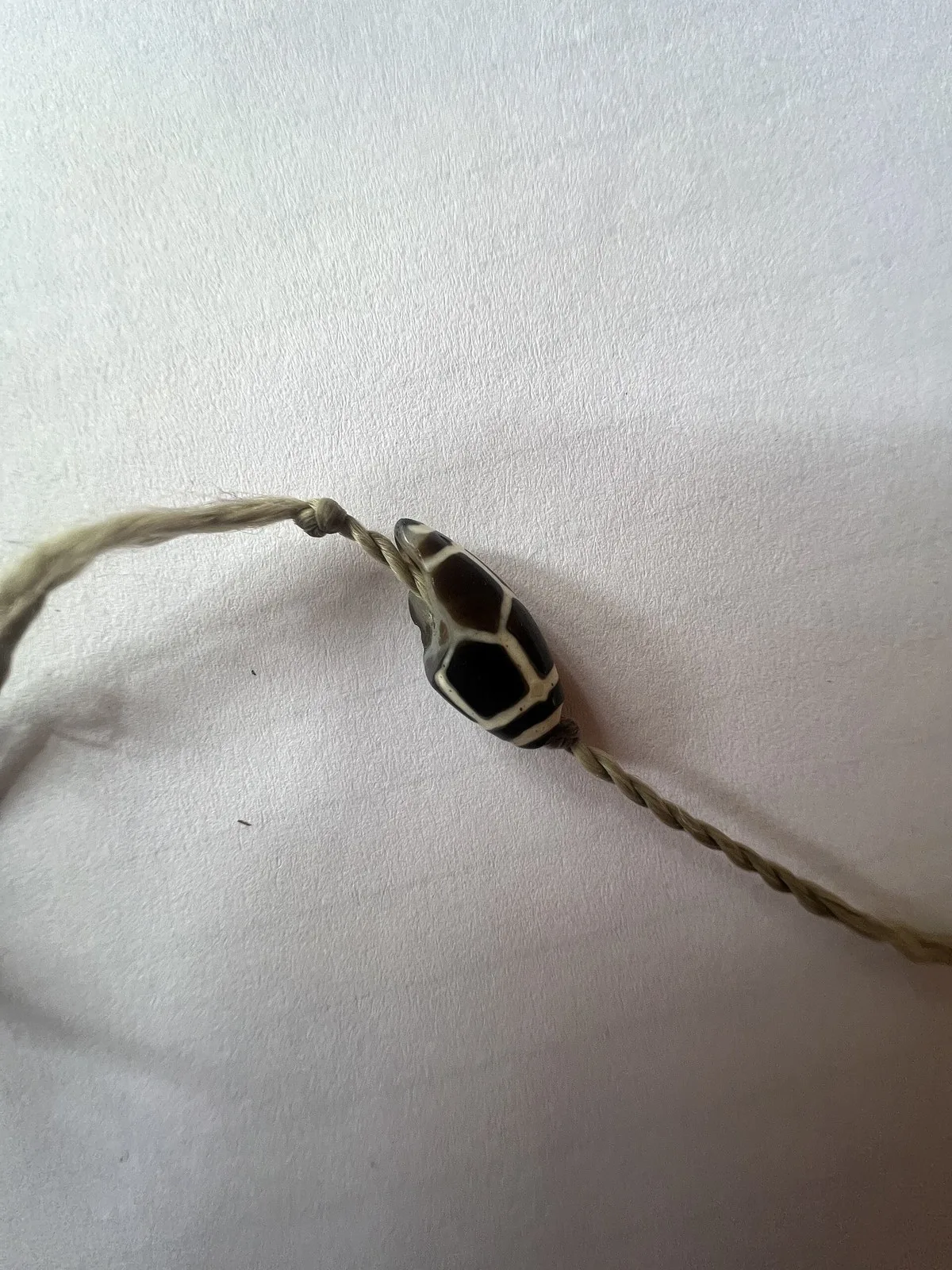
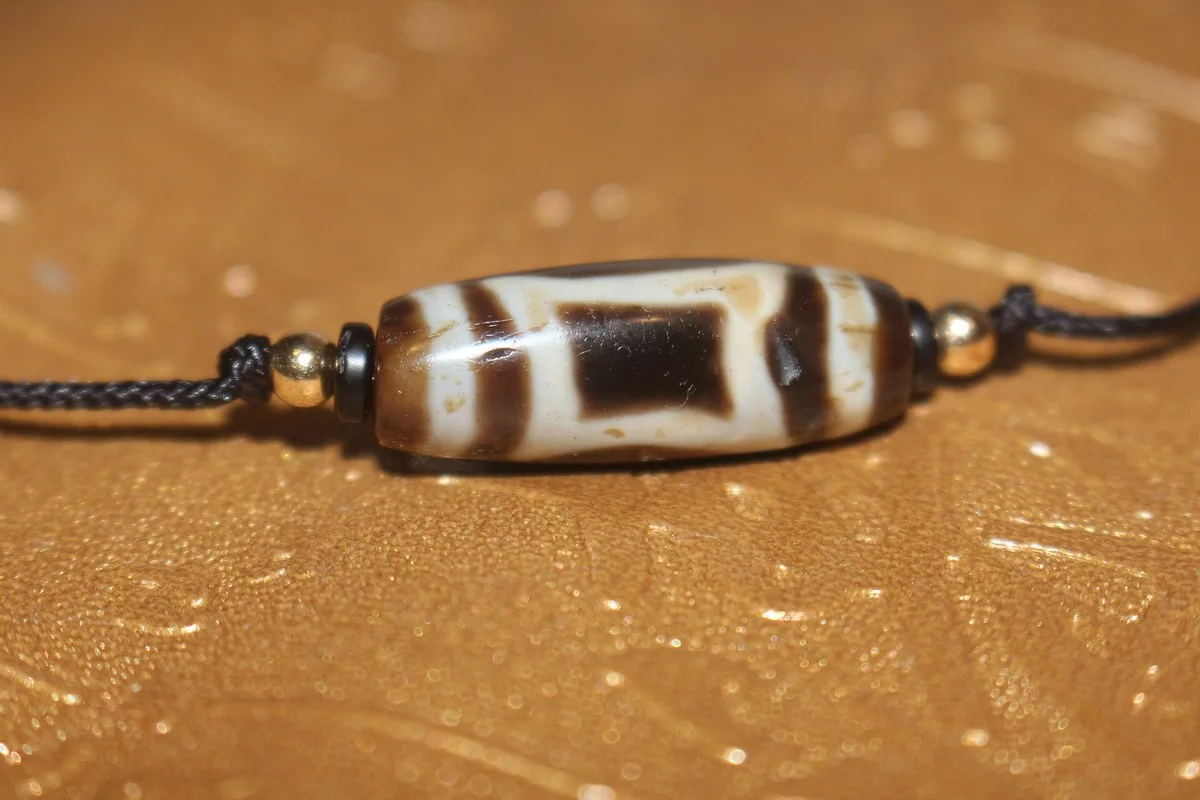
Dzi Agate – Tibetan Agate
Chemical formula – SiO₂
Hardness – 6.5–7
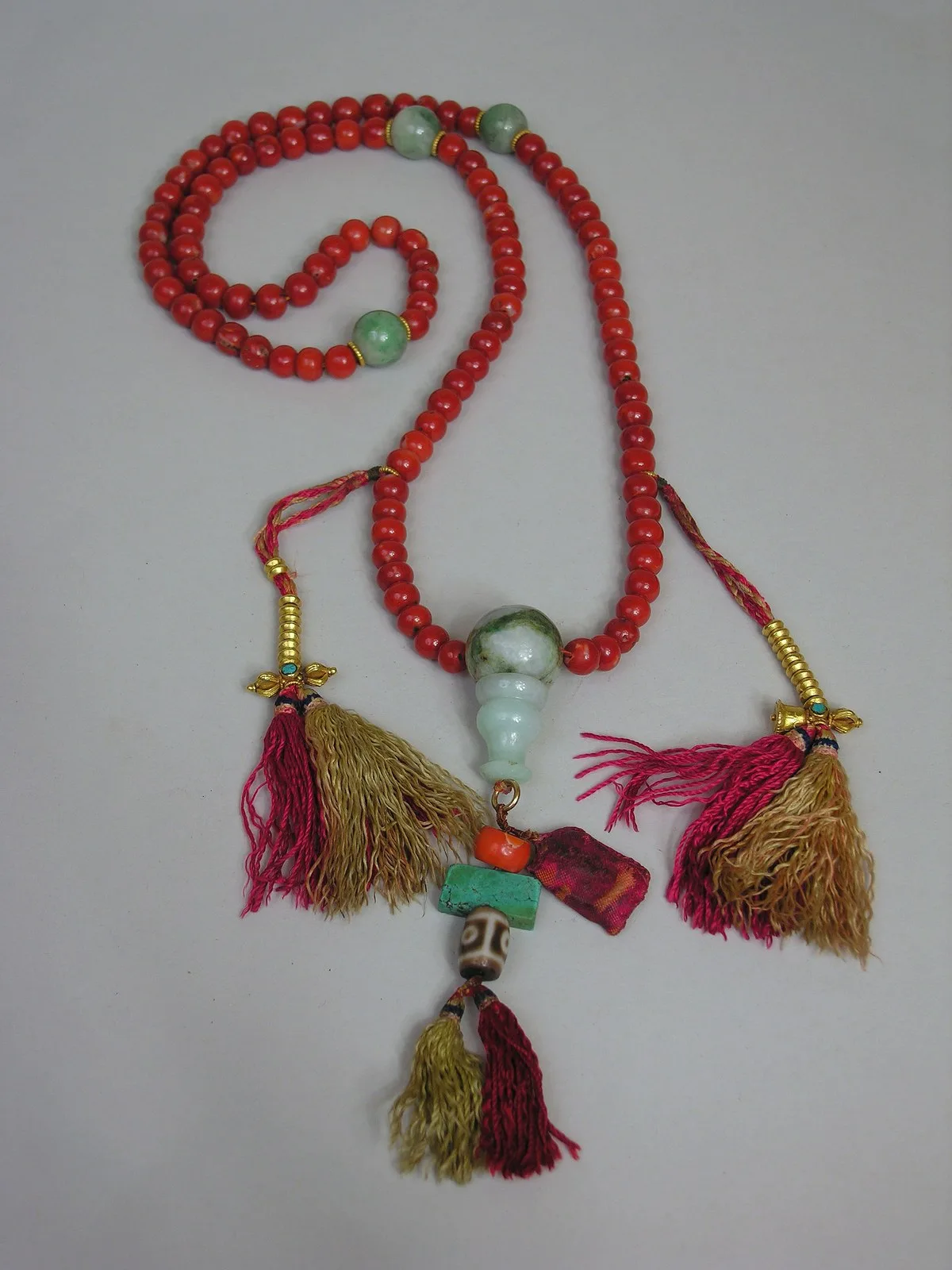
Colour – brown, white, black, reddishDzi agate is a stone from the chalcedony family, marked with eye-shaped patterns. In Tibetan "dzi" (pronounced "zee") means brightness and shine. Most people here wear it as an amulet — it works more as a talisman than as a crystal in the literal sense.
The history is murky. One version holds that dzi is not Tibetan at all: around 2000 BCE Tibetan soldiers campaigning in what is now Iran carried thousands of agate beads home. Tibetans took the stone as a guard against the evil eye and began making it themselves.
Old craftsmen drilled the stone with a flint shard, then etched the pattern with alkali: the lines were heated while animal fat, clay or wax protected the surrounding surface so it kept its colour. That is how white lines appear on a dark stone.
Origins
Old dzi were cut from Indian agate and carnelian. Today the rough comes from Brazil, Uruguay, Madagascar, India and China, while Idar-Oberstein in Germany has been the cutting centre since the 18th century.
Properties
Tradition gives each pattern its own meaning. One eye stands for light and the sun, and brings wisdom. Two eyes are tied to family happiness, three to luck and plenty, four to protection from the evil eye and unwanted company. Five eyes is counted a stone of power, nine — of luck, income and health. The nine-eye dzi is the most popular in Sakartvelo.
A twenty-one-eye dzi is said to grant wishes, and in Tibet the stone as a whole is treated as one of calm, harmony and spiritual balance.
Traditional healing properties
Lithotherapists usually tie dzi to circulation and general tone. It is said to help with fatigue and to bring the wearer back to a quieter state. This is the talisman's traditional role rather than a treatment.
This describes traditional practice, not medical advice. A stone does not replace a doctor.
Chakras
Tibetan dzi is linked to the first, root chakra – muladhara.
Zodiac
In the traditional list dzi belongs to Aries and Pisces. In practice it is treated as a universal amulet that suits any sign.
In Charcho jewellery
We do not have a ready-made dzi bracelet in the catalogue yet, but we make them to order — you choose the bead size and the number of eyes. Catalogue: bracelets.
Real or fake
- Modern dzi is not automatically a fake: agate really is etched with alkali and fired to produce the pattern. That is honest craft.
- On a real stone the lines are cut into the surface and sit at an almost even depth. On a plastic or resin copy the pattern is flat, as if painted on.
- "Antique" dzi is almost impossible to find on the market — originals sit with collectors. An expensive "old" stone usually turns out to be new.
Care
Agate is tough, but the fired surface dislikes abrasives. Warm water, a soft cloth and mild soap are enough. Acids, solvents and long sun exposure damage the colour.
See also
-
Garnet
Chemical formula – X₃Y₂(SiO₄)₃
Hardness – 6.5–7.5
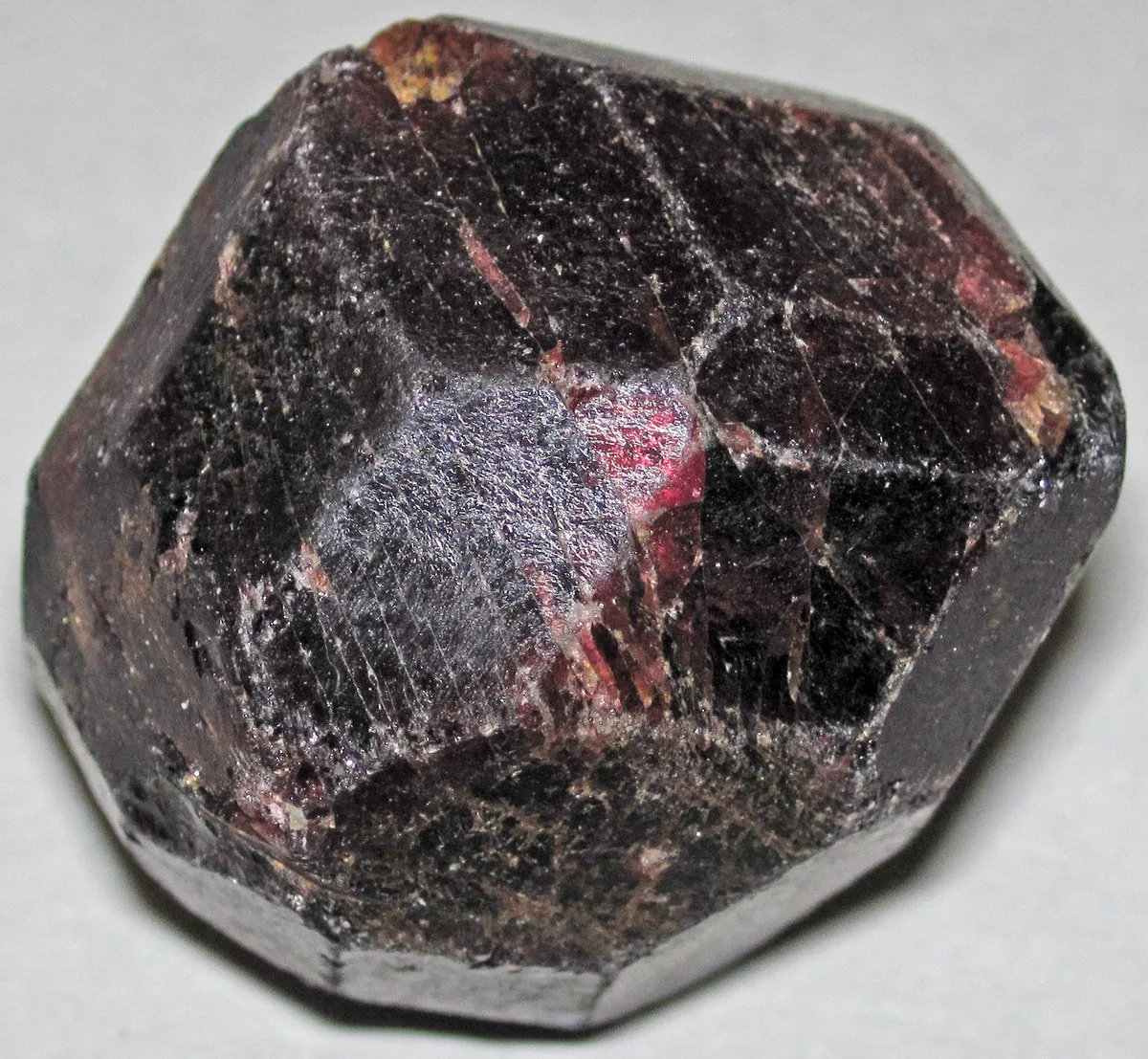
Colour – red, green, yellow, carrot, violetGarnet is a group of minerals rather than a single stone. The name comes from the Latin "granatum", pomegranate, because the red crystals were compared to the seeds of the fruit. The group holds around twenty species today, but six matter most: pyrope, almandine, spessartine, grossular, andradite and uvarovite.
We are used to red garnet, yet in nature it comes in almost any colour. Green garnet is known as tsavorite, pale green andradite as demantoid. Blue garnet, which shifts shade with the light, was found in Madagascar only in 1990 and remains the rarest of all.
Red garnet has a history measured in millennia: Egyptians used it as a decorative and ceremonial stone, and the Romans wore it as a protective talisman.
Origins
Garnet is mined all over the world. The largest suppliers are China, Madagascar, Sri Lanka, Brazil, India, Thailand, the USA, Kenya, Namibia and South Africa. Kenya and Tanzania are the main sources of tsavorite.
Properties
Tradition calls garnet the stone of regeneration and energy. It was said to restore strength and revive the whole body. Esoteric writers hold that it settles the mind and helps keep calm in the daily rush.
In ancient Greece garnet was counted a particularly strong guard against the evil eye. It is said to help the wearer find the right road, draw money and bring creative energy back.
Traditional healing properties
Lithotherapists call garnet the stone of health and mostly tie it to blood and heart. It is said to benefit the bones, cell renewal and immunity, as well as physical strength and skin.
This describes traditional practice, not medical advice. A stone does not replace a doctor.
Chakras
Red garnet is linked to the first, root chakra – muladhara, green — to the fourth, heart chakra – anahata, and yellowish — to the third, solar plexus chakra – manipura.
Zodiac
In the traditional list garnet belongs first of all to Aries. It also suits Leo, Taurus and Capricorn, signs known for stamina and resolve.
In Charcho jewellery
We do not have a ready-made piece in garnet in the catalogue yet, but we make them to order — you choose the bead size and shade. Catalogue: necklaces.
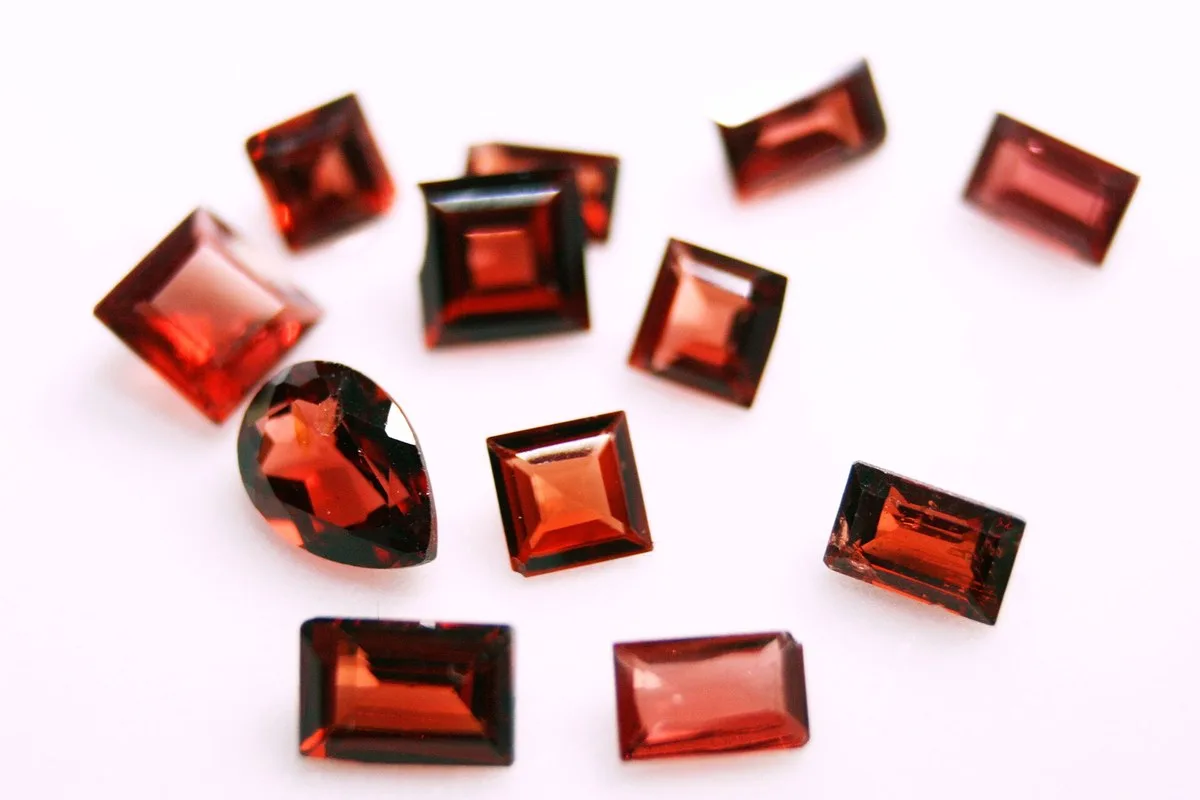
Real or fake
- Garnet is often replaced by basalt glass or dyed quartz. Glass shows bubbles and a colour that is too even; a natural stone has inclusions and shifts of tone.
- Garnet is isotropic: the colour does not change as you turn it. Pleochroism, different colours from different angles, points to another mineral.
- Garnet is heavy for its size — a small stone sits surprisingly solid in the hand. A light "garnet" should make you suspicious.
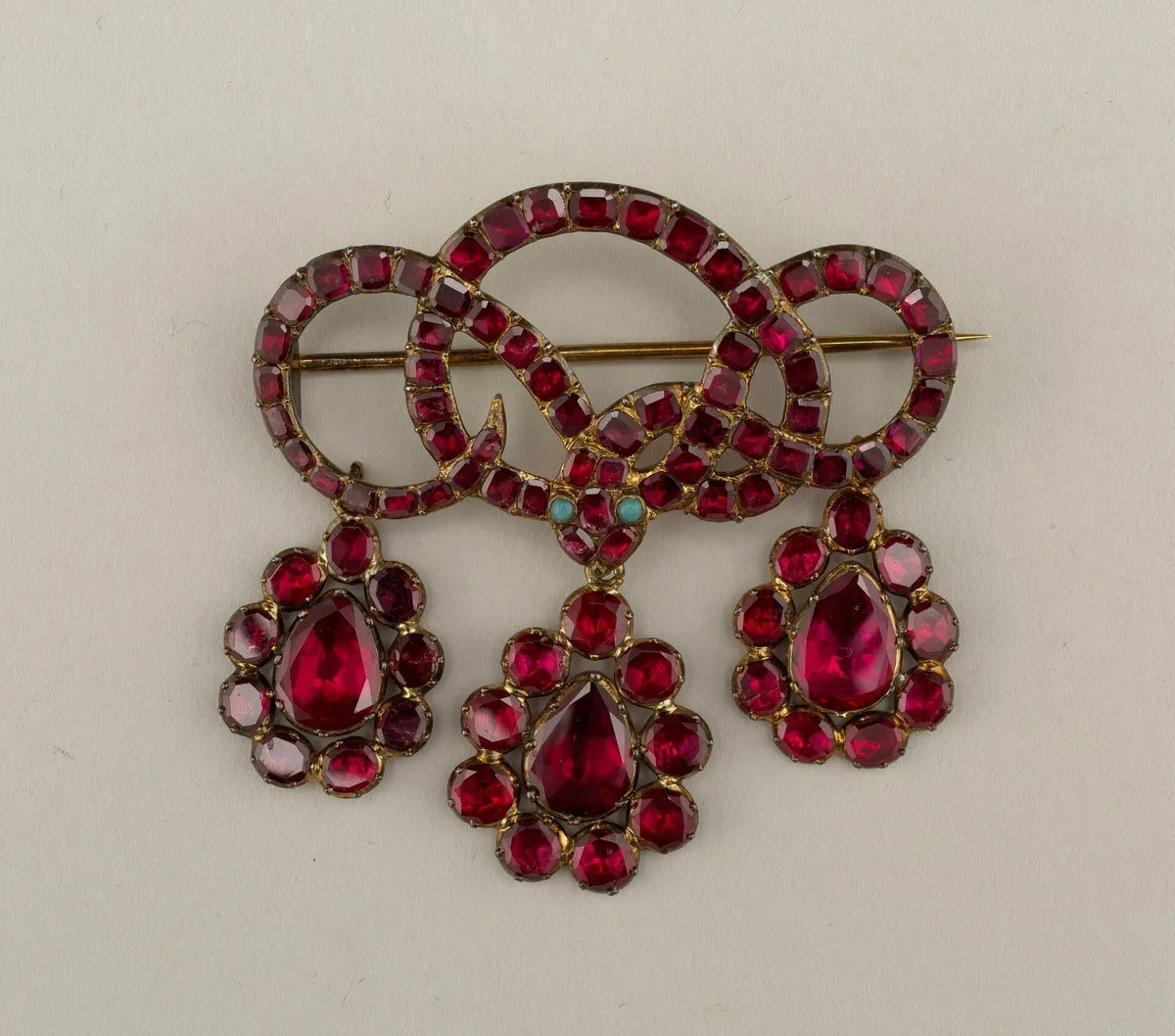
Care
Hardness is enough for daily wear, but some species are brittle and crack with a sudden change of temperature. Warm water, a soft cloth and mild soap are enough. A stone with fractures does not need the ultrasonic.
See also
-
Bull
Chemical formula – SiO₂
Hardness – 6.5–7
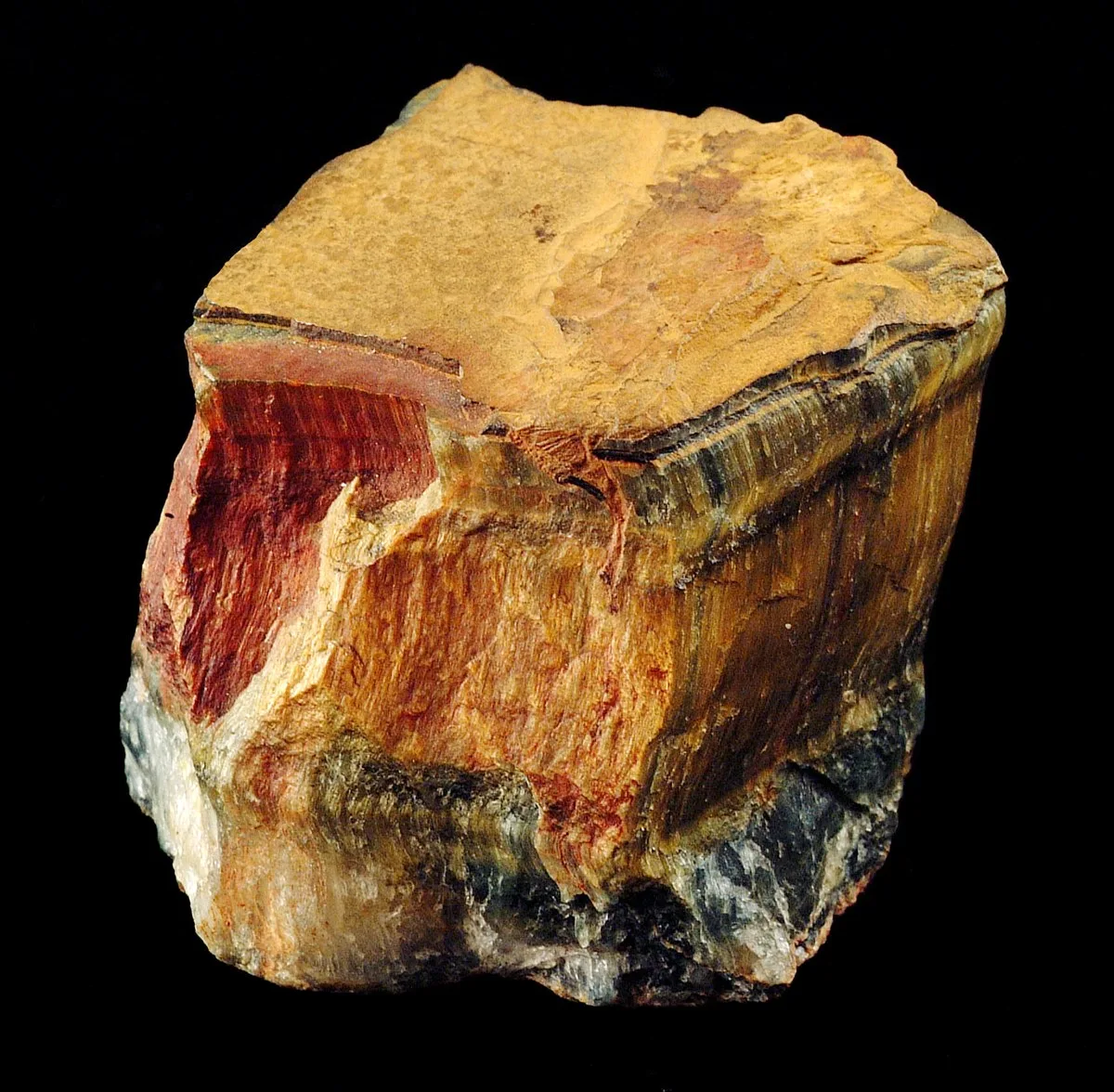
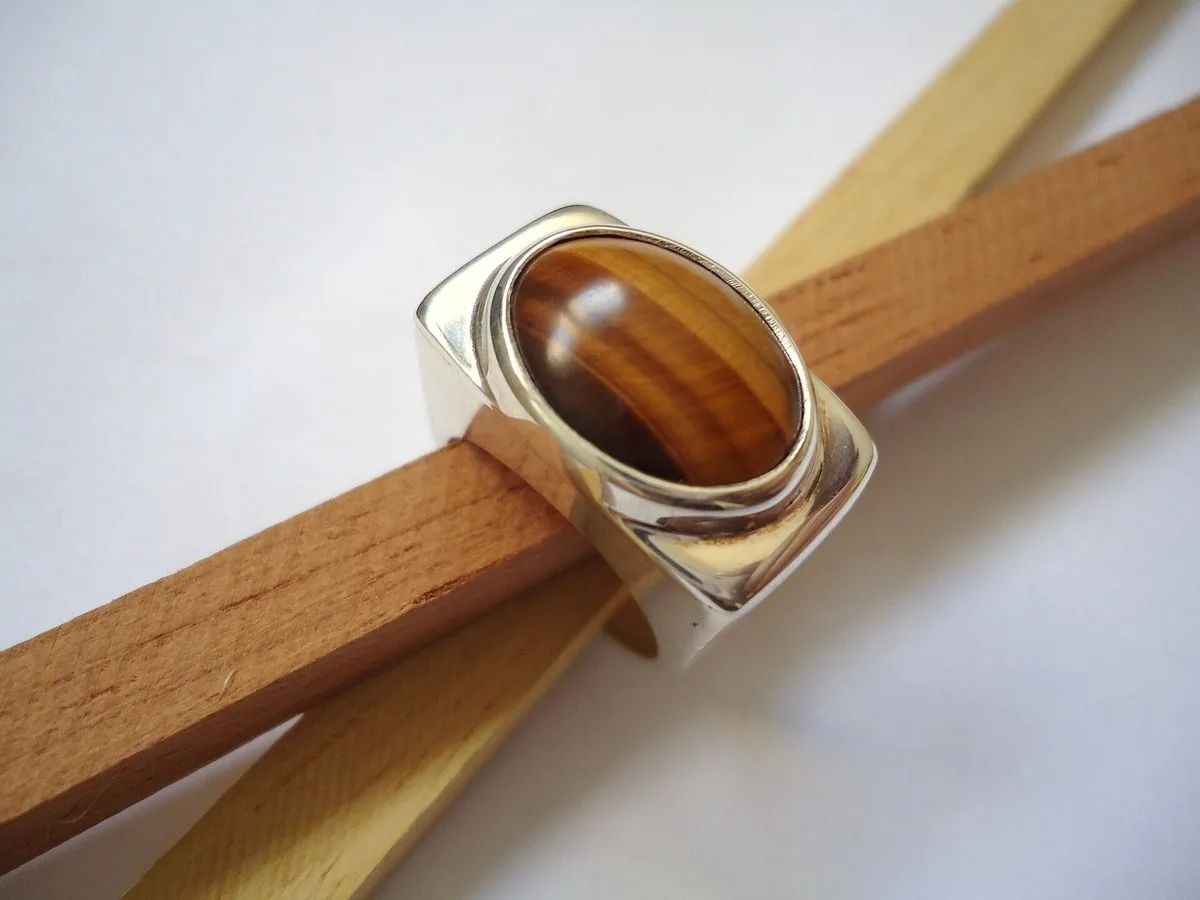
Colour – dark brown, reddishBull's eye is the brownish-red variety of fibrous microcrystalline quartz. It is a pseudomorph after crocidolite: a mineral of the asbestos family once sat there, and quartz and iron oxide later took its place while keeping the fibrous structure intact.
Those fibres produce the cat's-eye effect — a narrow band of light that slides across the surface. Bull's eye is one of the tiger's-eye variants; the third relative is hawk's eye, which comes in blue-grey. Next to golden tiger's eye, bull's eye is far rarer.
The trade also calls it dragon's eye, red tiger's eye and fire tiger's eye. When the stone carries natural hematite inclusions it is sold as "iron bull's eye", and such pieces usually lose the cat's-eye effect altogether.
Origins
Bull's eye, like tiger's eye, is mined in many places. Thailand and South Africa are the two largest suppliers. It also comes from Australia, Brazil, Canada, China, India, Korea, Myanmar, Namibia and Spain.
Properties
Esoteric writers say tiger's eye and bull's eye share their qualities with one difference: tiger's eye is tied to the solar plexus chakra, bull's eye to the root and solar plexus chakras, which makes it the calmer of the two.
The stone is believed to strengthen self-esteem, willpower, imagination, creativity and patience. Tradition treats bull's eye as a symbol of purpose, inner energy, passion and physical strength. Like every tiger's-eye variety, it is counted a strong protective amulet.
Traditional healing properties
Lithotherapists hold that bull's eye helps with joint inflammation, a weak heart, depression and constant fatigue. Traditionally it is also used to prevent women's complaints.
This describes traditional practice, not medical advice. A stone does not replace a doctor.
Chakras
Bull's eye is linked to the first, root chakra – muladhara, and the third, solar plexus chakra – manipura.
Zodiac
Astrologers say bull's eye suits anyone, especially worn in rotation with other stones. It sits best with the fire signs — Aries, Leo and Sagittarius.
In Charcho jewellery
We do not have a ready-made piece in bull's eye in the catalogue yet, but we make them to order — you choose the bead size and bracelet length. Catalogue: bracelets.
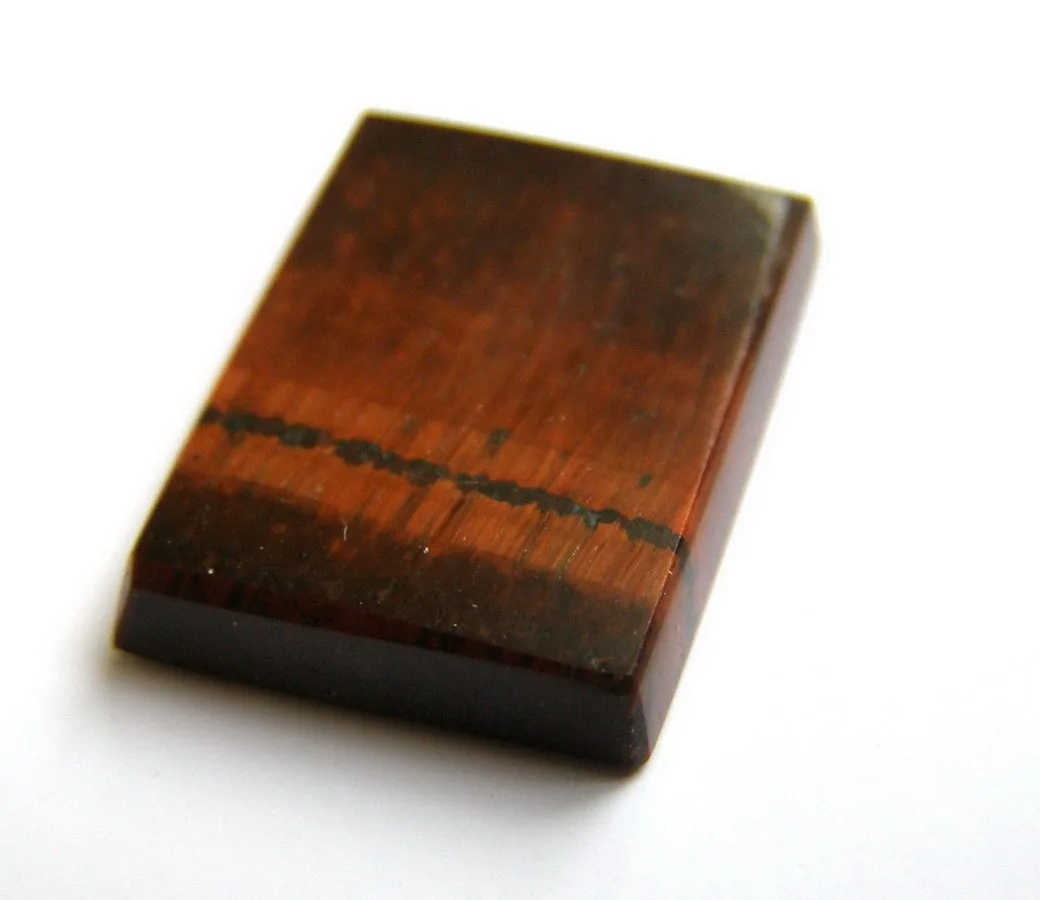
Real or fake
- Dyed and heat-treated pieces are common. A natural stone keeps a muted, dark tone; a dyed one is always brighter and looks unnatural.
- The fibre structure of a natural stone is uneven: the band of light moves and breaks in places. In a glass imitation the band is too clean and too straight.
- "Iron bull's eye" often lacks the sheen because of hematite inclusions — that is a natural piece rather than a flaw, but it also costs less.
Care
The fibrous build makes the stone sensitive to knocks and scratches. Warm water, a soft cloth and mild soap are enough; it dislikes long soaking and ultrasonic cleaning.
See also
-
Zircon
Chemical formula – ZrSiO₄
Hardness – 6.5–7.5
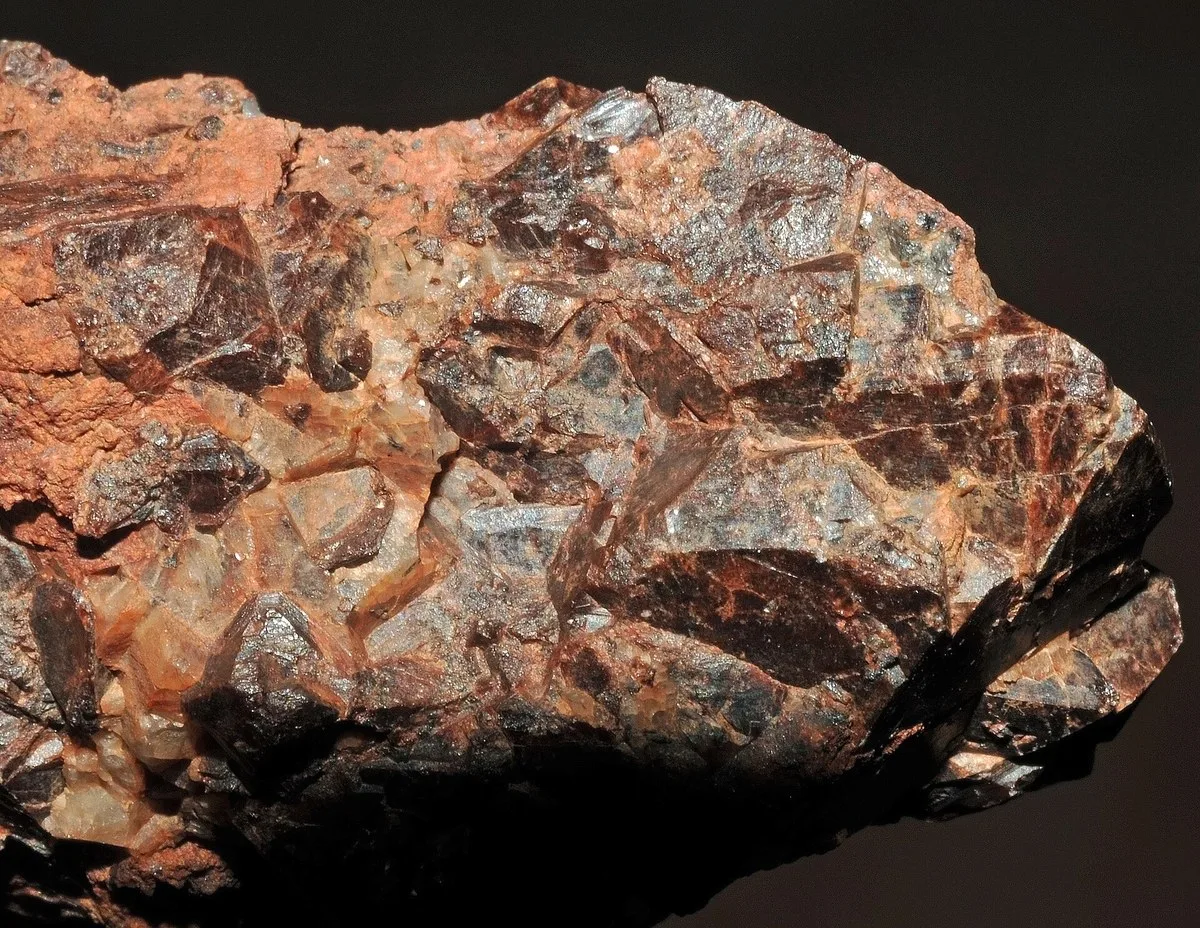
Colour – colourless, blue, yellow, green, red, brownZircon is zirconium silicate and one of the oldest minerals ever found on Earth: grains from the Jack Hills in Australia date back as far as 4.4 billion years. Geologists still study them to reconstruct the planet's early history.
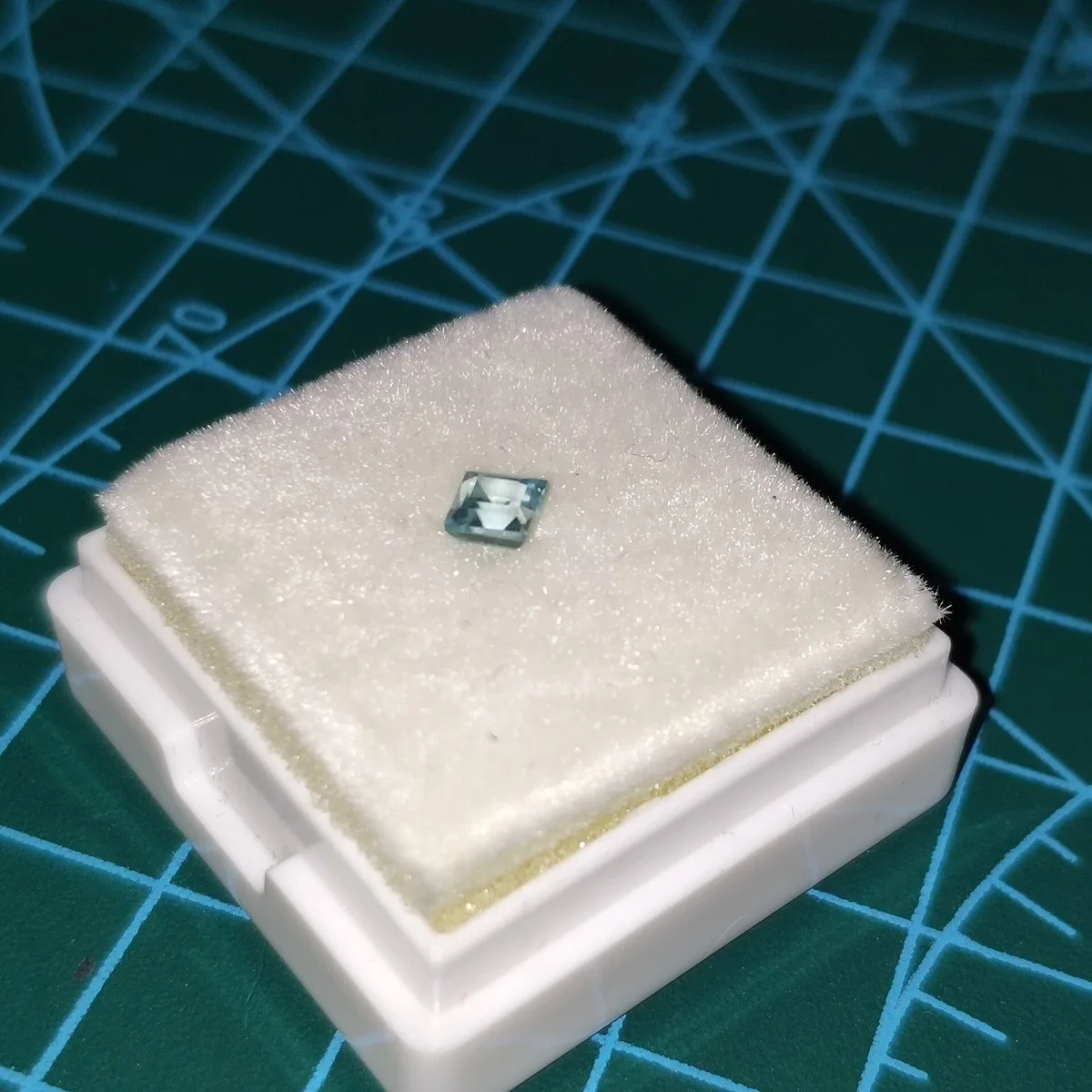
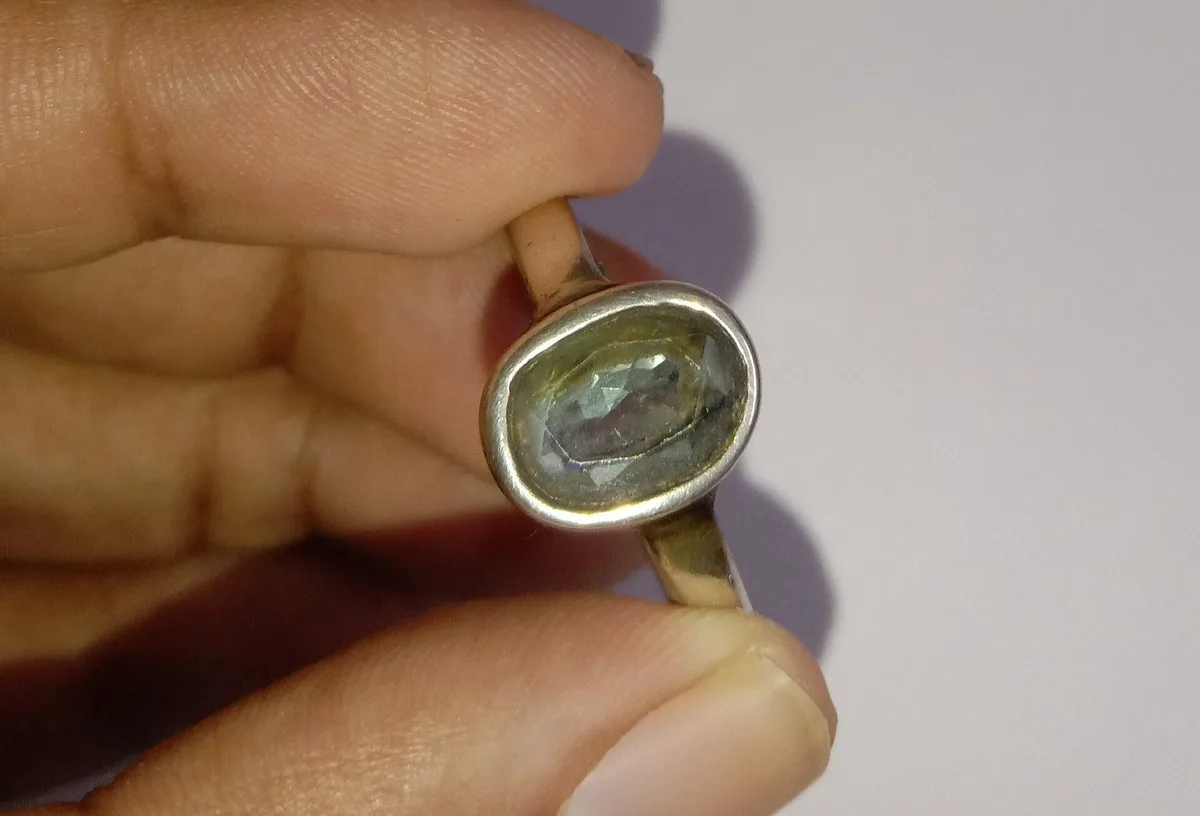
In jewellery zircon appears colourless, blue, yellow, green, red and brown. Colourless is the most common and the cheapest; blue is the market favourite, and that colour is almost always produced by heat treatment. The trade sorts zircon into three grades — low, medium and high — and price follows the grade, so two stones of the same size can differ several times over.
The name comes from the Persian "zargun", meaning golden, which was the word for the yellow stones. Zircon is often confused with synthetic diamond, although it is a natural mineral with nothing in common with anything grown in a lab.
Origins
Sri Lanka is the best-known supplier. Zircon is also mined in Cambodia, Myanmar, Brazil, Madagascar, Tanzania, Thailand, Vietnam, Nigeria and Korea. Cambodian and Sri Lankan stones are valued for the purity of their colour.
Properties
Tradition calls zircon the stone of happiness. It is said to shield the wearer from negativity and to keep the mood buoyant. Esoteric writers often recommend it to someone in low spirits, believing the stone gives back a love of life. Colour shifts these qualities, but not sharply.
Traditional healing properties
Lithotherapists link zircon with the thyroid gland. It is said to support the liver and help balance hormones. Traditionally it is also credited with restoring energy and toning the whole body.
This describes traditional practice, not medical advice. A stone does not replace a doctor.
Chakras
The chakra depends on colour: colourless — the seventh, sahasrara, reddish — the first, muladhara, blue — the fifth, vishuddha, green — the fourth, anahata.
Zodiac
In the traditional list zircon belongs to Leo. It also suits Sagittarius and Aries, whose energetic nature matches the stone's brightness.
In Charcho jewellery
We do not have a ready-made piece with zircon in the catalogue yet, but we make them to order — you choose the size, colour and cut. Catalogue: rings.
Real or fake
- Zircon and cubic zirconia are different materials. Cubic zirconia is grown in a lab and is a cheap stand-in for diamond.
- Natural zircon is doubly refractive: seen from the side, the edges inside appear doubled. Cubic zirconia shows no such effect.
- Zircon's facet edges wear and round off over the years, while fresh cubic zirconia keeps a sharp edge.
Care
Hardness is enough for daily wear, but zircon is brittle and a knock can chip the edge. Warm water, a soft cloth and mild soap are enough. Skip the ultrasonic and the steam.
See also
-
Zoisite – Anyolite
Chemical formula – Ca₂Al₃(SiO₄)₃(OH)
Hardness – 6.5–7
Colour – green, reddish, with black inclusionsZoisite was found in 1805 in Austria, in the Saualpe mountains. A mineral dealer, Simon Prešern, brought the unfamiliar stone to the mineralogist Sigmund Zois, who first called it saualpite; it was later renamed in his honour. The discovery drew little notice at the time — interest arrived only in 1967, when the rarest variety of zoisite, tanzanite, was found in Tanzania.
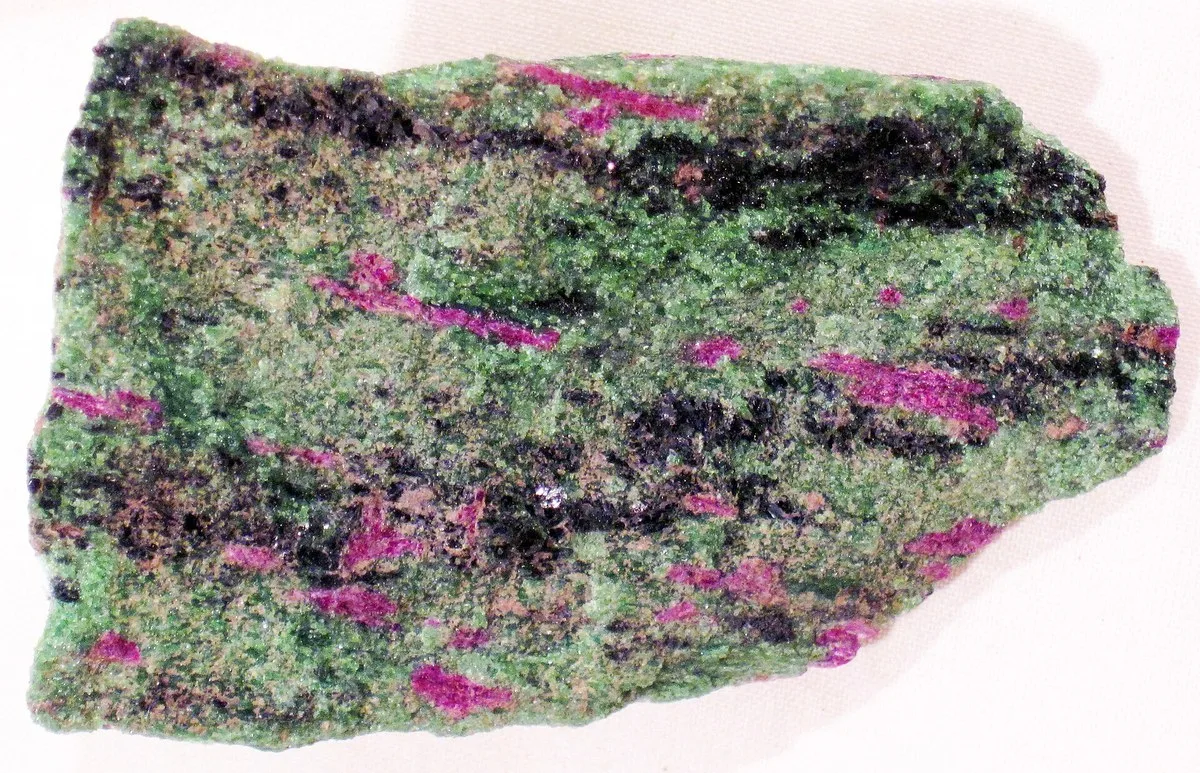
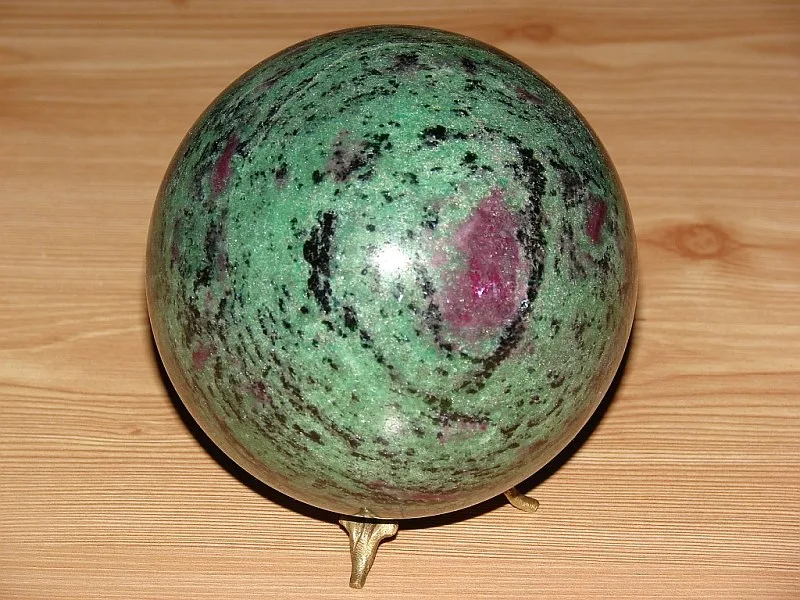
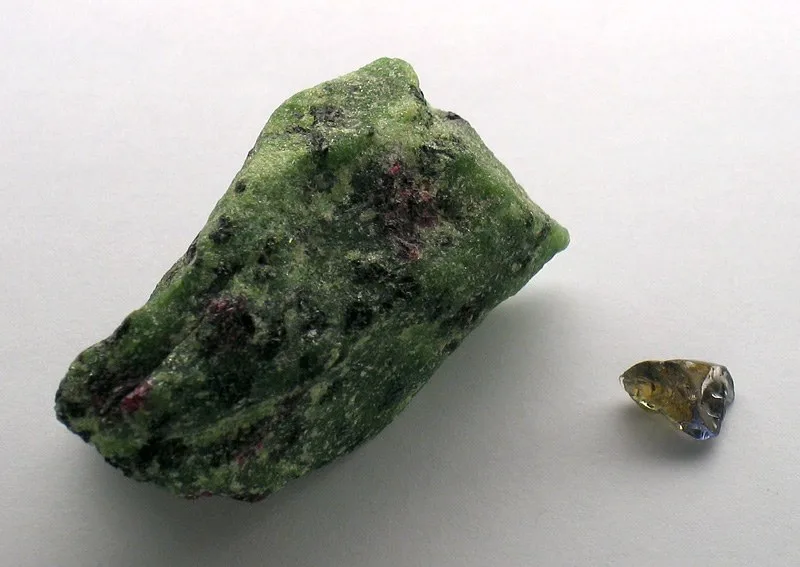
The zoisite family holds three minerals: tanzanite, thulite and anyolite. Anyolite is an intergrowth of two natural stones, green zoisite and ruby crystals, which is why it is called "ruby in zoisite". The name comes from the Maasai language and means green. Tom Blevins found the stone in Tanzania in the 1950s, convinced he had stumbled on a ruby deposit; the rock turned out to be both minerals at once.
Colour and density vary from piece to piece: zoisite runs from pale to deep green, the ruby from faint pink to rich red. That contrast is what makes anyolite easy to recognise.
Origins
Zoisite and its varieties are mined in Tanzania, the USA, Norway, Russia, Pakistan, Namibia, Austria, China and Czechia. Tanzania is the main source of anyolite.
Properties
Esoteric writers say ruby in zoisite fills the body with energy and sharpens the wearer's sense of purpose. The stone is believed to draw joy and warm feeling into daily life. Green zoisite is often called the stone of luck.
It is said to help mend family relationships, find love and uncover hidden talents. Tradition recommends zoisite especially to people who work creatively.
Traditional healing properties
Lithotherapists use ruby in zoisite for heart-related complaints. It is said to steady metabolism and support blood and lymph circulation.
This describes traditional practice, not medical advice. A stone does not replace a doctor.
Chakras
Zoisite and anyolite are linked to the fourth, heart chakra – anahata.
Zodiac
Zoisite has no fixed place in the traditional zodiac list. By character it is tied to Taurus and Libra, signs that carry the heart theme and a feel for beauty. Other signs can wear it just as well.
In Charcho jewellery
We do not have a ready-made piece in anyolite or zoisite in the catalogue yet, but we make them to order — you choose the shape and size of the stone. Catalogue: necklaces.
Real or fake
- Dyed zoisite is common. Dye collects in cracks, so the colour is darker inside a groove than on the surface.
- In anyolite the ruby should be natural corundum — reddish, often with black patches of hornblende. A glued or inserted "ruby" is a warning sign.
- Cheap tanzanite substitutes are glass and synthetic stones; real tanzanite shows three different shades from three angles.
Care
Anyolite often carries many fractures, so skip the ultrasonic and the steam. Warm water, a soft cloth and mild soap are enough. Long sun and high heat damage the colour.
See also
-
Hawk
Chemical formula – SiO₂
Hardness – 6.5–7
Colour – blue, bluish, greyish, dark blueHawk's eye is the fibrous, microcrystalline quartz in a grey-blue tone. It is also called a pseudomorph: asbestos fibres once occupied the space, quartz gradually replaced them and kept the shape.
It is one of the variations of tiger's eye; the same family includes bull's eye, which comes in a reddish brown. In everyday speech hawk's eye is often sold as blue tiger's eye.
Compared with the golden tiger's eye, this stone is far rarer, which is why the market is full of dyed and toned versions. Real hawk's eye is much more subdued and dark, while the dyed material is always brighter and unnaturally coloured.
Origins
Like tiger's eye, hawk's eye is mined in many places. Thailand and Africa are the two largest suppliers; the stone also comes from Australia, Brazil, Canada, China, India, Korea, Myanmar, Namibia and Spain.
Properties
Esoteric writers say hawk's eye is often used in meditation because it helps gather concentration. That is why you will often see it in the hands of students, teachers, researchers, scientists and creative people.
Tiger's eye and hawk's eye share their properties with one difference: tiger's eye is tied to the solar plexus chakra, hawk's eye to the throat and root chakras, which makes it a stone of communication and focus.
It is also described as a stone of emotional and physical balance that helps its owner cope with stress, nervousness, restlessness and agitation.
Traditional healing properties
Lithotherapists consider hawk's eye good for balancing metabolism, for vision problems, for preventing inflammation and for recovery after illness.
This describes traditional practice, not medical advice. A stone does not replace a doctor.
Chakras
Hawk's eye is linked to the throat chakra – vishuddha, and the root chakra – muladhara.
Zodiac
Astrologers say anyone can wear it, alternating with other stones. It suits Sagittarius and Capricorn especially well.
In Charcho jewellery
We do not have a ready-made piece in the catalogue yet, but we make them to order — you choose the bead size and shade. Catalogue: necklaces.
Real or fake
- The usual problem is toning: ordinary tiger's eye dyed blue. Real hawk's eye is dark and grey-blue, not bright.
- Dye gathers in cracks and between the fibres, so a loupe shows dark streaks.
- On a natural stone the cat's-eye band moves smoothly as you turn it and stays on the surface. A painted or printed line does not move.
- Glass imitations are far glossier and have no fibrous texture.
Care
Hardness 6.5–7 allows daily wear, but the fibrous structure is sensitive to knocks. Soaking is not worth the risk, especially if the stone has been toned. It needs no ultrasonic or steam; a soft, slightly damp cloth is enough.
See also
-
Charoite
Chemical formula – K(Ca,Na)₂Si₄O₁₀(OH,F)·H₂O
Hardness – 4.5–5
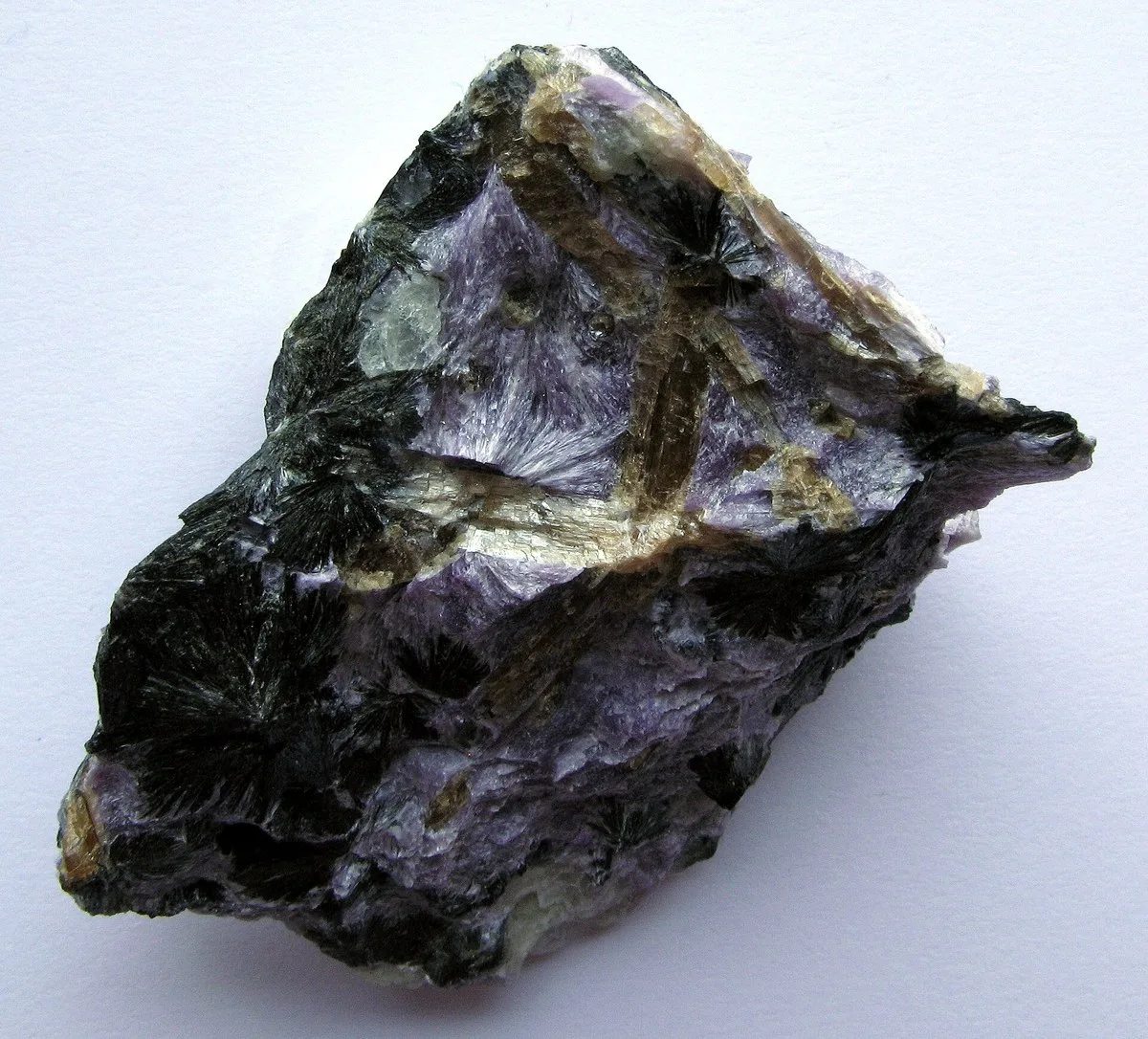
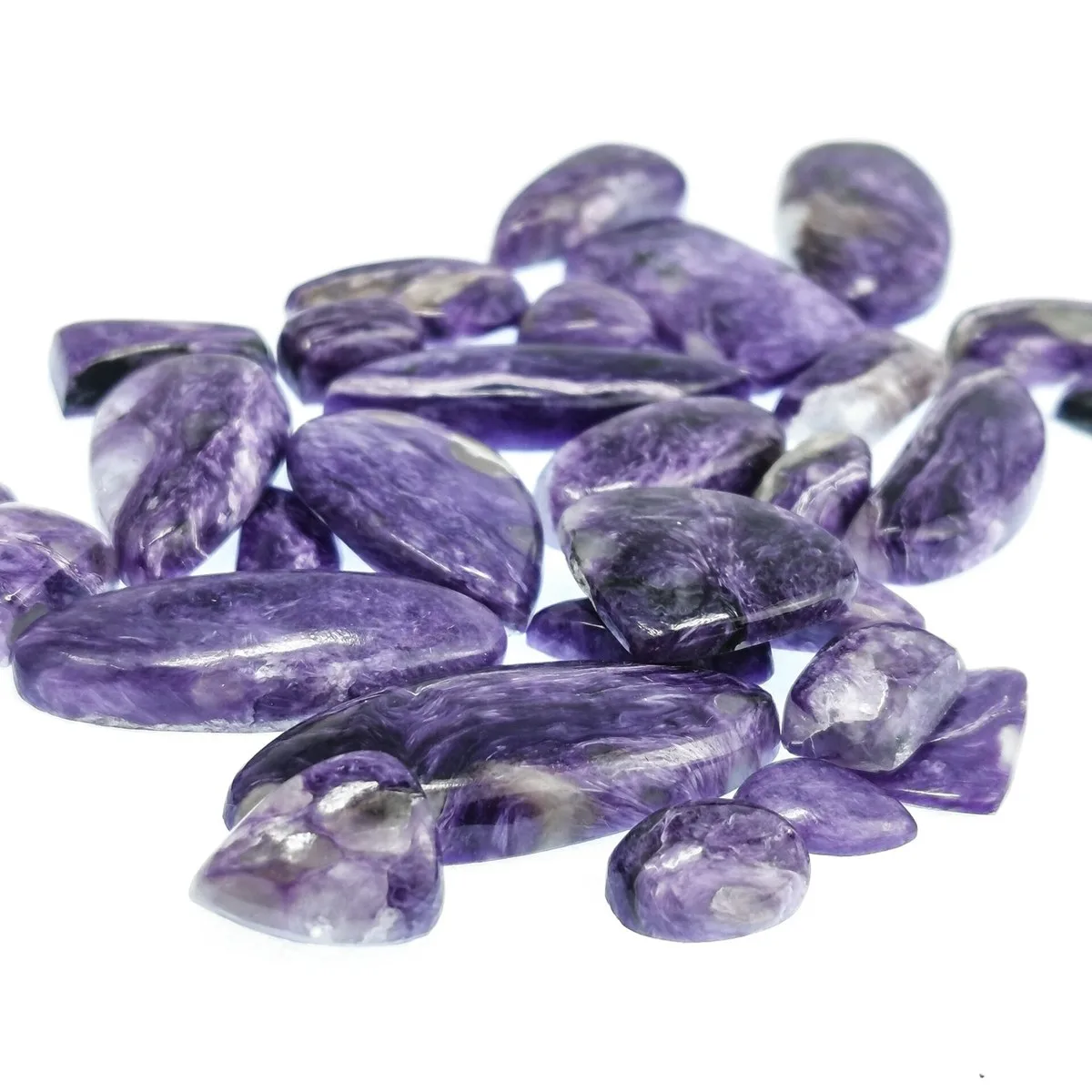
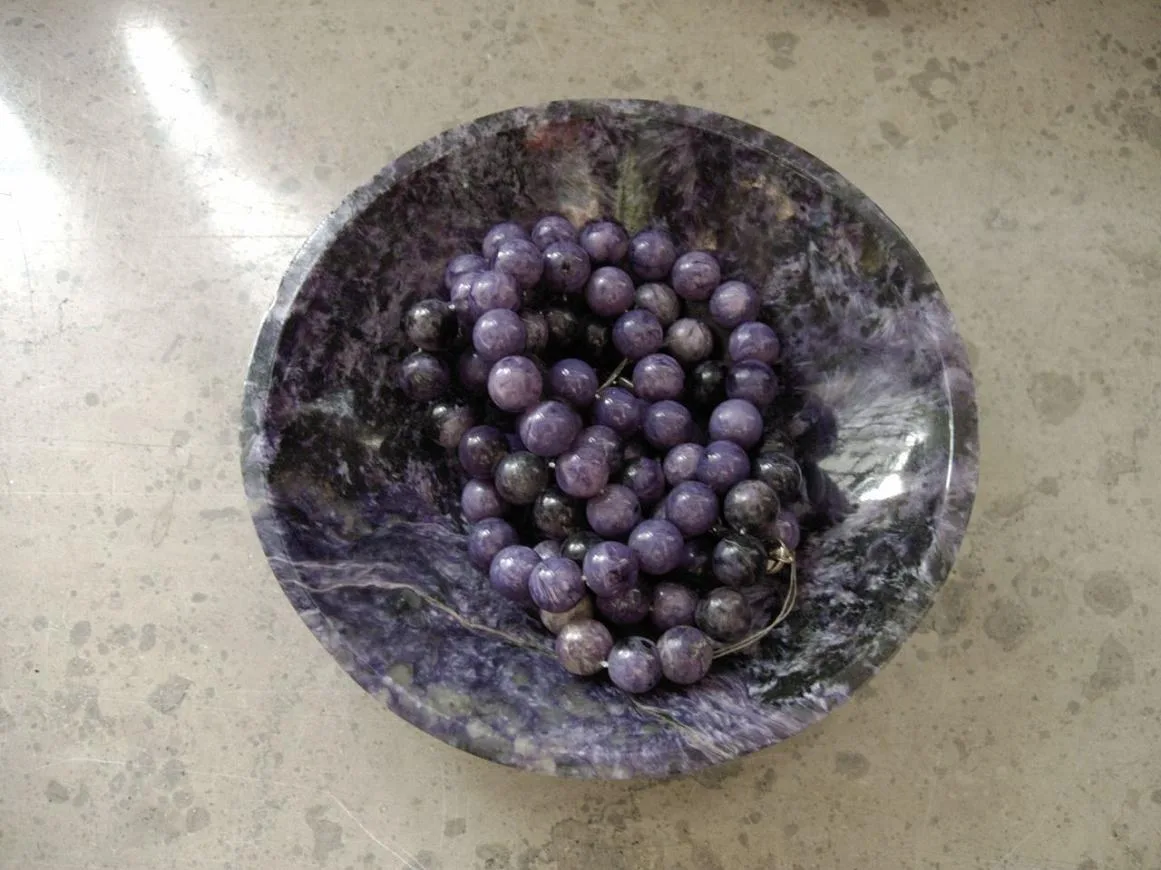
Colour – lilac, violet, greyCharoite is a silicate of complicated composition. It was found in the 1940s but only formally described in 1978, which makes it a relatively new stone for gemmologists. Its signatures are a vivid violet colour and a fibrous, swirling pattern: lilac, violet and grey drift into one another inside a single piece.
The name comes from the Chara River in Siberia. Charoite is mined in only one region in the world — the Murun massif in Yakutia — and that deposit is still the only commercial source. Some sources mention China and Serbia, but Russian stone dominates the market, which is why charoite is expensive.
Price follows the pattern. Sharp, contrasting swirls and clean violet cost the most; grey, even-toned pieces cost little.
Origins
Yakutia, Siberia — the only commercial deposit. The stone forms in an iron ore massif alongside calcite and tinaksite, so natural pieces often carry inclusions of other minerals.
Properties
Esoteric writers call charoite the stone of transformation and say it can convert energy. It is considered a stone of inspiration and creativity that supports spiritual growth.
It is said to help you find a way out of a dead end. People often call it the stone of correct vision, because it strengthens self-esteem and brings inner strength and courage.
Traditional healing properties
Lithotherapists link charoite to general recovery. It is said to help rebuild immunity after illness or surgery, and to be good for liver problems, heart and eye disease, and nervous strain.
This describes traditional practice, not medical advice. A stone does not replace a doctor.
Chakras
Charoite is linked to the third-eye chakra – ajna. Some practitioners also connect it with the heart chakra – anahata.
Zodiac
Tradition ties charoite to Scorpio and Sagittarius — signs that are at home with deep searching and transformation.
In Charcho jewellery
We do not have a ready-made piece in the catalogue yet, but we make them to order — you choose the shape and size of the stone. Catalogue: necklaces.
Real or fake
- The most common imitation is dyed quartzite. Real charoite has a fibrous pattern that curls naturally; in an imitation the colour is flatter and more even.
- Dye gathers in cracks, so a loupe shows dark lines.
- Charoite is soft (4.5–5), so a fingernail or a glass knife scratches it easily. If the "charoite" resists scratching, be suspicious.
- Plastic imitations warm up quickly in the hand and do not hold the natural chill.
Care
Hardness 4.5–5 means the stone is soft and will be damaged in a ring worn daily. No ultrasonic, no steam, no acids; warm water, mild soap and a soft cloth are enough. Store it on its own so that harder stones do not scratch the edges.
See also
-
Tsavorite
Chemical formula – Ca₃Al₂Si₃O₁₂
Hardness – 6.5–7.5
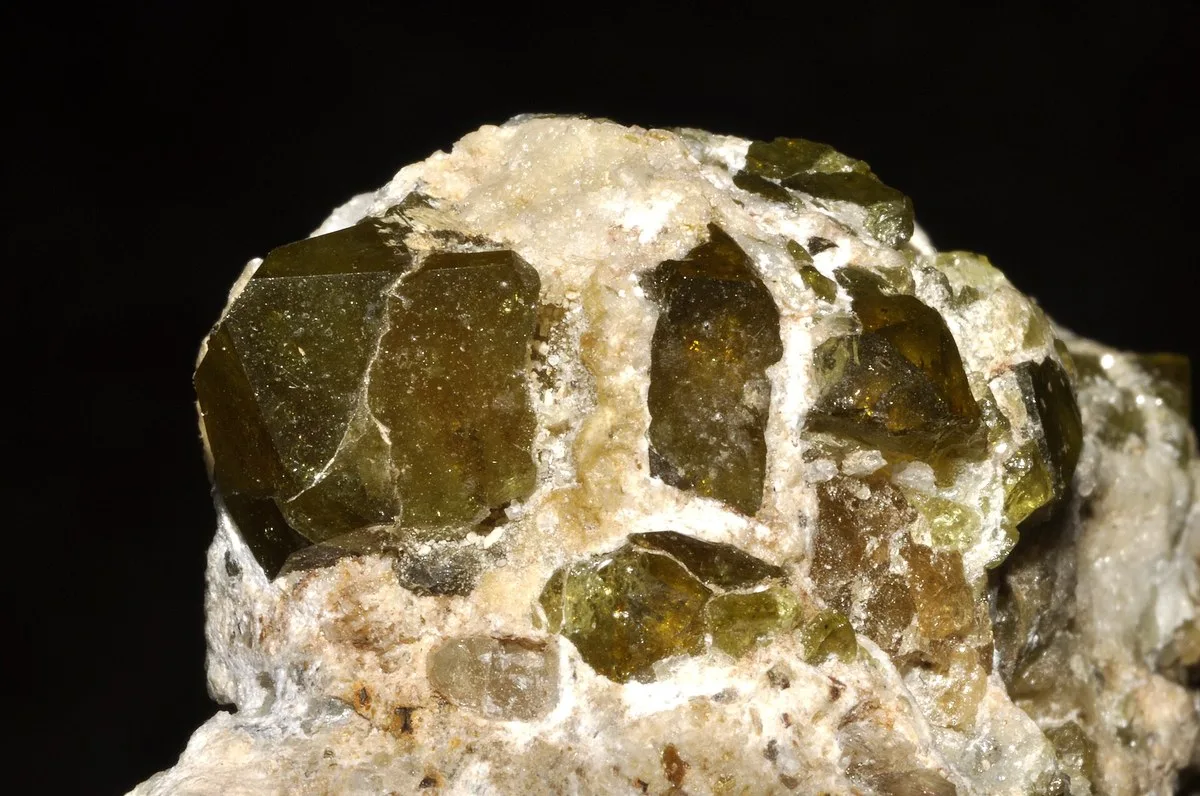
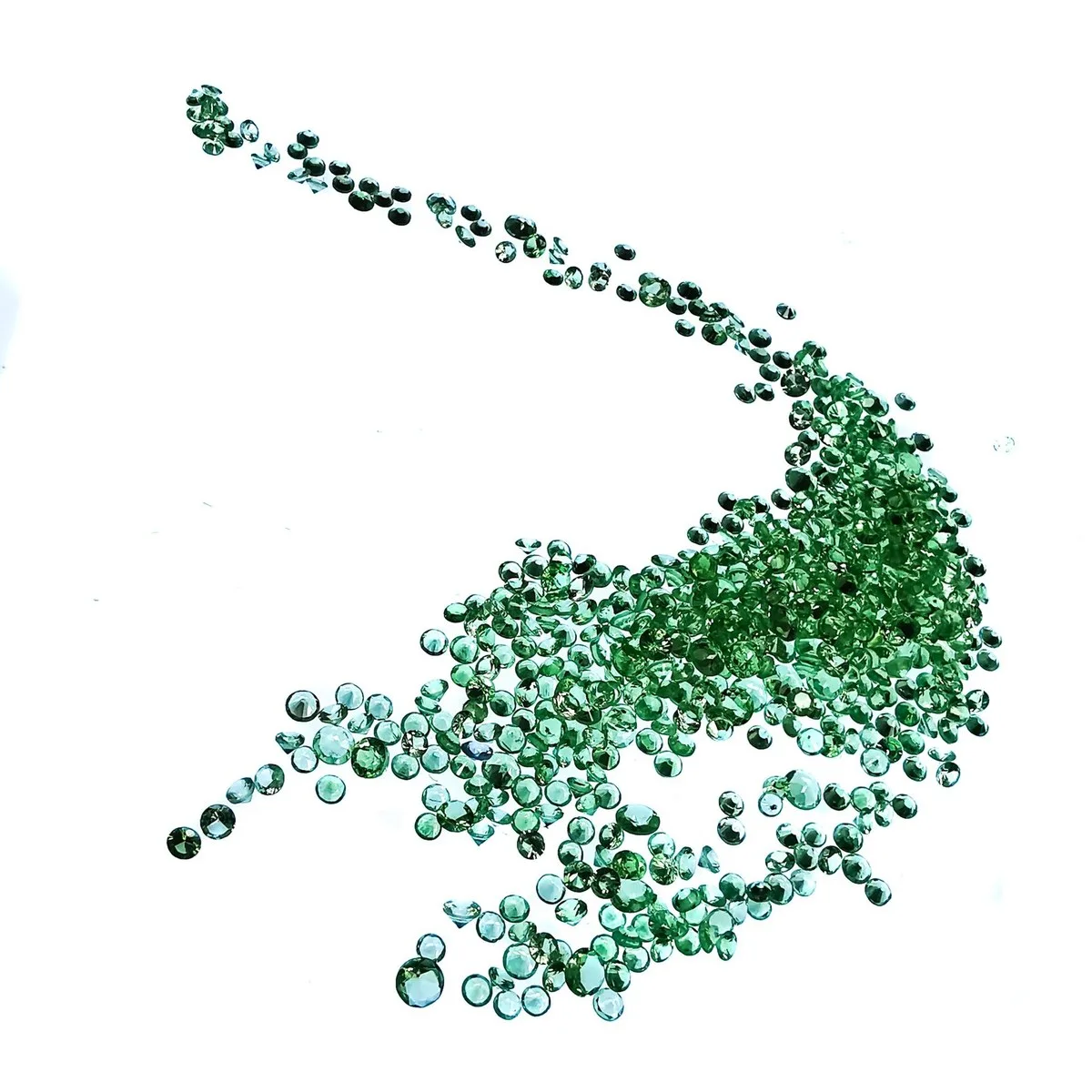
Colour – shades of greenTsavorite belongs to the garnet group. The group has six main species — pyrope, almandine, spessartine, grossular, andradite and uvarovite — and tsavorite is not among them, because it is not a gemmological species name. In fact it is a variety of grossular, but chromium and vanadium give it a startlingly bright, emerald green.
In 1967 this green mineral was found in East Africa, and Henry Platt, then head of Tiffany & Co., named it after Tsavo National Park in Kenya.
Tsavorite is rare and popular at the same time, and that shows up directly in the price. Its intense colour means it is often mistaken for emerald — which says a lot about what it is worth.
Origins
Kenya and Tanzania are the main suppliers. In Kenya the stone comes from the Tsavo and Taita Hills areas; in Tanzania from around Merelani, the same ground as tanzanite. Small amounts are found in Madagascar and Ethiopia.
Properties
Tsavorite is regarded as a stone of wealth, success, purposefulness and brilliance. It is said to bring optimism, positivity and joy.
Believers say that with tsavorite a person looks at life more positively and finds friends and close ones more easily. Esoteric writers hold that it helps you find your own path and walk it well.
Traditional healing properties
Lithotherapists consider tsavorite good for the heart, the blood, and the hormonal and digestive systems. They use it for healing wounds and recommend it for general health and a strong immune system.
This describes traditional practice, not medical advice. A stone does not replace a doctor.
Chakras
Tsavorite is linked to the heart chakra – anahata.
Zodiac
Astrologers say that, like other grossular varieties, tsavorite harms no one and suits every sign, but works especially well for Pisces, Aquarius and Cancer.
In Charcho jewellery
We do not have a ready-made piece in the catalogue yet, but we make them to order — you choose the size and shade of the stone. Catalogue: necklaces.
Real or fake
- Tsavorite is often confused with demantoid, which is also a green garnet. Demantoid shows fibrous "horse tail" inclusions; tsavorite does not.
- Unlike emerald, tsavorite is harder, brighter and more even in colour. Emerald always carries inclusions and clouds.
- Green glass and synthetic garnet are common on the market. Natural stone usually shows fine cracks and inclusions under a loupe.
- A stone that is too clean, in a "perfect" colour, at a low price is worth a second look.
Care
Hardness 6.5–7.5 allows daily wear, but a sharp knock or a sudden change of temperature can start a crack. Warm water, mild soap and a soft cloth are enough; ultrasonic cleaning is not necessary. Keep it away from perfume and hairspray, and store it apart from other jewellery.
See also
-
Chrysoprase
Chemical formula – SiO₂
Hardness – 6.5–7
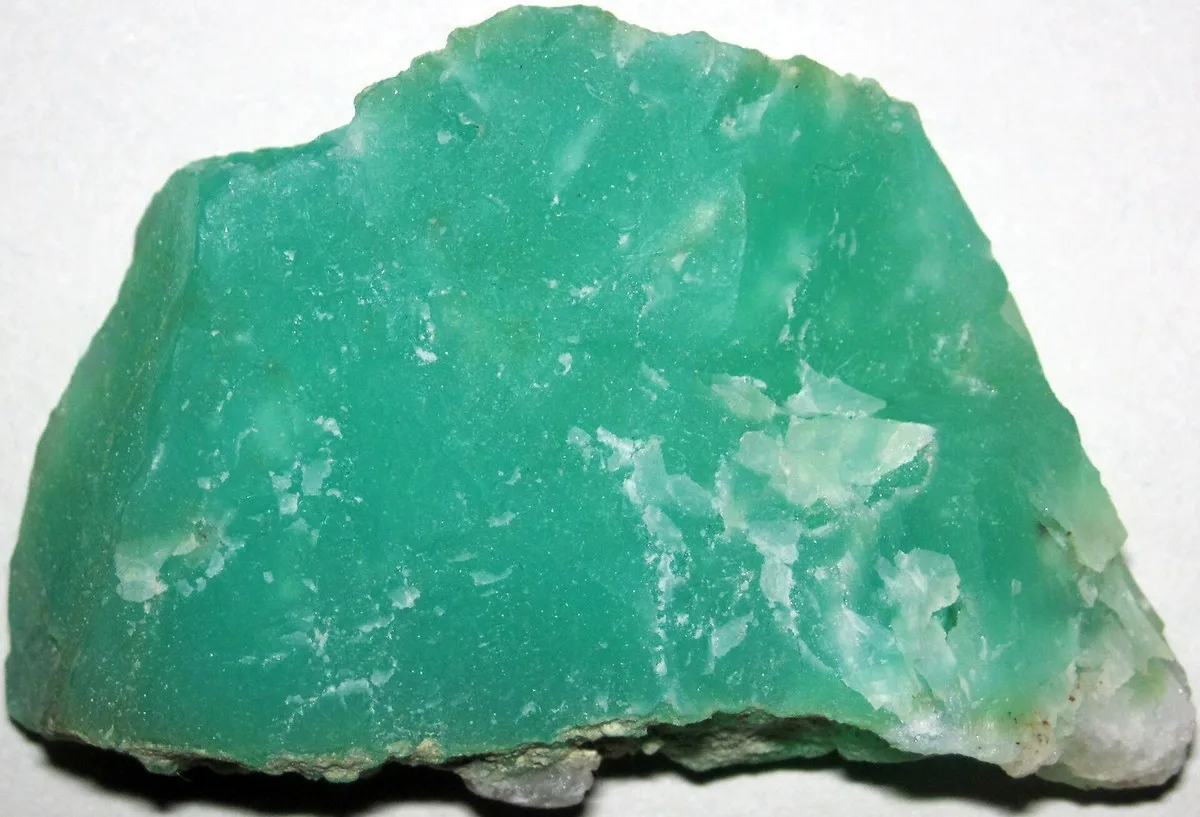
Colour – green, phosphorescent, brown with yellowish patchesChrysoprase is a variety of chalcedony, which is to say microcrystalline quartz. Its colour comes from a trace of nickel, and it is so bright that people sometimes doubt it is natural. Among the chalcedony varieties, chrysoprase is one of the hardest to obtain.
The name is Greek: chrysos for gold, prason for leek. Gold-green, in other words — exactly the shade of a leek leaf in the garden.
The price ladder is simple. The most expensive is a clean, near-translucent stone of even apple green. Pale lemon-green pieces cost less, and those with brown patches less again. A dark emerald tone turns up rarely and is often sold as Madagascar chrysoprase.
Origins
The main sources are Australia, Brazil, Germany, Poland, Russia, Tanzania, Madagascar, India, Kazakhstan and the USA. Queensland chrysoprase is the best known historically, while stone from Szklary in Poland turns up in old jewellery.
Properties
Chrysoprase is said to carry a strong vibration and to bring luck and income. Esoteric writers treat it as the businessperson's stone. It is believed to stir self-expression, hope, purposefulness and courage.
Older sources claimed chrysoprase brings joy, because it deals easily with negative thoughts and energy. Today it is still often recommended to people who are too hard on themselves.
Traditional healing properties
Lithotherapists consider chrysoprase a strong healing stone and say it helps with eye disease. They also link it to better eyesight, the immune system, and the regulation of body temperature and blood pressure.
This describes traditional practice, not medical advice. A stone does not replace a doctor.
Chakras
Chrysoprase is linked to the heart chakra – anahata.
Zodiac
Tradition ties chrysoprase to Gemini and Virgo. Both signs are practical and attentive to detail, which suits the stone's businesslike reputation.
In Charcho jewellery
We do not have a ready-made piece in the catalogue yet, but we make them to order — you choose the size and shade of the stone. Catalogue: necklaces.
Real or fake
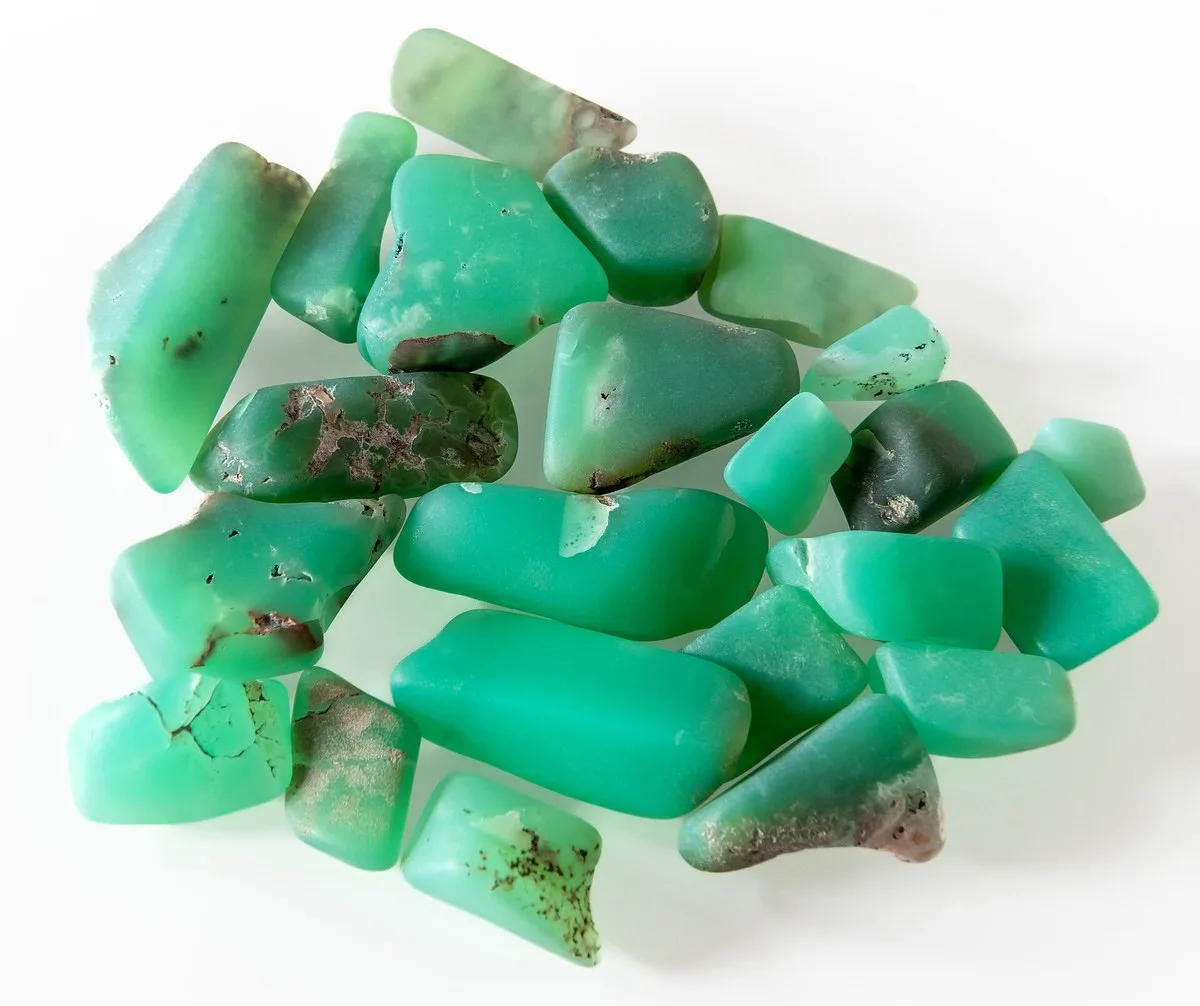
- Much of the chrysoprase on the market is chalcedony dyed with nickel salts. The dye collects in cracks and pores, so a loupe shows dark lines.
- Natural stone has an uneven colour, with paler patches and brownish dots.
- Real chrysoprase fades in sun and heat — oddly enough, that is a sign it is natural.
- Plastic and glass imitations are much lighter and warm up quickly in the hand.
Care
Hardness 6.5–7 allows daily wear, but the colour is sensitive to light and heat. Do not leave the piece in direct sun for long, do not drop it in hot water and skip the ultrasonic cleaner. Warm water, mild soap and a soft cloth are enough.
See also
-
Grape Agate
Chemical formula – SiO₂
Hardness – 6.5–7
Colour – violet, reddish violet, greenish blueGrape agate is a variety of purple chalcedony whose crystals grow in small balls, clustered like a bunch of grapes. The habit is called botryoidal, and the same pattern appears in raw malachite, hematite and prehnite. The name is a trade name rather than a mineralogical one: chemically this is ordinary chalcedony, just in an unusually pretty shape.
The stone was discovered fairly recently, and Indonesia remains the only significant supplier — which is why grape agate is rare and costly. Its main virtue is depth of colour and the density of the balls: the darker and more even the violet, the higher the price.
Pieces with two or more tones — green-blue transitions, for instance — are rarer and more valuable than uniform purple.
Origins
Indonesia, specifically Sulawesi, is the main source. Small amounts turn up in other tropical regions, but material of the same quality is uncommon.
Properties
The stone is new, so there is not much written about it. Most esoteric writers consider grape agate strong for the sixth and seventh chakras. It is said to sharpen intuition, help you recall dreams, and improve memory and concentration.
It is also described as a good friend to creative people, and as a stone that quiets the mind. People often keep a piece in the bedroom for calm sleep and good dreams.
Traditional healing properties
Lithotherapists have little practice with this stone. It is said to help with nervous tension, headaches and insomnia — through a softer, calming effect rather than a curative one.
This describes traditional practice, not medical advice. A stone does not replace a doctor.
Chakras
Grape agate is linked to the sixth, third-eye chakra – ajna, and the seventh, crown chakra – sahasrara.
Zodiac
There is no settled tradition yet. It is often connected with Aquarius and Pisces — signs that live comfortably with intuition and an inner world.
In Charcho jewellery
We do not have a ready-made piece in the catalogue yet, but we make them to order — you choose the bead size and shade. Catalogue: necklaces.
Real or fake
- Because the stone is rare, dyed versions are everywhere. The dye usually gathers in the hollows between the balls.
- Natural material is a muted violet with a grey cast; a very bright pink-violet tone is a red flag.
- The balls should vary in size and be slightly irregular. Perfectly even, as if cast in a mould, points to an imitation.
- Dyed druzy is sometimes sold under the name — ask the seller whether the piece has been treated.
Care
Hardness 6.5–7 is enough for daily wear, but the raised balls chip easily on impact. Do not soak it for long, especially if you are unsure about the colour. No ultrasonic and no steam; a soft, slightly damp cloth will do.
See also

Have an idea? We will make it.
Write or call us - together we will choose the material, colour and size, and make the piece to order.