 Free Delivery in Batumi


Blog
From the workshop: materials, care, gifts and the stories behind the pieces.
-
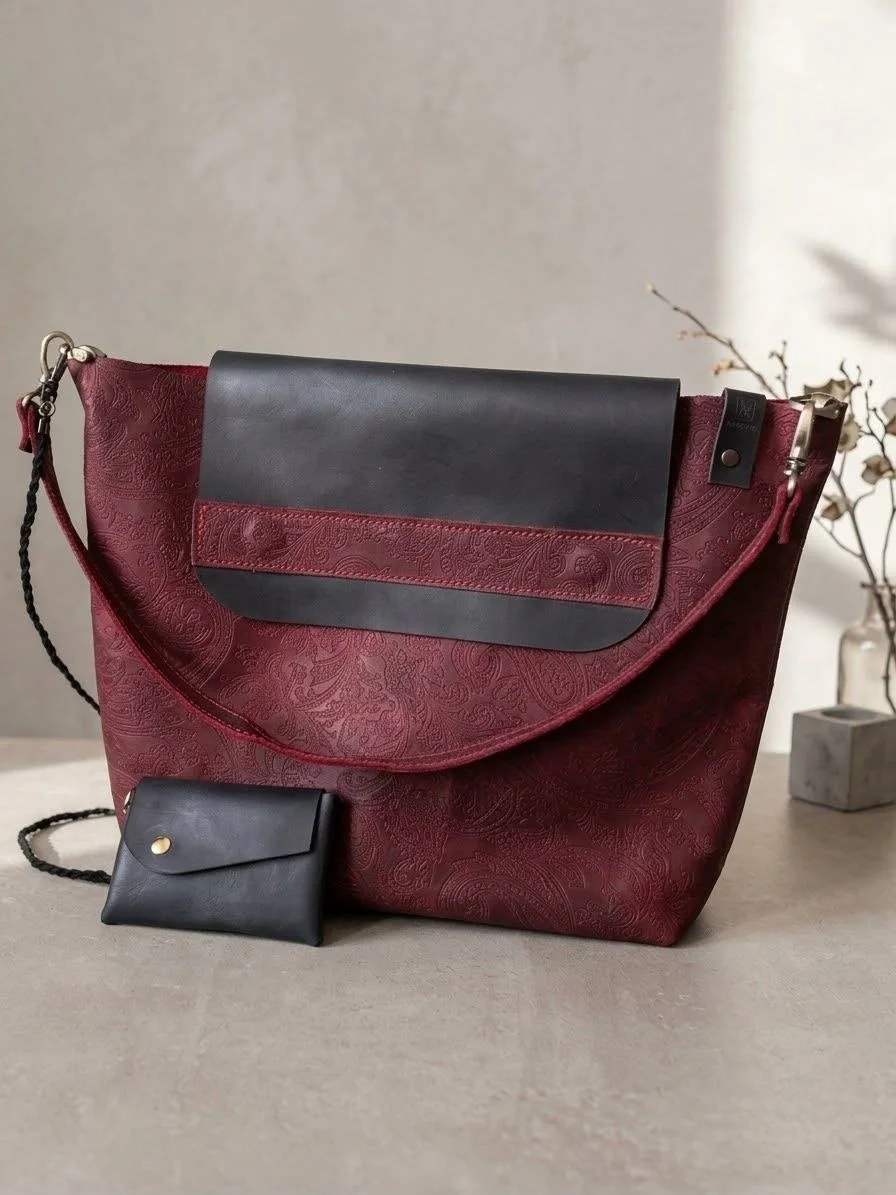
Seasonal leather storage
The winter bag is forgotten in summer, the summer one in winter. Three or four months in a cupboard is a long time for leather, and that is when the problems appear that we later notice "suddenly": uneven colour, dented corners, a stale smell. Storage asks for two things: cleanliness and a stable environment.
Before you pack it away
Leather is stored dry, always. At the end of the season, wipe the bag with a soft, slightly damp cloth, clear dust from seams and corners, then dry it at room temperature. If the leather feels dry and rough, apply a colourless conditioner and leave it overnight.
Empty the inside completely: receipts, paper, tissues. Paper absorbs moisture, and it is paper that leaves yellow marks on the lining.
Shape matters more than space
An empty bag holds air and creases. Put clean paper or cloth inside, but not newsprint, whose ink transfers. Tuck the handles in or straighten them to the side so that no permanent fold sets in one place.
A heavy bag is not stored hanging by its handle: leather stretches and loses shape. Keep a belt flat, on a ring or rolled, but never sharply folded. A wallet should be empty and flat; packed with cards, it memorises that shape over months.
If there are several leather pieces in the house, do not stack them. Buckles and zips scratch the surface next to them. Each piece gets its own bag or its own shelf.
Humidity: the main enemy
In Batumi, Sakartvelo, this is the point that matters most. Leather absorbs moisture and dries slowly; in a closed cupboard that moisture stays for weeks. So a bag lives in a cotton dust bag or a fabric cover, never in a plastic bag where air cannot move.
One small moisture absorber in the cupboard is enough; once it is wet it does nothing. Anything strongly scented passes its smell to the leather, and weeks later it is still there. If the flat is humid all year, a small hygrometer is worth having: it tells you when the cupboard is genuinely dry.
Temperature and light
The ideal place is a dark cupboard with a stable, dry temperature. A balcony, a basement or a heated room are poor choices, since both humidity and temperature swing there. Direct sun dulls colour, especially on dark and brown leather.
When the season starts
When the bag comes out, give it a day in the air first. If there is a pale, whitish bloom on the surface or a smell of mould, we have written about that separately. If the leather is dry and rough, a colourless conditioner in a thin layer. Then the usual wax, which makes daily wear easier.
See also
-
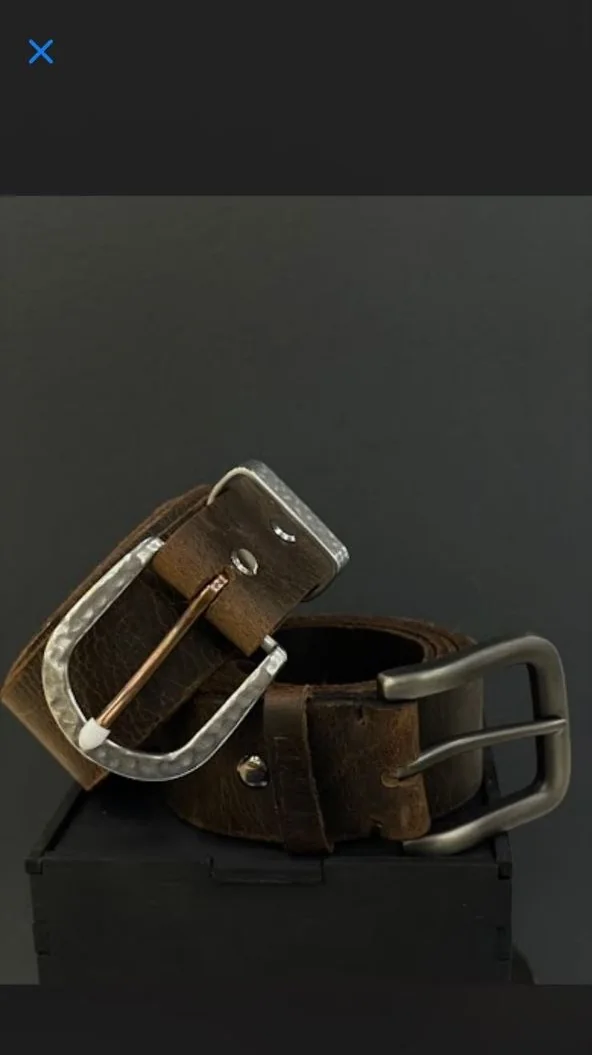
Leather colour and patina — why it darkens
A new leather belt and the same belt two years later often look like two different objects. The colour deepens, the surface polishes, the edges begin to shine. This is patina, and it is part of what leather is, not a fault.
What happens inside the material
Leather is a living structure: a network of collagen fibres with spaces and oils held between them. Over time the fibres oxidise, the oils migrate towards the surface or deeper in, and the dye slowly wears away where you touch the piece most. All three together shift the colour.
Four causes
- Sunlight. Ultraviolet light speeds up oxidation. A bag that sat by a window for months is visibly darker on the side the light reached.
- Oxygen. Contact with air slowly changes the chemistry of the leather. It is the slowest of the four, but over years it shows.
- Oil from your hands. Every touch leaves natural oil behind. That is why the handle and the edge of a pocket darken first.
- Friction. Against clothing, a desk, the inside of a pocket — any rubbing polishes the surface and brings the colour up.
Which leather changes most
Vegetable-tanned leather changes most visibly: tannins and a pale base together mean the shift shows within months. Aniline leather responds vividly too, though more gently. Leather with a heavy pigment layer barely moves at all — the colour stays stable, but the surface stays flat as well.
Evenly or in patches
Patina is rarely even. A bag darkens where it is held; a belt beside the buckle; a wallet at the corners. That unevenness unsettles people, yet it is exactly what makes the piece personal. If you would rather the colour moved more evenly, rub the piece down with a light cloth now and then — it smooths the process a little.
How to steer it
You can slow patina down; you cannot stop it. Long exposure to direct sun dries the surface and shifts the colour unevenly, so shade is kinder. Too much wax or cream mutes the colour and holds patina back — moderation matters here as everywhere. And if you want the leather to settle faster, just carry the thing: your hands and the air will do the rest.
See also
-
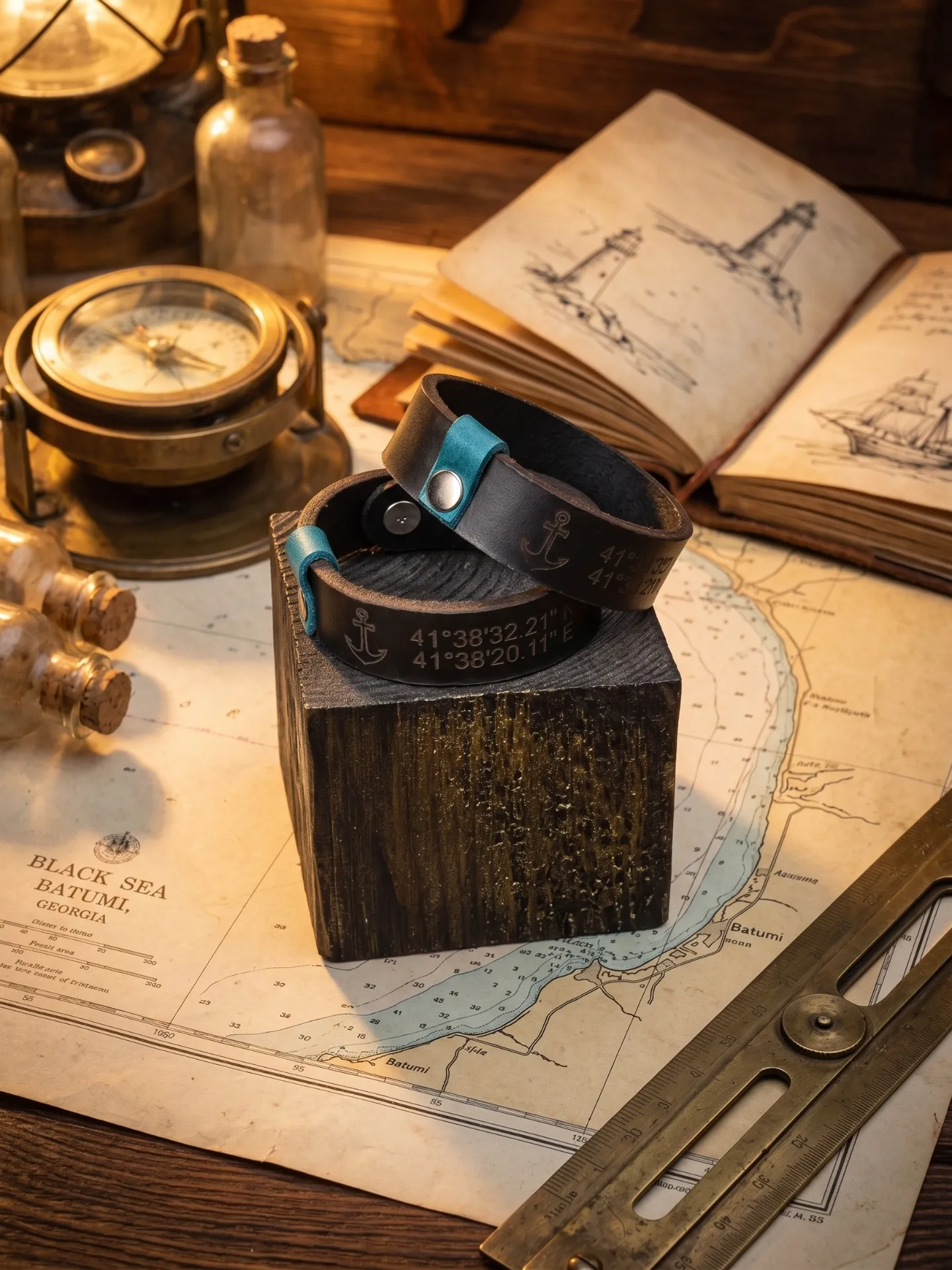
Leather thickness: what the millimetres mean
You pick up a piece of leather and the label says 1.4 mm. Or 2.8 mm. The number is not arbitrary — it decides how heavy the finished piece will be, how well it folds, and how long it will hold up.
How it is measured
Thickness is measured in millimetres with a caliper, at several points — near the edges and in the middle — because a natural hide is never uniform. Some makers work in ounces or fractions of an inch; one ounce is roughly 0.4 mm. So "3 oz" means about 1.2 mm, and "8 oz" about 3.2 mm.
The numbers by purpose
- 0.8–1.2 mm — wallet interiors, card slots, leather sleeves. Thin, easy to fold, and it takes a clean stitch line.
- 1.2–1.6 mm — the main body of a bag, handles, small straps. The most common range for everyday pieces.
- 2–3 mm — a classic belt, a cuff, structural parts of a bag.
- 3.5–4 mm — heavy work belts and mounts where the load is serious.
Thickness is not stiffness
Two hides of the same thickness can behave completely differently. The tanning method and the finish change how densely the fibres pack: vegetable-tanned leather stays firm at 1.5 mm, while soft chrome-tanned leather of the same thickness can drape like cloth. So in a shop, ask about firmness as well as thickness — better still, pick it up and feel it.
Two layers and skiving
Many pieces are made from two layers: an outer leather plus a thin lining. The result is firm outside and soft inside. Where seams run, the leather is thinned down — that is called skiving — so the edges do not end up bulky and the stitch sits flat. Good skiving does not weaken a piece; it is what makes the whole thing feel solid rather than merely thick.
Why thicker is not better
Thick leather takes load for longer, but it is heavier and folds badly. A wallet in 3 mm leather is unpleasant in a pocket, while a 1 mm belt stretches quickly. So the question is better put this way: what will the piece carry, and how often will you touch it? The answer usually tells you more than any number on a label.
See also
-
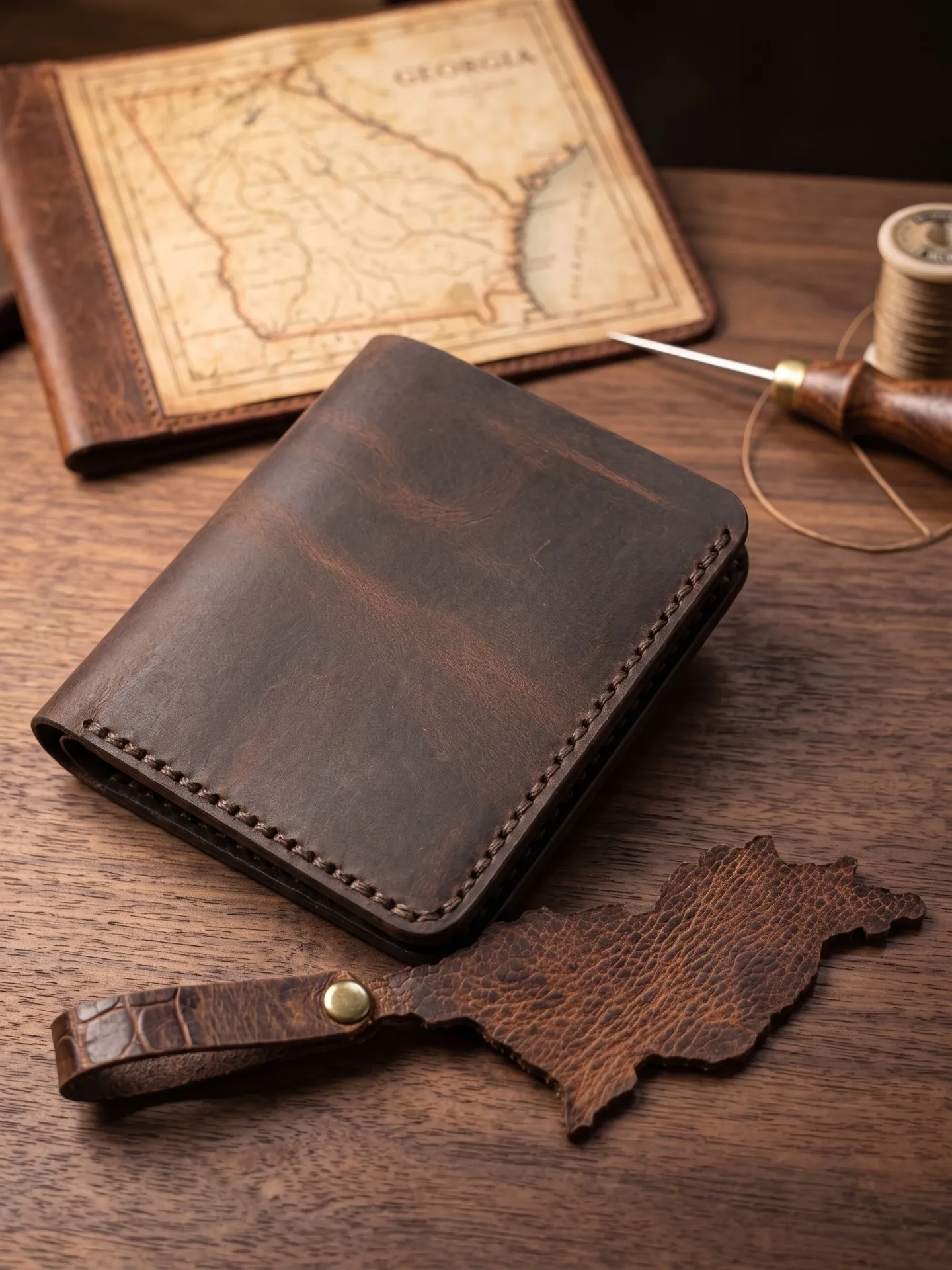
Why a leather wallet
A wallet is opened and closed several times a day: a card, a receipt, some change. That constant handling is why the material shows itself so quickly — it either ages well or starts cracking at the edges. What follows is what natural leather does differently, and how to choose a wallet that still looks tidy years from now.
What the material changes
Leather is skin: fibrous, flexible and, in a sense, alive. It slowly takes the shape of your hand and keeps its folds. Synthetic leather looks clean for the first months, then whitens along the fold and splits. Natural leather darkens and softens in the same place.
The second difference is the surface. Leather has a grain — a natural pattern that never repeats exactly from one panel to the next. That is why a handmade piece looks different from a factory one even at a glance.
How it ages
Crazy Horse leather starts out matte, with pale marks across the surface. In use it takes on a sheen, and small scratches smooth out from the warmth and friction of your hand. None of this is a fault — patina is the trace of time, and for many people it is the point.
Lifespan and repair
On a leather wallet it is usually the stitching that wears out, not the leather. A hand seam can be run again, the edges refreshed, the outer layer cleaned and conditioned. That is why one well-made wallet tends to outlast three cheap ones.
What to check when buying
- Thickness. Very thin leather is comfortable in a pocket, but the edges fray quickly.
- Stitching. Thick thread, an even step, enough distance from the edge — the clearest sign of longevity.
- Edge finishing. An unfinished cut edge wears out before anything else.
- Number of slots. As many as you actually need; extra slots only make the wallet thicker.
Our wallet
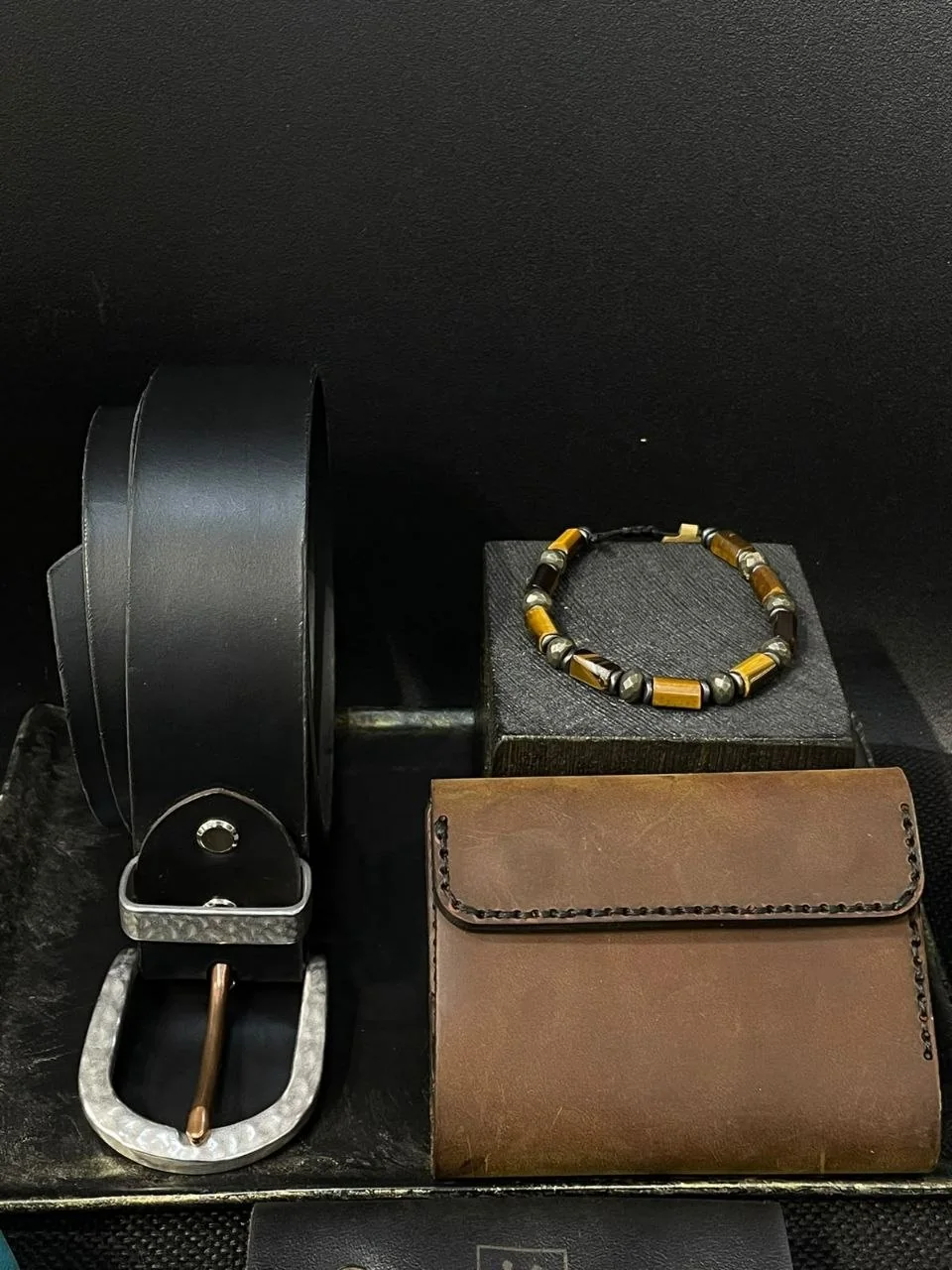
Our handmade leather wallet is a compact dark brown model with a dense hand seam. The leather has a Crazy Horse finish, so it gradually gains a sheen and deepens in colour as you carry it.
See also
-
Why a leather bag
A bag carries weight every day: a book, a bottle of water, a laptop, a child's things. That is why the look matters less than how it holds its shape, how it spreads the load, and what it is like after a few seasons.
A shape that holds
Compared with canvas and synthetic leather, leather holds its shape far more firmly. It softens over time, but the sides do not sag and the bag does not turn into a sack. This matters most in structured models, where the density of the leather itself carries the form rather than an insert inside.
Weight and the strap
The load goes first to the strap and the rings. A leather strap cuts into the shoulder less because it gradually takes its shape. What deserves a closer look is the attachment: if the strap is held by a single seam and stitched right at the edge, the bag will not take the weight. Thick rings and a double seam are visible exactly at that point.
Textures: pull-up and embossed crocodile
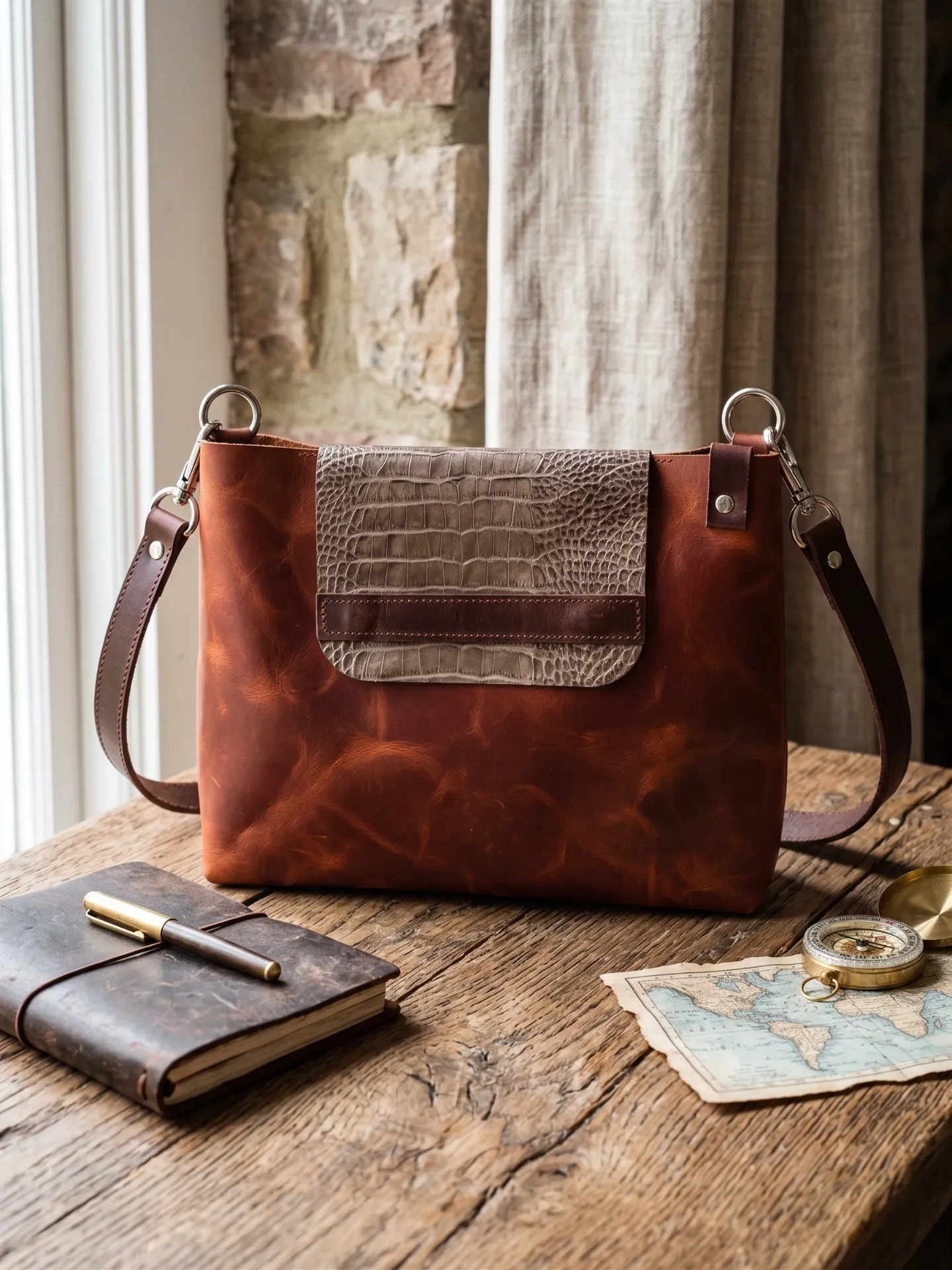
Pull-up leather shows pale streaks wherever it is pressed or stretched — those are the waxes and oils worked into the top layer. Over time the streaks blend and the bag settles into a deeper colour.
A crocodile texture, by contrast, is embossing, not actual crocodile skin. That distinction matters to us: we get the pattern from the press, not from a wild animal.
Rain and humidity
Batumi's climate suits leather rather well — the humidity keeps it from drying out. A wet bag, though, should not be dried on a radiator or near a stove: heat stiffens leather and causes cracks. Room temperature, paper inside to hold the shape, and a cotton cloth on the surface are enough.
Our bag
Our cognac leather bag is sewn from warm pull-up leather, with a cream flap in a crocodile texture, substantial silver rings and a leather shoulder strap. The dense construction means the bag keeps its shape even under load. It is made in Batumi, Sakartvelo, in our own workshop.
See also
-
Why a leather belt
A belt gets the least attention of anything we wear and is used more than most of it. Every day it bends, stretches and takes the load at the buckle. That is exactly why a belt shows whether the material is any good.
What happens to a cheap belt
The top layer of a synthetic or bonded belt looks clean at first, then starts to crack along the line of holes — where the prong goes in every morning. Leather in the same place compresses and softens, but does not split. Cheap belts also tend to fail where they should not: they curl into a ring at the back.
Thickness and holes
Thickness is the main technical property of a belt. Too thin and it sits nicely but carries nothing, and the holes wear out fast. Too thick and it is stiff enough to be uncomfortable when you walk. The right middle is a belt that feels firm in the hand and bends freely at the hip.
Holes should be punched, not pressed: the edges stay clean and do not fray over time.
The buckle carries the load
Most of the strain lands on the buckle, especially where the belt folds back and is stitched. So look at two things: the weight of the buckle and the quality of that seam. A heavy handmade buckle feels like too much at first, but it keeps the belt sitting straight instead of stretching to one side.
Sizing
Do not size a belt from your old belt — the old one has already stretched. Measure your waist over the clothes you wear it with, and aim for the middle hole. That leaves room to adjust in either direction. Try the belt standing and sitting: one that digs in when you sit is the wrong size, even if the measurement matches.
Our belt
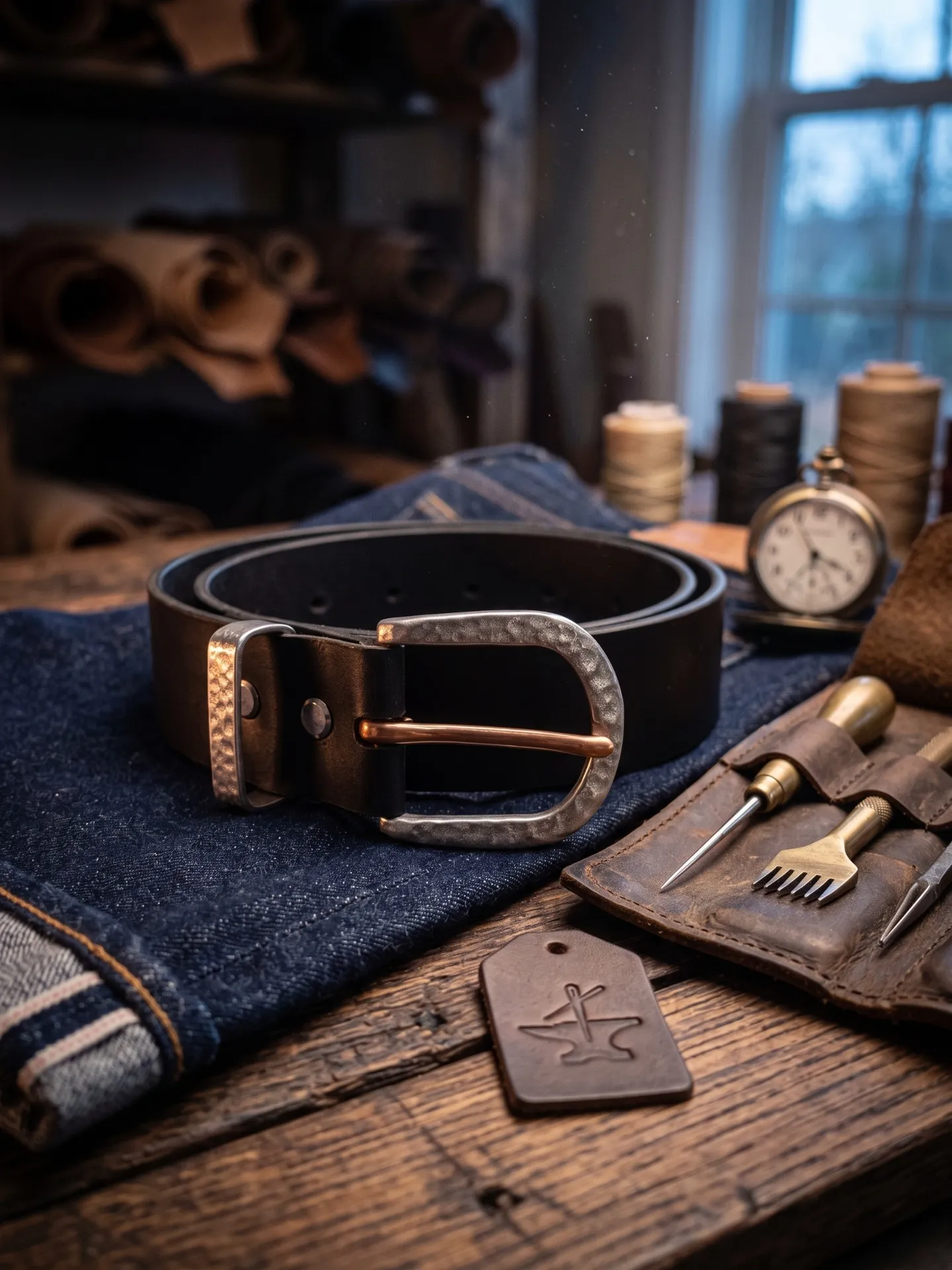
Our black handmade leather belt is cut from thick natural leather. The oval buckle, with its hammered silver finish and contrasting copper prong, works as well with jeans as it does with everyday dress.
See also
-
Choosing a wallet: size, slots, cards
Most people choose a wallet by colour and brand, then discover that the cards do not fit or the wallet will not go into a pocket. Here is a simple order to work in — the same one we use ourselves.
Contents first, then size
Before you choose anything, empty your old wallet onto a table. Think about what you actually use and what merely accumulates. Usually half the cards are rarely needed and the receipts never are.
The same exercise sets the size: cards, a cardholder, some change and a couple of documents — that is already the full picture.
Pocket or bag
If you carry a wallet in a front pocket, thickness matters most. A compact model or a separate cardholder works better there. If it lives in a bag or a back pocket, a larger wallet with two compartments can hold papers and change as well.
Slots and cards
The number of slots should match real use. Many slots make a thick wallet that will not fit a pocket, and the cards rub against each other.
A practical rule: one slot per card, plus one spare. Cards should slide in freely rather than stretch the slot — a stretched slot loses its shape over time.
Thickness, stitching, edges
Three things worth checking before you buy:
- Stitching. Thick thread, an even step, enough distance from the edge. If the thread sits too close to the edge, it cuts the leather.
- Edges. A finished edge is smooth and does not fray. An unfinished cut wears out first.
- The inside. If the wallet has inner pockets, check that the stitching there is clean too — that is usually where a wallet starts to come apart.
Our combined wallet
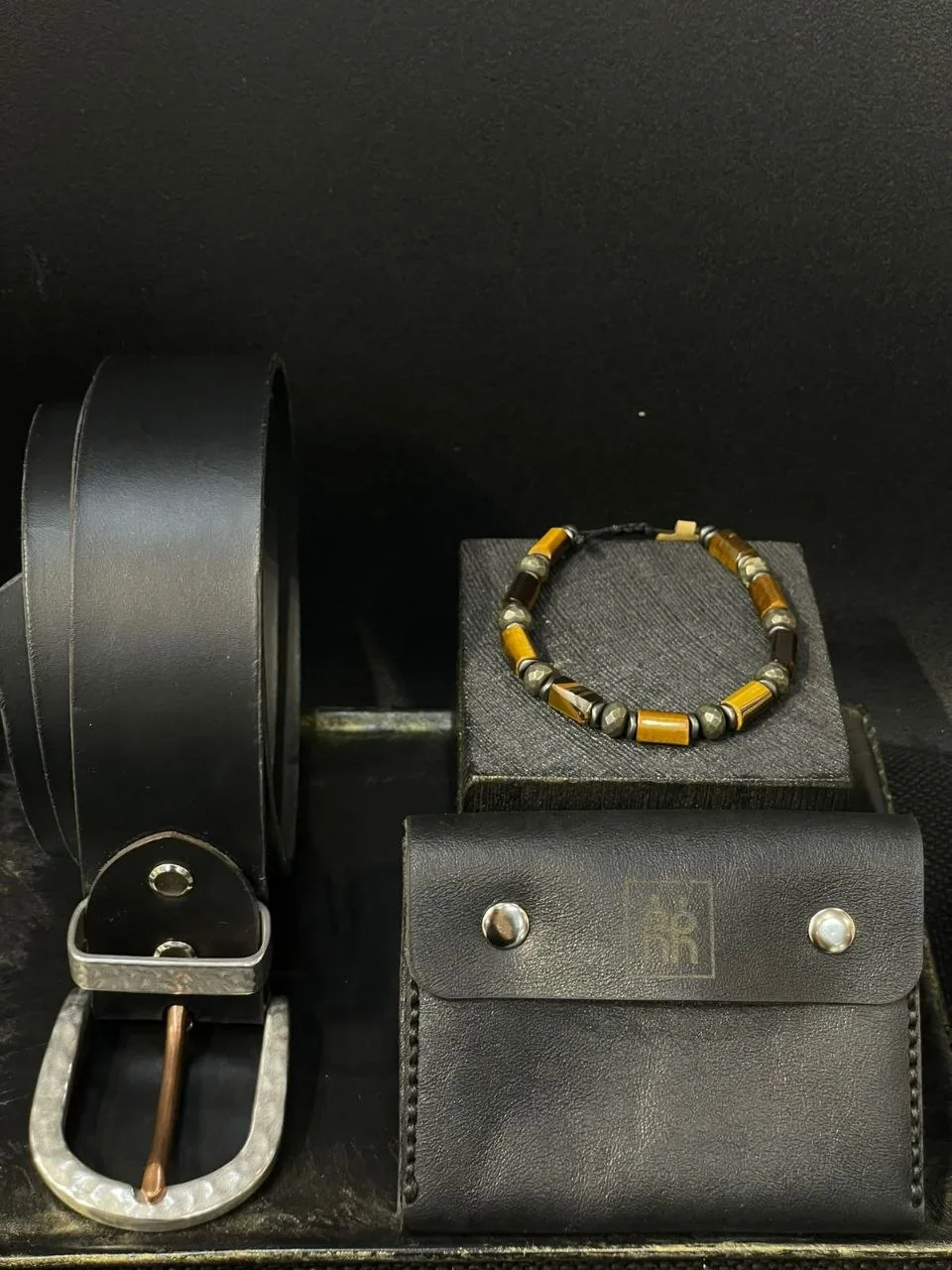
Our combined wallet comes in two parts: a wallet with card slots and a separate cardholder. Both are sewn from cognac natural leather; the cardholder has a crocodile-texture insert and a personalised brass button. It suits anyone who needs only cards day to day and prefers to keep papers and change separately.
See also
-
Belt size: how to measure correctly
A belt is worn every day, yet its size is usually picked by guesswork. In a shop the customer names a trouser size; the maker asks for centimetres. That is where the confusion starts.
What follows are measurements you can take at home with a tape measure.
Why a belt size is not a trouser size
A trouser size is a conventional number. 32, 48 or L describe a proportion the manufacturer has settled on, not centimetres. The same size from two brands can differ by a couple of centimetres.
Belt length, by contrast, is measured exactly: from the point where the leather meets the buckle to the hole you actually use. The buckle itself is not included — it adds two or three centimetres. This is why makers quote leather length rather than the length of the finished object.
The most accurate way: measure a belt you own
Take a belt that fits well and that you wear often. Lay it flat and straighten it. Measure from where the leather meets the buckle to the hole you normally fasten. Write the number down — that is your length.
If you use different holes at different times of year, measure three and take the middle one. That leaves room for winter, when the belt sits over thicker clothing.
One caveat: an old belt that has stretched will measure a centimetre long. In that case trust the second method instead.
If there is no belt to measure
Measure around your body at the height where you wear the belt — usually at the top edge of the trousers, not at the narrowest part of the waist. Measure in the clothing you will actually wear with the belt: a measurement taken over a thin shirt will be too tight in winter.
Keep the tape snug but not pulled.
Leather length on a belt usually runs five to ten centimetres more than your measurement. That reserve sits between the buckle and the holes, and it is what lets you fasten the belt a little looser or tighter.
Where the belt sits, and what to do between sizes
It depends where you wear it: at the waist, on the hips, or at the top of the trousers. For one person three different sizes can all be correct — so before buying, decide which trousers the belt will be worn with most often.
If your measurement falls between two sizes, take the longer one. Adding a hole is easy; lengthening a short belt almost never looks clean afterwards, especially when the buckle is fixed in place.
Ordering a belt from us
We cut belts to order: the leather is cut, the edges finished and the holes set to your measurement. All we need are two numbers — leather length and the width you prefer.
Black handmade leather belt with a forged buckle — the photographs show how the edge is finished and how the stitching sits. If you are unsure about your measurement, write to us and we will work it out together before any leather is cut.
See also
-
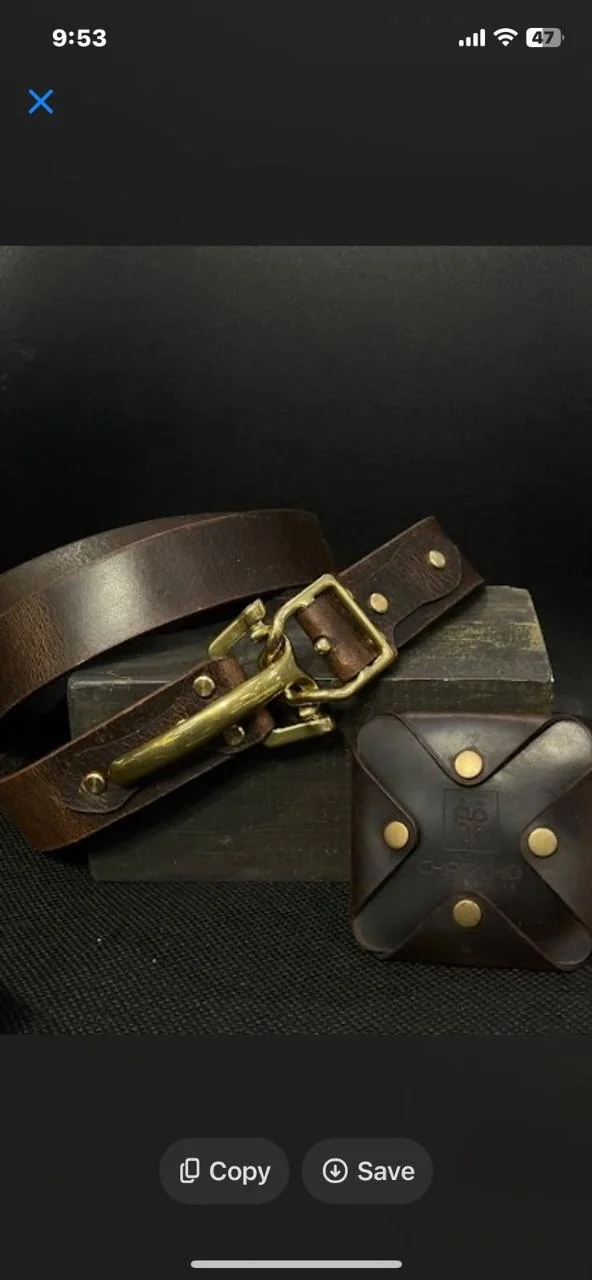
How to care for natural leather
Natural leather is no longer alive, but it behaves like skin: it takes in moisture, dries out in heat, changes colour where it rubs. Three things decide how long a piece lasts — how you clean it, how you feed it, and where you keep it.
Everyday handling
Most of the damage comes from settled dust, which works between the fibres like sandpaper every time the piece moves. Once a week, a dry soft cloth passed over the surface is enough — a thirty-second job.
Empty your bag once a week. Paper, sand and crumbs stay inside and hold moisture. And don't leave a bag in the car in the sun: behind the glass the temperature climbs quickly and the leather dries out.
Cleaning
The first step with any mark is a soft, slightly damp cloth. For a stubborn stain, dissolve a few drops of neutral soap in warm water, pick up the foam on the cloth, and only then touch the leather.
Wipe the surface again with a clean damp cloth so no soap is left behind. Never soak leather and never leave it wet: water stays in the fibres and weakens them.
Alcohol, acetone, kitchen cleaners and wet wipes strip the finish. One attempt is enough to leave a pale patch that never quite goes away.
Conditioning
Over time leather loses its natural oils and stiffens. It needs a balm or a wax now and then — a thin layer, worked in with a soft cloth or your fingers in small circles.
Too much conditioner softens the leather, makes it tacky and darkens the colour. Better to apply a little less and buff off the excess after five minutes. A few times a season is plenty; a weekly balm does harm.
Drying and heat
Wet leather has to dry on its own. Blot a rain-soaked bag with a soft cloth, stuff it with paper to hold the shape, and leave it at room temperature.
A radiator, a hairdryer or direct sun dries it far too fast: the surface cracks and the edges curl. Once it is dry, the leather needs conditioning again — the heat has taken the oils with it.
Batumi humidity and storage
Damp air is leather's main enemy. A piece kept in a damp room grows mould, and the mark stays on the surface for good. Store things in a cotton or linen dust bag, which breathes. A plastic bag traps moisture and does the opposite of what you want.
Put crumpled paper inside the bag to hold its shape, and silica gel beside it. Roll a belt rather than folding it: a crack starts exactly on the fold.
When to bring it to the workshop
A deep scratch, a seam that has opened, a finish that has worn through, or traces of mould — household remedies usually make these worse. Bring the piece in and we will look at what can be done and whether the repair is worth it. Sometimes a small intervention is enough; sometimes the honest answer is that the piece has had its life.
See also
-
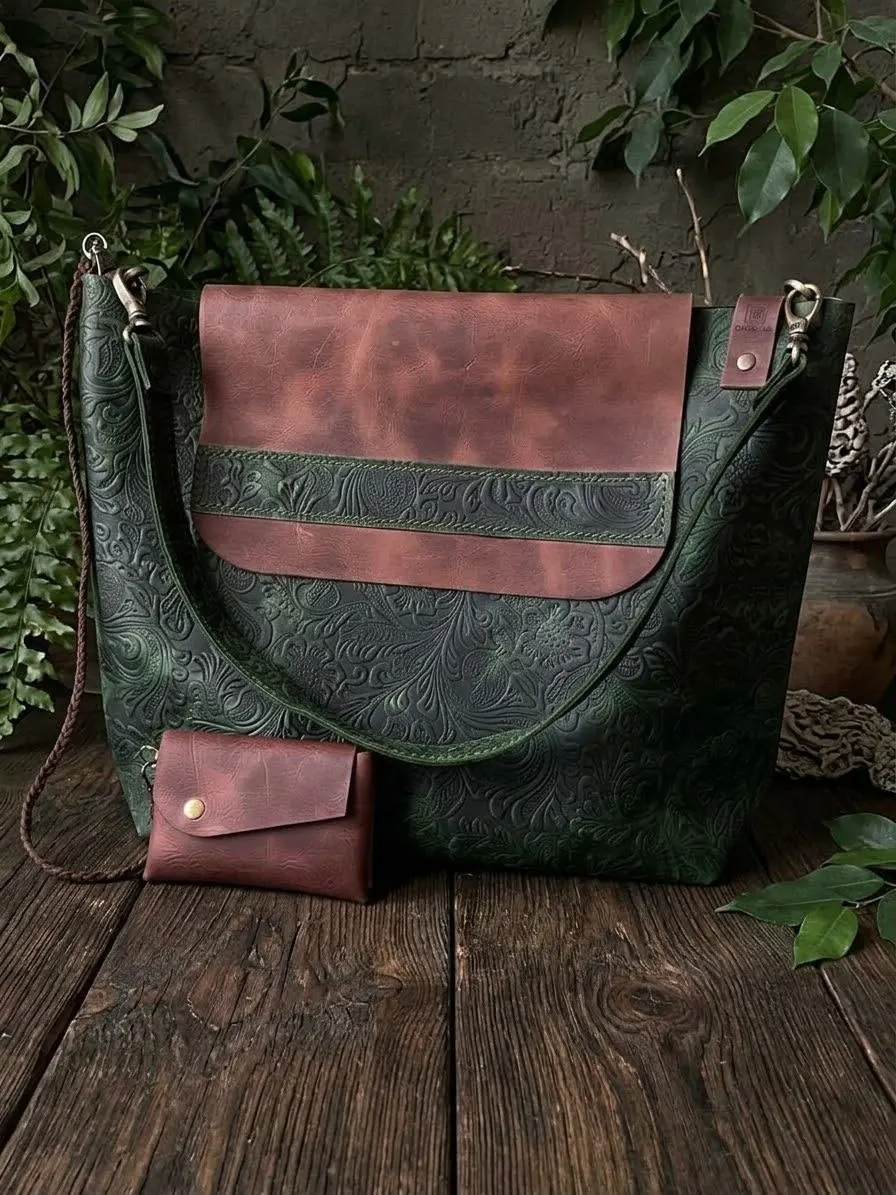
Real leather vs eco leather: how to tell
The "eco" in eco leather has nothing to do with ecology. It is a synthetic material made to look like leather. The word is marketing, not chemistry.
That does not make it a bad choice. It just means you should know what you are buying, especially when the price hints at real leather.
What eco leather is
Eco leather is a thin polymer layer laid over a textile base. The base gives it shape and body; the polymer gives the colour, the sheen and the leather-like surface. The fibres that in real leather are bound to each other simply are not there.
PU and PVC are two different materials
PU, polyurethane, is softer and lighter, with a surface that reads more naturally. It scuffs faster with wear, but it cracks less along a fold.
PVC, polyvinyl chloride, is heavier and stiffer. It is cheaper, barely breathes, and develops surface cracks sooner with long use. The cheapest bags and covers are usually PVC.
Five signs in the shop
Smell. Real leather has its own dry, faintly woody smell. Eco leather smells of plastic or adhesive, most noticeably inside.
Warmth. Real leather takes the warmth of your hand within a couple of seconds. Synthetic stays cool longer.
The fold. Bend the piece at a corner. Real leather folds into soft, fine lines. PU and PVC crease more sharply and often lose colour right along the crease.
The cut edge. Look at an exposed edge. On real leather you see a fibrous, suede-like core. On eco leather the weave of the textile backing shows through.
The surface. Pores and lines in real leather never repeat. If two items carry an identical pattern, that pattern was printed.
What the label tells you
"Genuine leather" is sometimes used for bonded leather too, so the phrase on its own proves little. "Eco leather", "vegan leather" and "leatherette", on the other hand, say synthetic outright.
The reliable test is your hands. A minute spent on the edge, the fold and the smell beats any label.
How to decide
Eco leather has real advantages: it does not soak up water, the colour is even, marks wipe off, and it costs less. For a child's bag, a travel cover, or something that only has to survive a season, it is a sensible choice.
Real leather wins elsewhere: it ages beautifully, it can be repaired, and worn daily it works out cheaper across the years. If a piece is with you every day and you are not planning to replace it, real leather is the more honest investment.
See also

Have an idea? We will make it.
Write or call us - together we will choose the material, colour and size, and make the piece to order.