 Free Delivery in Batumi


Blog
From the workshop: materials, care, gifts and the stories behind the pieces.
-
Libra and its stones
Libra runs from 23 September to 22 October. It takes the last week of September and three weeks of October, which gives two birthstones: September's sapphire and October's opal.
The traditional list barely touches either of those and offers softer stones instead: heliotrope, kyanite, jade. There is logic in that, since loud stones do not suit Libra.
Character, briefly
Libra gets the air element and the rulership of Venus, which in tradition makes it the sign of relationships, aesthetics and balance. It hears every side out, sometimes for longer than the situation needs.
The other side is deciding. When a choice finally has to be made, Libra looks for one more opinion. Tradition ties it to fairness and diplomacy.
All of this is astrology, not science. It is interesting as a cultural language, not as a diagnosis.
Traditional stones
Tap a stone name or photo — its article opens.
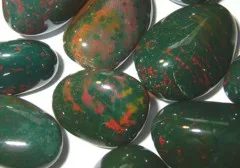
Heliotrope Dark green with red flecks, a variety of chalcedony. Hardness 6.5–7. Older texts call it bloodstone, though today it is tied more to endurance than to blood.
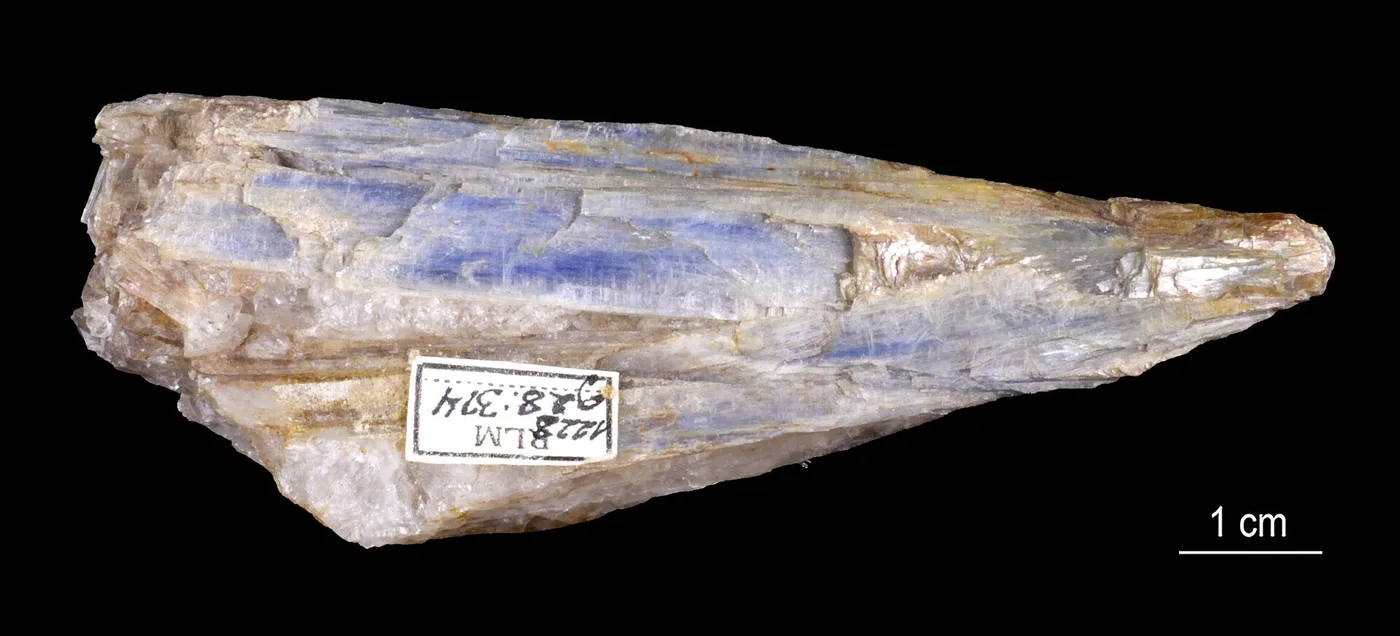
Kyanite A blue stone whose hardness changes with direction: 4.5 one way, 7 the other. That is why it needs careful setting. Tradition gives it calm.
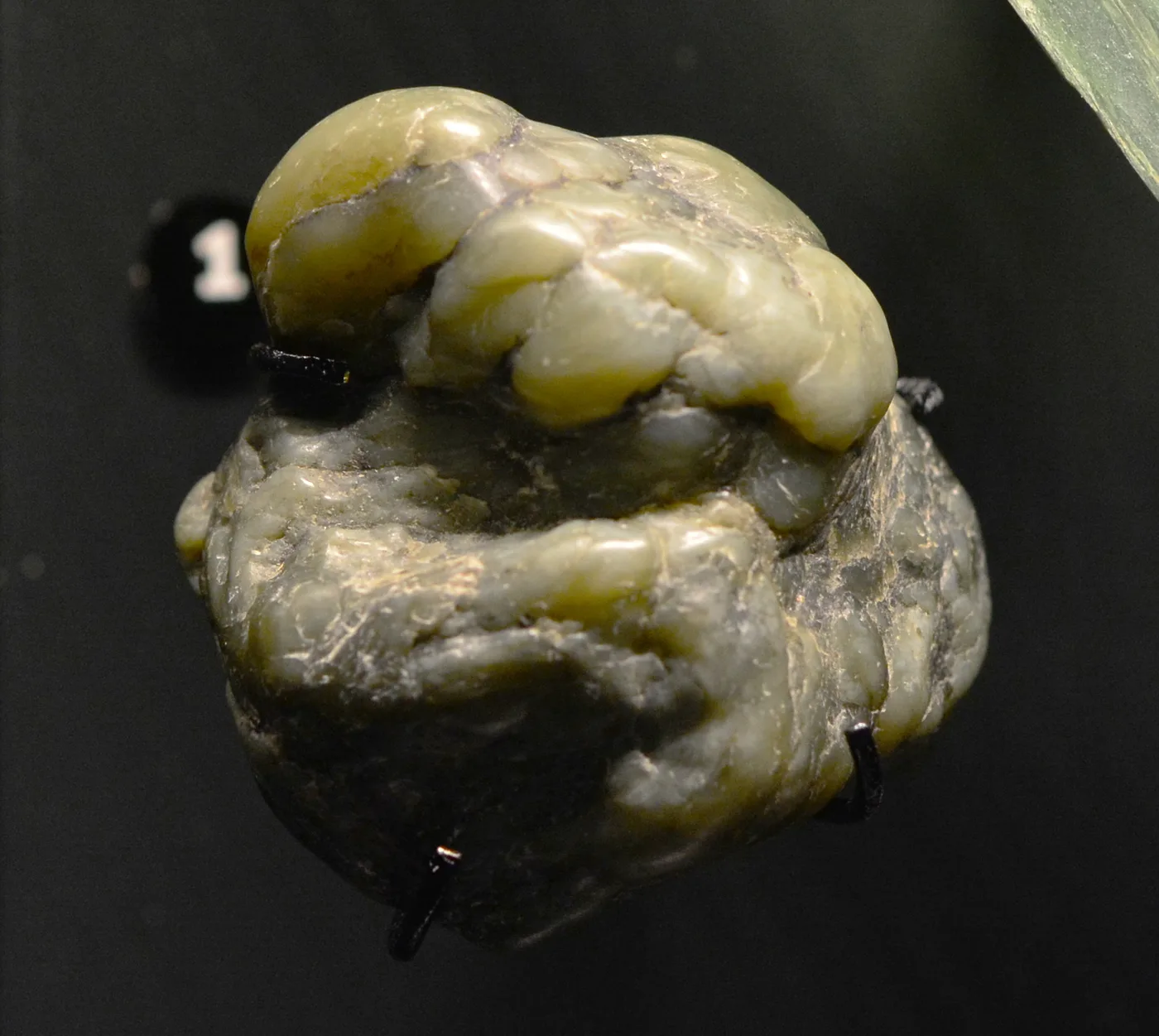
Jade A dense green stone and one of the oldest materials in Chinese culture. Hardness 6–6.5, but its fibrous structure makes it very hard to split. Tradition connects it with wisdom and staying power.
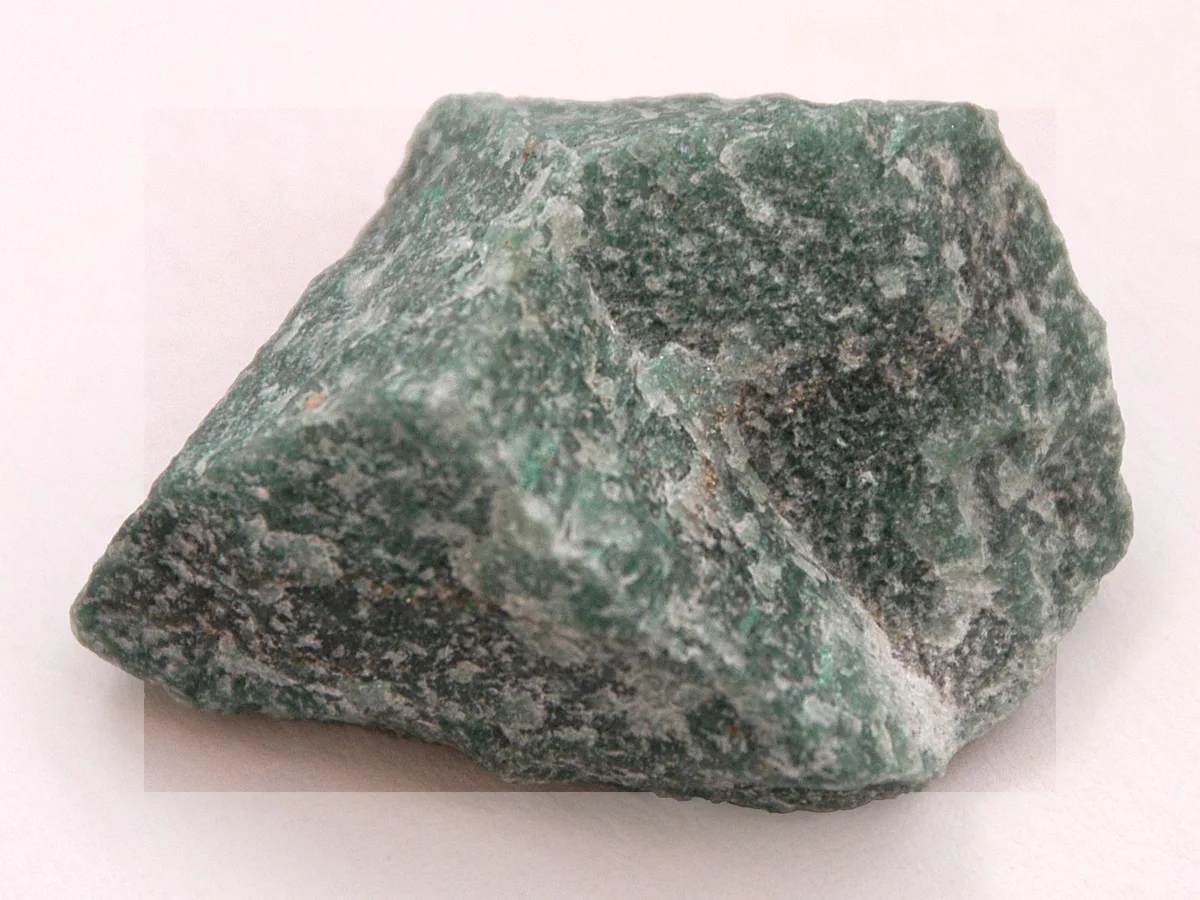
Aventurine Green quartz with small sparkling flecks. Cheap and hard, and daily wear does not trouble it. Tradition gives it luck.
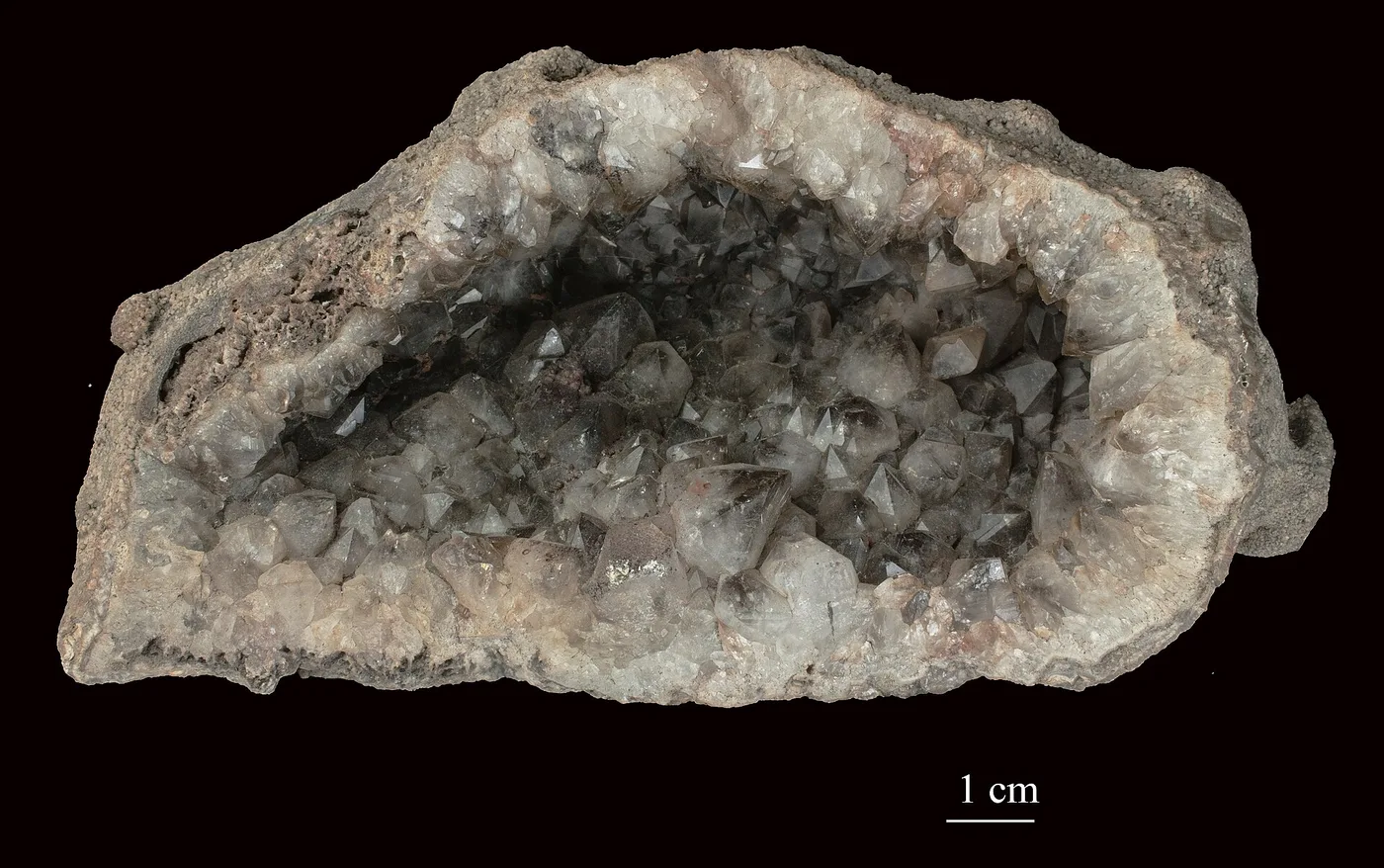
Smoky quartz Transparent, brownish grey, hardness 7. It looks restrained, which is exactly why it suits people who would rather not be the centre of the room.
How to choose
Libra suits soft, airy colours: pale blue, pink, green, silver, milky white.
For everyday wear the easy options are aventurine, smoky quartz and heliotrope. Kyanite needs care in a ring, while jade is the opposite and almost refuses to split, making it the most forgiving choice of the five.
If this is a gift, Libra values most of all that the piece suits them. Pick the colour against their clothes and their metal rather than against the list for the sign.
At Charcho
We assemble jewellery by hand and try to let the setting follow the shape of the stone rather than the other way round. There is more on heliotrope and jade on their pages, and finished work under bracelets and earrings.
See also
-

Cancer and its stones
Cancer runs from 21 June to 22 July. The sign sits between two months and takes most of July with it, which is why the birthstone given is ruby, the stone of July. On the June side, pearl is what remains.
The traditional list barely overlaps with either. It holds entirely different stones: calcite, moonstone, ammonite. Which is a good reason to know both lists and decide for yourself which one makes sense.
Character, briefly
Cancer gets the water element, and that means memory. Small details, old conversations, the tone in someone's voice — all of it stays. That is also why it reads a mood well, sometimes before the person has said anything.
The second side is defence. Cancer closes first, checks next, and only then lets anyone close. Tradition ties this sign to home, family and care.
All of this is astrology, not science. It is interesting as a cultural language, not as a diagnosis.
Traditional stones
Tap a stone name or photo — its article opens.
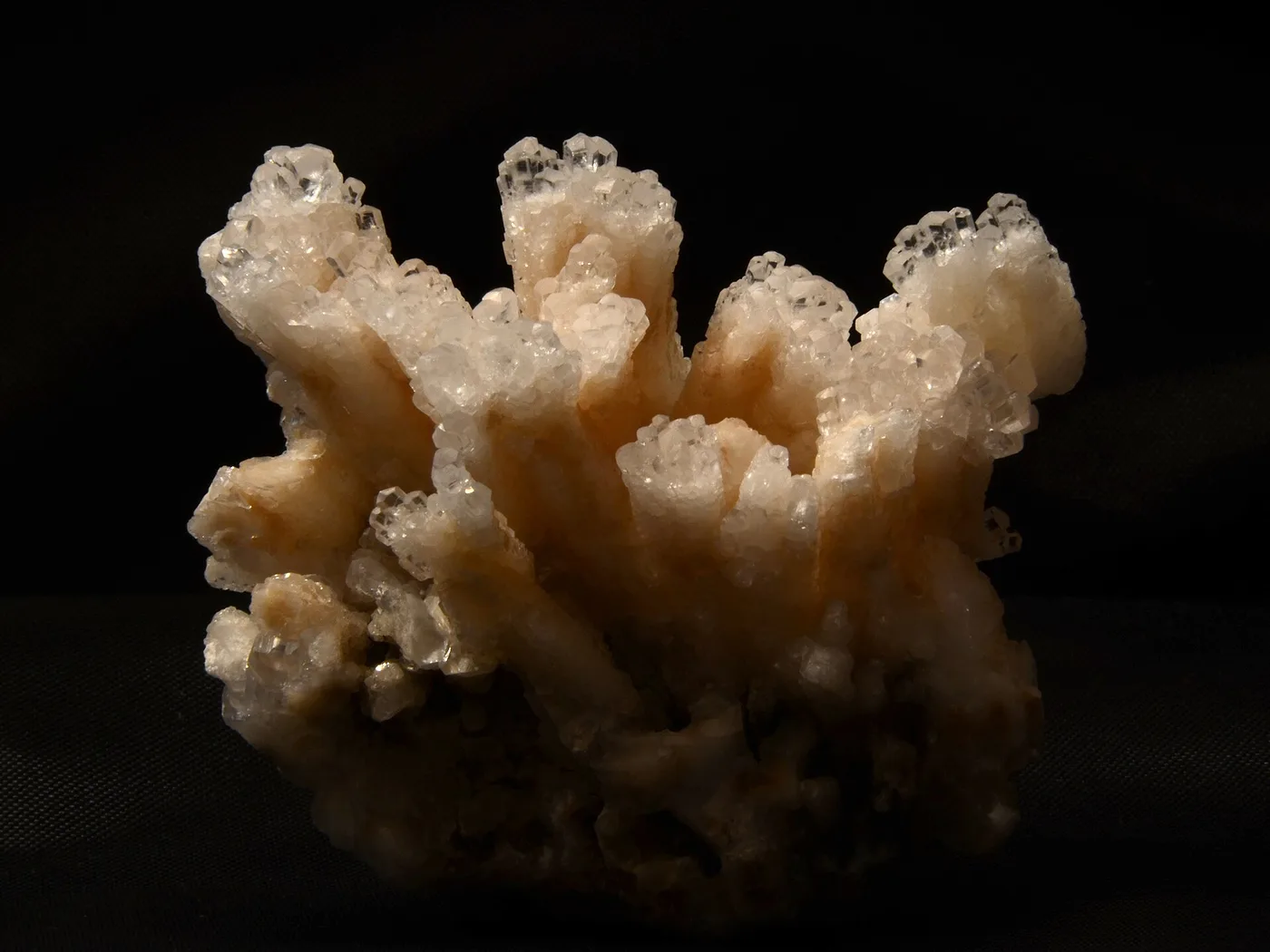
Calcite A soft mineral at hardness 3, scratched even by a fingernail. It comes in many colours: honey, pink, reddish. Tradition links it to calm, and in practice it is safer in a pendant than in a ring.
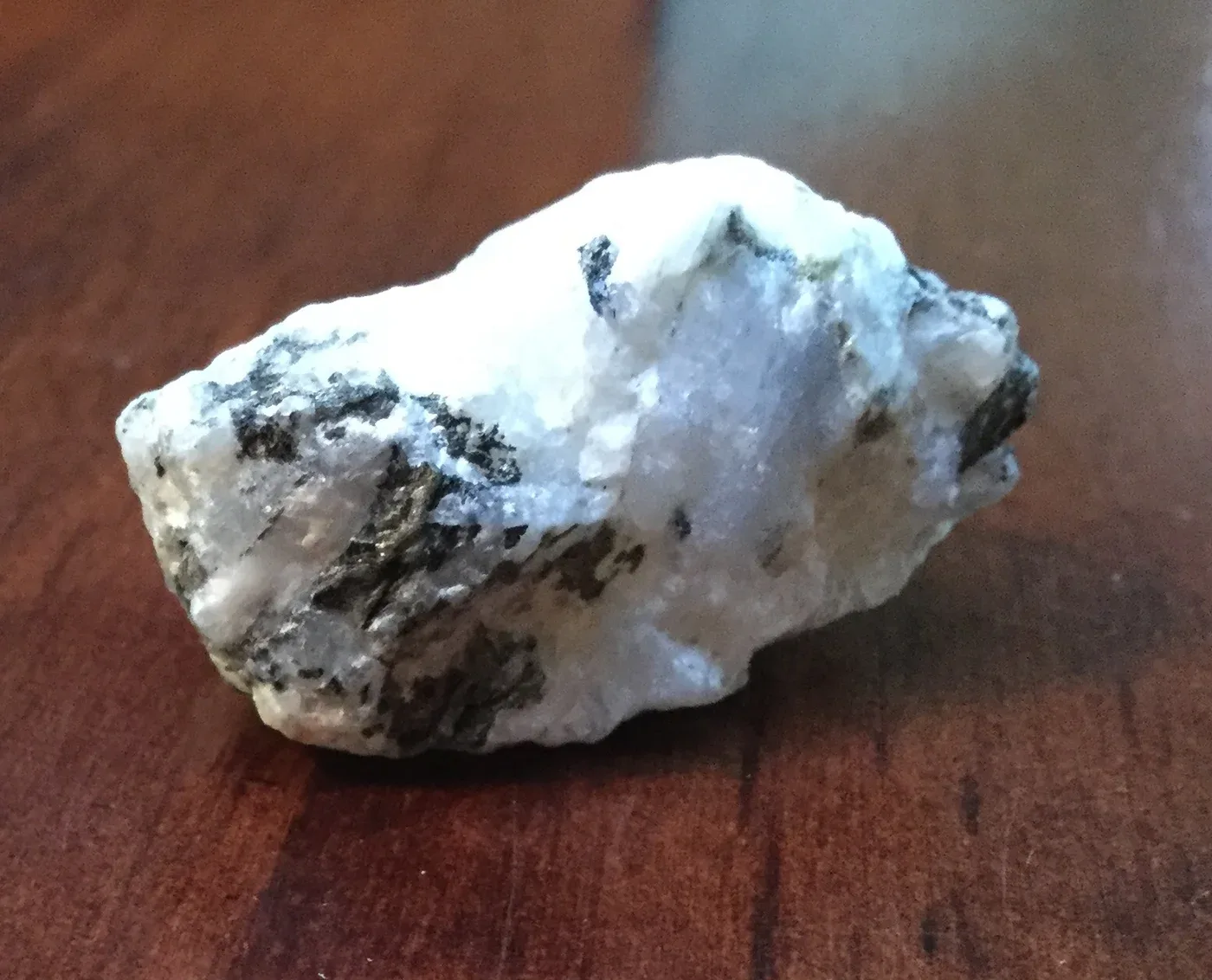
Moonstone Translucent feldspar that flashes blue in the light. It is the stone most often named for Cancer, since tradition gives it to the Moon and the Moon rules this sign.
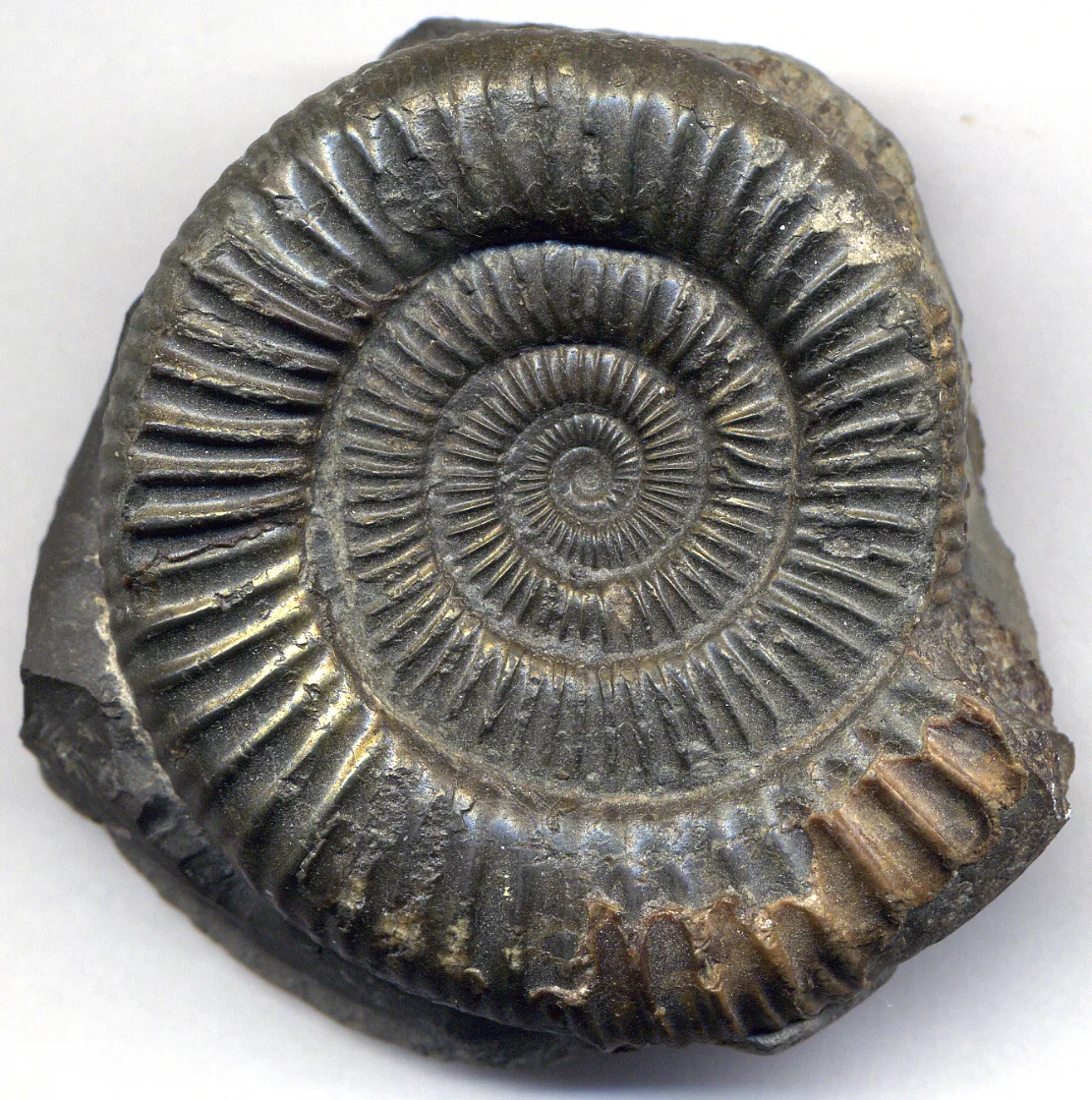
Ammonite A fossil shell, not a mineral. A natural spiral, sometimes with an opal-like sheen. For Cancer the logic is obvious, given the sign's own symbol is a shell.
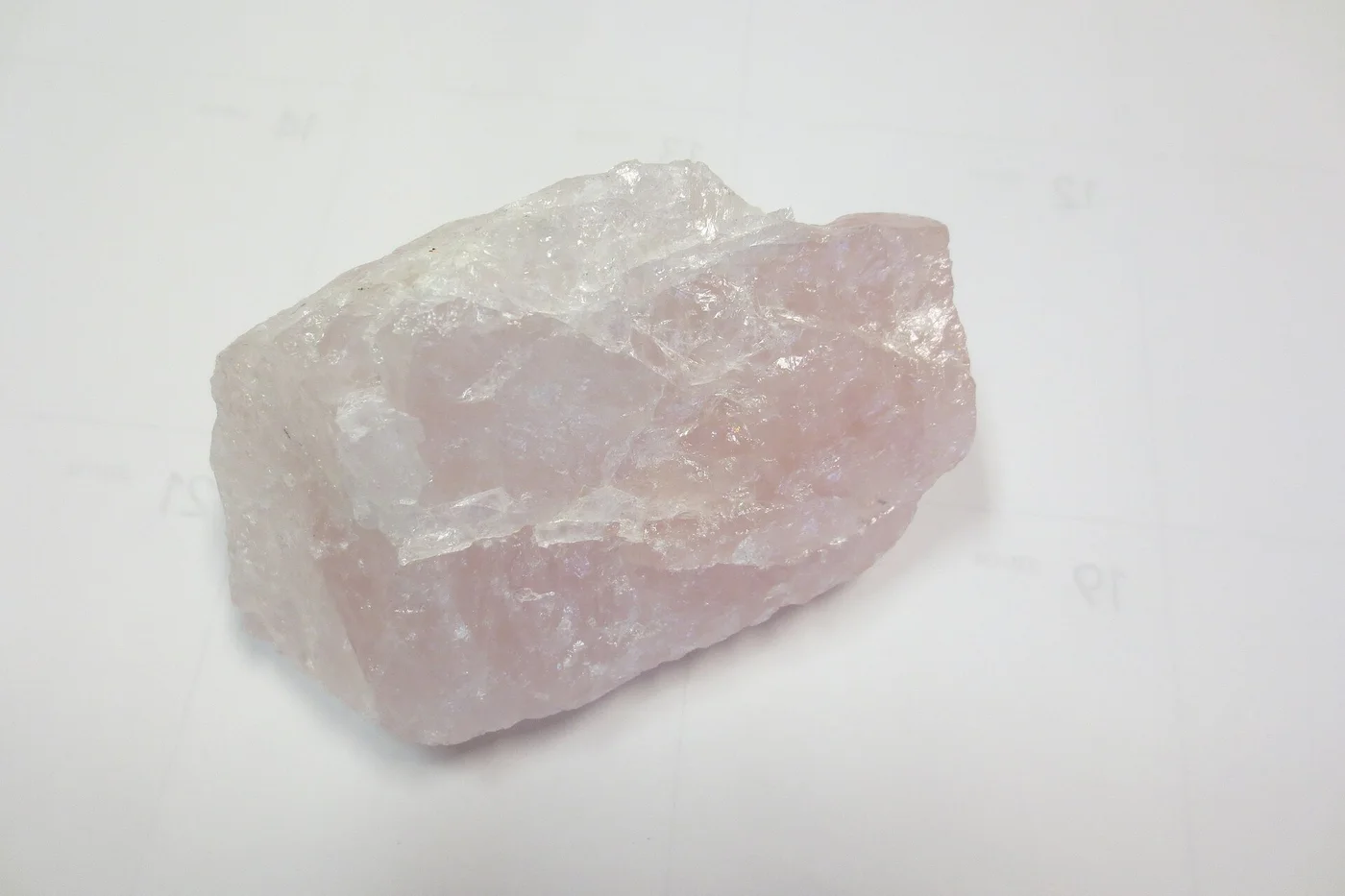
Rose quartz Soft pink, slightly cloudy. It is treated as the stone of love and care, and it handles daily wear well in a necklace.
Aventurine Green quartz with tiny sparkling flecks. Tradition gives it luck and calm, but the real point is that it is cheap and hard, which makes it practical.
How to choose
Cancer suits soft, watery shades: silver, pale blue, pink, milky white, light green.
For everyday wear the easy picks are moonstone, aventurine and rose quartz. Calcite is beautiful but soft, and a ring will be covered in scratches within a month. Ammonite sits nicely in a pendant, though its shape needs a setting built around it.
If this is a gift, keep in mind that Cancer tends to keep things with a history. A small handmade piece often means more than a large shiny one.
At Charcho
We assemble jewellery by hand and try to let the stone sit in the setting the way it looks in nature, without extra shine. There is more on moonstone and calcite on their own pages, and finished work under pendants and earrings.
See also
-
Leo and its stones
Leo runs from 23 July to 22 August. The sign splits between the last week of July and three weeks of August, which gives it two birthstones: July's ruby and August's peridot.
The traditional list, meanwhile, hands Leo entirely different stones, and they sit better on it anyway: sunlit, warm, distinct. Those are below.
Character, briefly
Leo gets the fire element, with the Sun as its ruler. Tradition ties it to warmth, generosity and a habit of being the centre of the room. A Leo walks in without saying anything and everyone still knows.
The other side is right there: if someone takes its place, it remembers for a long time. Tradition links Leo to pride and to keeping its word.
All of this is astrology, not science. It is interesting as a cultural language, not as a diagnosis.
Traditional stones
Tap a stone name or photo — its article opens.
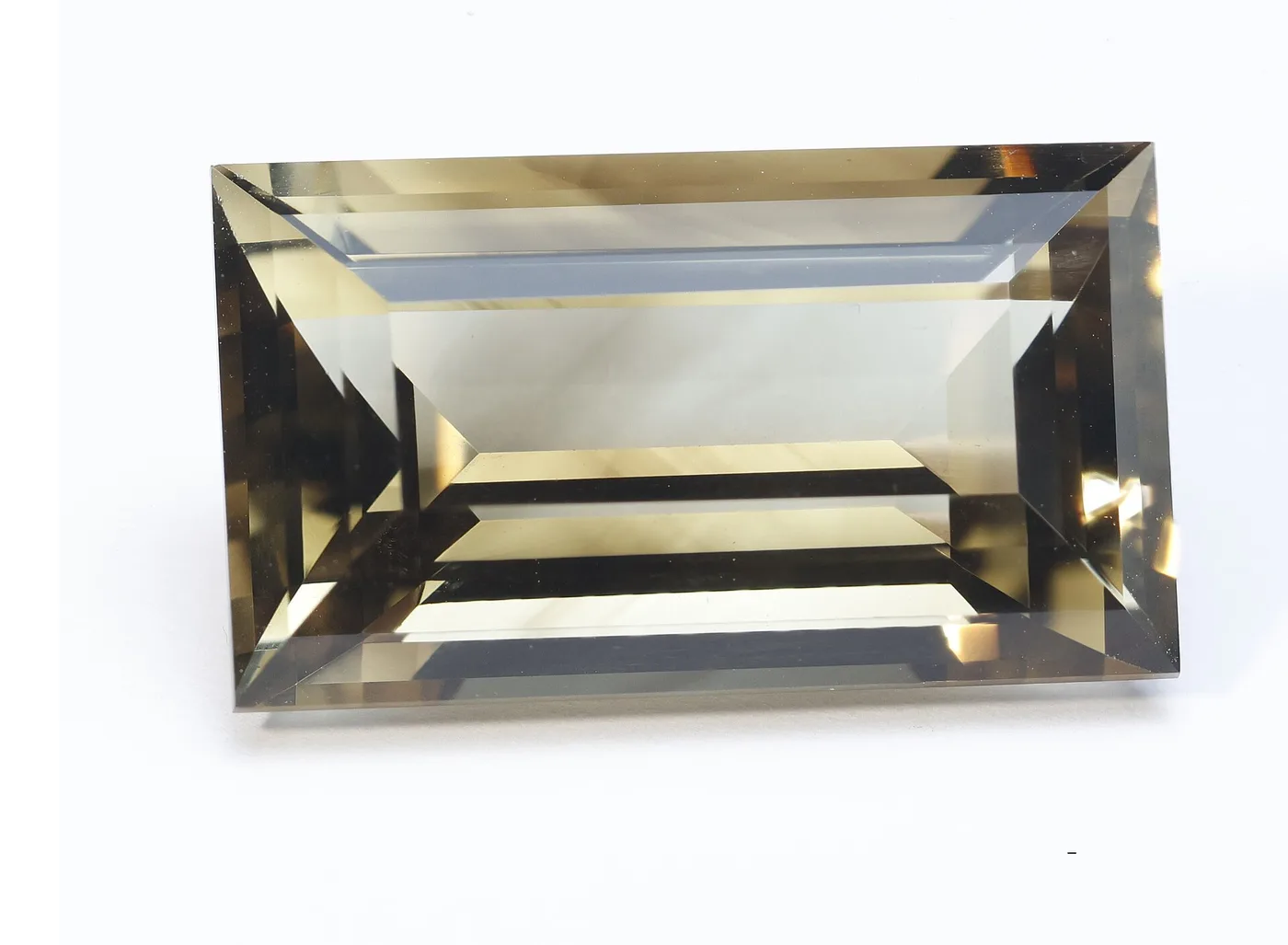
Citrine Yellow quartz, sometimes honey-coloured. Tradition treats it as the sun stone, and it is the one most often tied to Leo. At hardness 7, daily wear does it no harm.
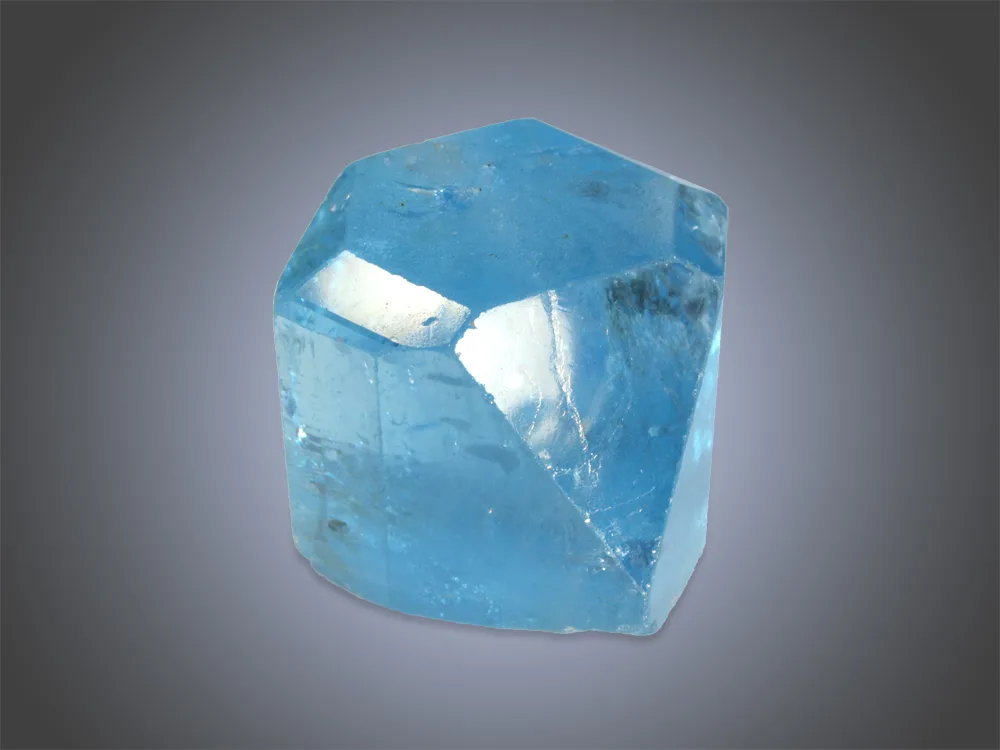
Topaz Vivid blue or gold, hardness 8. It is beautiful, but a faceted stone has fragile edges and needs protection in a setting. Tradition connects topaz with clarity and plenty.
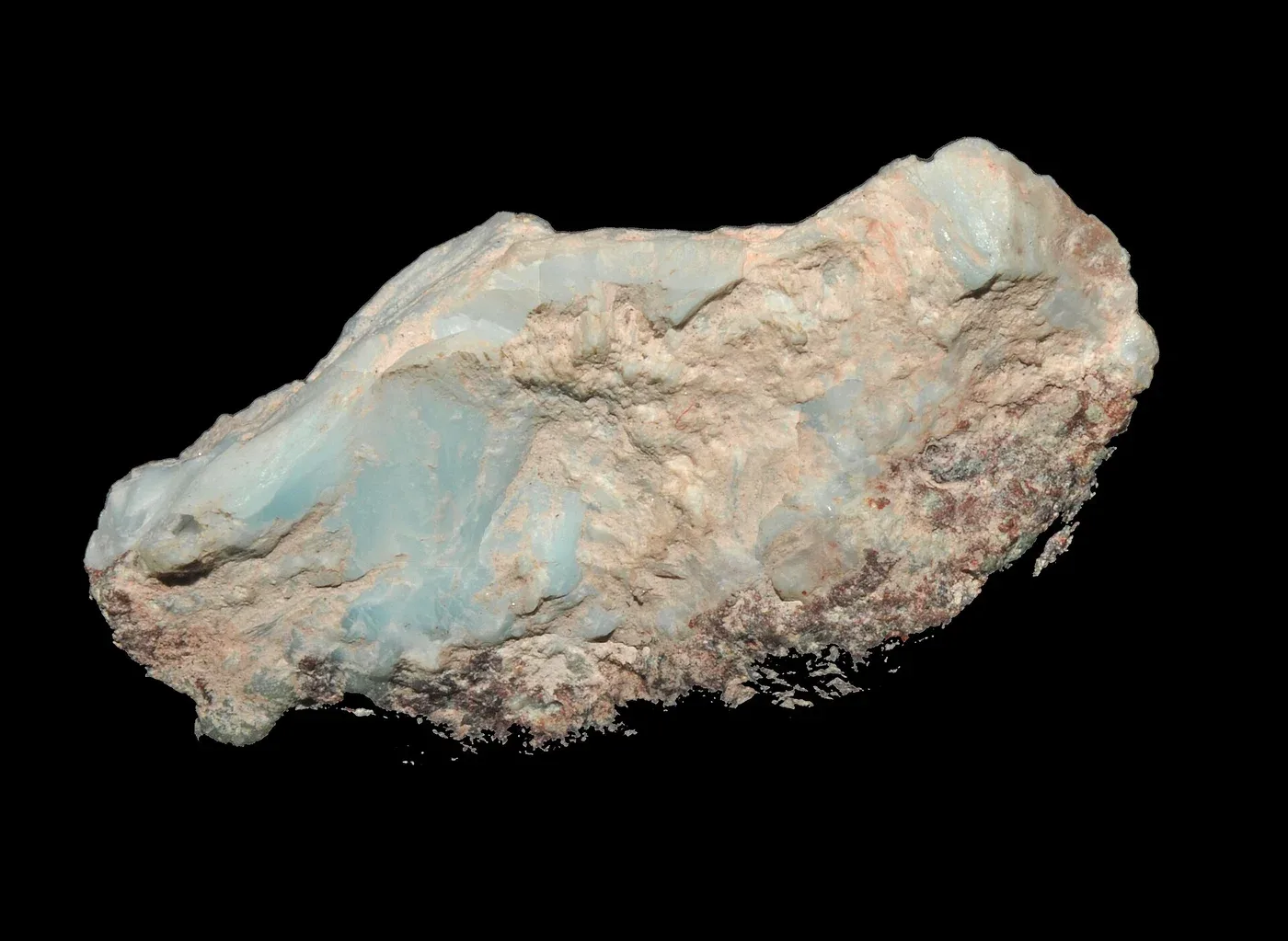
Larimar A pale blue, almost milky stone found only in the Dominican Republic. It is soft at hardness 4.5–5, so a ring needs care.
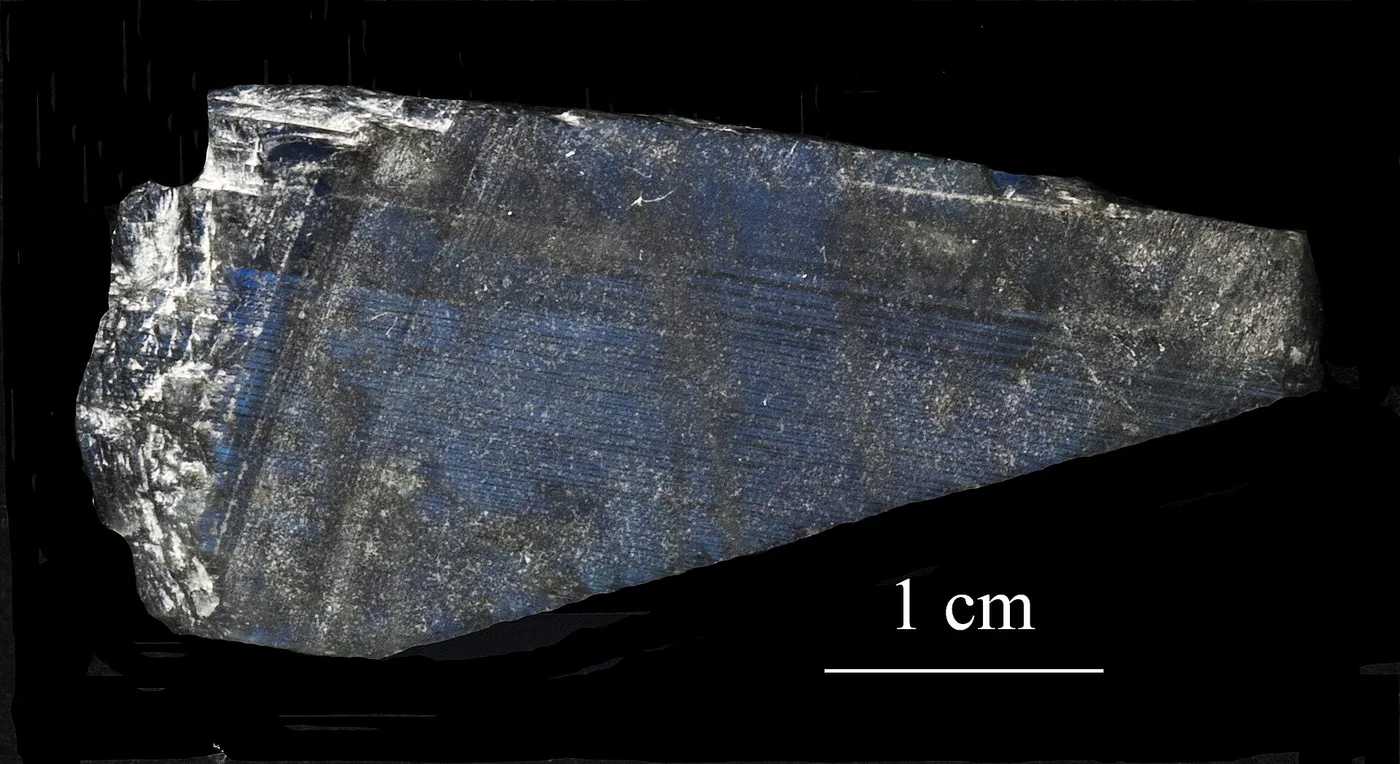
Labradorite Grey feldspar that flashes blue, green or gold as the angle shifts. Good for Leo if a plain colour feels dull.
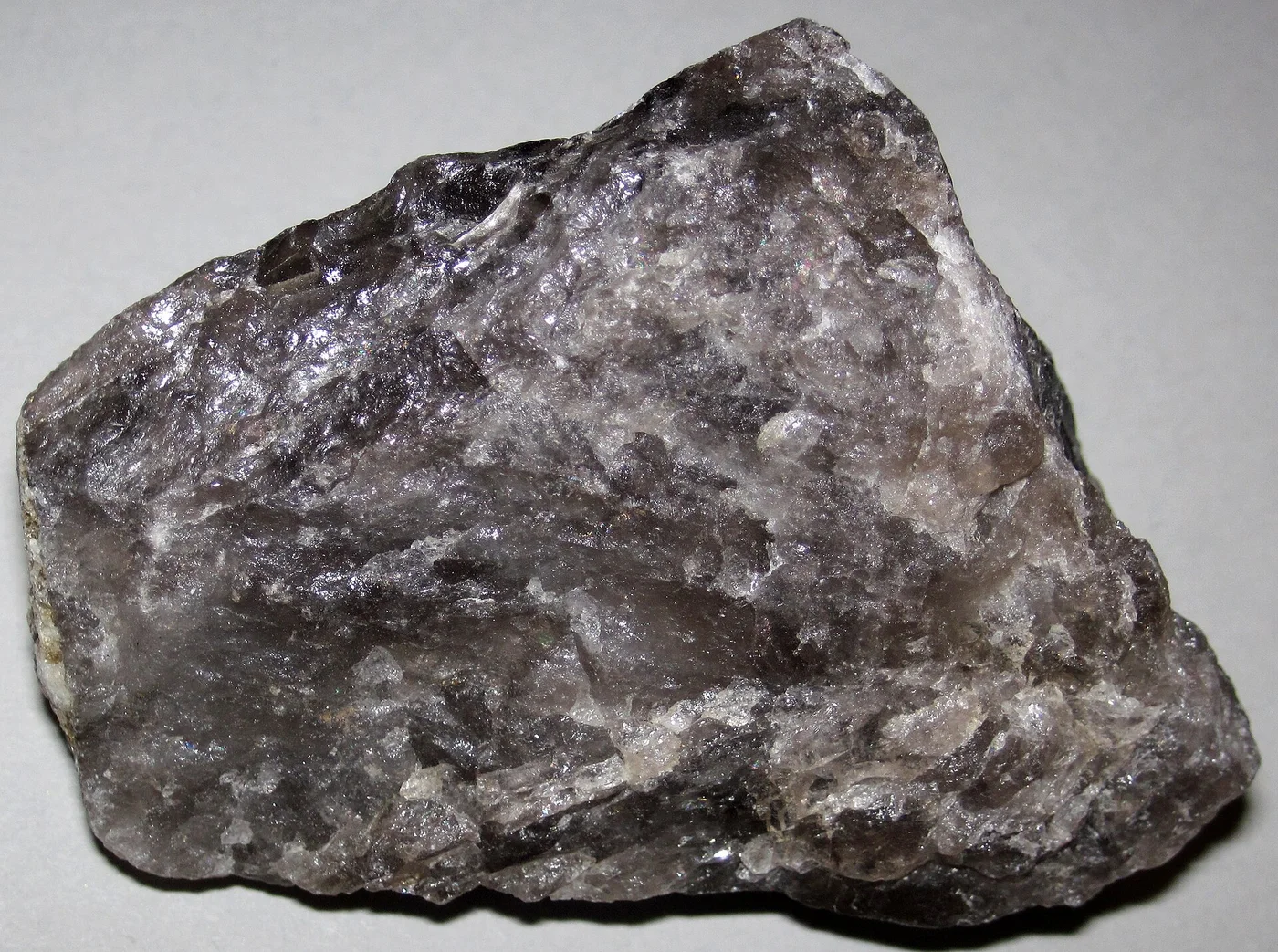
Rutilated quartz Clear quartz holding golden needles. Tradition gives it strength and protection.
How to choose
Leo suits warm, definite colours: gold, orange, red, strong blue. Grey and washed-out tones fade on it.
For everyday wear the calmer picks are citrine and rutilated quartz. Topaz and labradorite are more for evenings, and larimar genuinely asks for a careful hand.
If this is a gift, Leo really does like what shows. A small quiet stone does nothing on this sign, which needs something visible from across the room.
At Charcho
We build jewellery by hand and set warm stones in silver with as little metal as possible, so the colour is not swallowed. There is more on citrine and topaz on their pages, and finished work under necklaces and rings.
See also
-
Taurus and its stones
Taurus runs from 20 April to 20 May. It is one of the rare signs that splits almost evenly between two months: the last ten days of April and three weeks of May. That gives it two birthstones — diamond for April, emerald for May.
One clarification that often gets lost: the stone list for the sign and the stone list for the month were assembled separately, and they agree far less often than people assume.
Character, briefly
Taurus gets the earth element, and that is a fair description of its temperament. It settles in slowly, but once settled it lets go with difficulty. It does not rush or raise its voice; it quietly finishes what everyone else was arguing about.
The other side comes from the same trait, since change is an expense for Taurus. A new person, a new plan, a new route — all of it takes time. That is why tradition ties this sign to solidity and patience.
All of this is astrology, not science. It is interesting as a cultural language, not as a diagnosis.
Traditional stones
Tap a stone name or photo — its article opens.
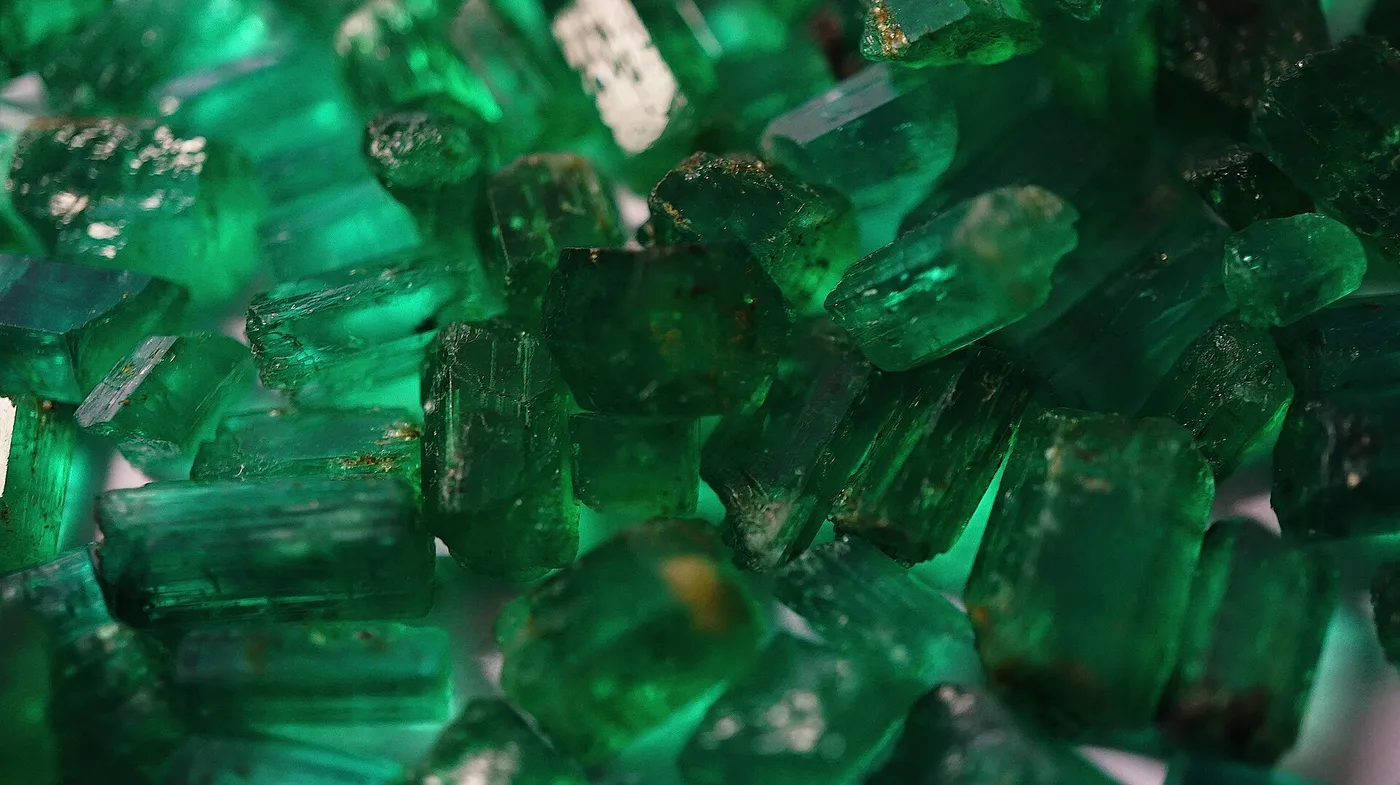
Emerald The May stone. A green beryl coloured by chromium and vanadium. Tradition links it to calm and loyalty, which happen to be the two things Taurus values most.
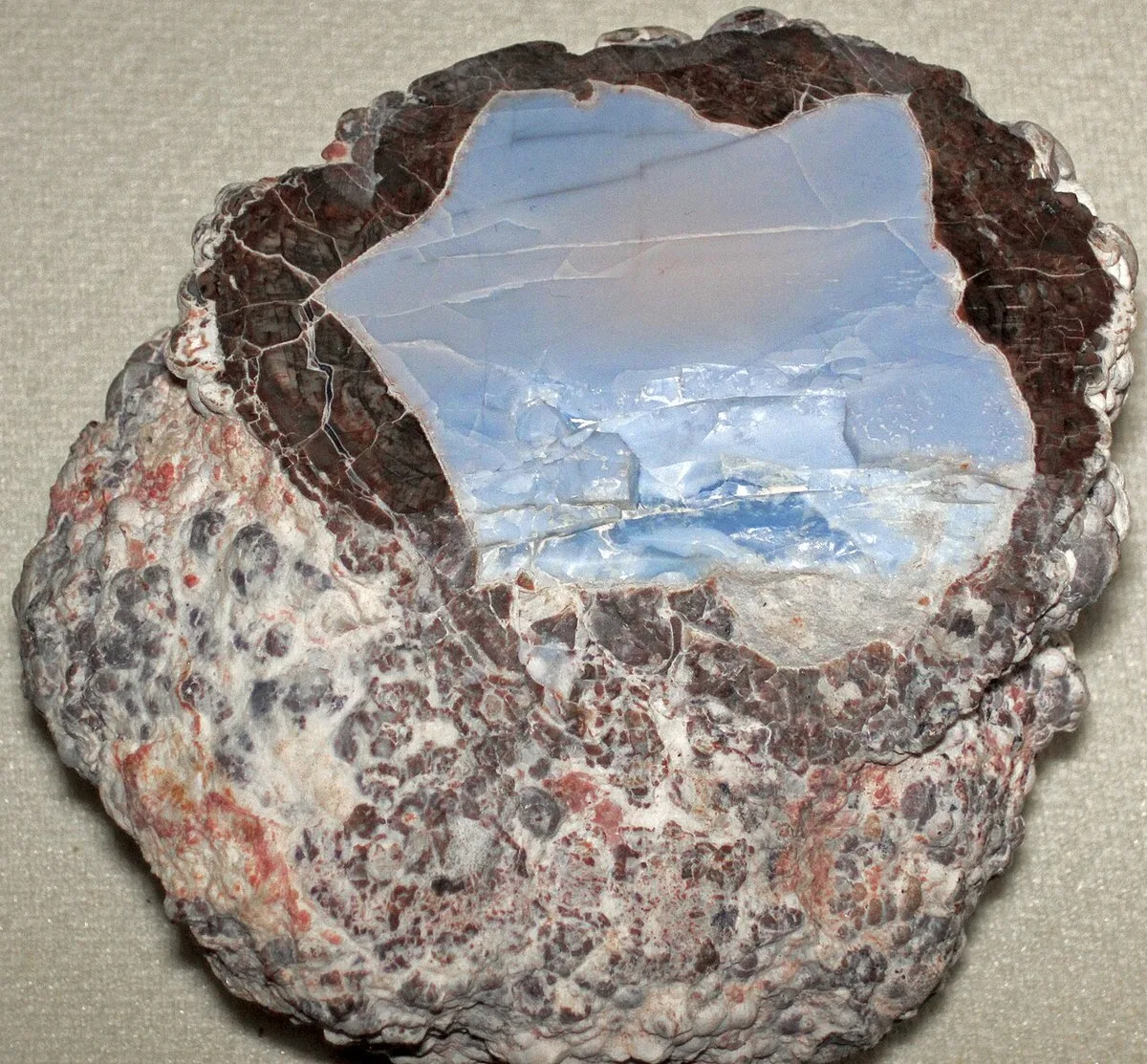
Agate Banded chalcedony. It sits near the top of the Taurus list because it is cheap and hard, and daily wear does not bother it. Tradition gives it a tie to the earth.
Rose quartz Soft pink, slightly cloudy. It is called the stone of love, though what matters here is its calm, which suits the Taurus temperament.
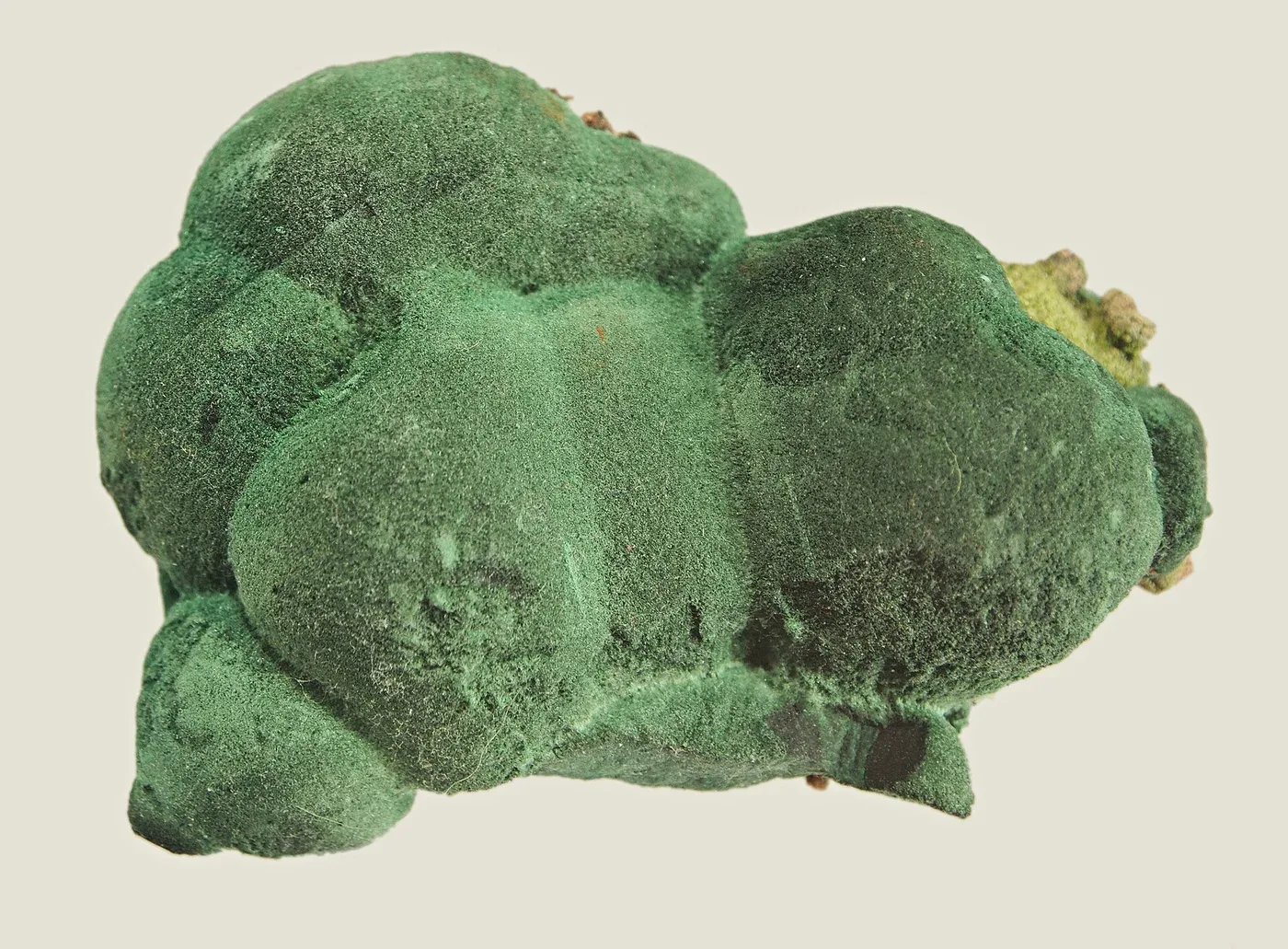
Malachite Green, with concentric rings. It is soft, hardness 3.5–4, so a ring worn every day is not its best setting. In a necklace or pendant it barely rubs against anything.
Moonstone Translucent feldspar with a blue sheen. Tradition associates it with intuition and quiet strength.
How to choose
Taurus suits earth and green tones: olive, pale green, milky white, pink, brownish shades. Sharp neon looks noisy next to it.
For everyday wear agate and emerald are the practical picks, since both are hard enough to shrug off scratches. Malachite and moonstone are more for evenings — fine for a night out, but they ask for care in daily life.
If the stone is a gift, think less about the sign and more about what the person actually wears. Someone who never wears rings will not be won over by one, however well it matches the horoscope.
At Charcho
We assemble jewellery by hand in Batumi and pick the stone before we settle on the setting. If you like emerald or agate from the Taurus list, have a look at our necklaces: you can see how a natural stone sits in silver.
See also
-
Gemini and its stones
Gemini runs from 21 May to 20 June. The sign takes most of June with it, which leaves three birthstone options: pearl, alexandrite and moonstone. The traditional list is longer and made of entirely different stones.
That gap is not a mistake. The two lists were built at different times on different logic: one follows months, the other follows the character of the sign.
Character, briefly
Gemini gets the air element, and speed is where that shows first. The thought outruns the sentence, and the sentence outruns the question. Two subjects, two books, two plans at once, and both genuinely interest it.
The weak spot sits right there: finishing is harder than starting, because new is always more interesting. Tradition ties Gemini to curiosity, talk and flexibility.
All of this is astrology, not science. It is interesting as a cultural language, not as a diagnosis.
Traditional stones
Tap a stone name or photo — its article opens.
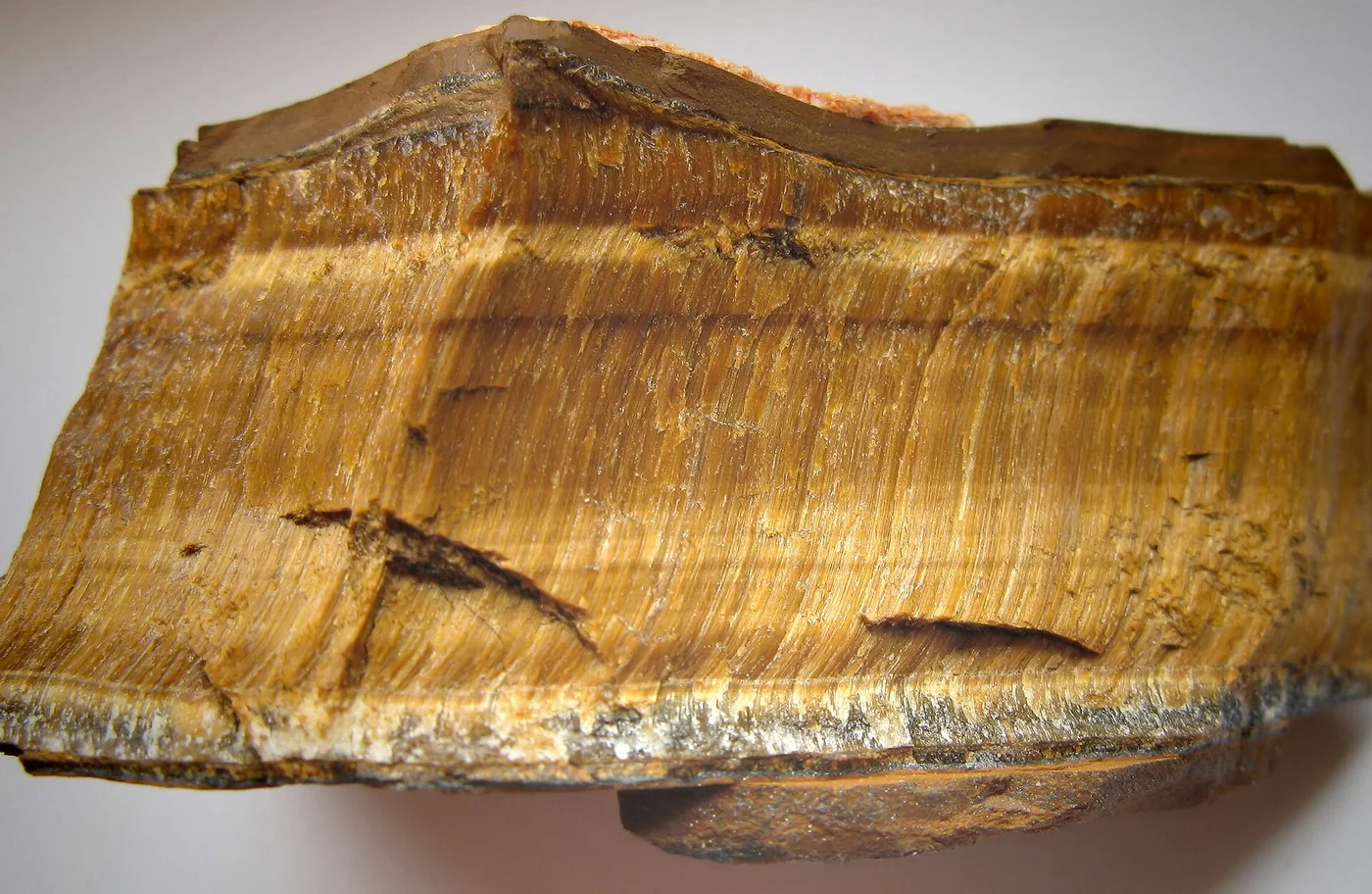
Tiger's eye Golden-brown quartz with a silky sheen. Tradition links it to nerve and clear-headedness, though with Gemini what works is the moving band of light: the stone answers when the angle changes.
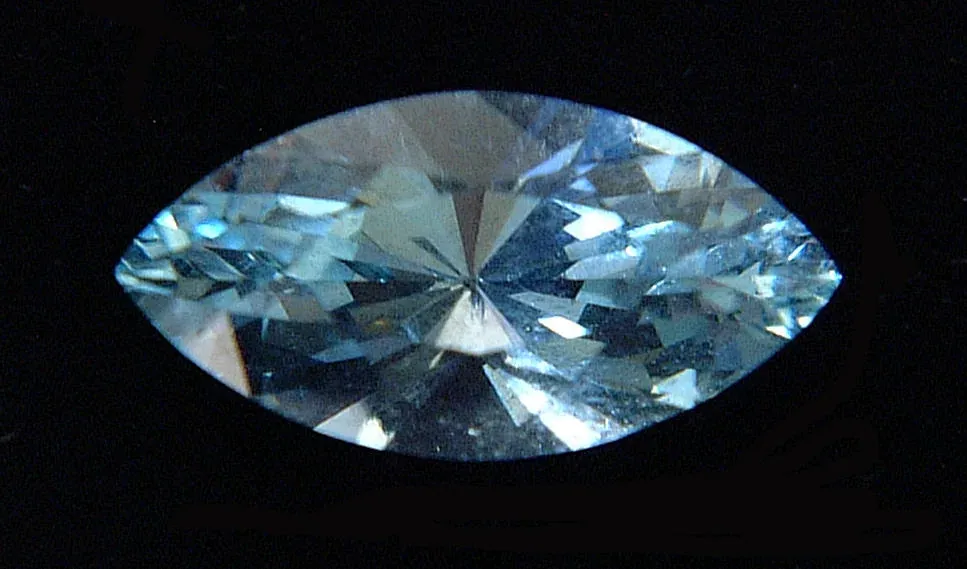
Aquamarine Pale blue beryl. Tradition connects it with calm, comprehensible speech, which is often what fast talking lacks. At hardness 7.5–8, daily wear is not a problem.
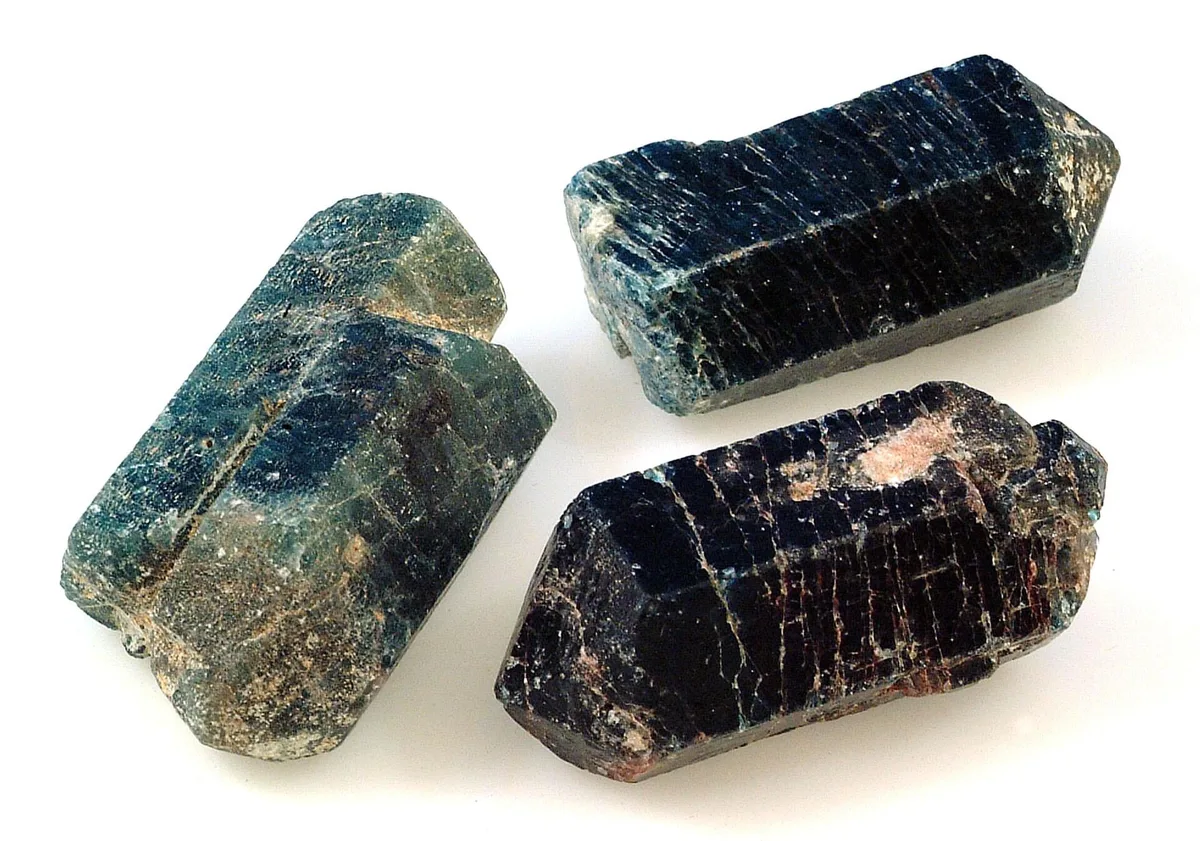
Apatite A soft stone at hardness 5. It comes green, blue or yellow, so there is plenty of colour and not much wear resistance. That makes it safer in earrings or a pendant than in a ring.
Citrine Yellow quartz. Tradition gives it cheer and energy. For Gemini it is a good pick when the job needs finishing rather than merely starting.
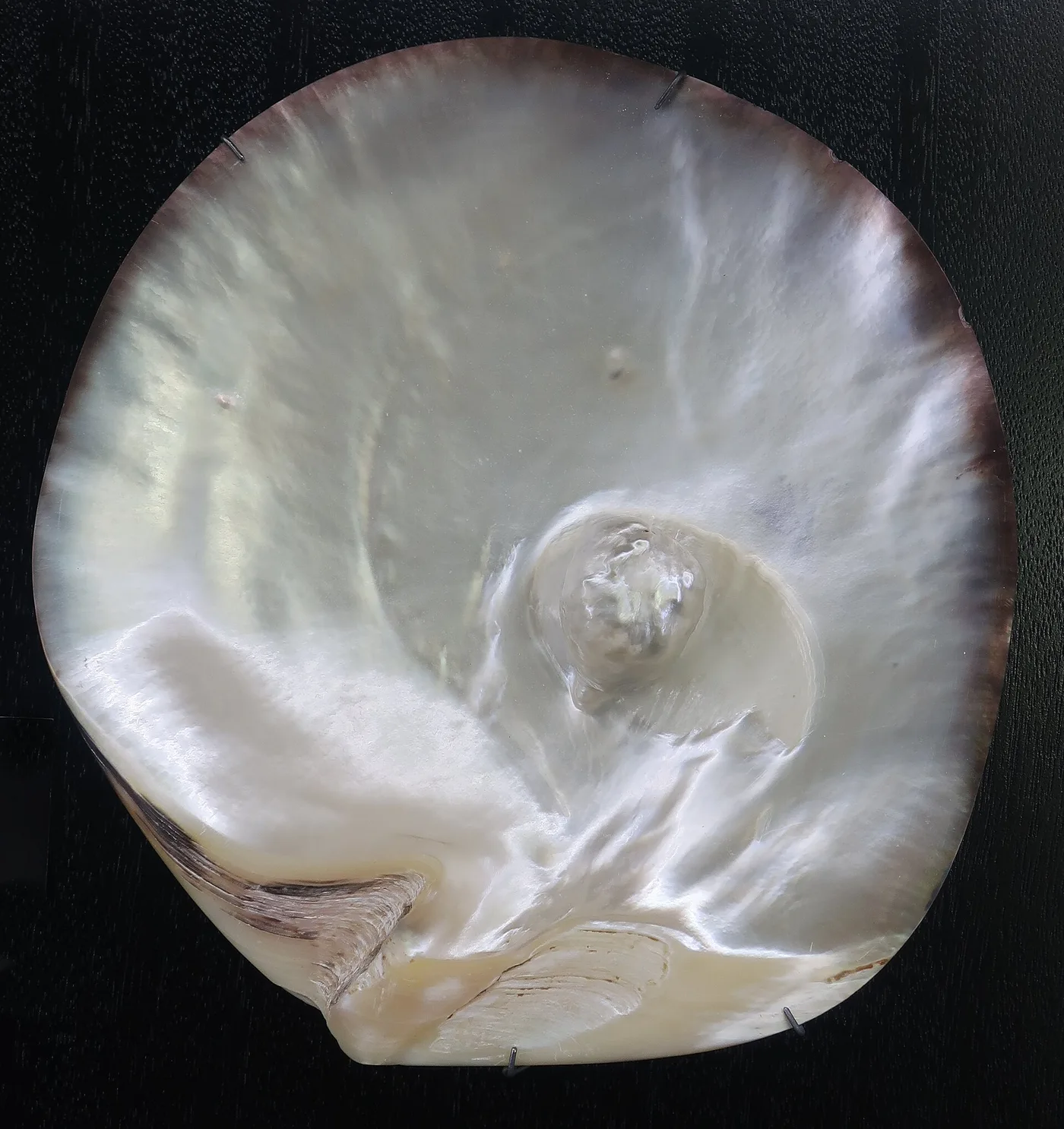
Pearl Organic, not a mineral, and the June birthstone. Tradition ties it to purity and calm. It is soft and dislikes acid and perfume.
How to choose
Gemini suits light, mobile colours: blue, yellow, green, silver. Heavy black and dark brown hang on it.
For everyday wear the calm choices are aquamarine, tiger's eye and citrine. Apatite and pearl need more care: keep pearl away from perfume, and apatite scratches fast in a ring.
If this is a gift, ask yourself what the person actually wears — a long necklace, small earrings, or nothing at all. The sign matters less than that.
At Charcho
We work with natural stone and silver, and the Gemini stones come up often, since people ask for exactly these light, plainly speaking colours. Have a look at the pages for tiger's eye and aquamarine, and see finished pieces under earrings.
See also
-
Aries and its stones
Aries runs from 21 March to 19 April, which puts it between two months. That gives it two birthstones: aquamarine for March, diamond for April. Everything else assigned to this sign is tradition rather than rule.
Character, briefly
Aries gets the fire element. It is the first sign, and it shows: it starts while everyone else is still making a plan. Fast, direct, no ceremony. The flip side sits right next to it, since patience is short and half-finished projects pile up.
All of this is astrology, not science. It is interesting as a cultural language, not as a diagnosis.
Traditional stones
Tap a stone name or photo — its article opens.
Aquamarine The March stone. Blue, calm, the exact opposite of the Aries temperament, which is why it is recommended to people who could use some quiet.
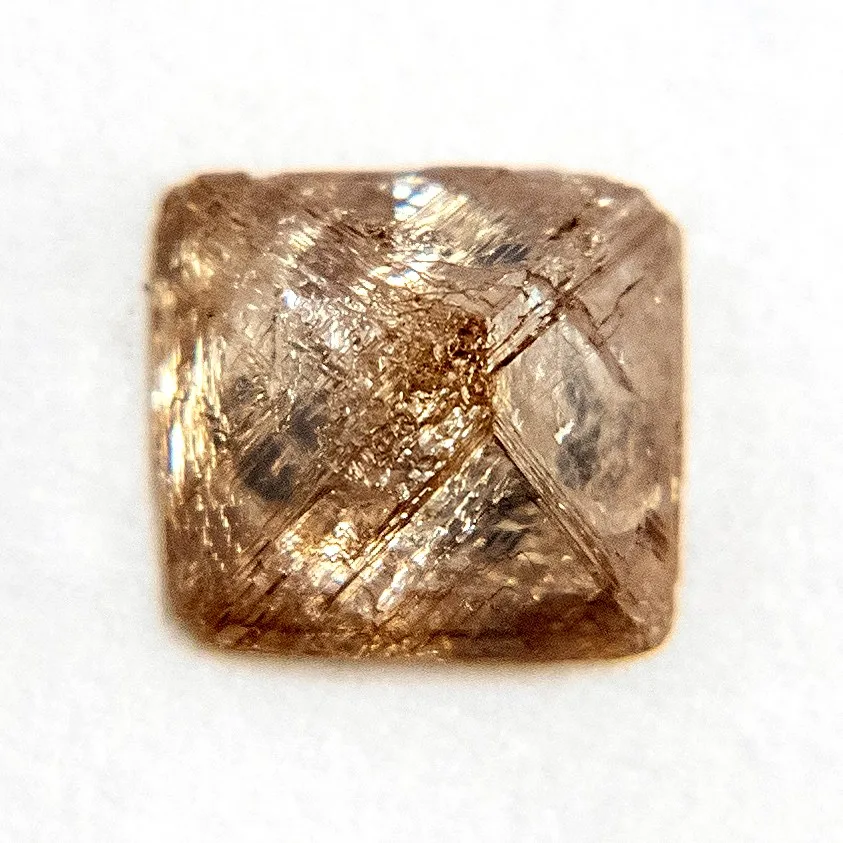
Diamond The April stone and the hardest natural mineral. Tradition ties it to resolve and staying power. It is expensive, so for daily wear people usually pick a small one.
Ruby Red, the stone of fire. It is the one most often linked to Aries.
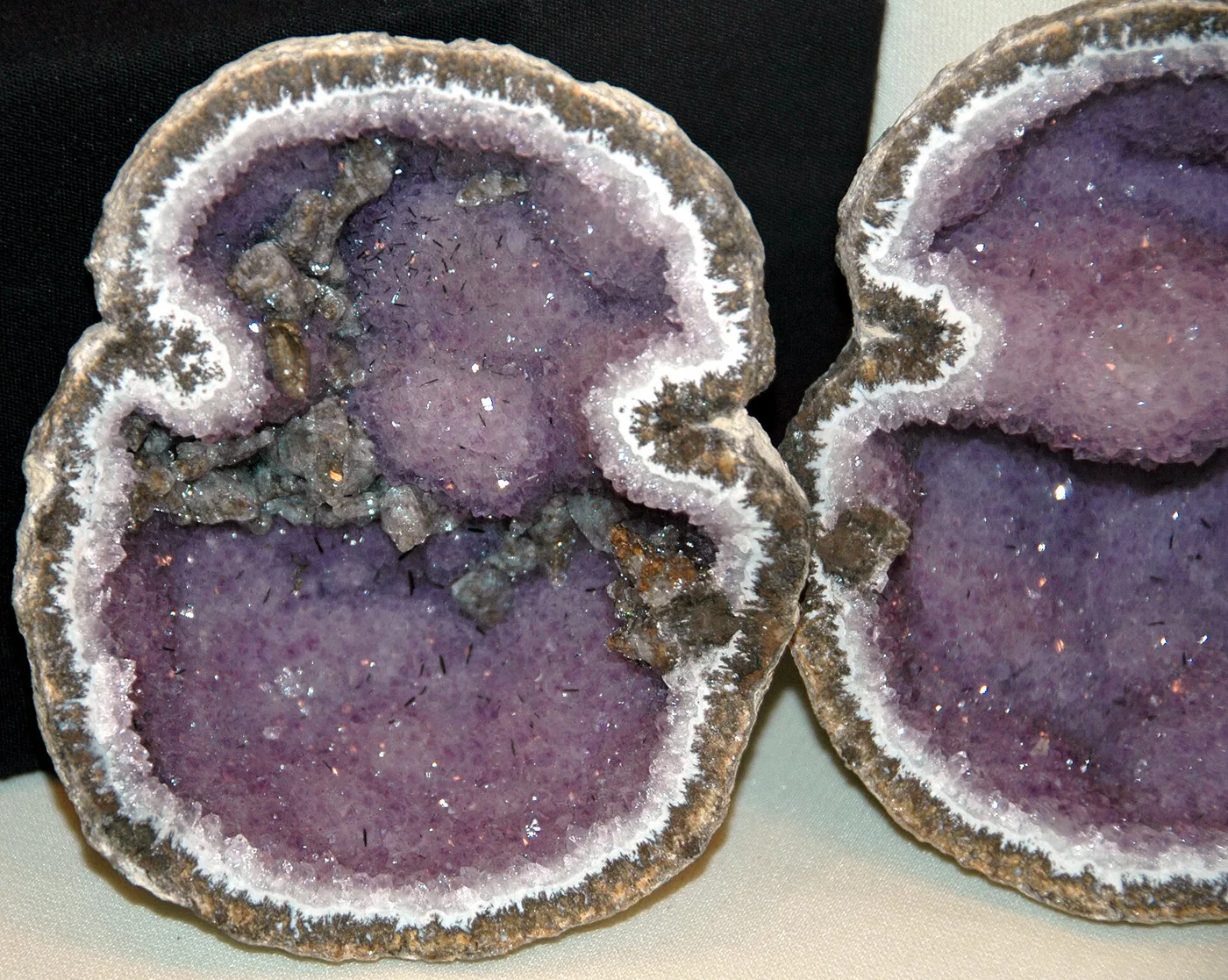
Amethyst Purple quartz. Traditionally a stone of sobriety, which helps with exactly what Aries tends to lack.
Heliotrope Green with red flecks, called bloodstone in older texts.
How to choose
Aries suits sharp, warm colours: red, orange, pale blue. For everyday wear aquamarine, amethyst or heliotrope are more practical, since all three are hard enough to shrug off scratches. A diamond is beautiful but asks for attention in a ring worn daily.
If the stone is a gift, think less about the sign and more about what the person actually wears. A necklace that stays in the box pleases nobody.
At Charcho
The most obvious pick for Aries is our aquamarine necklace: the March stone, set with natural blue aquamarines.
See also
-
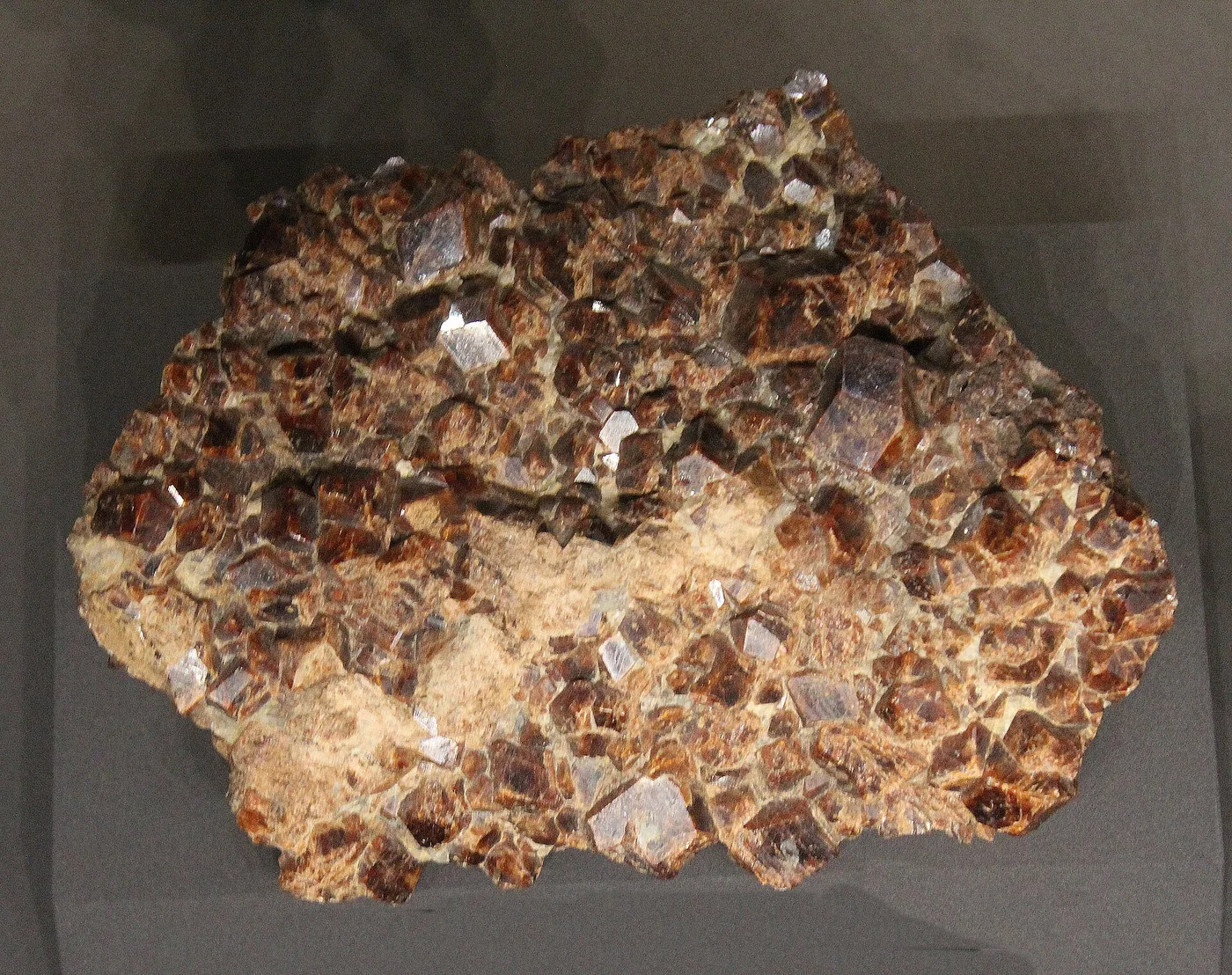
Hessonite
Chemical formula – Ca₃Al₂(SiO₄)₃
Hardness – 7–7.5
Colour – honey, brown, red, cinnamonHessonite is a garnet, and more precisely a variety of grossular. Most grossulars are green; hessonite runs deep red, brownish or carrot-orange, which is why the trade also calls it "cinnamon stone".
The name comes from the Greek "hesson" — weaker, lesser — because hessonite is slightly softer and lighter than the rest of the garnet family. Older mineralogy books spell it "essonite" as well.
Its signature is the pattern inside: wavy, flowing bands that look like honey or syrup caught in the stone. That treacly texture is one of the best signs of a natural hessonite.
Price follows size, clarity and colour. Cabochons and beads stay affordable; a clean, bright red faceted stone costs far more. A large share of what is sold has been heat-treated — that deepens the colour and is accepted practice, as long as the seller does not hide it.
Origins
Sri Lanka is the classic source — its stones are sold as "Ceylon hessonite" and are considered the cleanest in colour. Good material also comes from Brazil, India, Tanzania, Madagascar, Canada and the United States.
Properties
Tradition treats hessonite as a stone of passion and creativity. It is said to help with self-expression, to strengthen willpower and to ease low moods.
Esoteric writers also call it a guardian of domestic harmony: hessonite is said to soften the tone of an argument and help a couple find common ground. It is usually worn alongside other warm, orange stones.
Traditional healing properties
Lithotherapists link hessonite with the urinary and reproductive system, with circulation and with the heart; some add the spleen. The stone is said to boost blood flow and give the body warmth.
This describes traditional practice, not medical advice. A stone does not replace a doctor.
Chakras
Root chakra – muladhara, together with svadhisthana. Some traditions also connect it to the third, manipura.
Zodiac
Tradition assigns hessonite to Aquarius. Astrologers say it suits Libra and Cancer especially well, and works favourably on the fire signs — Aries, Leo and Sagittarius.
In Charcho jewellery
We mostly set hessonite as a cabochon: a flat, smooth surface shows the stone's warmth and inner pattern best. Its brown-red tone sits well with silver and rose gold. We do not have a ready-made piece in the catalogue yet, but we make them to order. Catalogue: rings.
Real or fake
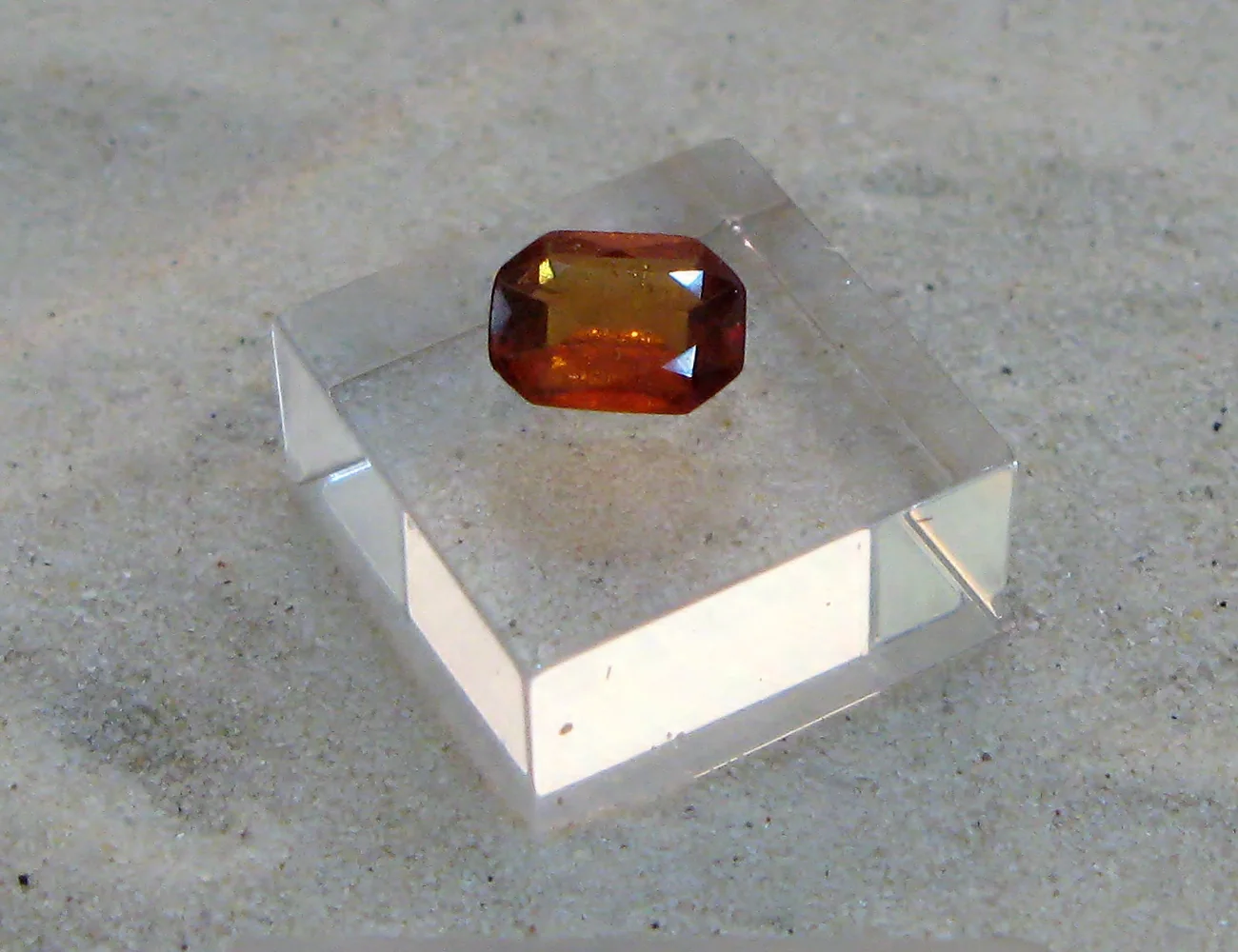
- Glass has no wavy "syrup" pattern — you see either evenly scattered bubbles or nothing at all.
- Natural stones almost always carry tiny inclusions and slight shifts in colour; a perfectly clean, evenly coloured large stone is expensive, so a low price should raise questions.
- Red tourmaline looks similar, but it shows thread-like inclusions and cracks, while hessonite shows flowing treacle bands.
Care
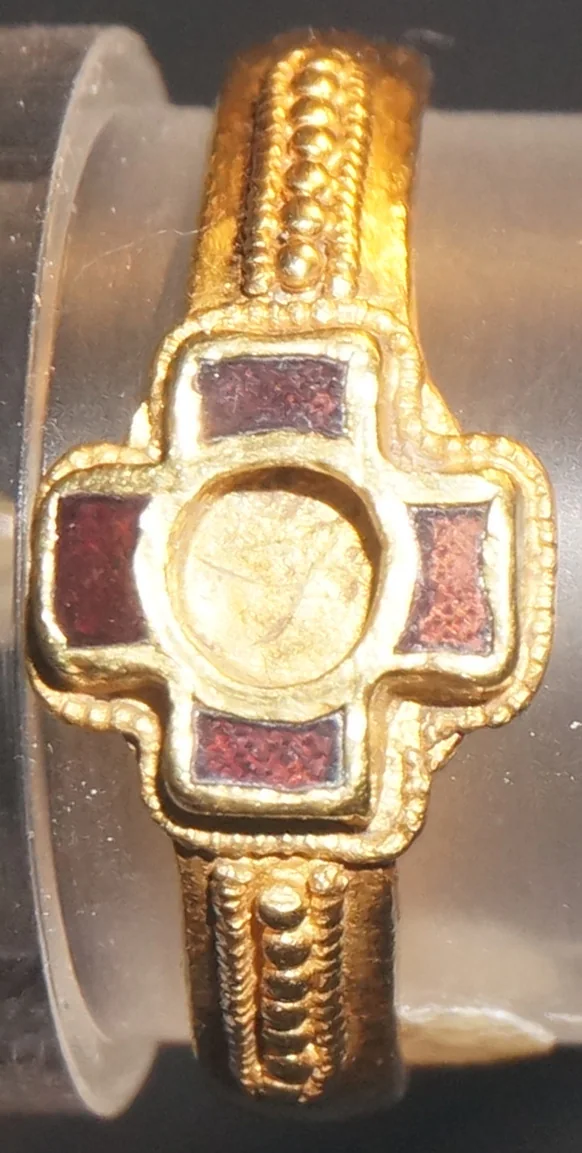
Hardness 7–7.5 makes the stone fine for daily wear, but it needs no ultrasonic or steam cleaning — warm water, a soft cloth and mild soap are enough. Keep it away from acids, perfume and sharp temperature swings, which open cracks.
See also
-
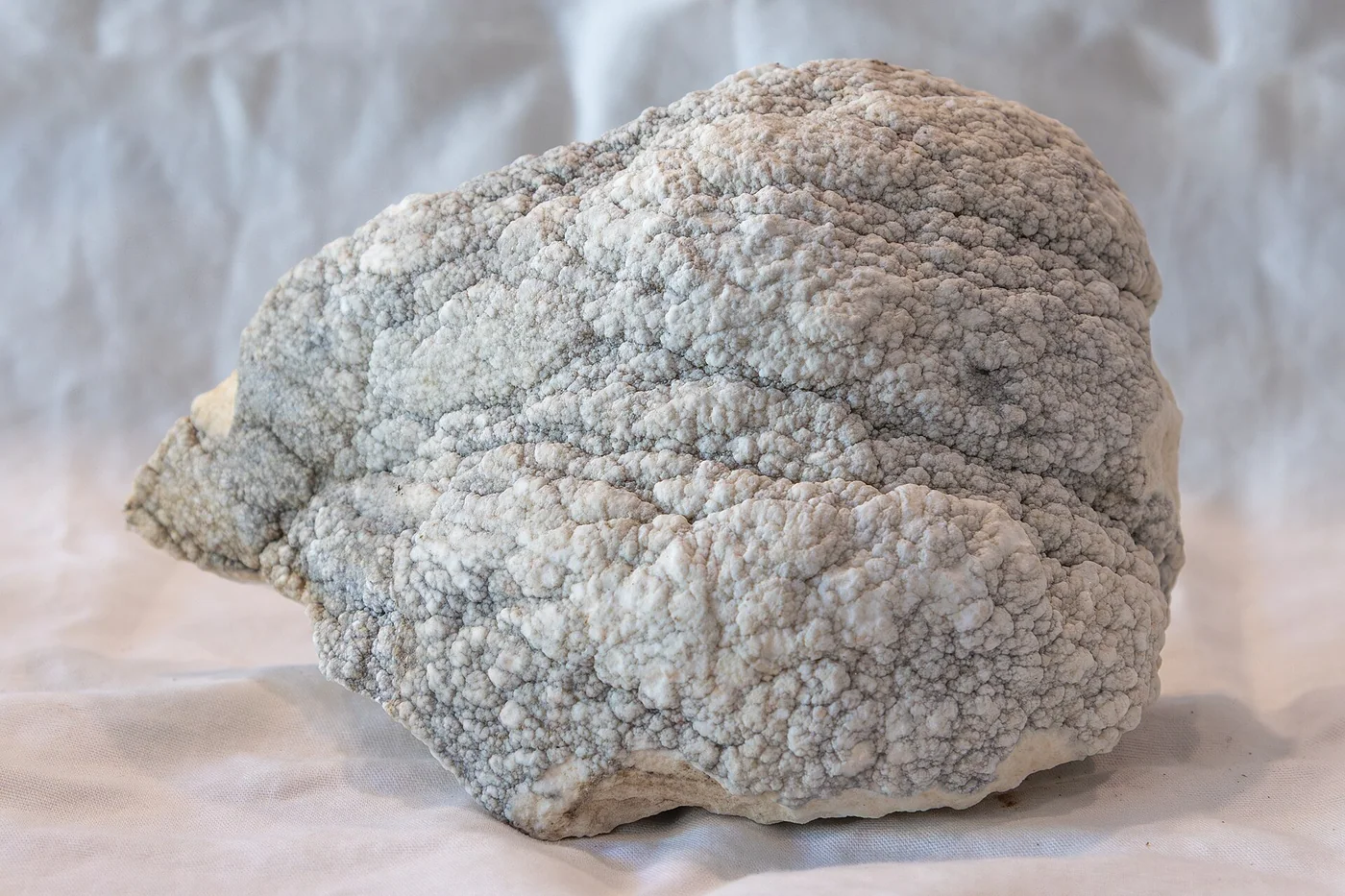
Howlite
Chemical formula – Ca₂B₅SiO₉(OH)₅
Hardness – 3.5
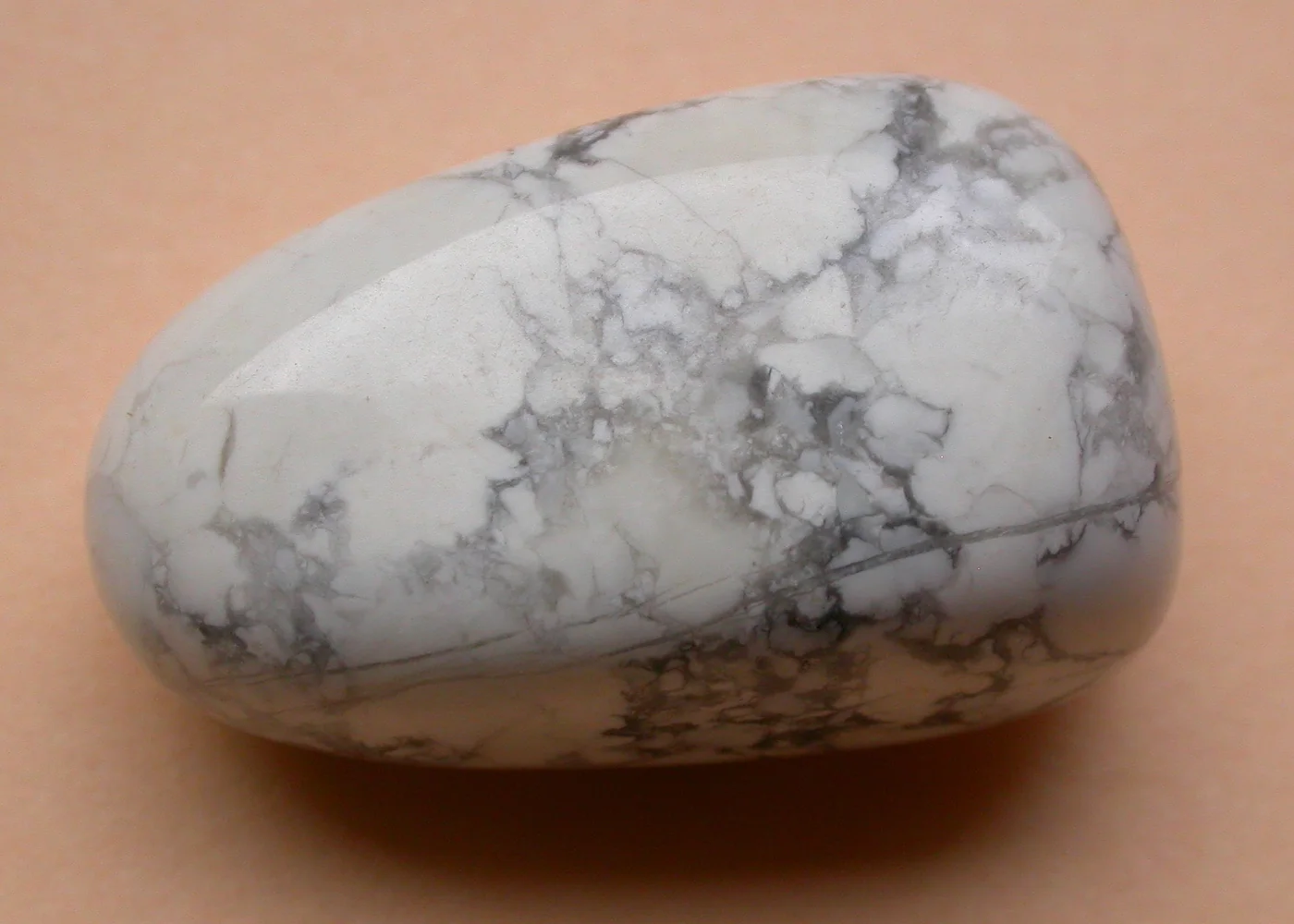
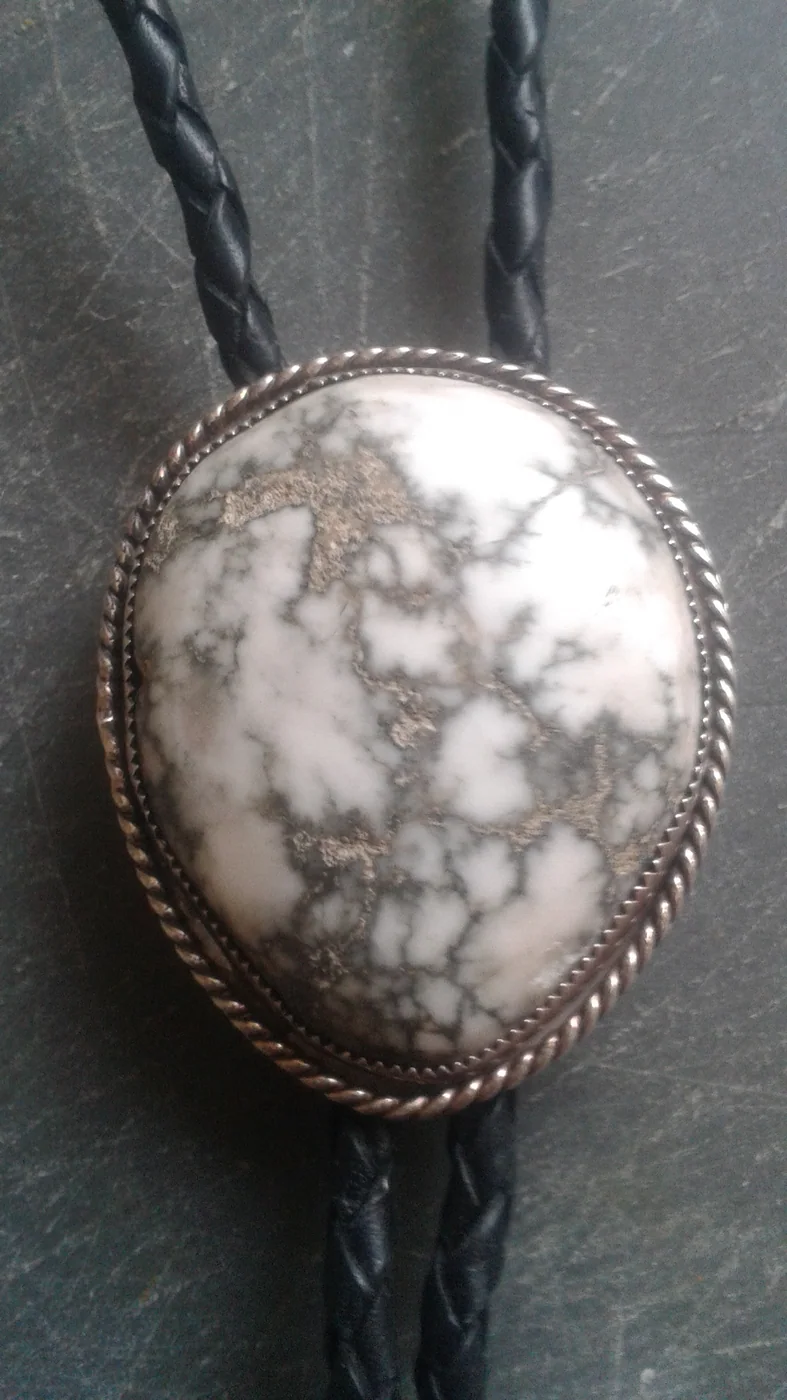
Colour – white with grey and black veiningHowlite is a borate mineral: soft, porous and milky white, with grey or black veins running across the surface in an arabesque pattern. That veining is what makes the stone recognisable at a glance.
The name goes back to 1868, when the Canadian chemist, mineralogist and geologist Henry How described the mineral after finding it in Nova Scotia — his name stayed with it.
Howlite is often called "white turquoise", though it is no relation: the colour and the pattern simply look alike. It is far cheaper and porous, so it drinks dye readily. Dyed blue it is sold as turquoise, dyed deep blue as lapis, dyed red as coral.
Origins
Most howlite comes from the United States, mainly California. Smaller amounts are found in Turkey, Germany, Mexico and Russia.
Properties
Esoteric writers call howlite the calmest of stones. It is said to help with stress and irritation, to soothe and to release tension.
The stone is believed to lift self-esteem and help a person present themselves. School pupils and students are advised to keep it for concentration. Howlite is undemanding — it is said that anyone can wear it and it asks for no particular "tuning".
Traditional healing properties
Lithotherapists use howlite for pain and for insomnia. It is said to restore the body's calcium balance and to strengthen bones, teeth, hair and nails.
This describes traditional practice, not medical advice. A stone does not replace a doctor.
Chakras
Crown chakra – sahasrara.
Zodiac
Tradition does not tie howlite to one sign — it is treated as a neutral stone that suits everybody. Most often it is still recommended to Cancer and Pisces, who need calm and emotional balance more than most.
In Charcho jewellery
We mostly use howlite as beads and cabochons — the black-and-white pattern plays well along a strand, and no two stones look the same. We do not have a ready-made piece in the catalogue yet, but we make them to order. Catalogue: bracelets.
Real or fake
- In natural howlite the veins bend slightly and break off unevenly; in an artificial "stone" they are too clean and symmetrical.
- On dyed howlite the colour sits darker along the edges of the veins and inside the pores; real turquoise and lapis do not behave that way.
- Cheap blue "turquoise" is almost always dyed howlite — real turquoise costs completely different money and is never porous.
Care
Hardness 3.5 means the stone is soft: a sharp edge, ring metal or keys in a pocket will mark it easily, so store it separately. The porous surface absorbs dirt and perfume, so clean it with a soft dry cloth; do not leave it soaking, especially if it has been dyed. No ultrasonic, no steam.
See also
-
Chiastolite
Chemical formula – Al₂SiO₅
Hardness – 5–5.5
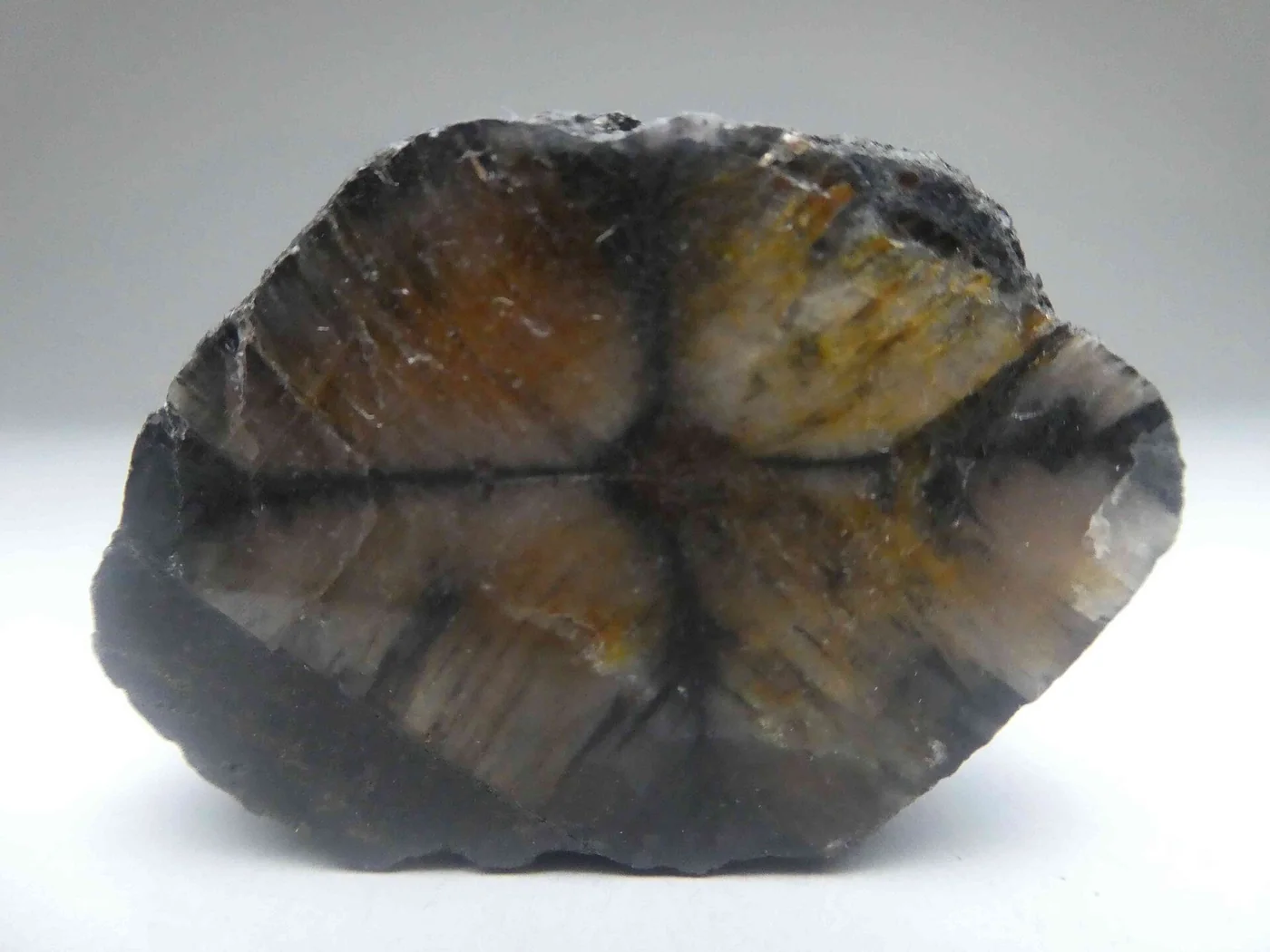
Colour – brown, black, yellowChiastolite is the opaque variety of the mineral andalusite. Its mark is a set of black graphite inclusions that form a cross, which earns it the name "cross stone". The Greek "chiastos" means arranged crosswise.
Staurolite carries a similar cross, but it is a completely different mineral and the two are unrelated. In chiastolite the cross grows with the crystal: graphite gathers at the corners while a pale or clear band stays in the middle.
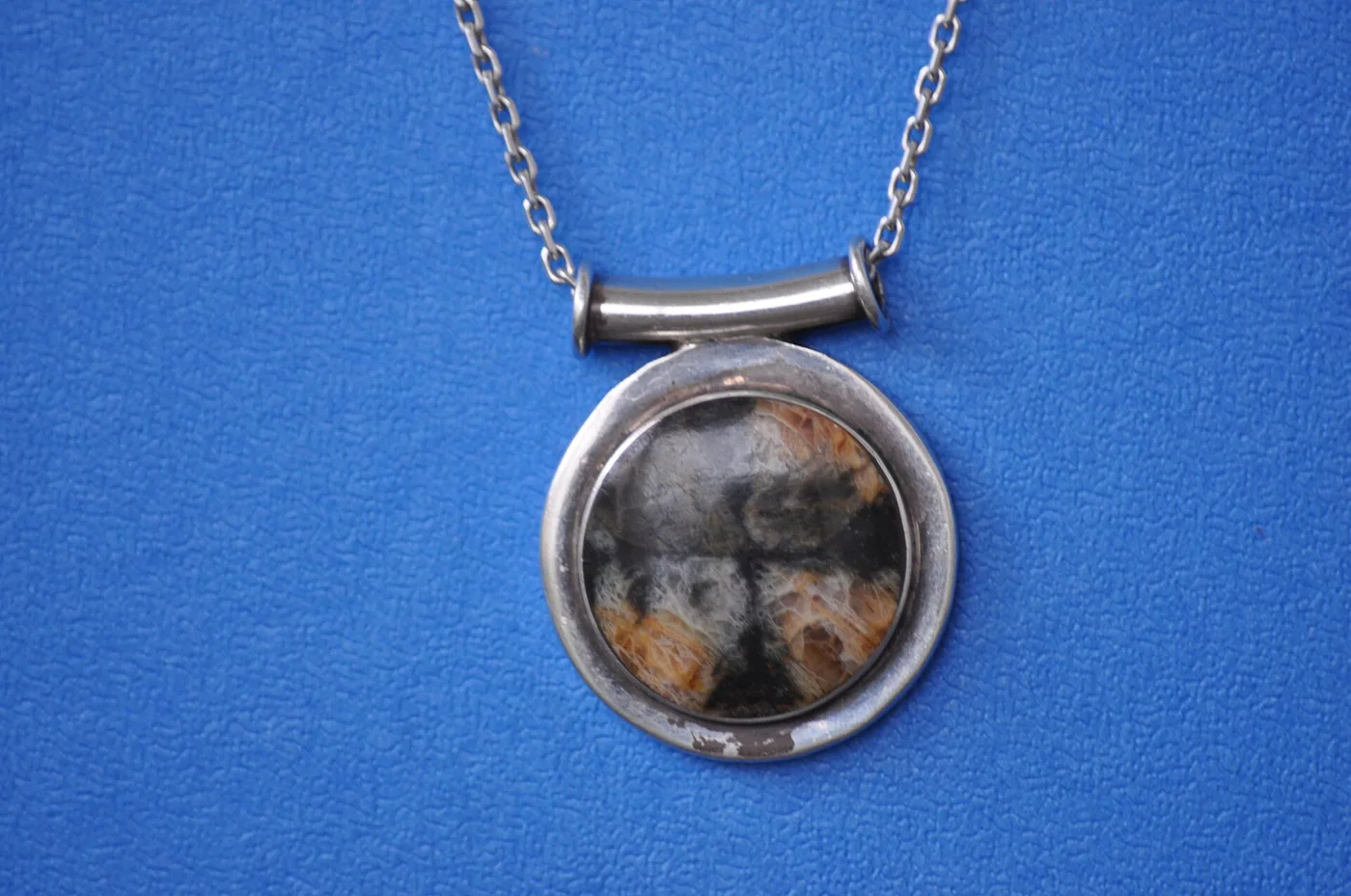
Hardness is only 5–5.5, so jewellery usually uses the stone as a cabochon or a polished piece rather than a faceted gem. Because it is soft, it is worn mostly as an amulet, not as an everyday ring.
Origins
Spain and the USA are the largest suppliers. The stone is also mined in Brazil, Australia, China and Russia. Pieces with a well-defined cross are rare and cost more.
Properties
Chiastolite is held to be a stone of balance and harmony. It is said to give back emotional steadiness, calm and clarity of mind.
Esoteric writers believe the stone makes problems easier to handle, helps a person adapt to change and lets them see an argument from another side. It is often used by people in creative work — musicians, writers, poets, painters, directors.
Because of its religious meaning, chiastolite is valued by clergy: monks, nuns and priests wear it. A legend says that if the owner turns the stone to evil or purely to profit, the mineral will crack or go missing.
Traditional healing properties
Lithotherapists say chiastolite works well for rheumatism, circulation and heart complaints. It is believed to guard against lung and bronchial illness and to strengthen immunity overall.
This describes traditional practice, not medical advice. A stone does not replace a doctor.
Chakras
Chiastolite is linked to the first, root chakra – muladhara, and the seventh, crown chakra – sahasrara.
Zodiac
Astrologers hold that any sign can wear chiastolite. It works especially well for Pisces, Libra and Gemini.
In Charcho jewellery
We do not have a ready-made piece in chiastolite in the catalogue yet, but we make them to order — you choose the shape of the stone and the length of the pendant. Catalogue: necklaces.
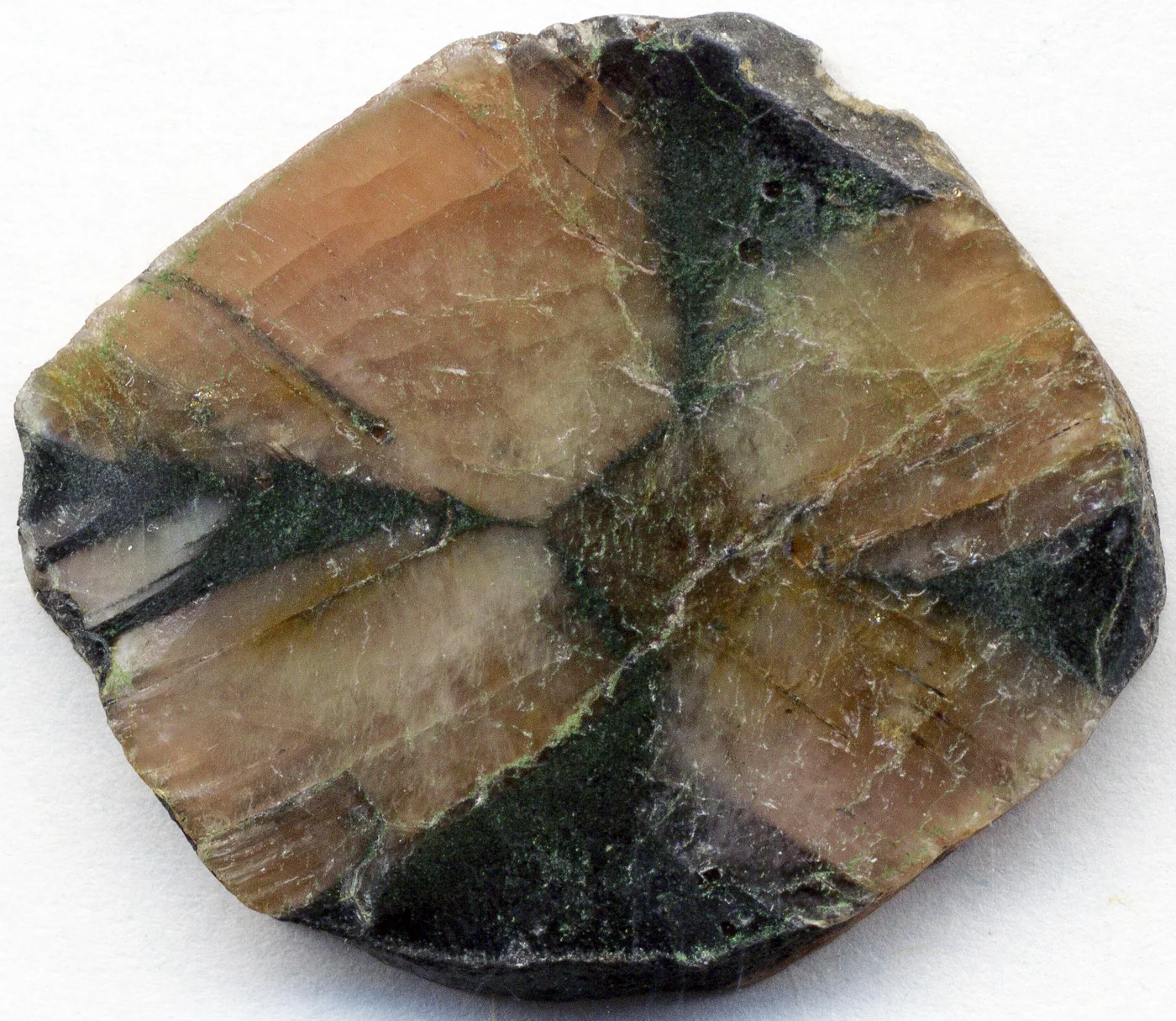
Real or fake
- Cheap copies are made of resin and clay with the cross painted by hand. In a natural stone the cross is graphite — matte, with a metallic sheen, and it does not sit proud of the surface.
- A real cross is not always centred. A perfectly symmetrical cross often gives away a drawing, though centred natural pieces do exist and cost a lot.
- Hardness is only 5–5.5: a natural stone scratches easily with a steel knife, and many imitations are softer still and cut with a fingernail.
Care
Chiastolite is soft and brittle, so store it apart from other pieces so nothing scratches it. Warm water, a soft cloth and mild soap are enough. Skip the ultrasonic, the steam and long soaking.
See also
-
Hematite
Chemical formula – Fe₂O₃
Hardness – 5.5–6.5
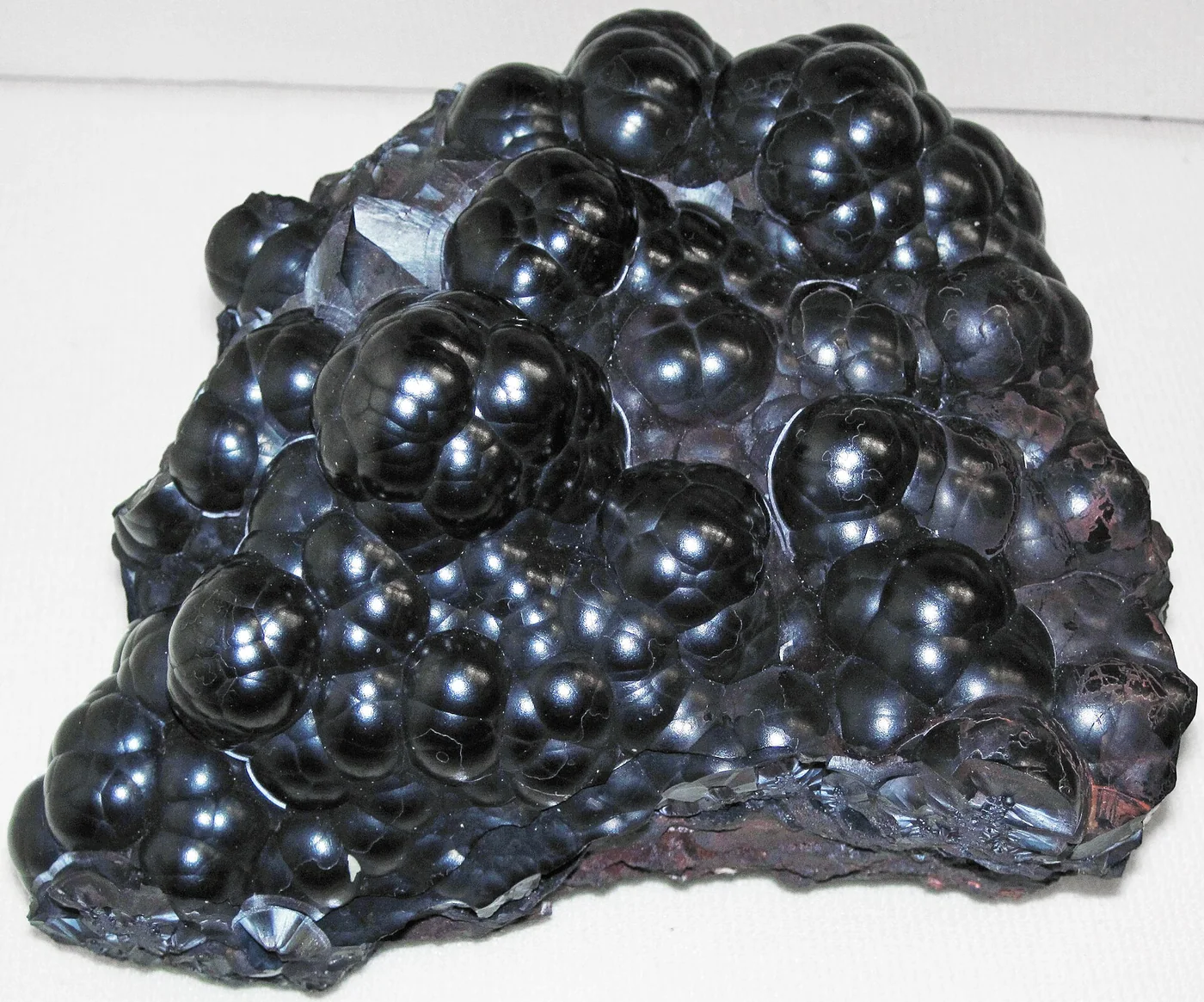
Colour – black, silvery, reddishHematite is iron oxide and one of the most common iron ores. The name comes from the Greek "haima", blood: the powder of some pieces really is blood red.
That is why hematite is often confused with heliotrope, the bloodstone. Heliotrope belongs to the chalcedony family and has nothing to do with iron oxide — only the name and the red colour are alike.
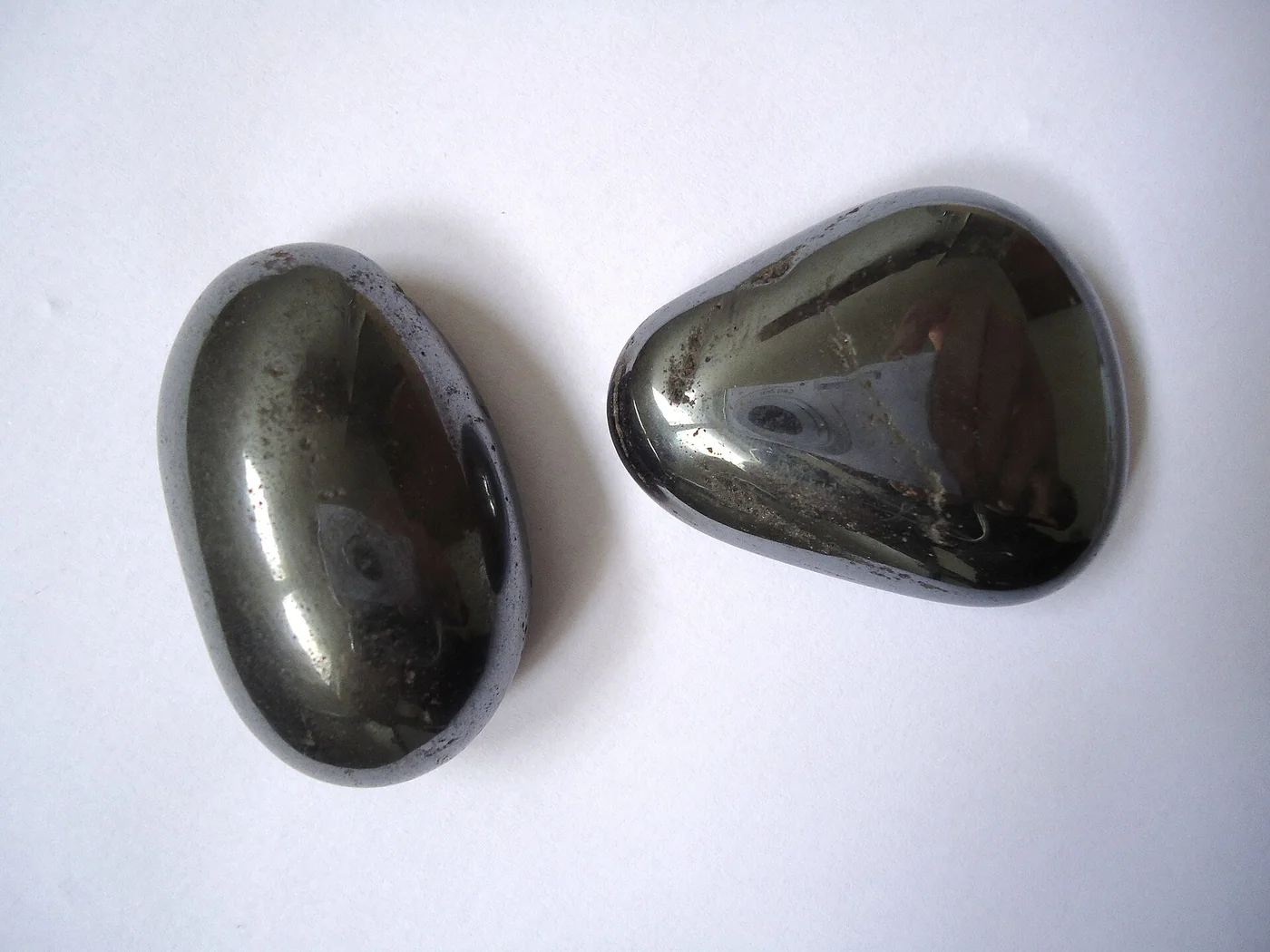
Raw hematite is often reddish, and industry uses it as a red pigment. Once polished, the surface turns mirror-like silver-black. Hematite also grows together with other minerals — jasper, tiger's eye — and the sparkle in sunstone comes from its inclusions too.
Origins
Hematite is found in many places, but most of it comes from Brazil, England and Italy. It is also mined in Morocco, elsewhere in Africa and in the USA.
Properties
Esoteric writers count hematite among the strongest balancing and protective stones. It is said to restore order and calm, and to support quick, logical thinking.
Tradition recommends hematite especially to people who need precise thinking — physicists, mathematicians, engineers. In the past it was believed to add courage, confidence and optimism to the wearer.
Traditional healing properties
Lithotherapists use hematite to cool the body. It is said to help with circulation, nervous tension, stress and insomnia, and with pain in the spine and lower back.
This describes traditional practice, not medical advice. A stone does not replace a doctor.
Chakras
Hematite is linked to the first, root chakra – muladhara.
Zodiac
In the traditional list hematite belongs to Scorpio and Aquarius. Both signs match the stone's weight and calm, though anyone can wear it.
In Charcho jewellery
We do not have a ready-made piece in hematite in the catalogue yet, but we make them to order — you choose the bead size and bracelet length. Catalogue: bracelets.
Real or fake
- The "magnetic hematite" sold on the market is usually synthetic ferrite. Real hematite responds to a magnet very weakly or not at all.
- The surest test is the streak: drawn across rough ceramic, hematite leaves a cherry-red line. Ferrite leaves grey or black.
- Hematite is very heavy for its size. A light "hematite" that feels like plastic is an imitation.
Care
Hematite reacts to water and chemicals and develops rust spots over time. Do not leave the piece in water, and keep perfume and soap away from the stone. Dry it and wipe with a soft cloth, then store it separately.
See also

Have an idea? We will make it.
Write or call us - together we will choose the material, colour and size, and make the piece to order.