 Free Delivery in Batumi


Blog
From the workshop: materials, care, gifts and the stories behind the pieces.
-
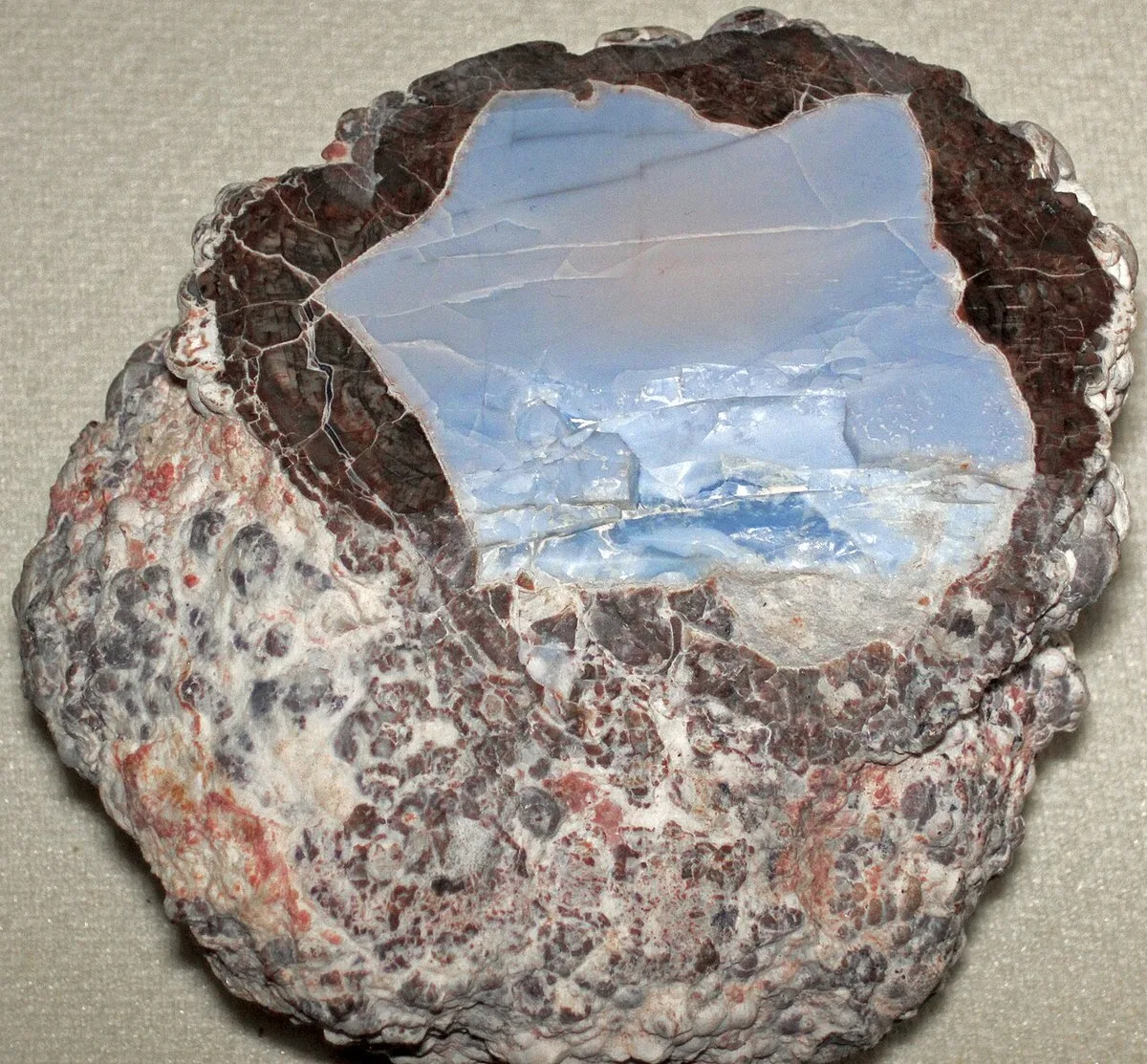
Agate
Chemical formula – SiO₂
Hardness – 6.5–7
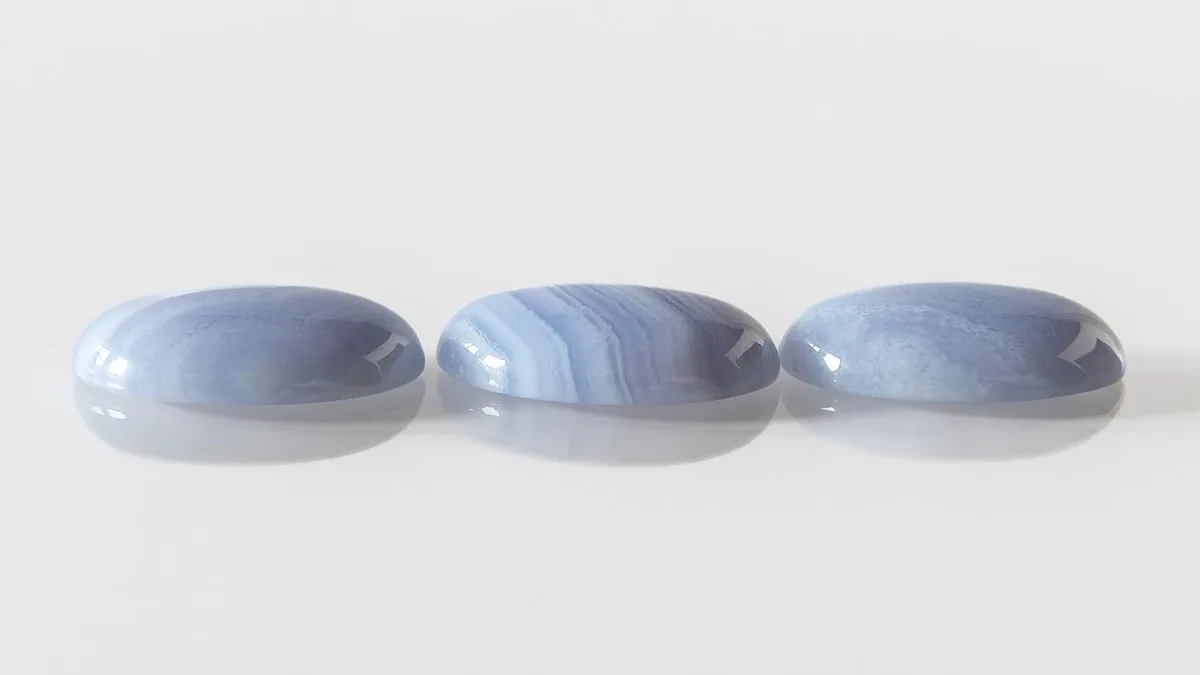
Colour – almost any shade, usually in bandsAgate is a mineral of the chalcedony family, a microcrystalline form of quartz in which the layers differ from one another in colour and transparency. Those bands are why the stone is nicknamed the rainbow of the earth.
The name leads back to ancient Sicily. On the banks of the Achates river, today's Dirillo, the stone was so abundant that the Romans built workshops there and drove their cutting machines with the power of the water. The deposit stayed in use for nearly two thousand years and closed around 1800, when the supply ran out.
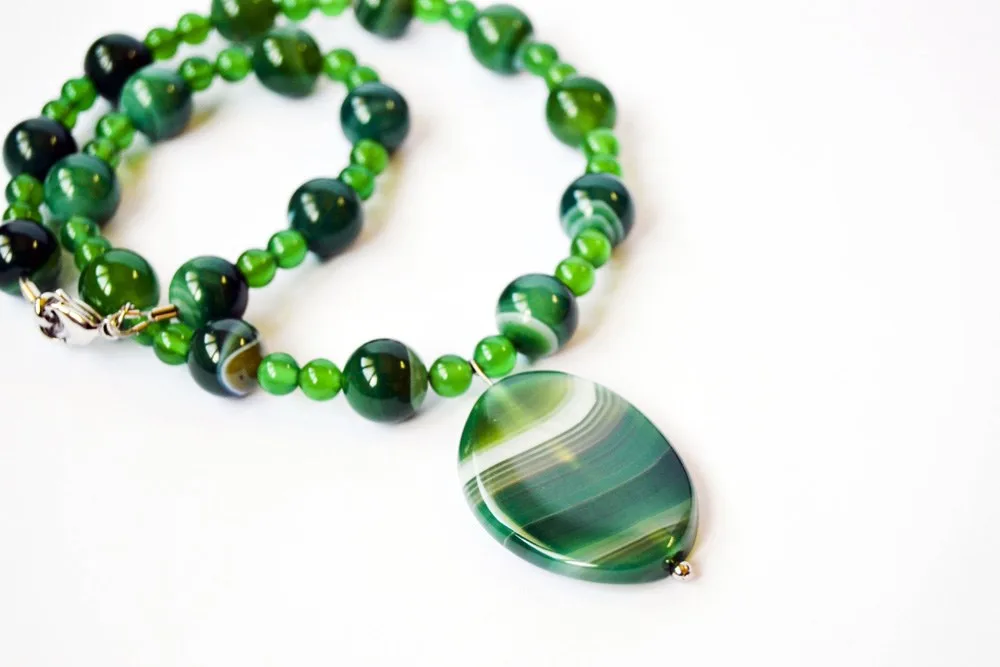
There are many varieties: blue, black, green, red, white, moss, fire and landscape agate. Price follows the clarity of the banding and the depth of the colour.
Deposits
Agate is found in many parts of the world; the richest sources are Brazil, Uruguay, Argentina, India, Australia and the United States.
Sakartvelo is agate country too. About ten deposits and occurrences are known, including Tedzami and Kachaghiani in the Akhaltsikhe municipality. The local stone is paler, but collectors value it for its own character.
Properties
In esoteric circles agate is considered one of the calmest, most unassuming stones. It is said to protect the home and relationships, to gather scattered thoughts and to add a sense of purpose. Colour carries its own meaning: black for protection, green for telling truth from falsehood, red for endurance, white for quiet.
Healing properties
In traditional lithotherapy agate is linked with the nervous system and with the circulation of fluids, and the black variety with bones and joints.
This describes a traditional practice, not medical advice. A stone cannot replace a doctor.
Chakras
Mainly the root chakra – muladhara. By colour: blue – vishuddha, green – anahata, white – sahasrara.
Which zodiac sign
In traditional astrology the banded structure echoes the element of earth — Taurus, Virgo, Capricorn. Practitioners often also recommend agate to Cancer, as a stone of home and family.
In Charcho jewellery
Agate is a generous material: affordable, durable and different in every piece. We use it in cabochons and beads — necklaces.
Real or fake
- Glass imitations show air bubbles and bands that are too even, too mechanical.
- Dye tends to collect in cracks, so the colour looks darker along the fractures.
- Real agate feels cold and scratches glass: its hardness is 6.5–7 against 5.5 for glass.
- A suspiciously bright pink or blue in a cheap stone almost always means dye.
Care
Warm water, mild soap and a soft cloth are enough. Keep dyed stones out of long sunlight, where the colour fades. Skip the ultrasonic cleaner and steam, and store the piece in its own pouch.
See also
-
Ammonite
Chemical formula – CaCO₃
Hardness – 3.5–4
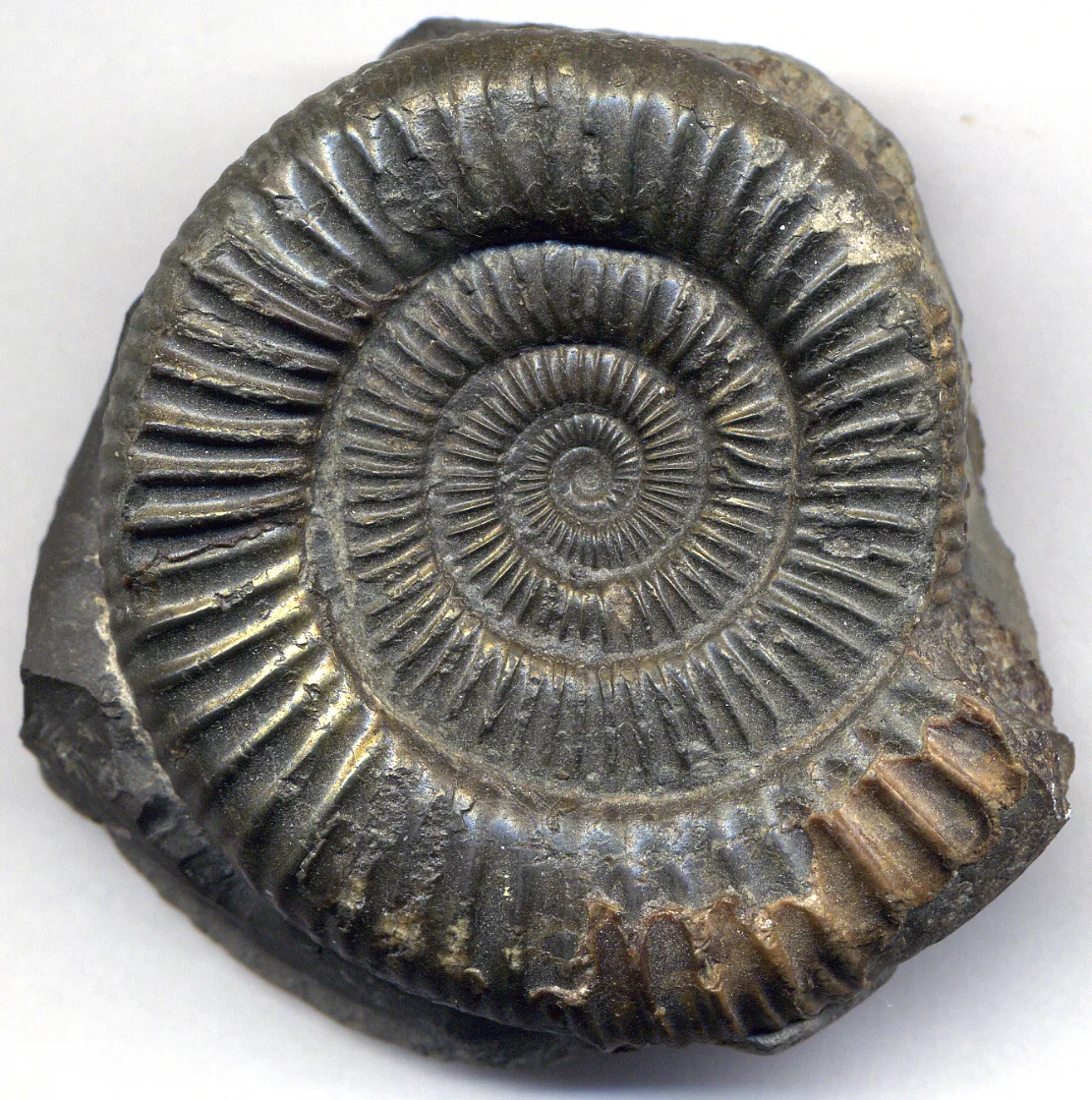
Colour – brown and grey, with coloured inclusionsAmmonite is not a mineral in the mineralogical sense; it is a fossilised shell. The name belongs to ancient cephalopod molluscs that lived in the oceans long before the dinosaurs and survive today only as spirals in stone. Some specimens are hundreds of millions of years old.
The name comes from the Egyptian god Amun, who was shown with a ram's head. An ammonite's spiral looks like a ram's horn, and that resemblance fixed the name.
The colour of the shell depends on which mineral replaced the calcium carbonate. Most often it is calcite or chalcedony, rarely pyrite — then the stone turns golden. The most expensive variety is ammolite, found only in Alberta, Canada, and easily mistaken for opal or labradorite.
Origins
Ammonite appears almost everywhere in the world — in marine deposits, limestones and clays, wherever there was once a sea. Ammolite comes from a single place: the Canadian province of Alberta.
Properties
Esoteric writers say ammonite awakens metaphysical ability and creative drive. It is believed to push out negative energy and to strengthen the survival instinct and willpower.
Kept in a house, ammonite is said to clear the space, bring family harmony and turn conflict aside. Many people put it under the pillow for insomnia, or on the desk for luck.
The spiral stands for continuity and evolution. Tradition especially recommends the stone to those who work with water and to those who spend a life searching: historians, archaeologists, researchers.
Traditional healing properties
Lithotherapists link ammonite with general health and long life, and with help during insomnia and nightmares. It is said to be used for blood disorders, to steady the metabolism, and for weak bones, hair, skin and nails.
This describes traditional practice, not medical advice. A stone does not replace a doctor.
Chakras
Associated with the first and the last chakra – muladhara and sahasrara.
Which zodiac sign it belongs to
Astrology does not tie ammonite to one sign. As a fossil it is often linked to the earth signs — Taurus, Virgo and Capricorn — people who value strength and endurance.
In Charcho jewellery
Ammonite is soft, so it rarely goes into a ring. A necklace, earrings or a pendant talisman is safer. The stone suits an open setting: the spiral should be fully visible, with metal holding only the edges.
We have no finished piece with this stone yet, but we take custom orders. Catalogue: necklaces.
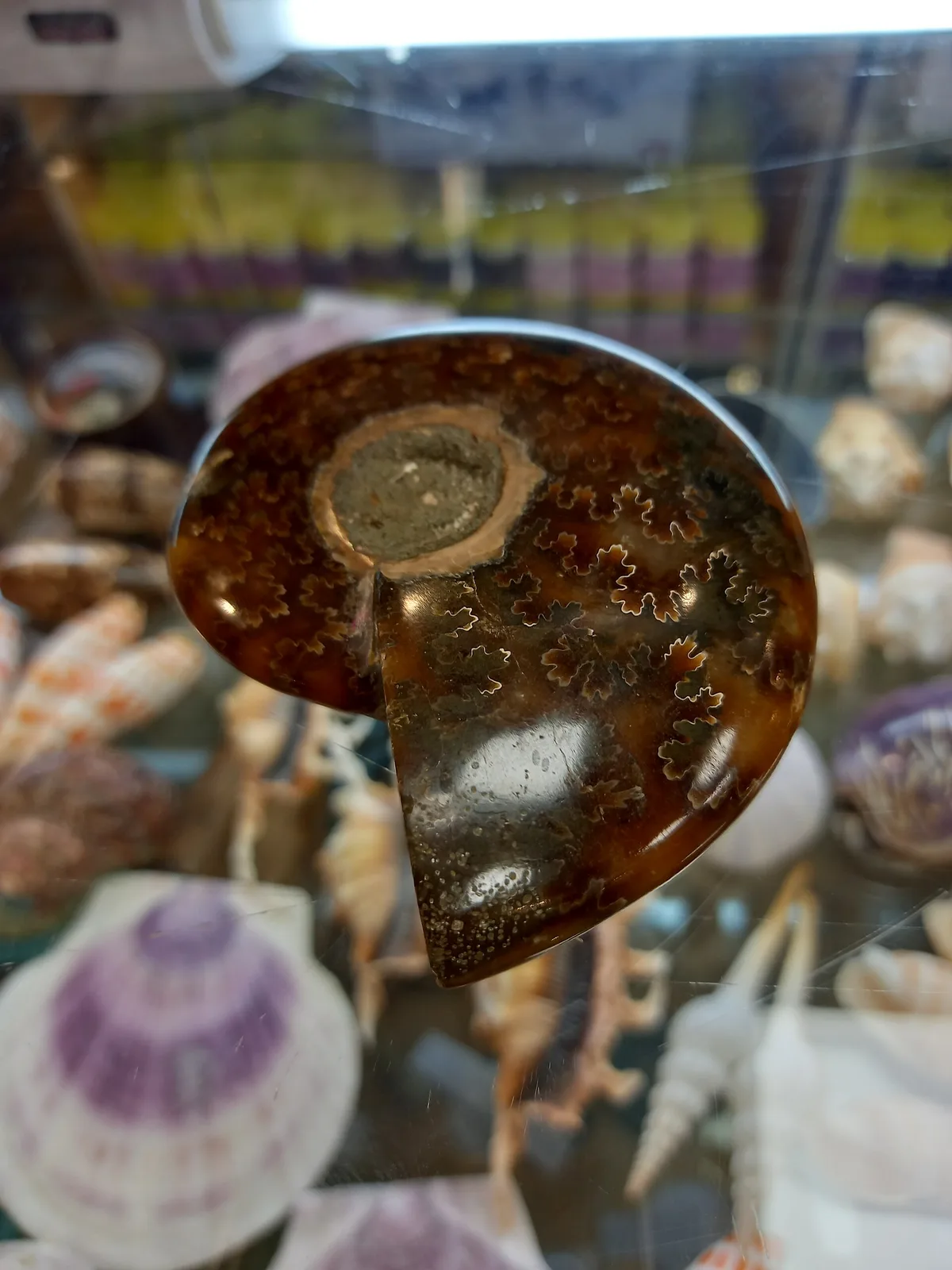
Real or fake
- Cast resin copies exist. A real shell has inner whorls and natural cracks.
- Dyed specimens collect colour in the cracks; natural colouring is even and muted.
- Ordinary ammonite is often sold as ammolite. Ammolite has an opal-like flash; plain ammonite does not.
- A shell is not as heavy as solid stone, but an empty or very light specimen is still a reason to look twice.
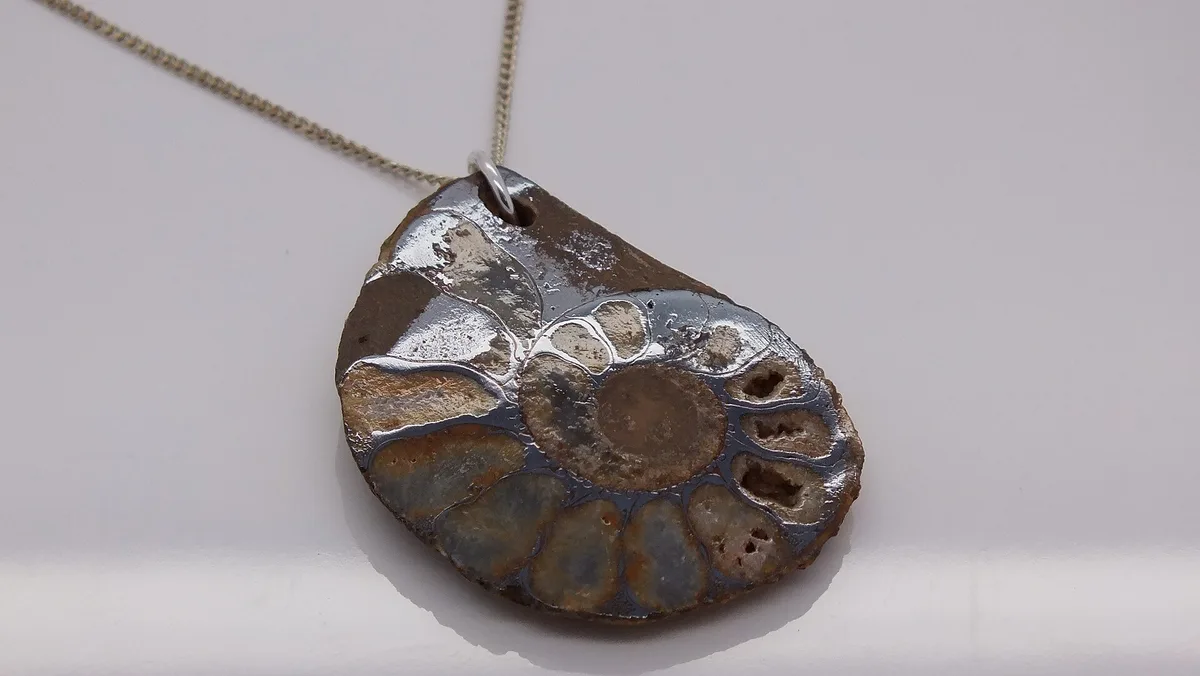
Care
Hardness 3.5–4 makes this a soft stone. Ultrasonic cleaners, steam and acid (vinegar, lemon) are out — they attack calcium carbonate. Warm water, a soft cloth and a separate box away from other jewellery are enough.
See also
-
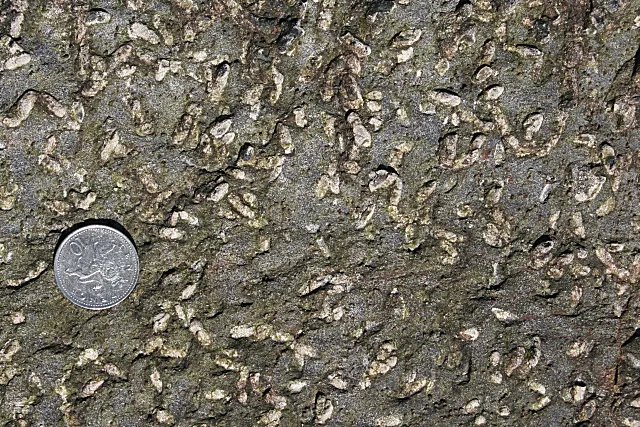
Andalusite
Chemical formula – Al₂SiO₅
Hardness – 7.5
Colour – pleochroic: yellow, brown, greenAndalusite is a mineral few people know by name, though the name itself is easy to place: the stone was first found in Andalusia, Spain, and has carried that region ever since.
Chemically it is an aluminium silicate, a close relative of kyanite and sillimanite. All three are built from the same elements, but their atoms sit differently, which gives each its own hardness and colour.
The mineral's signature is pleochroism: turn the stone and the colour changes. Andalusite is usually transparent, but there is an opaque variety too — chiastolite, with a cross-shaped pattern many people recognise at once.
Origins
The main suppliers are Brazil, Australia, Canada, Russia, Spain, Sri Lanka, the USA and Madagascar. Clean, well-coloured jewellery-grade material is not common even from these sources.
Properties
Andalusite is called the stone of vision. It is said to help you read people — to see what someone is really about. Tradition credits it with showing a problem from another angle and with sharpening memory, concentration and intuition.
Its bright colour is said to fill the owner with energy and to balance inner contradictions. That is why andalusite is often linked with meditation and prayer.
Traditional healing properties
In traditional lithotherapy andalusite is associated with digestion, circulation, fatigue and insomnia, with eyesight, hormonal balance and the lungs.
This describes traditional practice, not medical advice. A stone does not replace a doctor.
Chakras
Associated with the solar-plexus and heart chakras – manipura and anahata.
Which zodiac sign it belongs to
Astrologers recommend andalusite to the fire signs — Aries, Leo and Sagittarius. Those signs move fast and ignite quickly, and andalusite is said to give their energy a direction.
In Charcho jewellery
Pleochroism shows best in a ring: as the stone turns, the colour shifts, so a faceted andalusite is more interesting than a cabochon. Because it has a pronounced cleavage, we choose a protective setting — the corners should be covered by metal.
We have no finished piece with this stone yet, but we take custom orders. Catalogue: necklaces.

Real or fake
- The first test is rotation: the colour must shift from different angles. Glass and dyed quartz cannot do it.
- Chiastolite is often sold as andalusite. It is the same mineral, only opaque and cheap.
- Dyed stones stay in one tone and do not react when turned.
- For an expensive stone, a lab report is the safest answer.
Care
Hardness 7.5 is enough for everyday wear, but andalusite has a clear cleavage plane — a sharp knock starts a crack. Dishwashing and laundry solutions are a risk. Warm water, a soft cloth and a separate box are enough.
See also
-
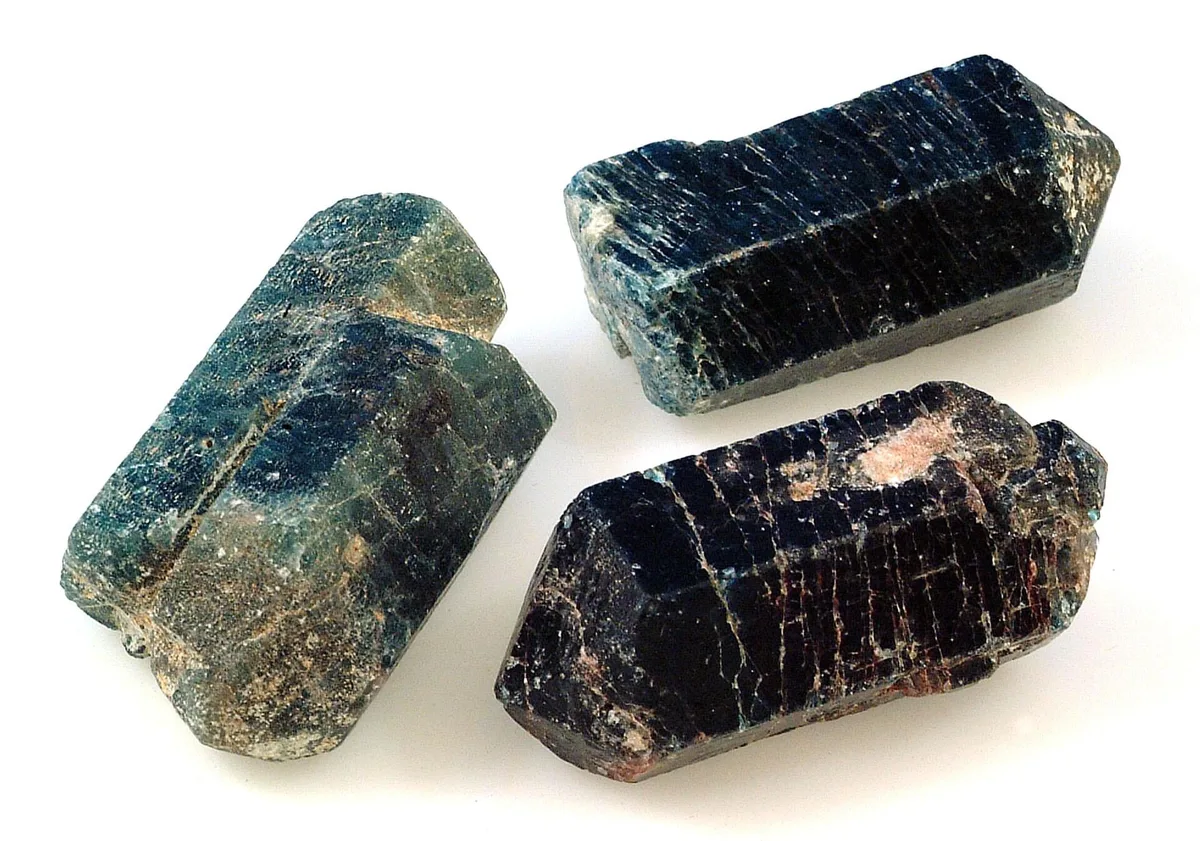
Apatite
Chemical formula – Ca₅(PO₄)₃(F,OH,CI)
Hardness – 5
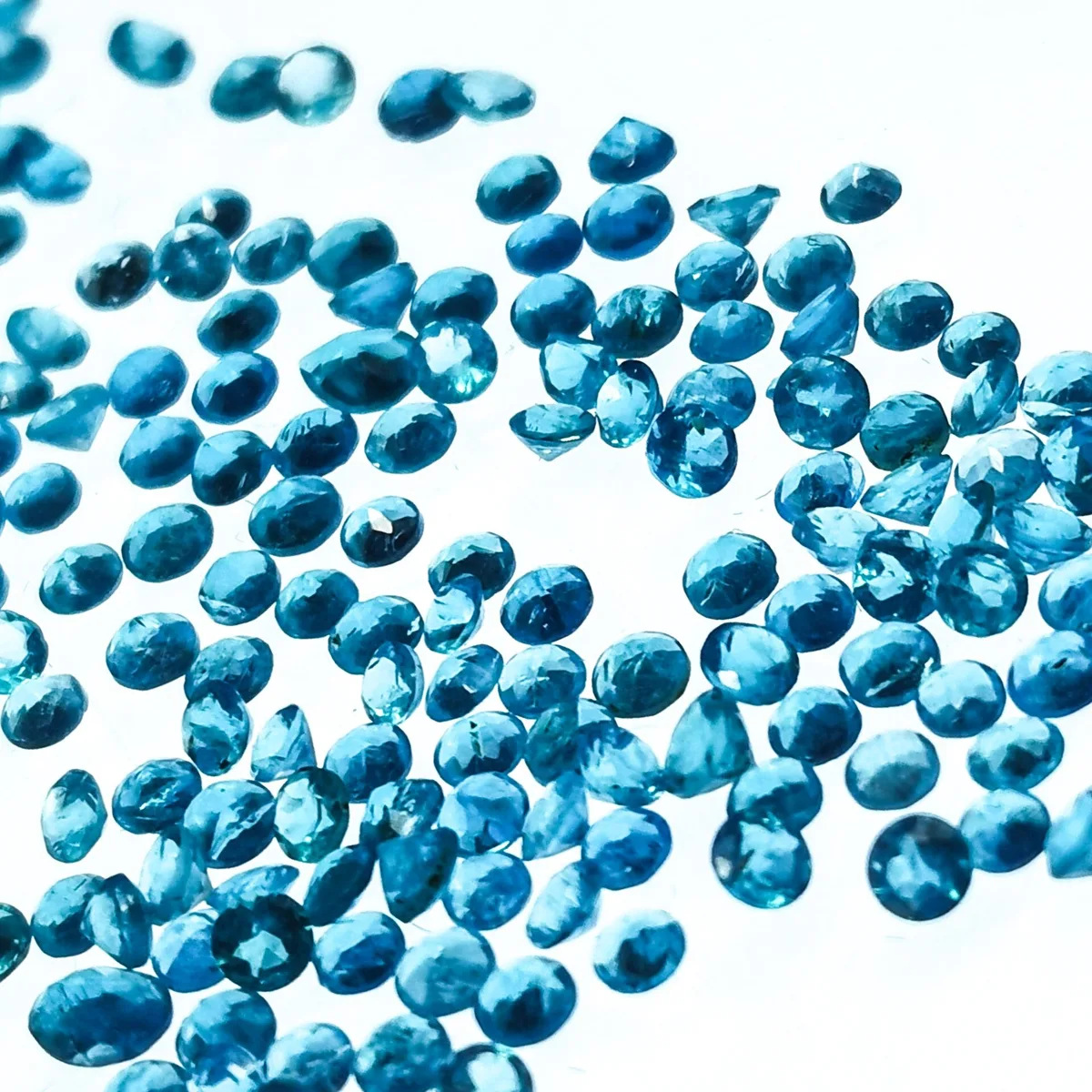
Colour – colourless, yellow, pink, green, sky blue, violetApatite is a fairly common mineral, but its flawless transparent form is rare and expensive. Its range of colours has made it a collector's favourite: one species can run from sky blue to pink.
The name comes from a Greek word meaning "to deceive". The reason is simple: with so many colours, apatite was often mistaken for other precious stones, and the buyer noticed only later.
Transparent pieces are costly; translucent and opaque ones are far more affordable. Jewellery-grade apatite usually needs no treatment at all — the colour is bright enough as it is.
Origins
Apatite is found all over the world, but most of the stone on the market comes from Brazil, Kenya, Burma, Sri Lanka, Mexico, Canada, India, Norway and the USA. African deposits are known for blue-toned material.
Properties
Esoteric writers tie apatite to thoughts and ideas. It is used in meditation — to deepen the intellect and to stir imagination and intuition.
The stone is said to help with focus, clear thinking, easy communication and quick learning. It is believed to clear the aura and to "charge" other crystals. Even simple proximity is said to bring calm: apatite eases worry and nervousness.
Traditional healing properties
Lithotherapists use apatite for nails, allergies, arthritis, bones and eyes, to balance the nervous system and to help with weight control.
This describes traditional practice, not medical advice. A stone does not replace a doctor.
Chakras
Associated with the fifth, throat chakra – vishuddha.
Which zodiac sign it belongs to
As a throat-chakra stone, apatite is traditionally given to the air signs — Gemini, Libra and Aquarius. It is recommended especially to people whose work is speech: teachers, journalists, translators.
In Charcho jewellery
Hardness 5 means apatite is too soft for a ring worn every day. We use it in earrings and necklaces, where the stone is protected from knocks, and the setting stays open so the colour does not fall into shadow.
We have no finished piece with this stone yet, but we take custom orders. Catalogue: necklaces.
Real or fake
- Blue apatite is natural, but pale tones are often enhanced — worth asking the seller about.
- A glass imitation shows air bubbles and a perfectly even colour.
- Apatite is doubly refractive, which shows along the edges of a richly faceted stone.
- Scratches mean the stone was worn for a long time, not that it is fake.
Care
Hardness 5 makes this a soft stone. No ultrasonic, no steam, no acid: apatite is a phosphate and dissolves in acid. Warm water, a soft cloth and a separate box are enough. Keep alcohol and perfume away from it.
See also
-
Amazonite
Chemical formula – KAlSi₃O₈
Hardness – 6–6.5
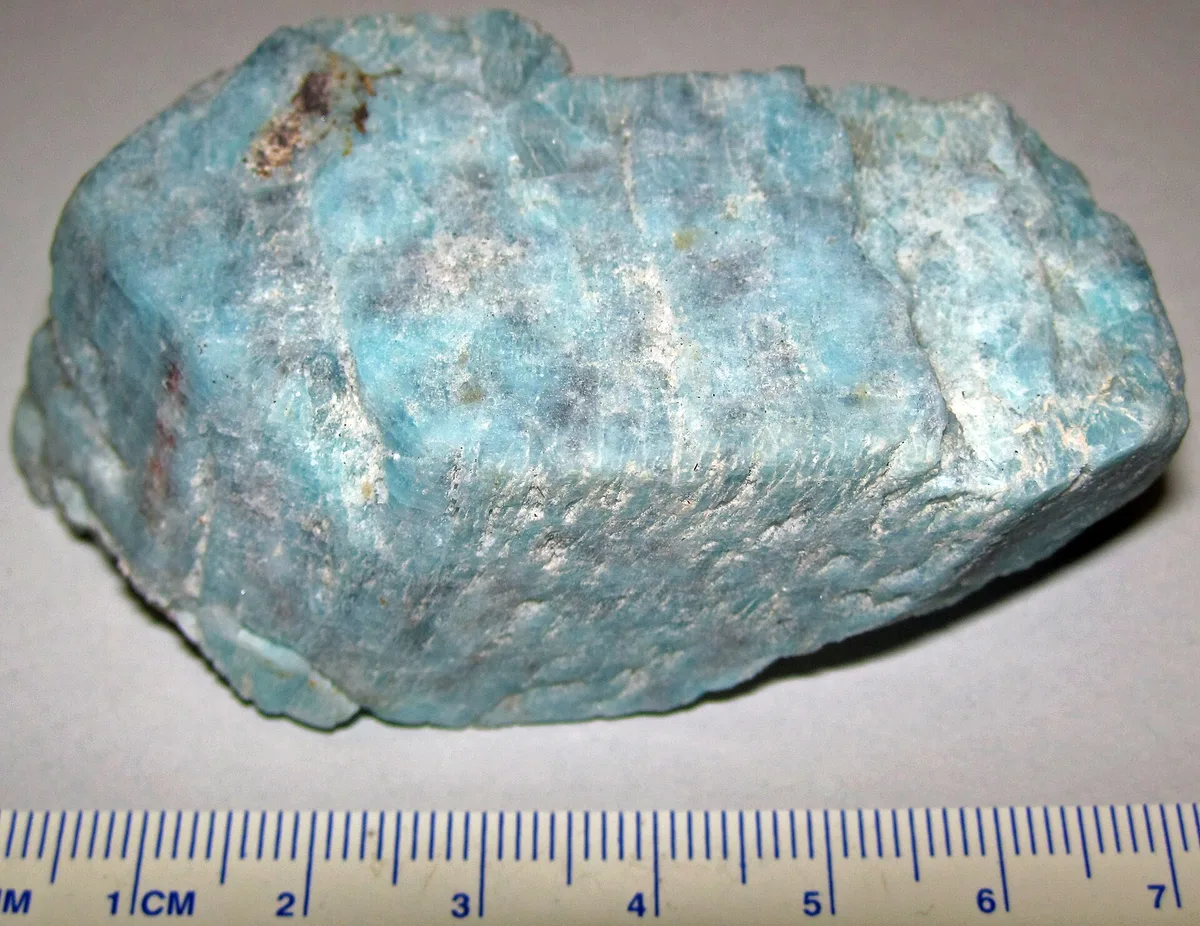
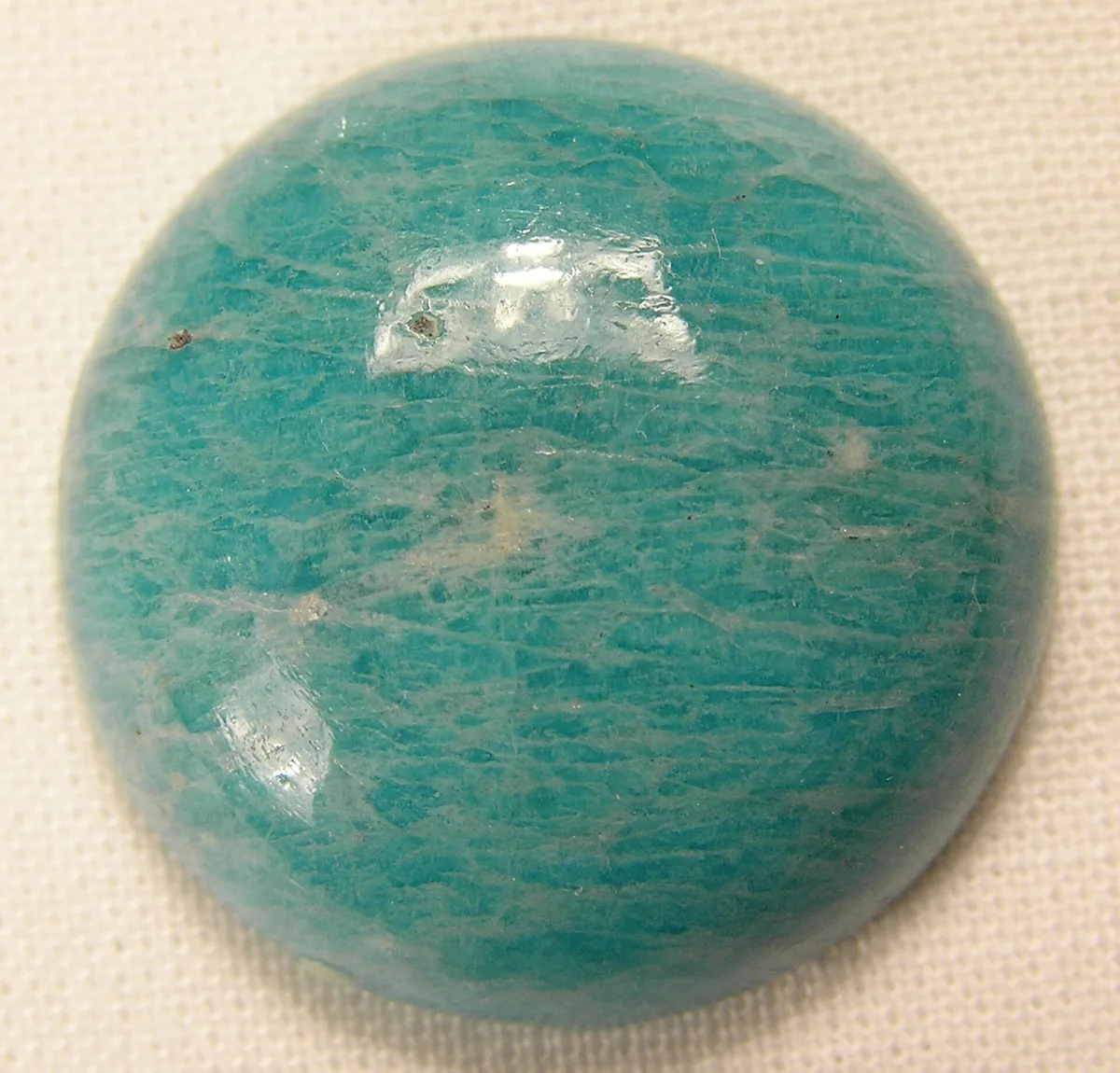
Colour – sky blue, green, greyAmazonite is a variety of potassium feldspar, or microcline. The colour runs from pale sky blue to green-blue and is sometimes so gentle that the stone seems to let light through. Most pieces are threaded with characteristic white lines — those lines are what help you recognise it among stones of a similar colour.
The name is tied to the Amazon river, though mineralogists point out that amazonite is not mined anywhere near it. The name stuck so firmly that the stone never got another.
Because of its colour, amazonite is often confused with nephrite, aquamarine, jadeite and larimar. There are three main looks: the classic stone with white lines, a smooth pale blue without lines, and a multicoloured "rainbow" amazonite. Clean, dense blue pieces are the most expensive.
Origins
Amazonite is mined in Russia, the USA (Colorado and Virginia), Australia, Madagascar and Brazil.
Properties
Amazonite is called the stone of truth and courage. Like most blue stones it is a stone of communication — it is said to help those who struggle to say what they think, or to hear it.
It is often recommended to people whose work drains a lot of energy. After a tiring day the stone is said to calm the mind and the nervous system. It is believed to bring calm and stability.
Esoteric writers frequently suggest amazonite to someone dealing with unbalanced anger. It is also called the housewife's stone, for the way it is said to strengthen family relationships.
Traditional healing properties
Lithotherapists use amazonite for varicose veins and link it to thrombosis prevention. It is said to relieve nervous exhaustion and to ease endocrine complaints.
This describes traditional practice, not medical advice. A stone does not replace a doctor.
Chakras
Linked to the fifth, throat chakra – vishuddha. In multicoloured amazonite the dark tones work on the first and second chakras, yellowish ones on the third, and pale grey on the sixth and seventh.
Zodiac
Tradition makes amazonite the stone of Virgo, a sign that loves precision and order. It also suits Aquarius, especially when someone finds it hard to share their ideas.
In Charcho jewellery
Amazonite's colour plays well with leather and silver, which is why we often choose it for necklaces. There is no ready-made piece in the catalogue yet — we make them to order. Catalogue: necklaces.
Real or fake
- Much of the market is dyed quartz and howlite sold under the name amazonite. Real stone has white lines and natural shifts in colour.
- In dyed material the colour sits denser in cracks and along the edges — that is the first sign.
- Amazonite cannot be fully transparent and colourless; such a stone looks more like glass or quartz.
- Green amazonite is often confused with nephrite, which is denser and has a greasier surface.
Care
Hardness 6–6.5 means the stone should not be stored next to sharp objects. Do not soak it for long and avoid acidic or alkaline cleaners. Prolonged sun dulls the colour, so do not leave the piece on a windowsill.
See also
-
Ametrine
Chemical formula – SiO₂
Hardness – 7
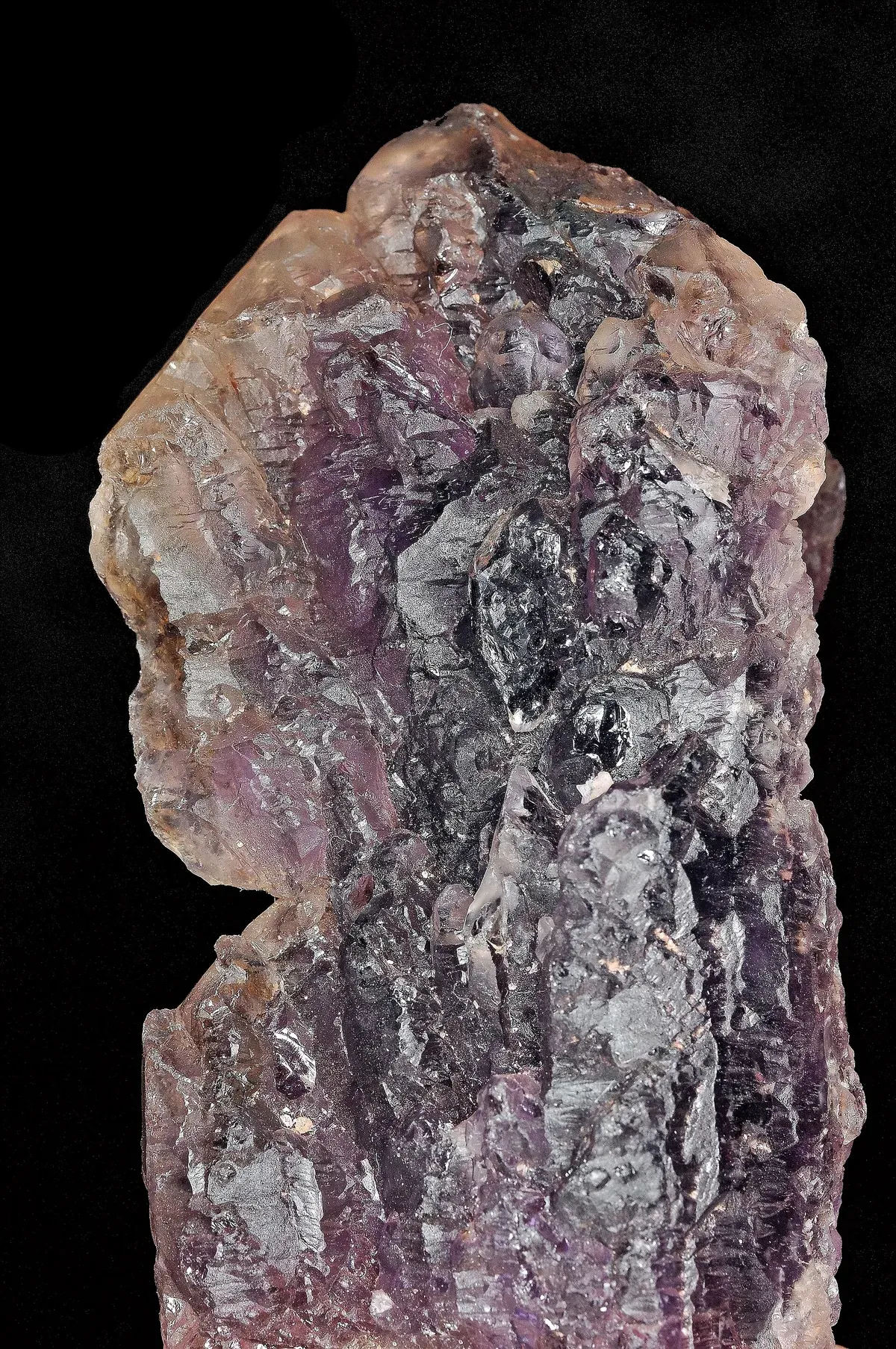
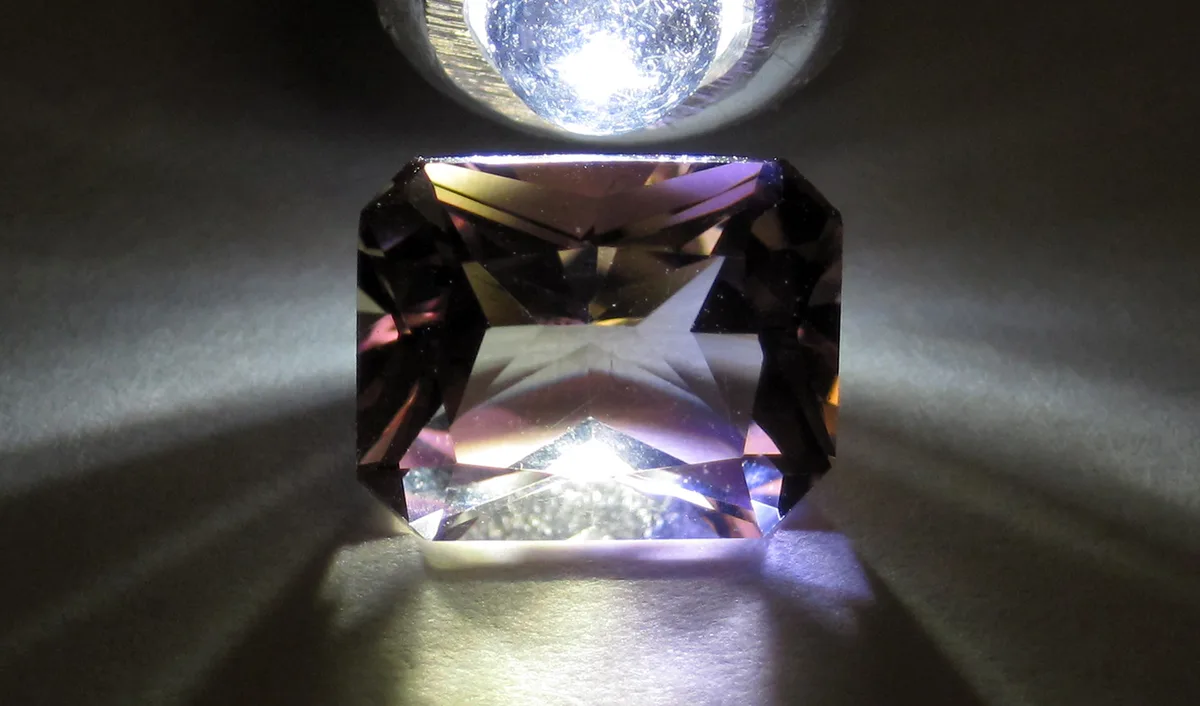
Colour – yellow and violet gradients within one crystalAmetrine belongs to the quartz family, and a single crystal carries two colours at once: violet amethyst and yellow citrine. The name says as much — ame-trine, two stone names shortened into one.
In nature ametrine is uncommon. A completely clean, water-clear specimen is especially hard to find. Mid-grade stones stay affordable; transparent and flawless ones do not.
Much of the ametrine on the market has been heat-treated. That is no surprise: amethyst changes colour at high temperature and starts to look like citrine, so the boundary between the two zones is sometimes man-made.
Origins
Bolivia is the main supplier today — the crystals most often seen in shops come from high in the Andes. The stone was first found in Brazil, but other countries now supply very little.
Properties
Tradition holds that one stone carries the energy of both minerals: the calm of amethyst and the luck of citrine. Ametrine is said to build confidence, strengthen creativity and lift the mood.
It is a favourite with people whose work demands creative thinking: musicians, painters, writers, directors, architects. The stone is believed to help finish what has been started.
Traditional healing properties
In lithotherapy ametrine is linked with digestion, concentration, memory and the quality of sleep.
This describes traditional practice, not medical advice. A stone does not replace a doctor.
Chakras
Associated with the third-eye and solar-plexus chakras – ajna and manipura.
Which zodiac sign it belongs to
Astrologers call ametrine a universal stone that suits any sign. It is recommended above all to Libra: the balance of two colours echoes the nature of that sign.
In Charcho jewellery
Ametrine's main asset is the line between its two colours, so we set it in a minimal frame — heavy metal swallows that line. An open cabochon or a simple faceted cut works best, in a ring, in earrings or at the centre of a pendant.
We have no finished piece with this stone yet, but we take custom orders. Catalogue: necklaces.
Real or fake
- In natural ametrine the boundary between the two colours is sharp; if the tones blend gradually, the stone has probably been dyed.
- Glass and synthetic quartz are cheap, and glass often shows air bubbles.
- Heat treatment is normal, but the seller should say so plainly.
- A suspiciously cheap "Bolivian ametrine" is a reason to ask questions.
Care
Hardness 7 means a ring worn daily is a slight risk. Direct sun and hot water damage the colour, so take the ring off when washing dishes. Warm water, a soft cloth and a separate box are enough.
See also
-
Azurite
Chemical formula – Cu₃(CO₃)₂(OH)₂
Hardness – 3.5–4
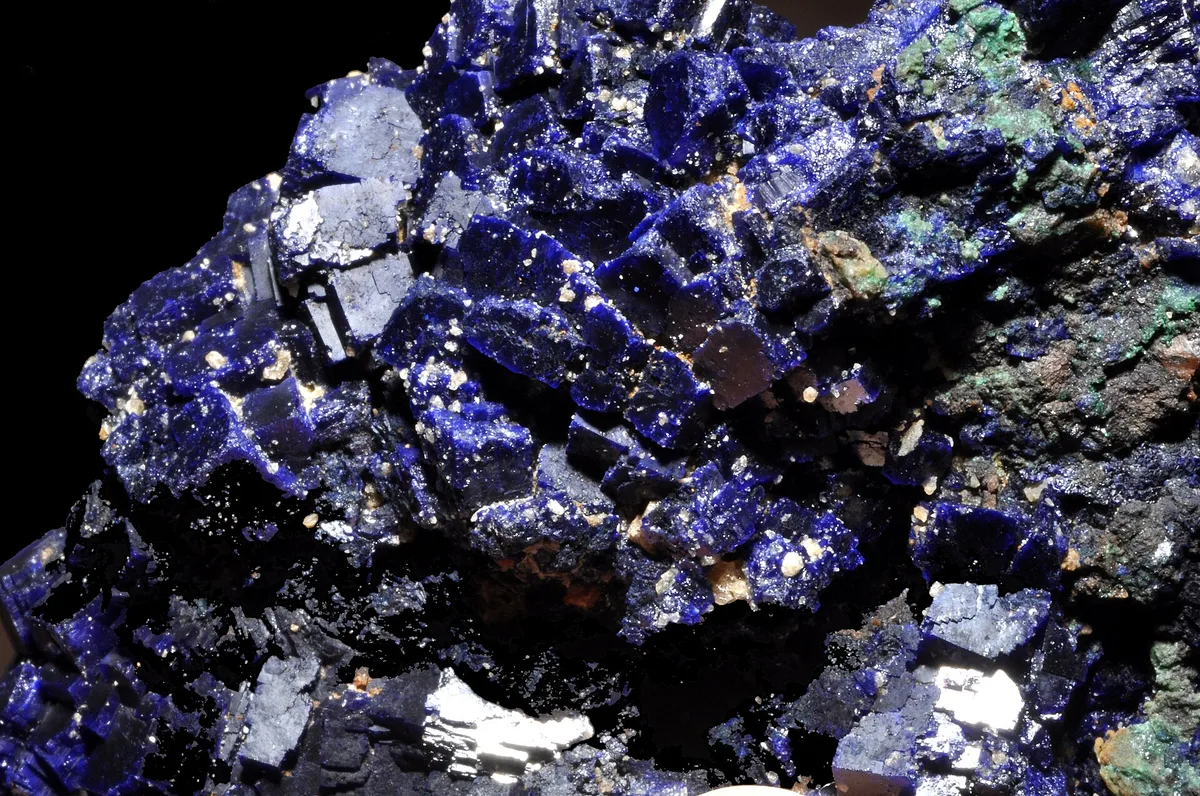
Colour – blue, sky blueAzurite is a copper carbonate. Copper is what gives it that deep, calm blue you rarely meet in other natural stones. The shade drifts towards sky blue at one end and violet-red at the other, and green malachite patches often show on the surface.
The name comes from a Persian word meaning "azure". The curious part is that the stone is soft — hardness is only 3.5–4, so jewellery use is limited and it usually appears as a cabochon or an inlay.
Azurite is often mistaken for lapis lazuli. The difference is simple: lapis carries golden pyrite flecks and bright copper spots, azurite does not. Azurite's blue is cooler and more even, while lapis is darker and patchier.
Historically azurite was first used as an industrial stone, and in the Middle Ages it dyed cloth. The first deposit was found in France.
Origins
Azurite turns up in many places. The largest suppliers are Arizona, New Mexico, Namibia, Congo, Morocco, France and Australia.
Properties
In ancient China azurite was called the stone of heaven, and people believed it could open the celestial gate. The Maya saw it as a symbol of inspiration and purpose, and the Greeks used it for healing.
Modern esoteric practice links azurite to vivid dreams and meditation. It is said to clear the throat chakra, which makes it popular with speakers and singers. It is also believed to help with study and to sharpen concentration and memory.
Azurite-malachite deserves its own mention — a natural intergrowth of the two stones. Tradition connects it with the earth, calm and nature, and holds that it carries the properties of both minerals at once.
Traditional healing properties
Lithotherapists use azurite for problems with the spine and individual vertebrae. It is said to help with arthritis and joint pain, and with complaints of the kidneys, gallbladder, spleen and liver.
This describes traditional practice, not medical advice. A stone does not replace a doctor.
Chakras
Linked to the fifth, throat chakra – vishuddha. Azurite-malachite — the heart and throat chakras.
Zodiac
Tradition ties azurite to Sagittarius, the sign of curiosity and distant goals. It also suits Aquarius, especially when someone struggles to speak up and express themselves.
In Charcho jewellery
Because it is soft, we usually set azurite as an inlay rather than a hanging stone, so the piece lasts longer. Jewellery is made to order: necklaces.
Real or fake
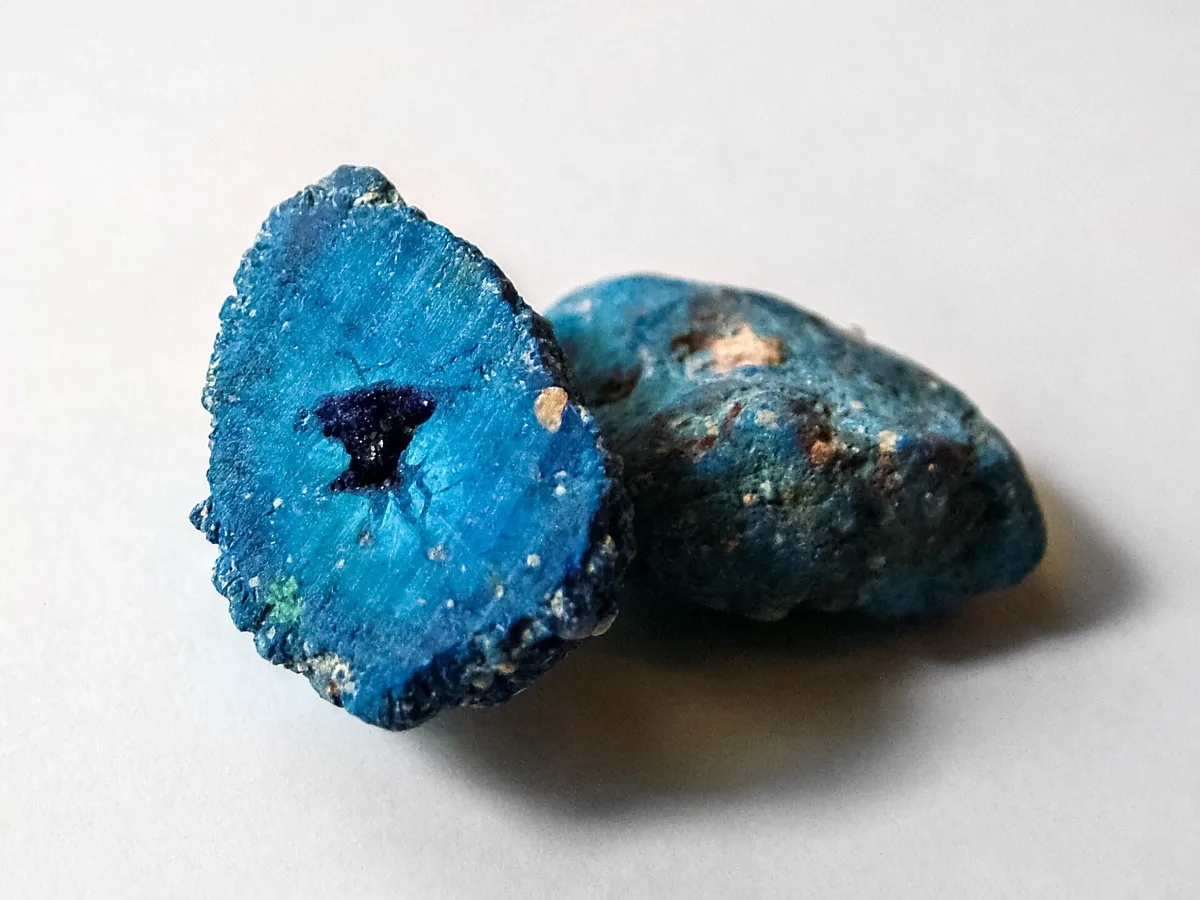
- Softness means much of the azurite on the market is impregnated with resin or wax. It is genuine but treated, and cheap.
- Blue howlite, dyed quartz and blue glass are frequently sold as azurite. Real stone has uneven natural patches and green malachite spots.
- A very bright, perfectly uniform blue is unusual for azurite.
Care
Azurite dislikes water, acids and heat — a long soak will shift its colour. Do not wet it, skip the ultrasonic cleaner, and keep perfume off the stone. A dry soft cloth is enough.
See also
-
Alexandrite
Chemical formula – BeAl₂O₄
Hardness – 8.5
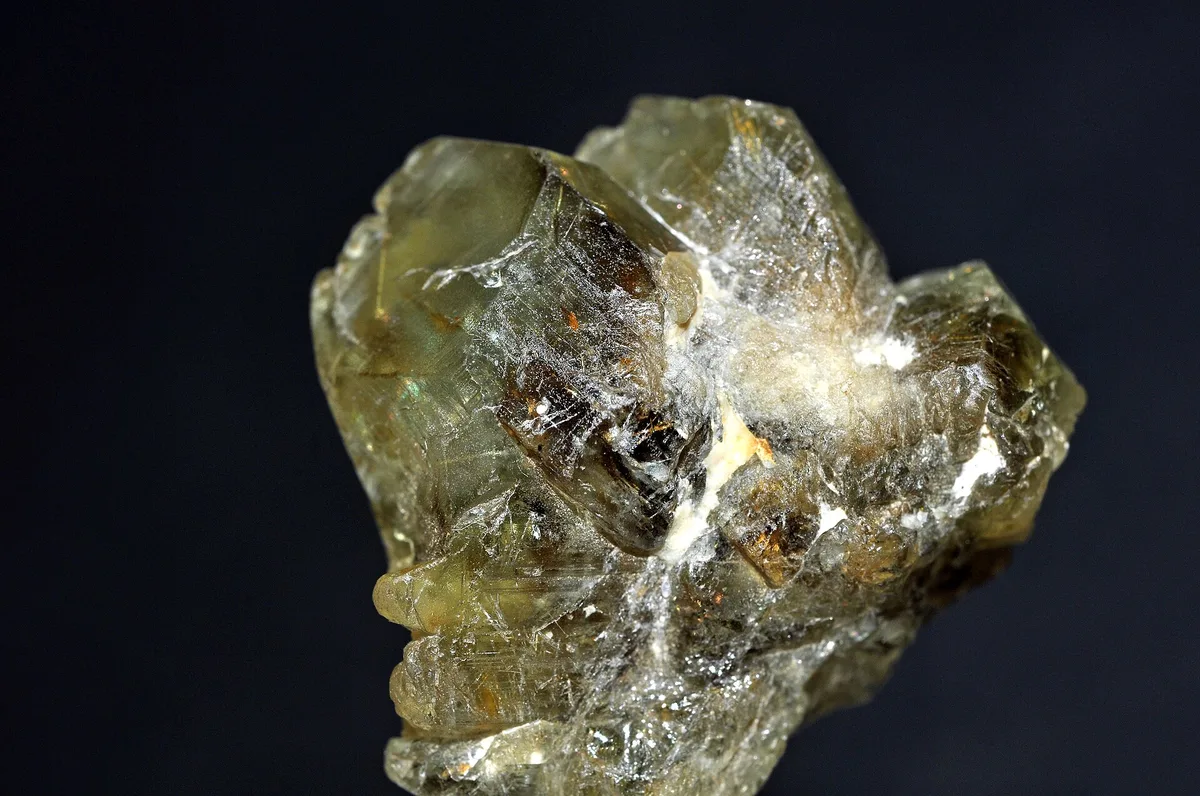
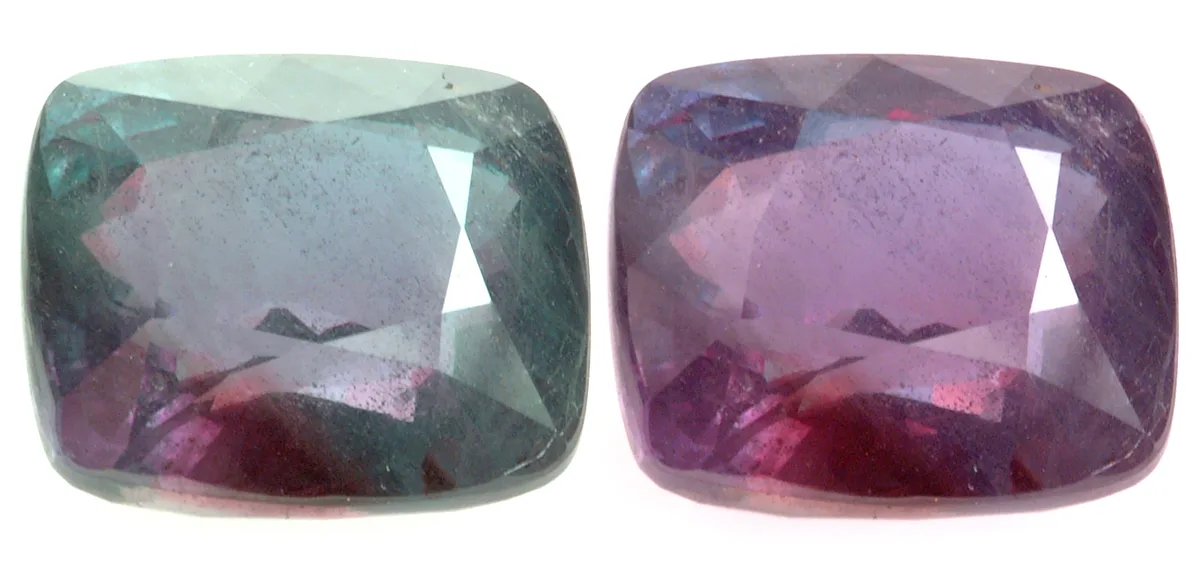
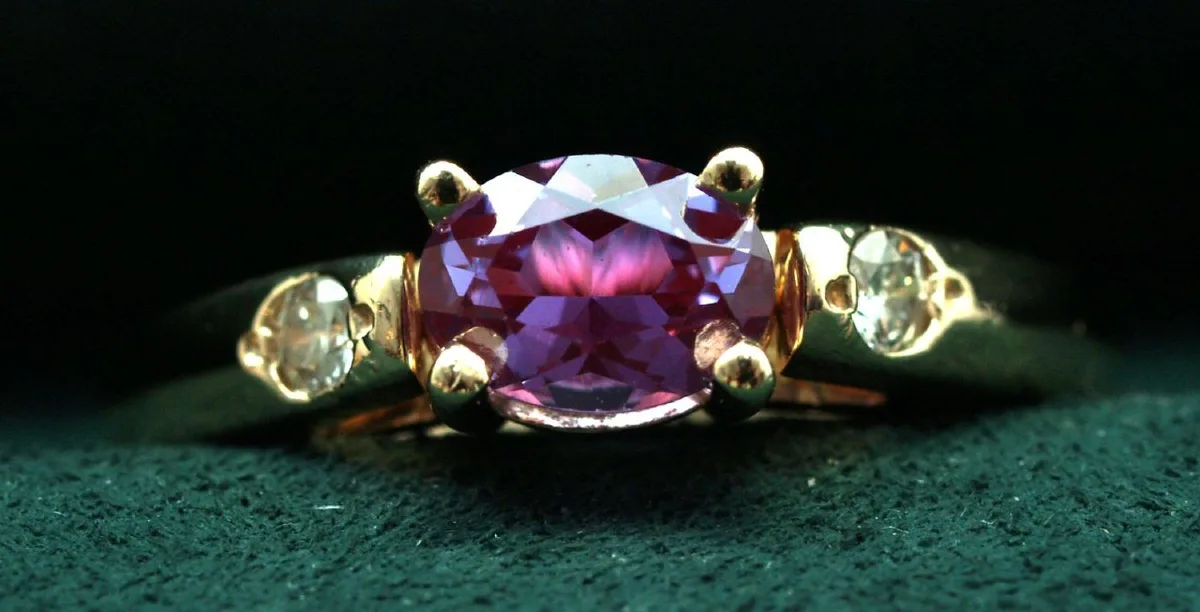
Colour – pleochroic: green, violet, yellowish, bluish, reddishAlexandrite is a variety of chrysoberyl and the rarest of them. Its defining trait is colour change: in daylight the stone looks green or bluish-green, while under warm lamplight it turns red or violet-red. The effect has its own name — the alexandrite effect.
The stone was found in the early 1800s in the Urals, in an emerald mine by the Tokovaya river, by the mineralogist Nils Gustaf Nordenskiöld. At first he took it for part of an emerald and never suspected a new mineral. The name honours the future Emperor Alexander II, though historians still argue over who proposed it.
Alexandrite is one of the best-known pleochroic stones. Its deposits are considered all but exhausted, so a large, clean stone with a strong colour change costs more than a diamond. Even a convincing imitation is expensive.
Origins
For years Russia was the only supplier, but the Ural deposits ran out long ago. In 1987 the stone was found in Brazil, and later in Myanmar, Sri Lanka, India and Madagascar.
Properties
Esoteric tradition calls alexandrite the stone of flourishing and long life. It is said to balance mind and emotions and to help its owner grow spiritually. It has a reputation as a calming stone, which is why it is recommended to people with a fiery temper.
In the 19th century alexandrite was used to balance the physical, astral and mental bodies. It is believed to awaken creativity and imagination, sharpen intuition and help its owner find a way out of a dead end.
Traditional healing properties
Alexandrite is said to react to changes in weather and in its owner's health. Lithotherapists link it to stronger circulation and "cleaner" blood, and to the blood vessels, spleen and pancreas.
This describes traditional practice, not medical advice. A stone does not replace a doctor.
Chakras
Linked to the seventh, crown chakra – sahasrara.
Zodiac
Alexandrite is the stone of June, so it belongs first of all to Gemini. Tradition also connects it with Scorpio and Aries — signs at home with change and transformation.
In Charcho jewellery
Real alexandrite is rare and costly, so we do not list a ready-made piece. We make it to order and usually choose a small stone under 5 mm, so the colour change still reads. Catalogue: necklaces.
Real or fake
- True alexandrite is green by day and red under warm light. If a stone looks violet or pink under every light, it is not alexandrite.
- The market is dominated by synthetic alexandrite and by colour-change corundum or spinel. They are attractive, and far cheaper than the natural stone.
- Cheap "alexandrite" is almost always vanadium glass: you can see air bubbles and traces of the additive.
- Natural stone carries inclusions and micro-cracks — a perfectly clean large stone is a reason to slow down.
Care
Hardness 8.5 is enough for daily wear, but the stone is sensitive to temperature swings. Skip steam, ultrasonics and chemicals; warm water and a soft cloth will do. Store the piece separately so sharp edges cannot scratch it.
See also
-
Almandine
Chemical formula – Fe₃Al₂(SiO₄)₃
Hardness – 7–7.5
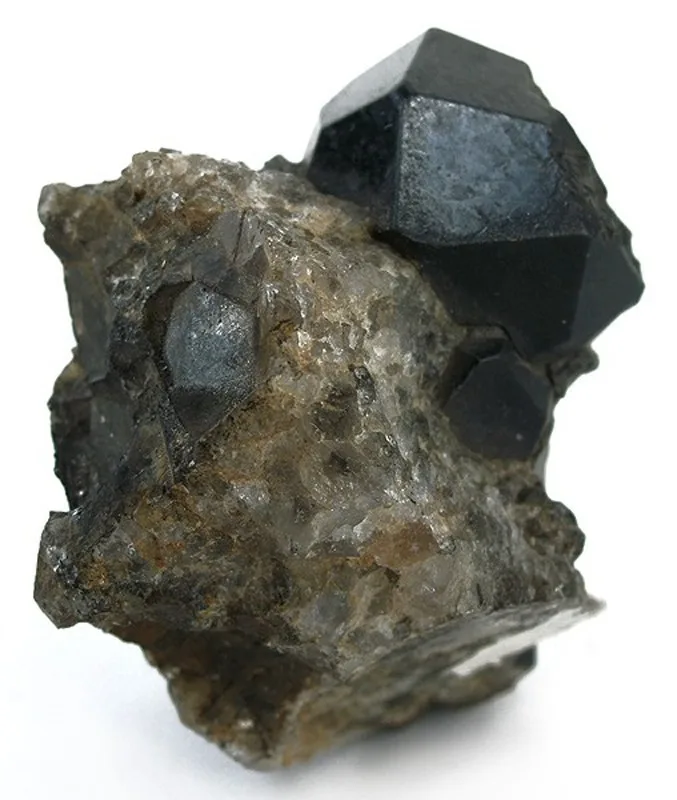
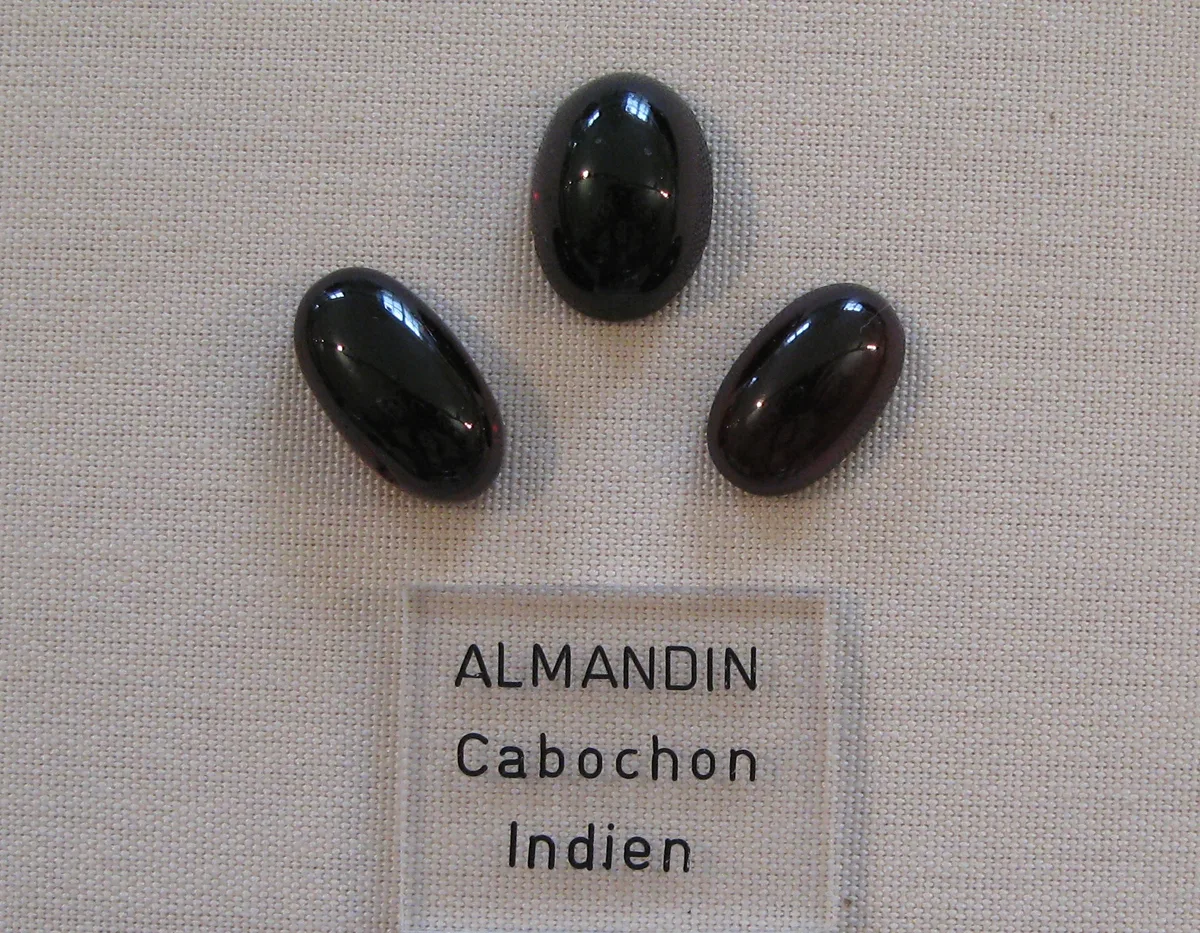
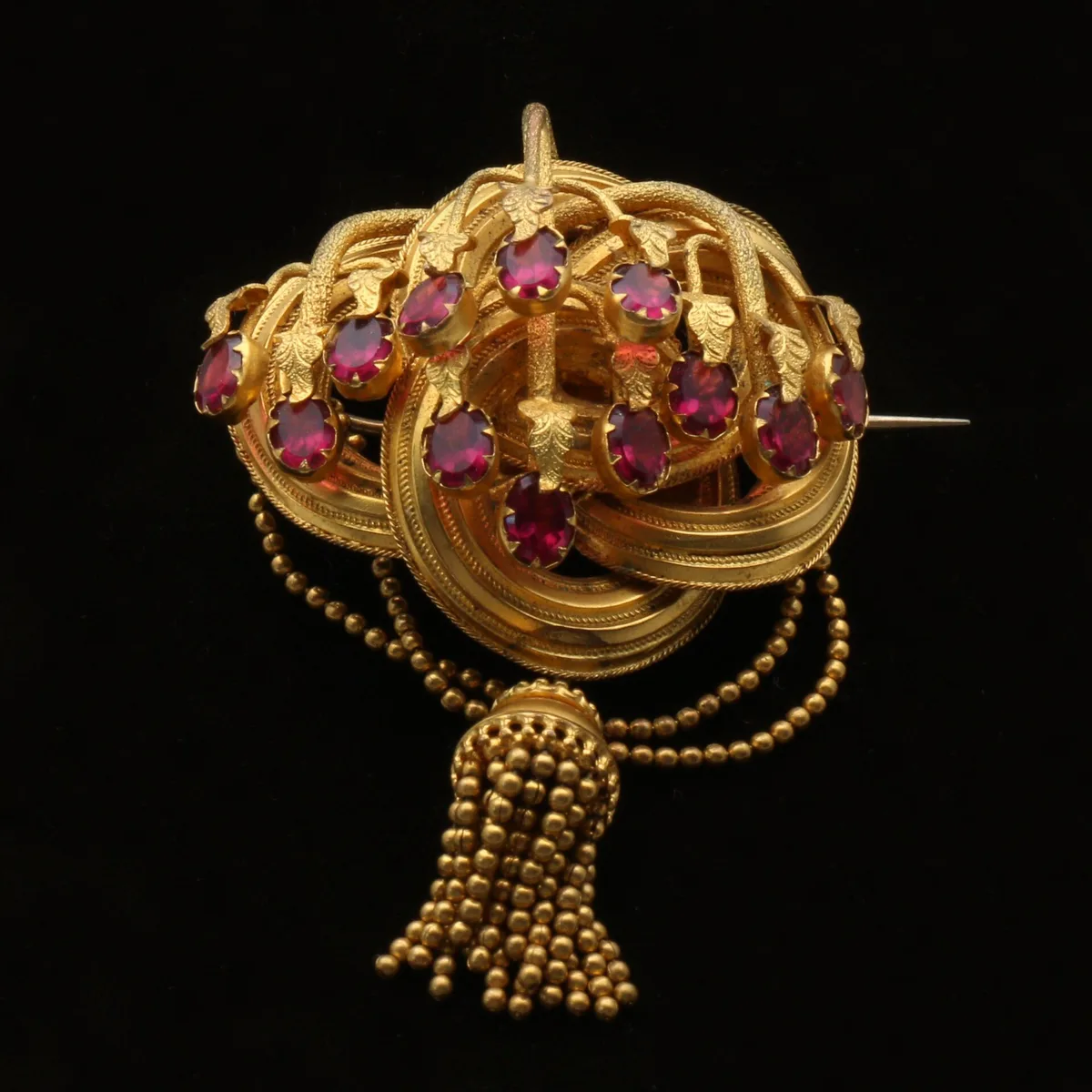
Colour – red, reddish-brown, violetAlmandine is a member of the garnet family and its most widespread variety. The colour runs from violet to a dark brownish red: deep and heavy, far more earthy than the bright red of ruby. That tone comes from a high iron content.
The name is traced to the ancient city of Alabanda, where the stone is said to have been worked in antiquity.
A pure, bright red almandine is rare and the most expensive. The dark, almost black reddish stones cost far less, and they are the ones you meet most often in jewellery.
Origins
Almandine comes from Brazil, India, Madagascar, Sri Lanka, the USA, Austria, Canada, Japan, Tanzania and Zambia. Sri Lanka is known for the highest grade.
Properties
For centuries almandine has been treated as a protective talisman and a stone of strength. Different cultures held that it strengthened a person's physical and mental capacity.
Because of its deep colour, almandine is also counted among stones of love, joy, relationships and energy. Esoteric writers call it the talisman of travellers, journalists, researchers and anyone fond of adventure — people who move a lot and look for new places.
Traditional healing properties
Lithotherapists hold that almandine supports circulation and the work of the heart. It is said to speed recovery after surgery or injury, to regulate metabolism and to bring the body back to tone.
This describes traditional practice, not medical advice. A stone does not replace a doctor.
Chakras
Linked to the first, root chakra – muladhara.
Zodiac
Traditionally garnets, and red almandine in particular, are the stone of Aquarius. Modern astrologers also recommend it for Sagittarius, Leo, Scorpio and Aries.
In Charcho jewellery
Almandine is a generous stone for us: deep colour, reasonable price, and hardness that survives daily wear. There is no ready-made piece in the catalogue yet, but we make them to order. Catalogue: necklaces.
Real or fake
- Almandine is often mistaken for ruby. Ruby is a bright, clean red with a livelier sparkle; almandine carries a brown or violet cast.
- Glass and synthetic garnet are regularly sold as the natural stone. Glass shows air bubbles and a colour that is too even.
- Natural stone has inclusions, fine cracks and an uneven spread of colour. A very clean, very cheap "almandine" is a warning sign.
- Remember that "garnet" is a family name: pyrope and spessartine sit in it too.
Care
Hardness 7–7.5 is fine for everyday wear. Avoid sudden temperature changes — hot water and cold air together can start a crack. Warm water and a soft cloth are enough for cleaning.
See also
-
Ruby
Chemical formula – Al₂O₃
Hardness – 9
Colour – red, cherryRuby is one of the most expensive stones in the world. A small ruby often costs more than a large diamond. For centuries it was prized for its colour, properties and density, and it was a favourite talisman.
In ancient India it was called "ratnaraj", king of stones. Ruby appears in Sanskrit texts, the Bible and other ancient sources.
In Sakartvelo ruby has a long history: it was imported from the east, and the name itself is Arabo-Persian in origin. An ancient necklace found at Bori is set with 29 rubies. In Georgian literature ruby became the symbol of brilliant red.
Origins
The largest suppliers are Burma and Thailand. Rubies also come from Sri Lanka, Tanzania, Madagascar, Australia and Mozambique.
Properties
Tradition treats ruby as the stone of vitality, passion and courage. It is said to give the owner energy and confidence, and to guard against danger.
Ruby is said to have no patience for lies: in old legends the stone changed colour when trouble approached its owner.
Traditional healing properties
In traditional lithotherapy ruby is the stone of circulation, the heart and vitality.
This describes traditional practice, not medical advice. A stone does not replace a doctor.
Chakras
Associated with the first, root chakra – muladhara; in some traditions with the heart.
Which zodiac sign it belongs to
It is the stone of July, so it belongs to Cancer first of all, though ruby answers more readily to fire signs.
It also suits Leo, for whom passion and self-expression come naturally, and Aries, the sign of courage and forward motion.
In Charcho jewellery
We have no finished piece with ruby yet, but we take custom orders. Catalogue: necklaces.
Real or fake
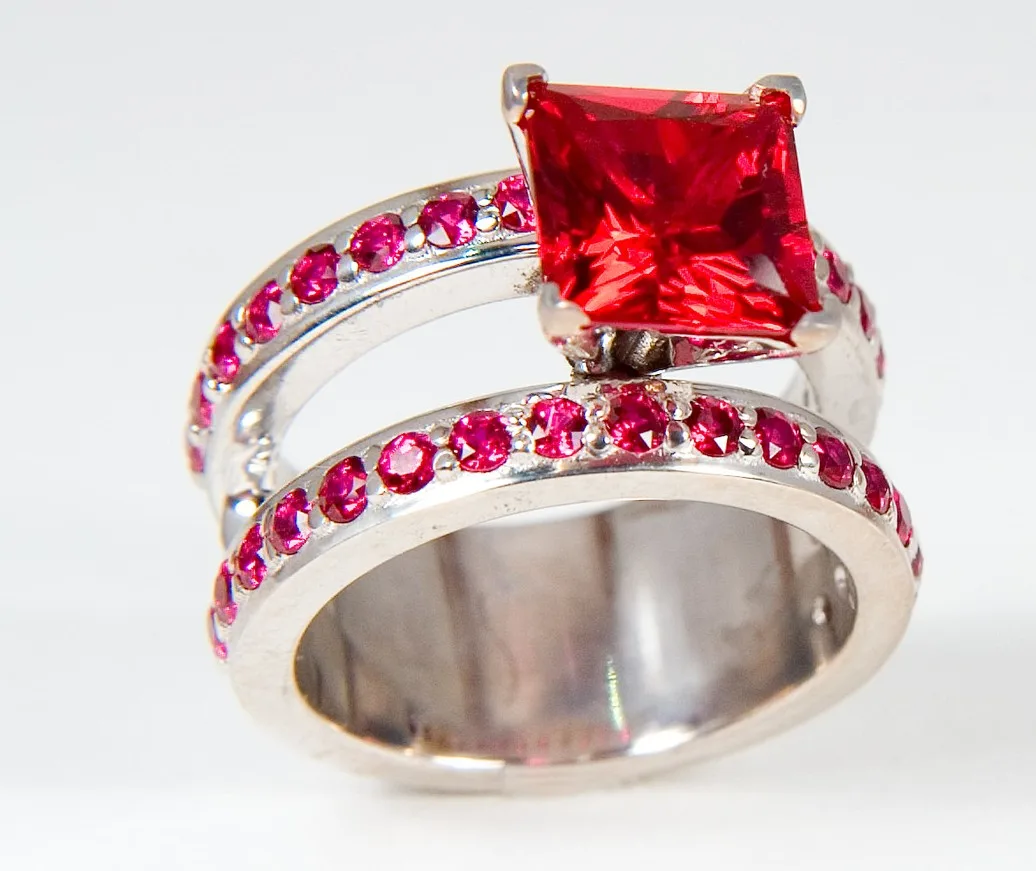
- Because it is rare, ruby is often dyed and fracture-filled, and such a stone is cheaper than natural.
- Large natural rubies are extremely rare; a suspiciously cheap "big ruby" is almost always glass or synthetic.
- Age is no guarantee of authenticity.
- Natural ruby has inclusions and micro-cracks; a flawless stone raises questions.
Care
Hardness 9 makes it tough. If the stone has been fracture-filled, skip ultrasonic and steam. Warm water and a soft cloth are enough.
See also

Have an idea? We will make it.
Write or call us - together we will choose the material, colour and size, and make the piece to order.