 Free Delivery in Batumi


Blog
From the workshop: materials, care, gifts and the stories behind the pieces.
-
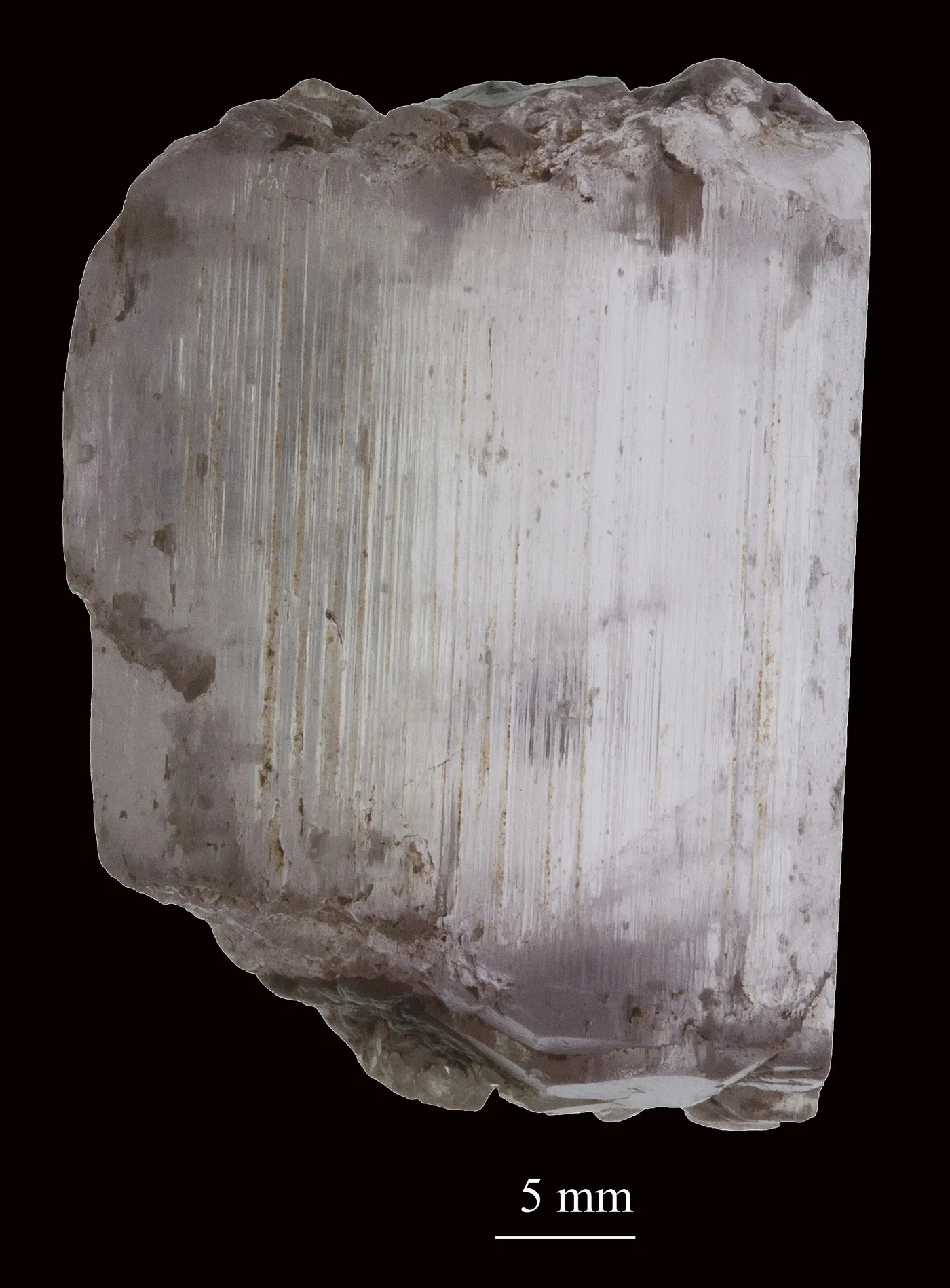
Kunzite
Chemical formula – LiAl[Si₂O₆]
Hardness – 6.5
Colour – pale lilac, pinkKunzite is a member of the spodumene group, and its pink-lilac tone is rarely found in nature this clean. It was first discovered in the US state of Connecticut and named after George Frederick Kunz — a mineralogist who served as vice-president of Tiffany & Company and was regarded as a legendary expert on coloured stones. Kunz wrote the full description of the stone in 1902.
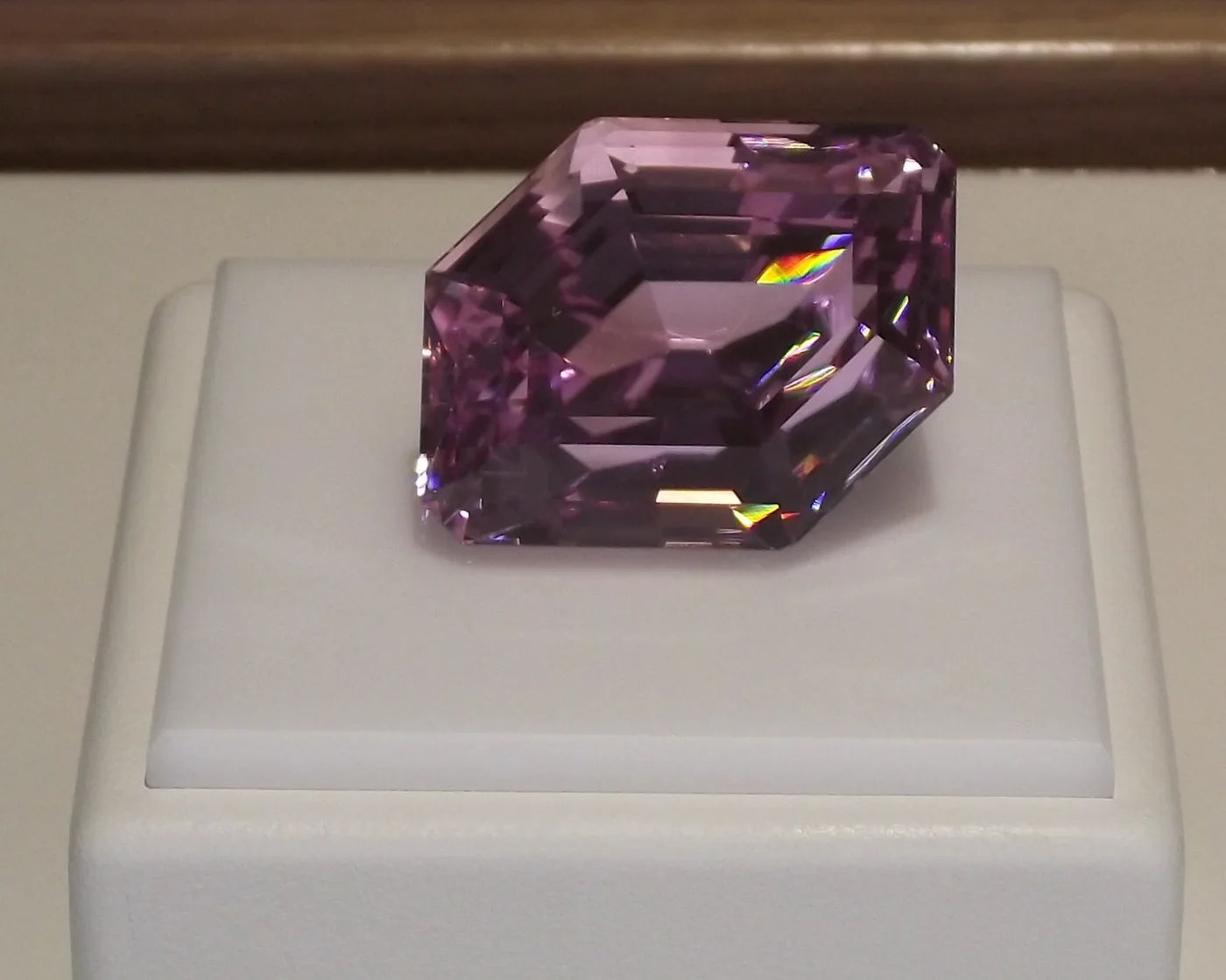
Jewellers prize kunzite for another reason: it is pleochroic, showing different colour intensity from different angles. A cutter therefore orients the crystal so that its deepest tone lands on the top facet. Hardness 6.5 is moderate, and perfect cleavage means the stone yields easily to a blow — which is why it is always set in a closed bezel.
Deposits
Although kunzite was first found in America, today the market is supplied mainly by Afghanistan and Pakistan. Crystals are also mined in Brazil and Madagascar, and in the United States in California and Maine.
Properties
Tradition treats kunzite as a powerful spiritual stone. It is said to release painful memories of the past, dissolve fears and help the owner feel the joy of life and love again. The stone is believed to clear energetic blocks and cleanse the aura of negativity.
Kunzite is also known as a calming stone: it is said to ease stress and tension and to keep unbalanced anger away. Sometimes a single glance is enough to make the day feel lighter — so say those who wear it.
Healing properties
Lithotherapists link kunzite with restoring hormonal balance, the heart and the blood; tradition considers it especially beneficial for the female body and says it is kind to the skin. This is a cultural tradition, not medical advice — for any health concern, please see a doctor.
Chakras
Heart chakra — anahata.
Which horoscope it suits
Tradition links kunzite with Taurus, Leo and Libra. Because the stone belongs to the heart chakra, it is especially recommended to those who have carried a heavy emotional load lately.
In Charcho jewellery
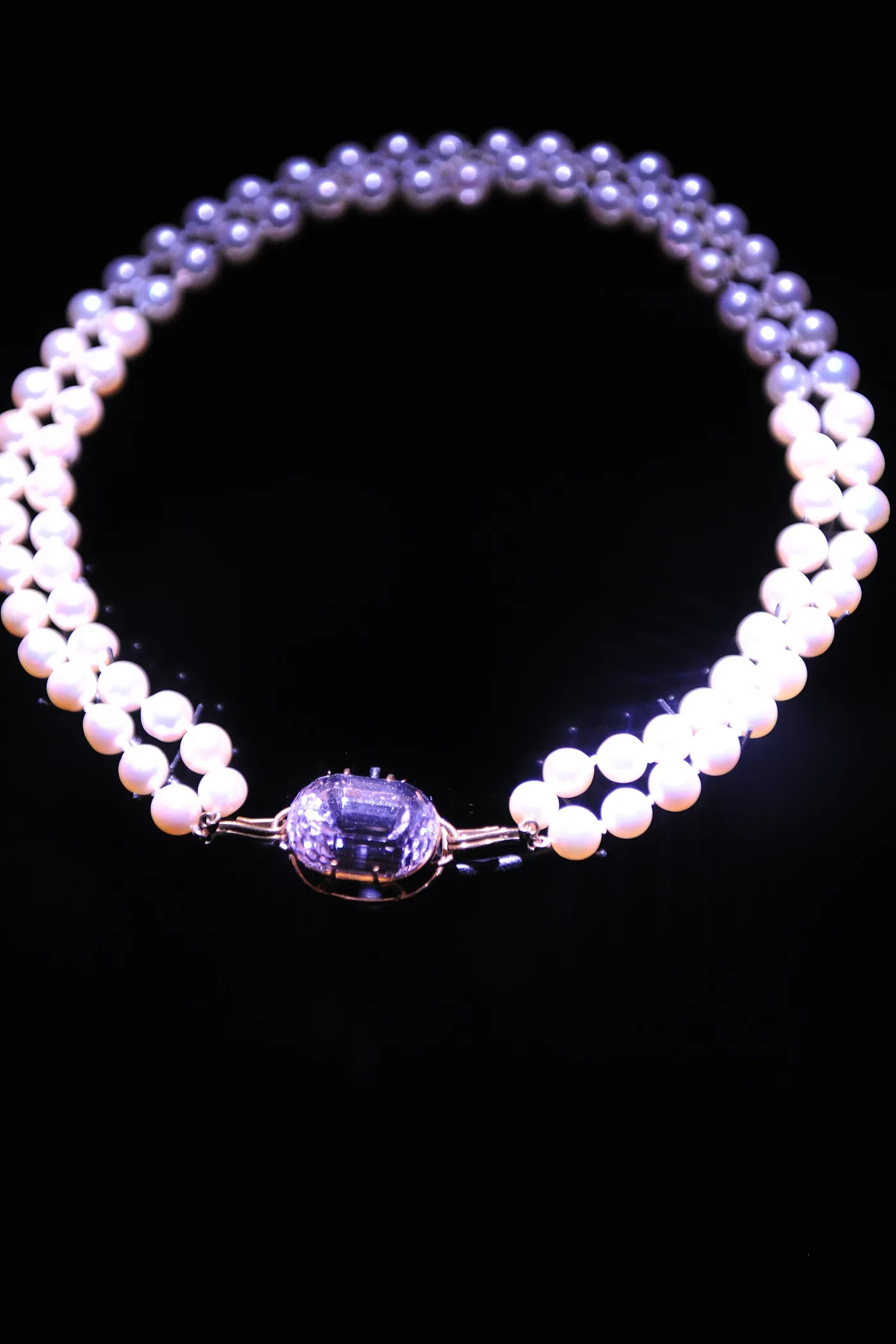
Kunzite is the softest colour in our palette: it is almost never "loud", and that quietness is exactly what makes it special. In our necklaces it warms pink-toned skin and gives a pleasant contrast to cooler shades.
Real or fake
Pink glass or dyed quartz is often sold as kunzite. A real stone is pleochroic: the shade shifts as you turn it. It shows cleavage planes and natural inclusions, while glass reveals bubbles and a flat, even colour. One more clue: genuine kunzite loses colour under prolonged exposure — a drawback, yet precisely what confirms its natural origin.
Care
Kunzite dislikes sunlight, heat and ultrasonic baths — the colour may disappear. Clean it with warm water and a soft cloth only, without chemicals. Because of its cleavage, protect it from knocks and store it separately in a soft pouch.
See also
-
Labradorite
Chemical formula – NaAlSi₃O₈ – CaAl₂Si₂O₈
Hardness – 6 – 6.5
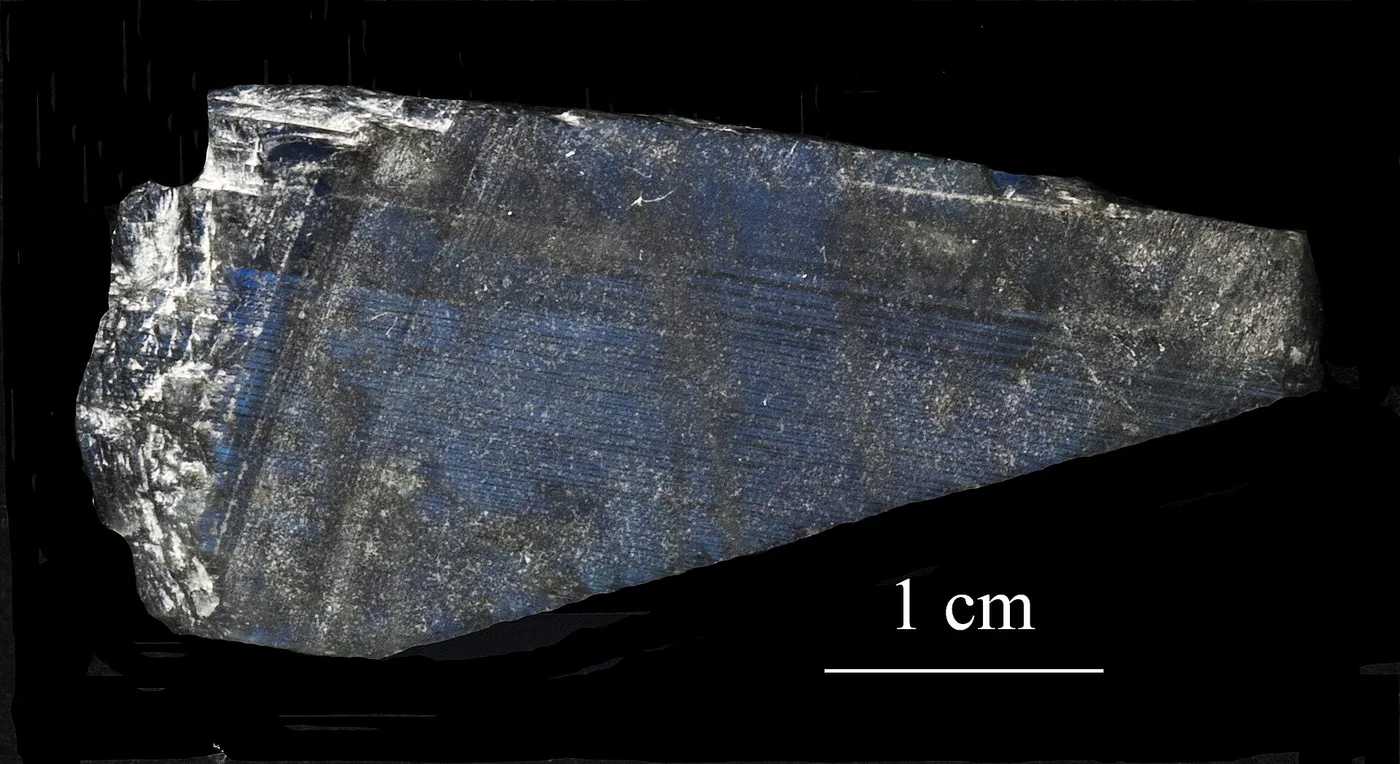
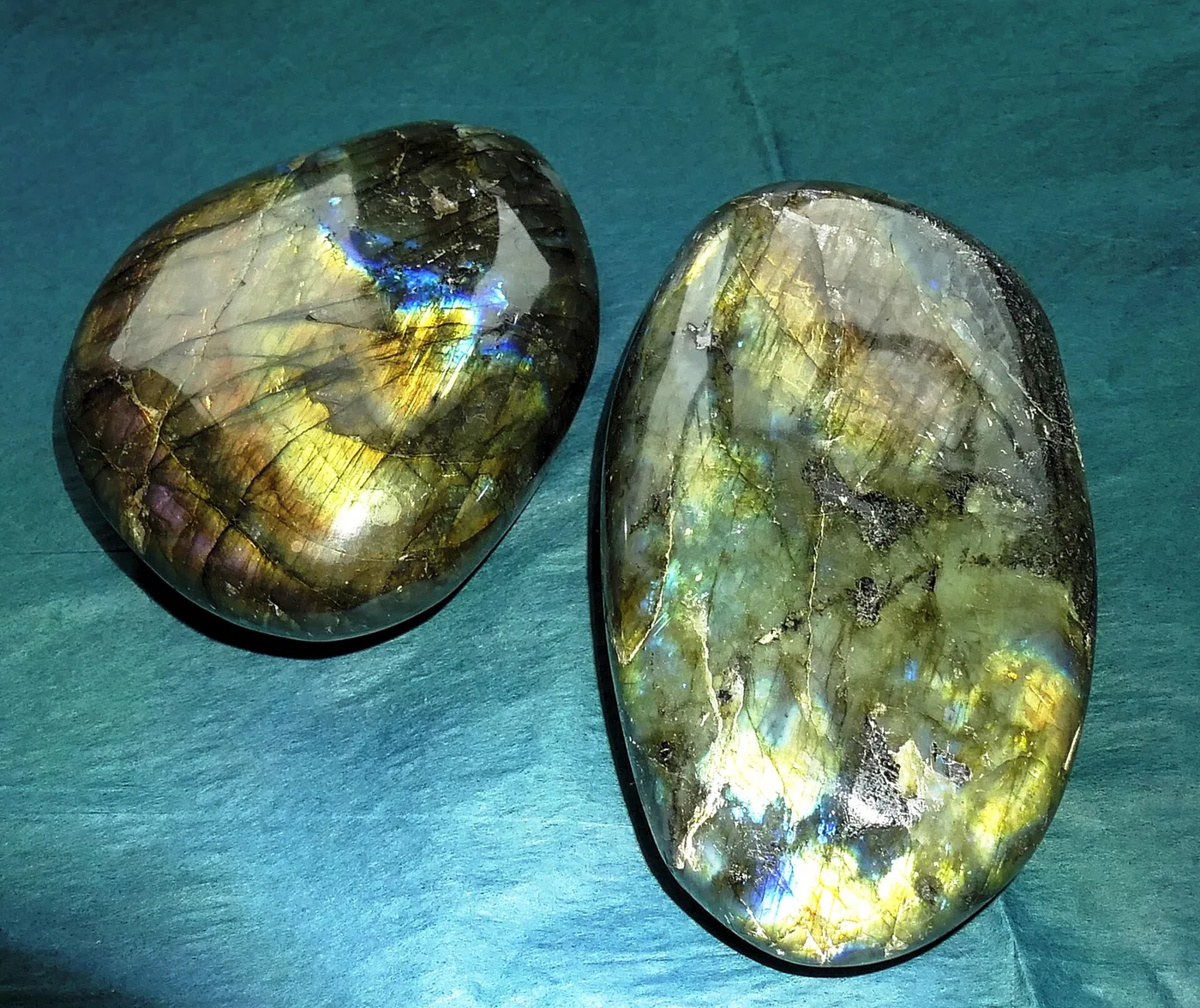
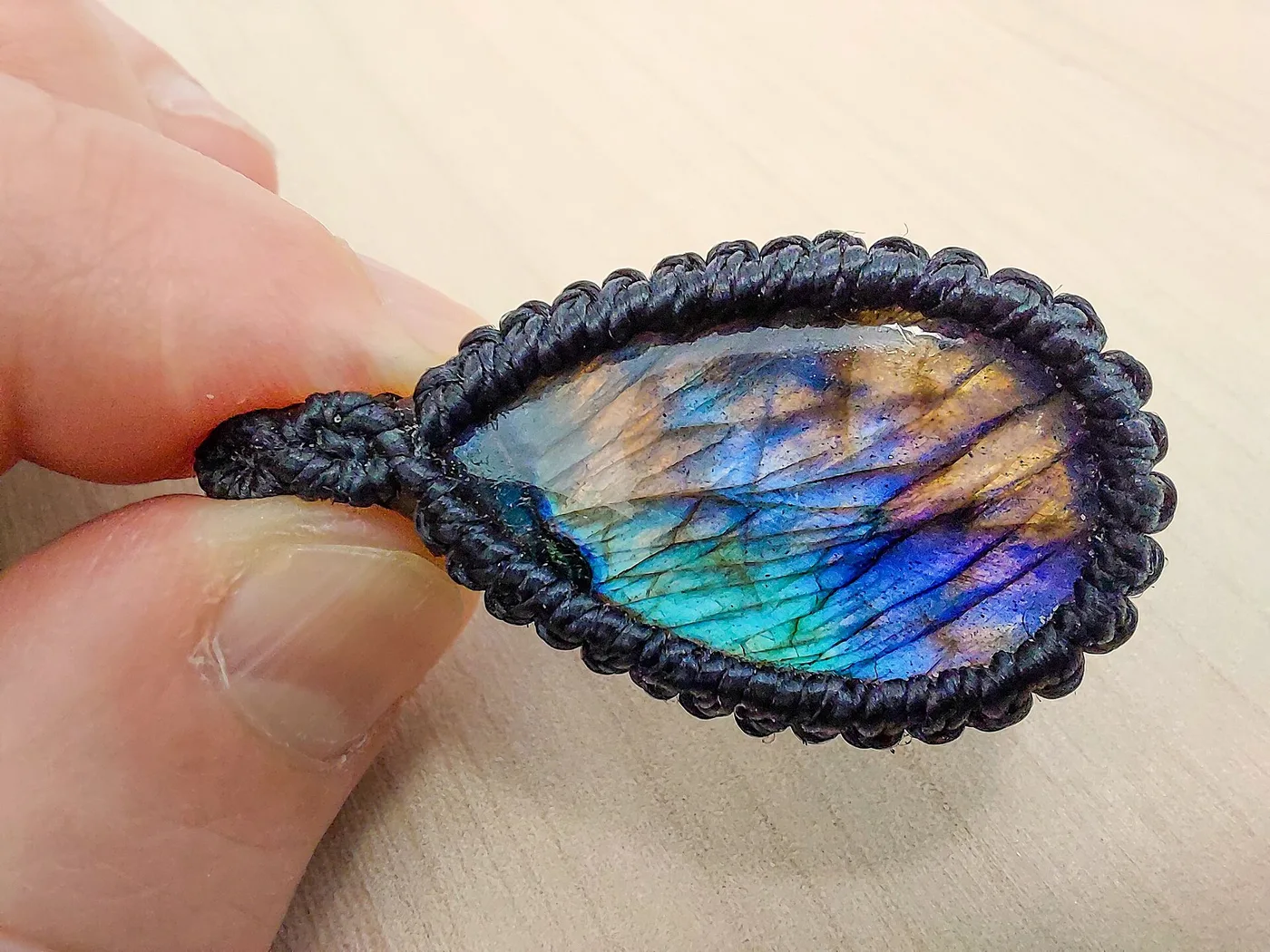
Colour – blue, orange, violet, green, sky-blueLabradorite belongs to the feldspar family, and its central oddity is that the stone itself is grey: the colour is born inside it through a particular refraction of light. The effect is called labradorescence, and it is why the stone shifts shade as you turn it, from pale sky blue to deep violet.
The name honours the Labrador region of Canada, where the mineral was discovered in 1770. It has since been found elsewhere, but by then the name had already entered the record.
Labradorite is rarely fully transparent — most of it is opaque or translucent, which is why it is usually cut into cabochons. A cabochon shows the flash best, so the cutter's task is to orient the stone so that the blue "glow" sits at its centre.
Deposits
Labradorite was discovered in Canada, and the country remains one of the largest suppliers. It is also mined in Australia, Madagascar, Mexico, Norway, Russia and the United States.
Properties
Among minerals, labradorite is considered one of the strongest protective stones. It is said that wearing it awakens the owner's dormant powers and talents, sharpens intuition and strengthens the body's resistance.
At work the stone is said to help hold concentration and to leave a good impression on people. Labradorite is believed to calm a tired mind and develop the creative side — which is why it is often recommended to musicians, film directors, actors, speakers and designers.
Healing properties
Lithotherapists hold that labradorite supports the strengthening of the body; some healers believe it eases back pain and improves sleep. This is a cultural tradition, not medical advice — for any health concern, please see a doctor.
Chakras
Throat chakra — vishuddha. Depending on colour, the stone is also used on other chakras: the blue flash is linked to the third eye, the orange one to the solar plexus.
Which horoscope it suits
Tradition links labradorite with Scorpio, Sagittarius and Leo. It is said to suit especially those whose work involves public speaking or creative output.
In Charcho jewellery
Labradorite is a particular stone for us: its flash barely registers in a photograph and only comes alive in the hand or in motion. That is why in our necklaces we set it as round cabochons in open bezels and work to bring the glow to the top face.
Real or fake
Labradorescence is very hard to imitate, which makes labradorite one of the more "honest" stones. Even so, glass imitations and surface coatings exist: there the flash is flat and fixed, it does not play as the stone turns, and a scratch quickly exposes the coating. A real stone has a grey body, and the glow comes from within.
Care
Hardness 6–6.5 and perfect cleavage mean labradorite yields easily to a knock. Clean it with warm water and a soft cloth; skip ultrasonic cleaners, steam and chemicals. Store the piece separately so other stones do not scratch it.
See also
-
Quartz
Chemical formula – SiO₂
Hardness – 7
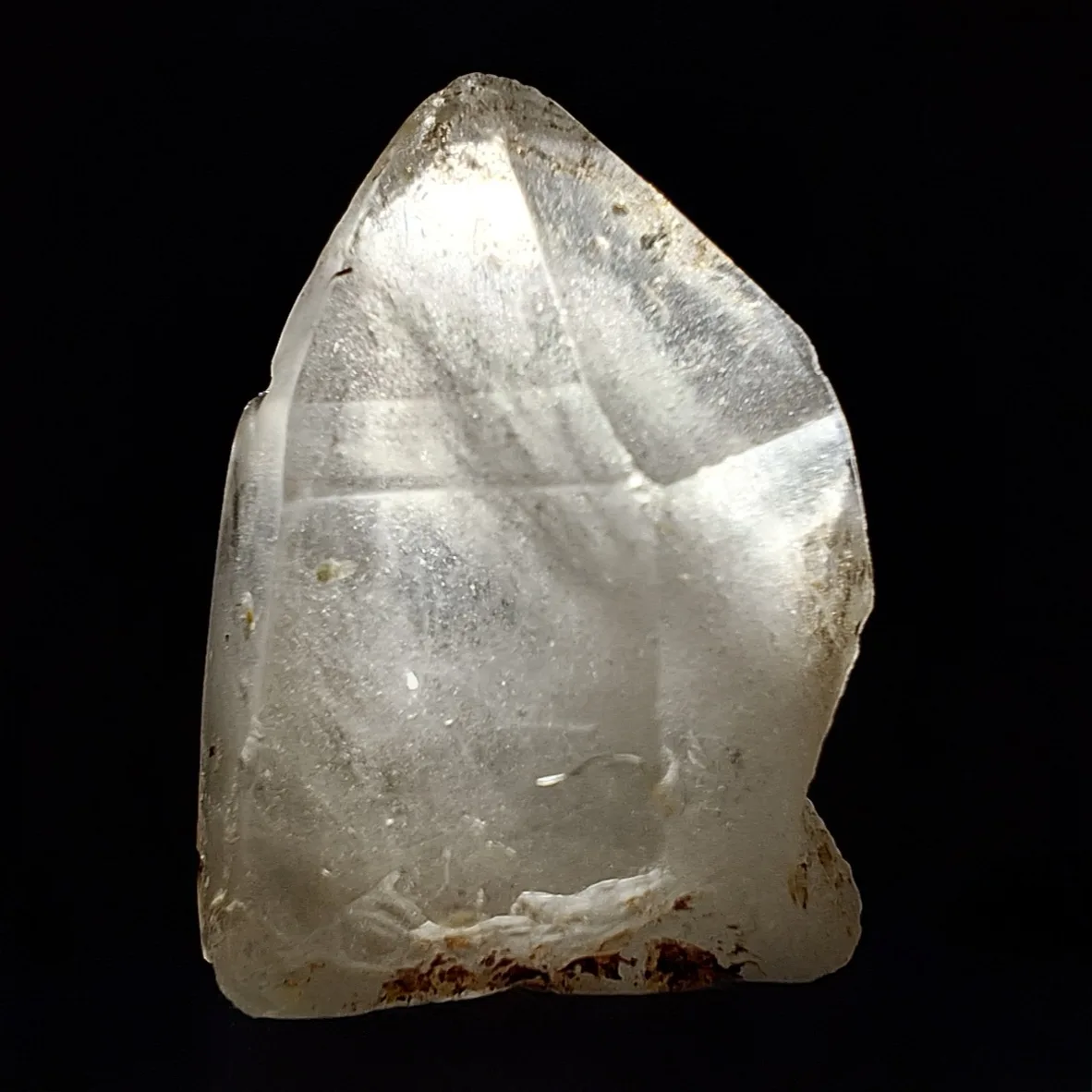
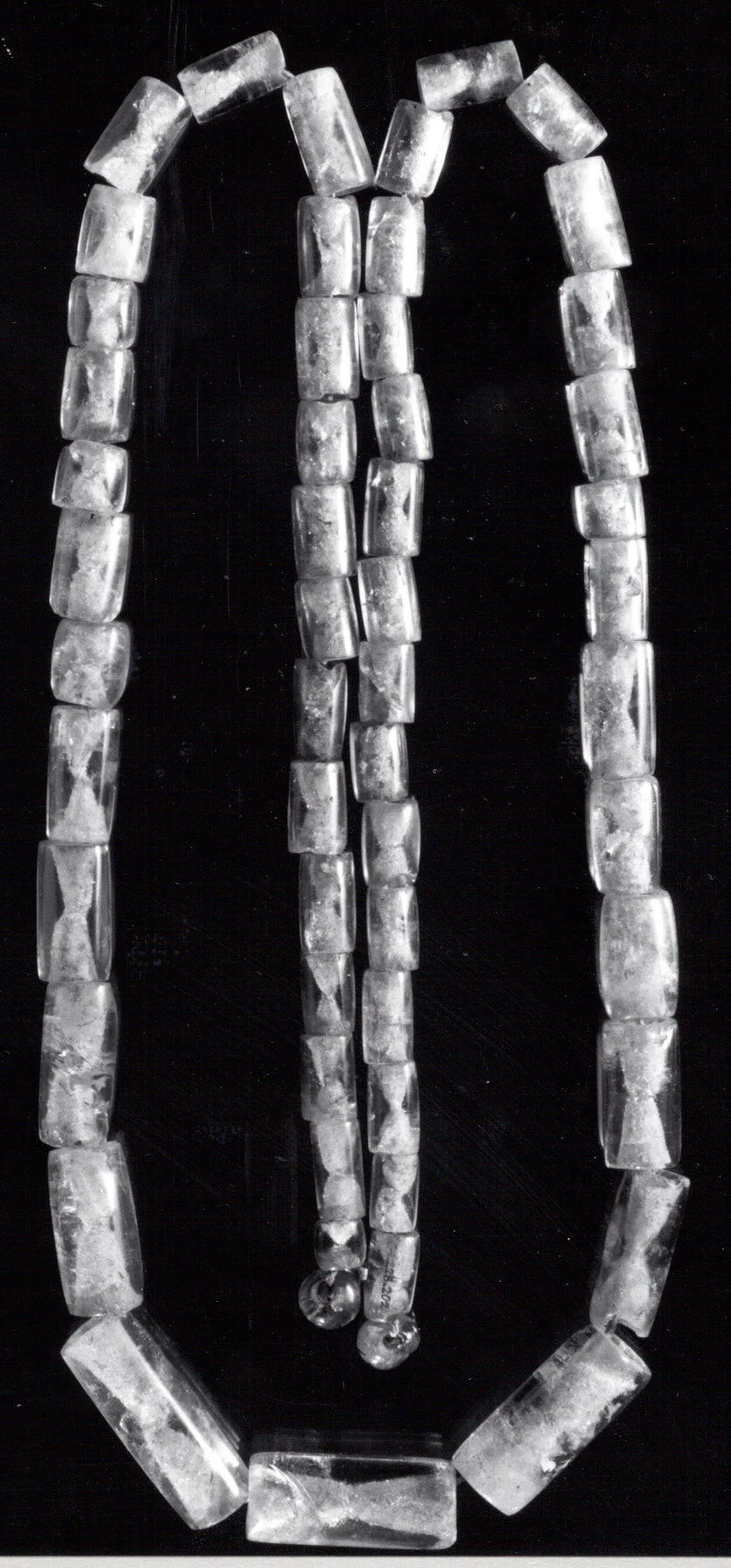
Colour – variesQuartz is one of the most common minerals in the Earth's crust: most sand and many rocks, granite among them, are built from it. In jewellery it rarely appears under its own name. Its varieties are treated as separate stones, and few people realise that amethyst, citrine and jasper are relatives of the same mineral.
The name comes from German and means "hard" — a fair description, since quartz outranks many jewellery stones on hardness. Behind the single formula sit two large families. Macrocrystalline quartz has crystals you can see: amethyst, citrine, prasiolite, rock crystal, rose and smoky quartz, tiger's eye. Cryptocrystalline quartz is made of grains so small that even a microscope barely separates them. That group is called chalcedony, and it includes agate, chrysoprase, heliotrope, jasper and carnelian.
Prices follow the same logic: ordinary rock crystal costs little, while a large crystal in a rare colour runs into the thousands. Quartz has been in use for centuries and has never lost its appeal — beyond jewellery, it keeps time in watches and works inside electronics and building materials.
Deposits
Quartz is found almost everywhere, but jewellery-grade crystals come from a limited number of places. The main sources are Brazil, Madagascar, India and Sri Lanka. Classic rock crystal localities are the Alps and the Russian Urals, while Arkansas in the United States is known for its crystal "vugs".
Properties
Tradition calls quartz the "master stone": it is said to amplify intention and reinforce the qualities of other stones. Clear rock crystal is considered the most neutral of all — no single energy is assigned to it, which is why it is often used to "boost" neighbouring stones. Rose quartz is regarded as the stone of love and calm, smoky quartz as a protective one.
Healing properties
In lithotherapy quartz is most often linked to general tone and the recovery of energy; it is said to help with fatigue and tension. This is a cultural tradition, not medical advice — for any health concern, please see a doctor.
Chakras
All chakras; especially the crown chakra — sahasrara. Rose quartz is tied to the heart chakra (anahata), amethyst to the third eye (ajna).
Which horoscope it suits
Tradition treats quartz as a stone for every sign, since it is neutral and fits any horoscope. More specifically, rose quartz is linked to Taurus and Libra, citrine to Gemini and Sagittarius, amethyst to Pisces.
In Charcho jewellery
Quartz is the most rewarding material we work with: hard, easy to polish and available in a wide range of colours. Rock crystal and rose quartz cabochons look especially good in our necklaces.
Real or fake
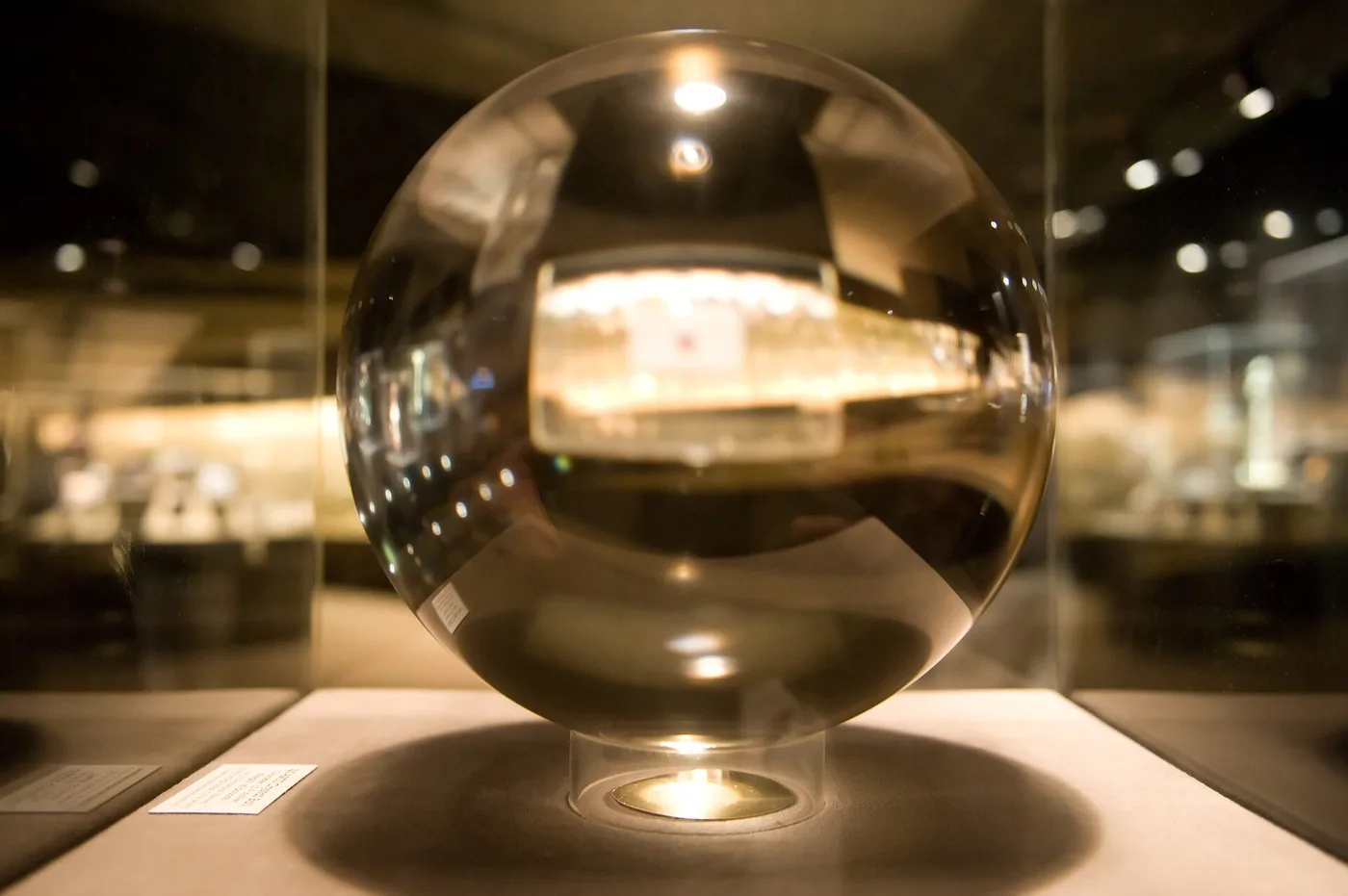
Glass and fibreglass are the usual stand-ins sold as quartz. A real stone feels cold and heavy in the hand, holds no bubbles and keeps natural inclusions. A crystal that is too clean, too flawless and too cheap is usually a reason to pause.
Care
Hardness 7 lets you wear the stone daily, but still guard it against sharp knocks. Warm water and mild soap are enough; ultrasonic cleaners and chemicals are best avoided. Coloured varieties — amethyst, citrine, rose quartz — fade in long sunlight, so don't leave the piece on a windowsill.
See also
-
Kyanite
Chemical formula – Al₂SiO₅
Hardness – 4 – 4.5
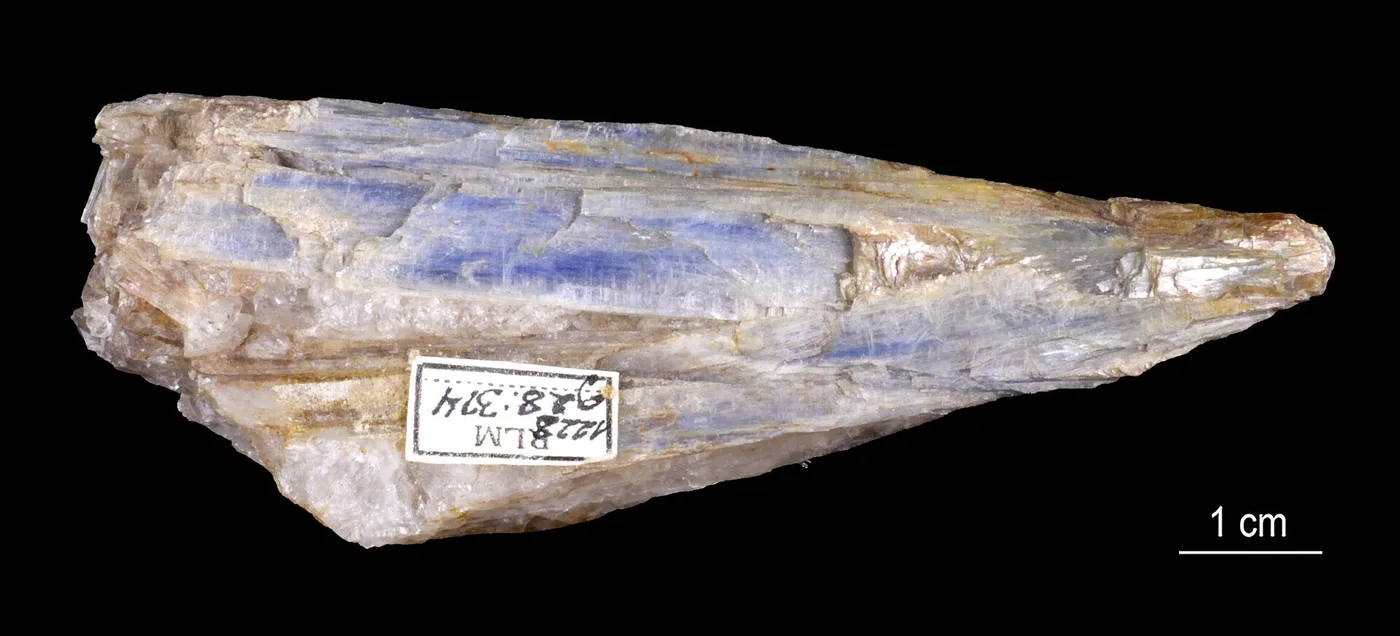
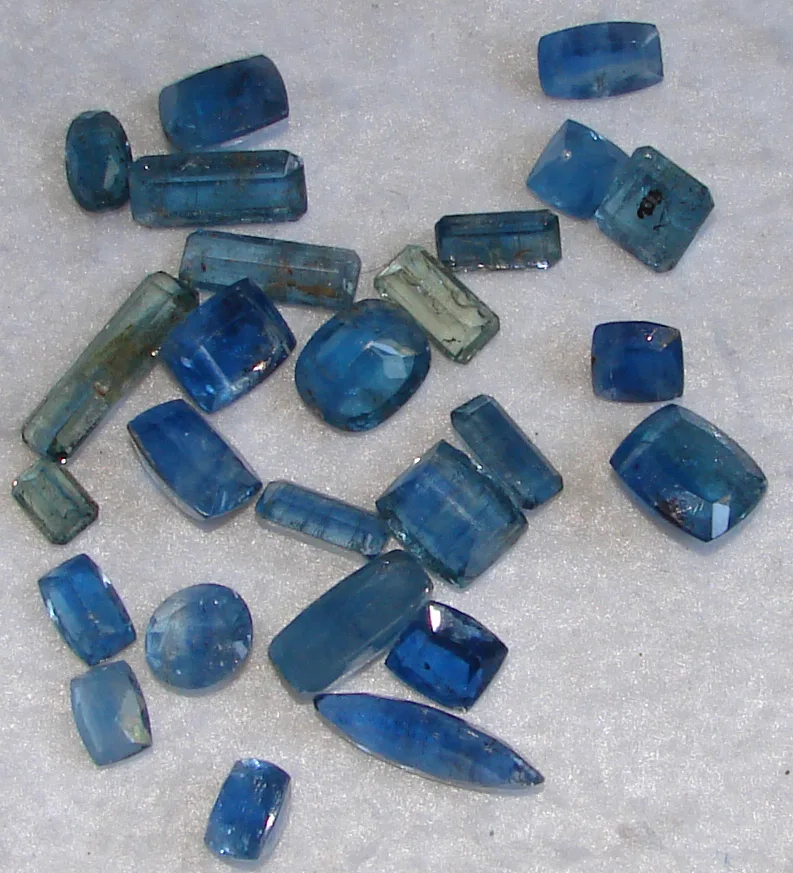
Colour – blue, colourless, brownAmong blue stones, kyanite stands out for the purity of its tone, from pale sky blue to a deep, almost cornflower shade. The name comes from Greek and means "dark blue", though in nature the stone is not always blue: yellow, grey, green and completely colourless crystals occur too. Orange kyanite was recently found in Tanzania.
The stone's most curious trait is its hardness. Along the crystal it is distinctly softer than across it, which is exactly why it is so difficult to cut and polish. In jewellery kyanite usually appears as a cabochon, sometimes faceted, but high durability is not something to expect.
Price follows colour depth. Pale grey-blue crystals are affordable, while clean, transparent blue kyanite costs considerably more — and that is the material collectors look for.
Deposits
Kyanite is not rare and is mined in many countries. The main suppliers are Australia, India, Brazil, Nepal, Kenya, Tanzania and the United States. In Europe crystals are found in Austria and Sweden, in Africa in Zimbabwe, while Myanmar and Russia supply the eastern market.
Properties
In esoteric tradition kyanite is the stone of dreams and visualisation. It is said to add honesty, loyalty and calm to a person's life. Curiously, kyanite is one of the few stones that tradition does not ask you to cleanse regularly: it is believed not to attract negative energy at all.
It is also said to help people see their own potential and move toward their goals without unnecessary obstacles. Kyanite is often linked with truthful speech, which is why it is recommended to speakers and teachers. A legend adds that the stone helps only decent, hard-working people and brings the right ones into the owner's life.
Healing properties
Lithotherapists connect kyanite with the nervous and endocrine systems, brain function and overall tension in the body; tradition also calls it a stone of cell development. This is a cultural tradition, not medical advice — for any health concern, please see a doctor.
Chakras
All chakras; especially the throat chakra — vishuddha. Kyanite is said to "work" with every chakra and help balance them.
Which horoscope it suits
Tradition links kyanite with Taurus, Libra and Aries. Because the stone belongs to the throat chakra, it is especially recommended to those who speak a lot or work in public, whatever their sign.
In Charcho jewellery
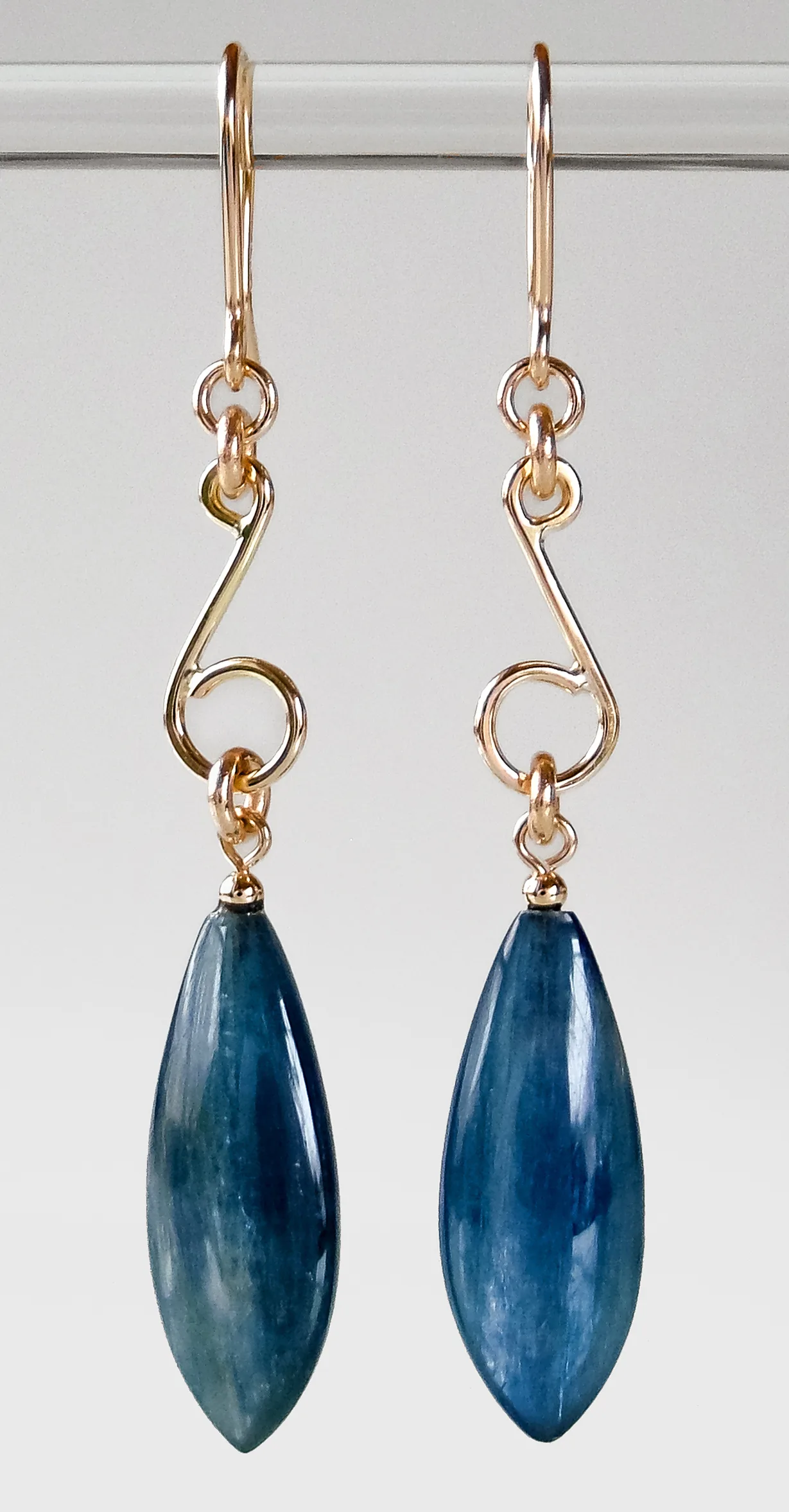
In our necklaces kyanite contrasts beautifully with lighter skin and pairs well with silver. Its leafy, fibrous texture makes every stone individual: two identical cabochons practically do not exist. Since the stone is soft, we set it in a closed bezel so the edges stay protected from knocks.
Real or fake
Blue glass or dyed sandstone is often sold as kyanite. A real stone has a fibrous, columnar structure, visible internal planes and unevenly distributed colour. Glass is uniform, with bubbles and scratches on the surface. Another clue: kyanite feels comparatively light and "cold" in the hand.
Care
Hardness 4–4.5 means the stone is not ideal for a ring worn daily — earrings or a necklace suit it better. Protect it from knocks and scratches and store it separately in a soft pouch. Clean with warm water and mild soap only; skip ultrasonic cleaners, steam and salt water.
See also
-
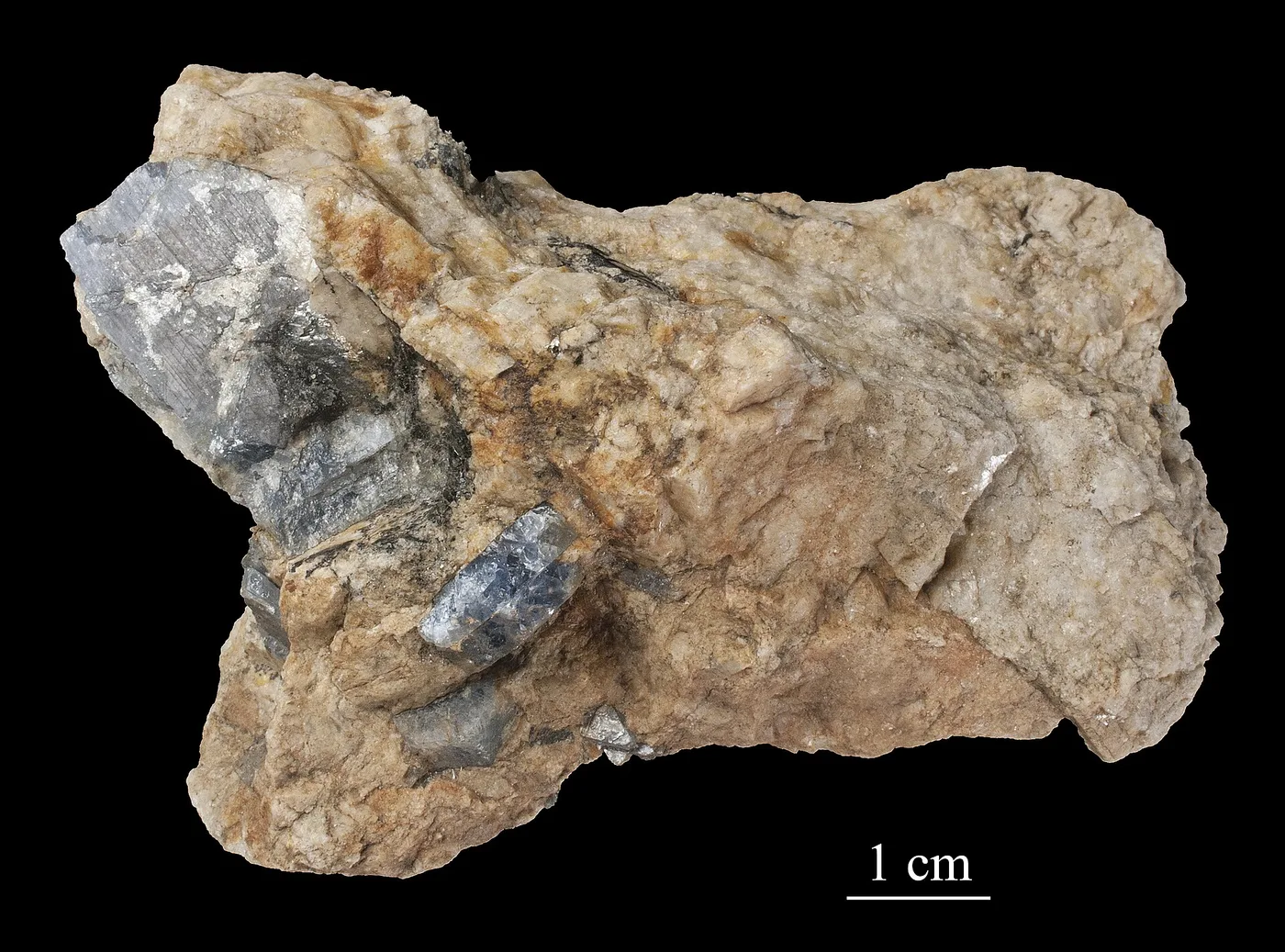
Corundum
Chemical formula – Al₂O₃
Hardness – 9
Colour – variesCorundum is not a single stone but a mineral group whose two best-known members are ruby and sapphire. Many people wearing a ruby or a sapphire are in fact wearing corundum without ever suspecting it.
In hardness corundum trails diamond by only one point — 9 on the Mohs scale. That is what makes it such a rewarding material for a jeweller: it takes daily wear calmly and keeps its polish for years.
For centuries the stones of the corundum group were considered the rarest and most precious on earth. Today the picture has changed: natural ruby and sapphire reserves are modest, and synthetic stones replace part of the supply. Synthetic ruby was first shown at the international exhibition in Paris in 1900; artificial sapphire is grown the same way.
Deposits
Natural corundum comes mainly from metamorphic rocks. The classic ruby localities are Myanmar, Thailand, Sri Lanka, Tanzania and Mozambique; Madagascar has become one of the main suppliers in recent decades. Sapphire is known from Sri Lanka, Kashmir, Australia and the US state of Montana.
Properties
Tradition regards ruby as the stone of vitality, passion and courage, and sapphire as the stone of wisdom, loyalty and calm. Corundum is said to give its owner confidence and to keep judgement clear when decisions are made. Both stones were called talismans of kings and clergy for centuries.
Healing properties
In lithotherapy ruby is linked to circulation and the heart, sapphire to the eyes and the nervous system. This is a cultural tradition, not medical advice — for any health concern, please see a doctor.
Chakras
By colour: red ruby — root chakra (muladhara); blue sapphire — throat (vishuddha) and third eye (ajna).
Which horoscope it suits
Tradition links ruby with Leo and Cancer, sapphire with Virgo and Libra. If you have not chosen a colour yet, consider this: red suits a hotter, more active character, blue suits a calmer, analytical temperament.
In Charcho jewellery
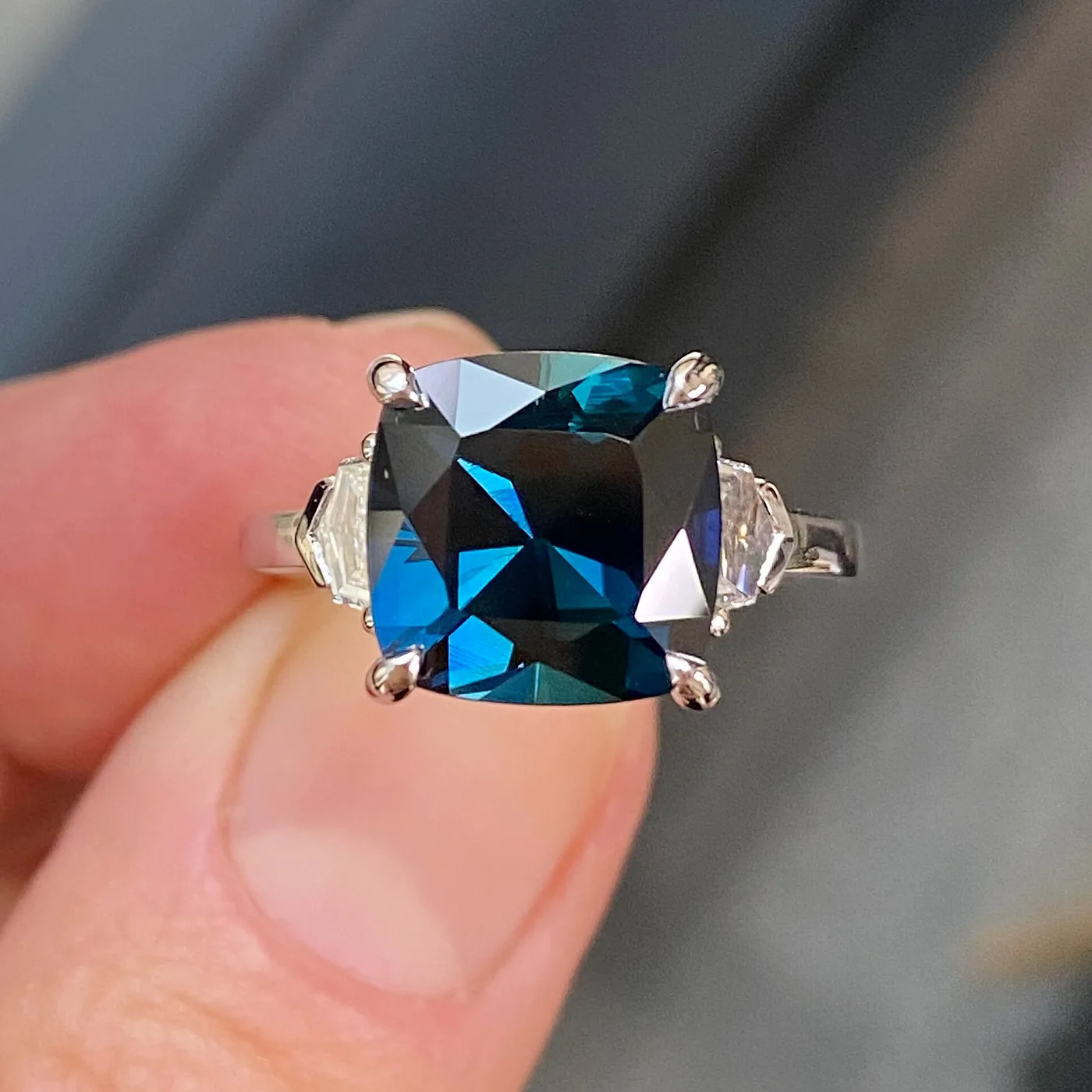
Hardness 9 makes corundum our favourite stone for everyday pieces — above all for rings, which take the most punishment. In our necklaces its deep colour draws the eye from across a room and does not fade with time.
Real or fake
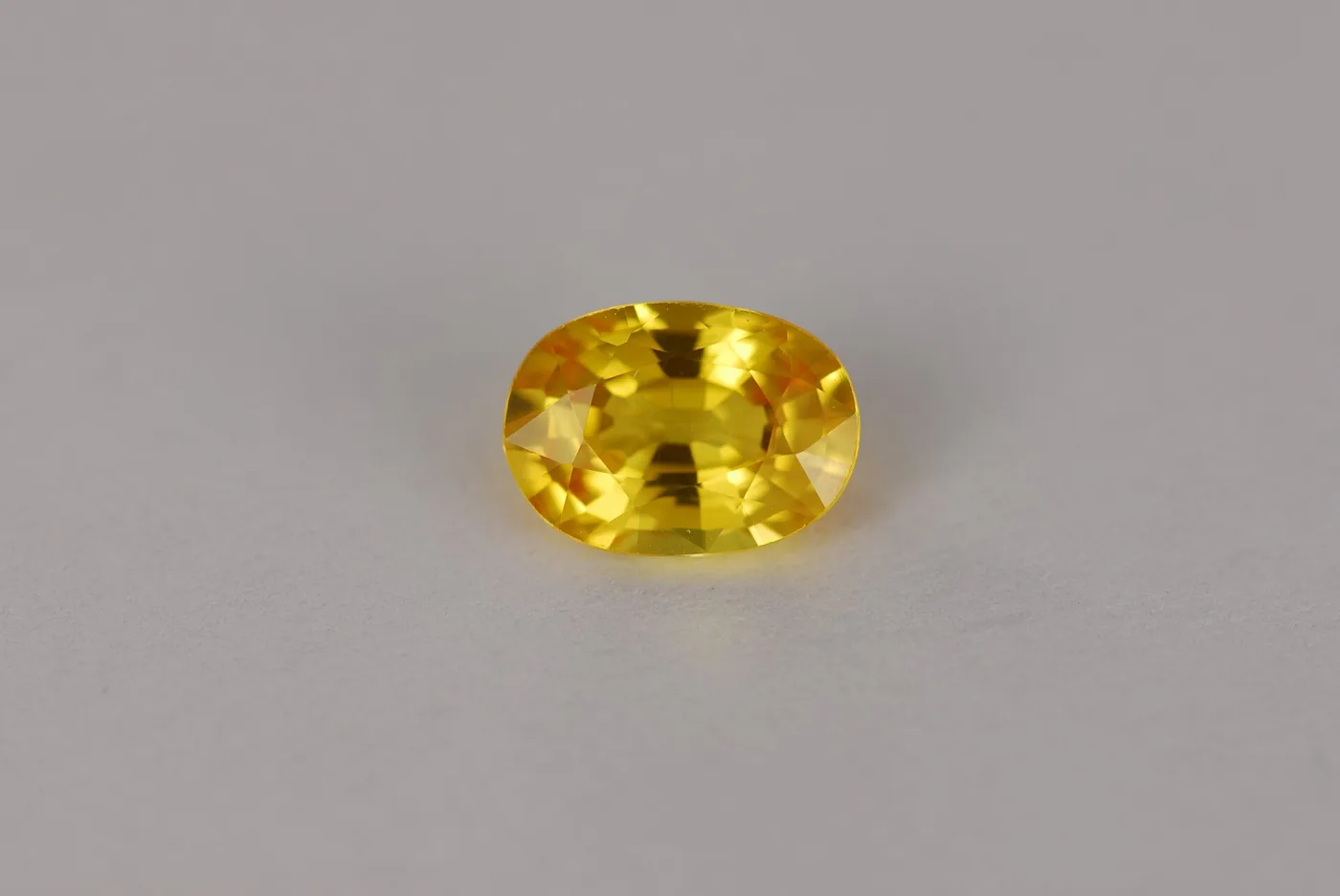
Corundum is one of the few stones whose laboratory twin is almost indistinguishable from the natural one. Synthetic ruby shares the formula and the hardness; the difference lies in density, inclusions and price. Under a loupe, synthetic stone shows curved striae or gas bubbles, while natural stone holds fine needle-like inclusions and natural "fingerprints". A very large, flawless and comparatively cheap ruby is almost always suspicious.
Care
Warm water, mild soap and a soft brush are all you need. Ultrasonic cleaning is acceptable only for untreated stone — if a ruby has been fracture-filled, skip it. Guard the piece against hard knocks: hardness does not soften an impact. Store it separately so it does not scratch other stones.
See also
-
Cat
Chemical formula – depends on the host mineral, most often SiO₂
Hardness – 6.5–7 (for the quartz group)
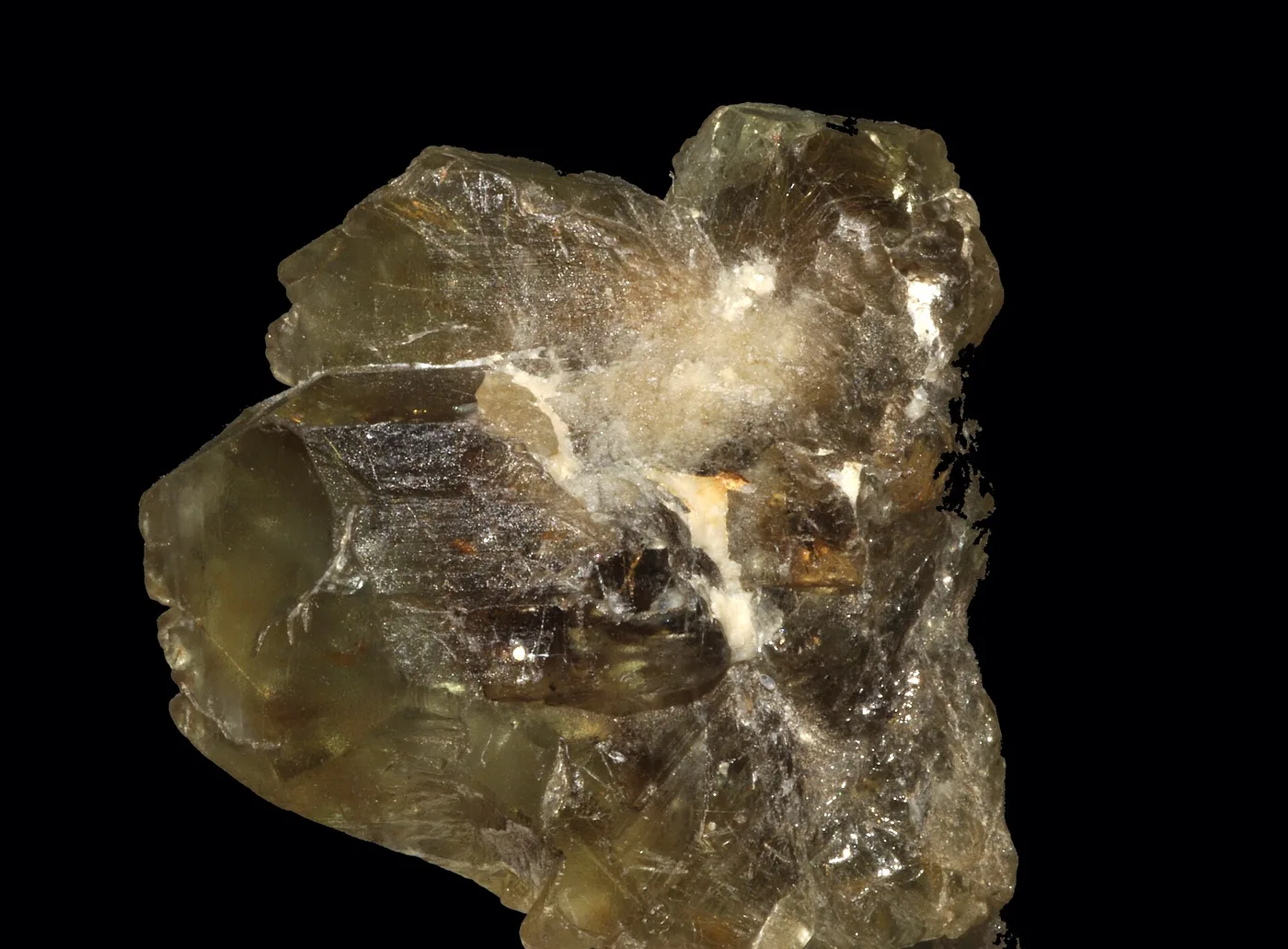
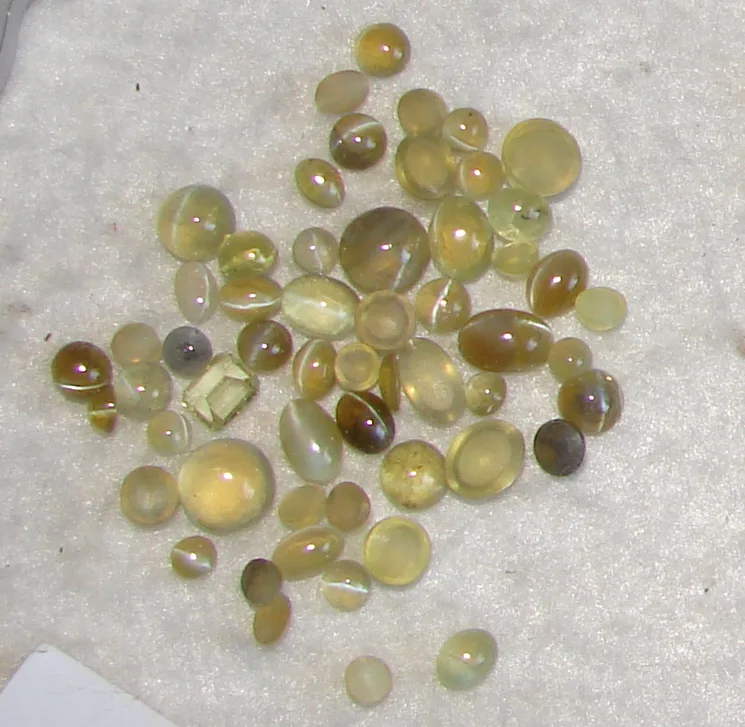
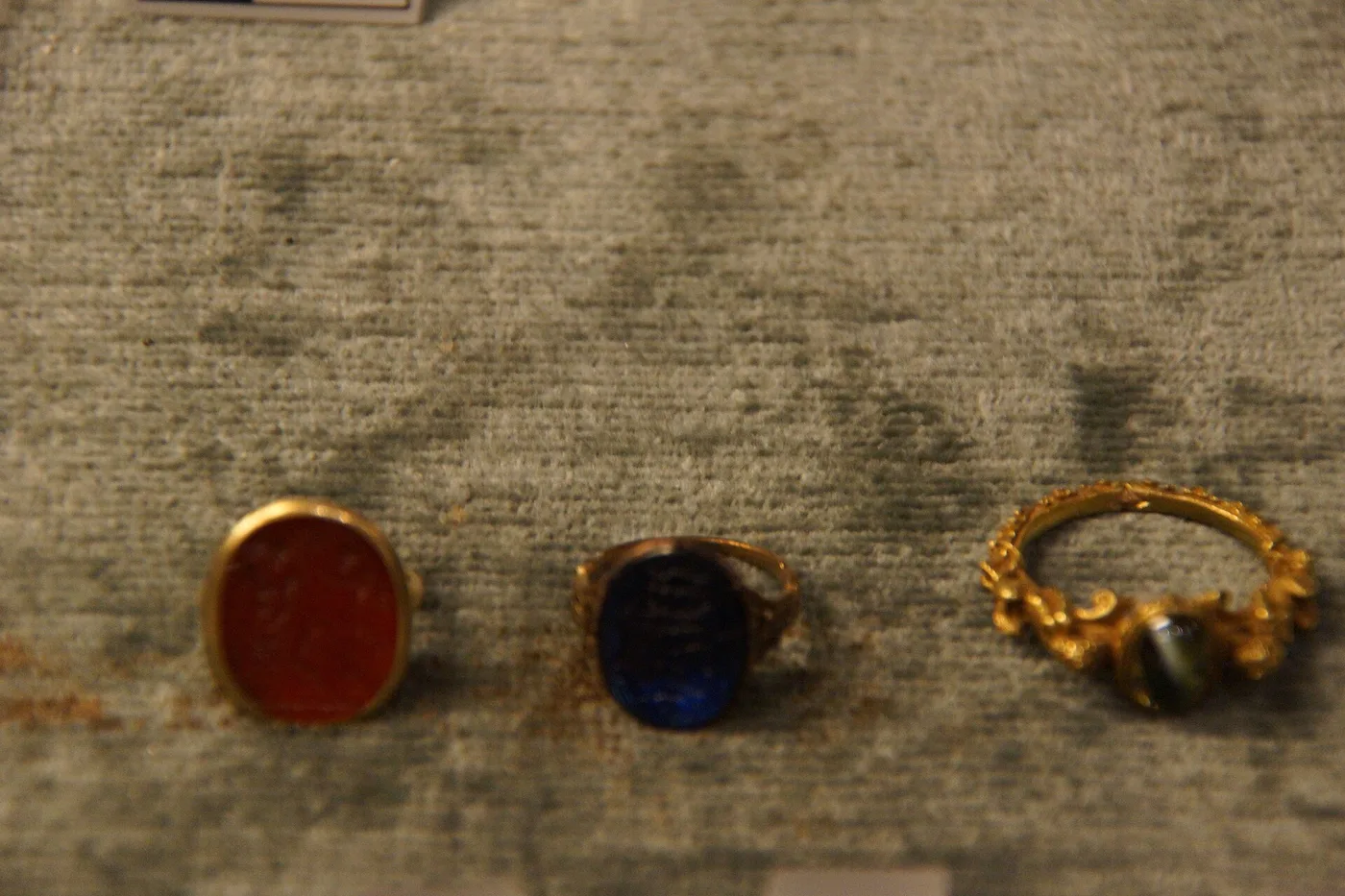
Colour – honey, brown, yellowish, green, bluish, grey"Cat's eye" is not one mineral. It is a trade name for stones with a particular optical effect: a bright narrow band appears on the surface and moves like a pupil as the stone turns. Mineralogists call the phenomenon chatoyancy.
The effect appears in many completely different minerals, which is why the name is so loose. The rarest version is alexandrite. It also occurs in tourmaline, several varieties of quartz, apatite, iolite, aquamarine, tanzanite and emerald. The most popular is tiger's eye — quartz in which the fibres of a former asbestos-like mineral have been replaced by silica.
The cause is simple: parallel fine fibres or hollow tubes run through the stone. Light reflects off them and gathers into a single line. The more evenly the fibres are arranged, the sharper the band.
Deposits
Deposits depend on which mineral is the host. A well-known source of quartz cat's eye is Sri Lanka; of tiger's eye, South Africa and Western Australia. Versions in other minerals come from India, Brazil, Madagascar, Burma and Tanzania.
Properties
In tradition cat's eye is most often an amulet against the evil eye. It is said to protect its owner when they are the centre of attention and to shield them from too much of it.
The second theme is inner sight: esoteric practitioners link the stone with intuition and premonition. It is said to help you see your own decisions more clearly.
Traditional healing properties
In traditional lithotherapy cat's eye is the stone of headaches, sleep and the nervous system. Tiger's eye is separately credited with courage and general tone.
This describes traditional practice, not medical advice. A stone does not replace a doctor.
Chakras
Associated with the third eye – ajna. Tiger's eye is also linked with the solar plexus and the root chakra.
Which zodiac sign it belongs to
By name and character cat's eye belongs first of all to Leo, the sign whose symbol is a great cat.
It also suits Capricorn, who values caution and long sight, and Gemini, the sign of change and curiosity.
In Charcho jewellery
Cat's eye is cut as a cabochon — facets break the band. We set the stone in an open setting and try to centre the band so it moves evenly across the piece. Catalogue: necklaces.
Real or fake
- What is most often sold is glass imitation, in any colour you like.
- In glass the band is too sharp and straight, and the fibres are perfectly parallel.
- In a natural stone the band is slightly wavy and inclusions of the host mineral are visible.
- Ask which mineral it is: "just cat's eye" is not an answer.
Care
Care follows the host mineral. The quartz version is tough; apatite and tanzanite need far gentler handling. The general rule: warm water, a soft cloth, separate storage and protection from knocks. Ultrasonic cleaning only if you know the stone is untreated.
See also
-
Smoky quartz – cairngorm
Chemical formula – SiO₂
Hardness – 7
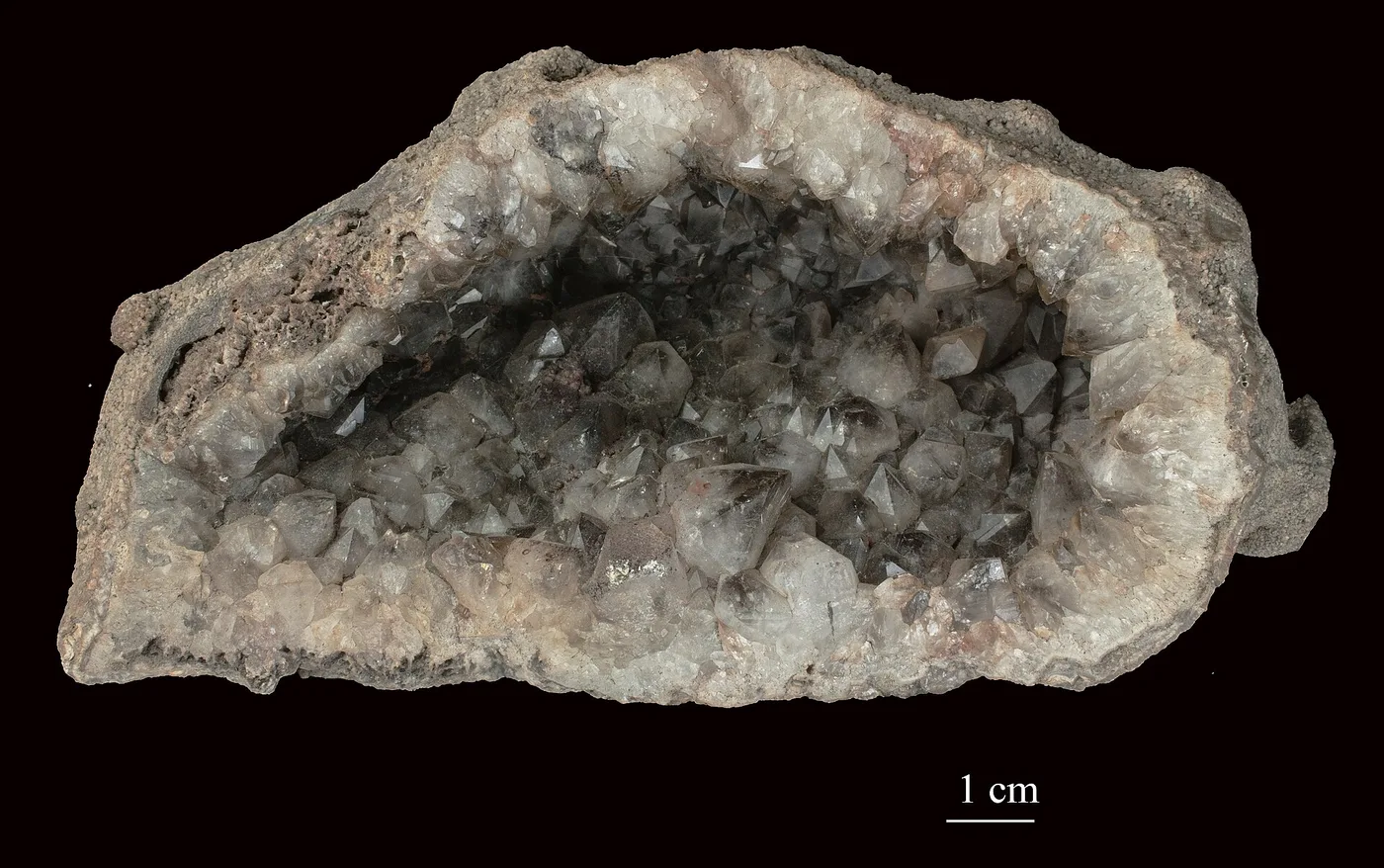
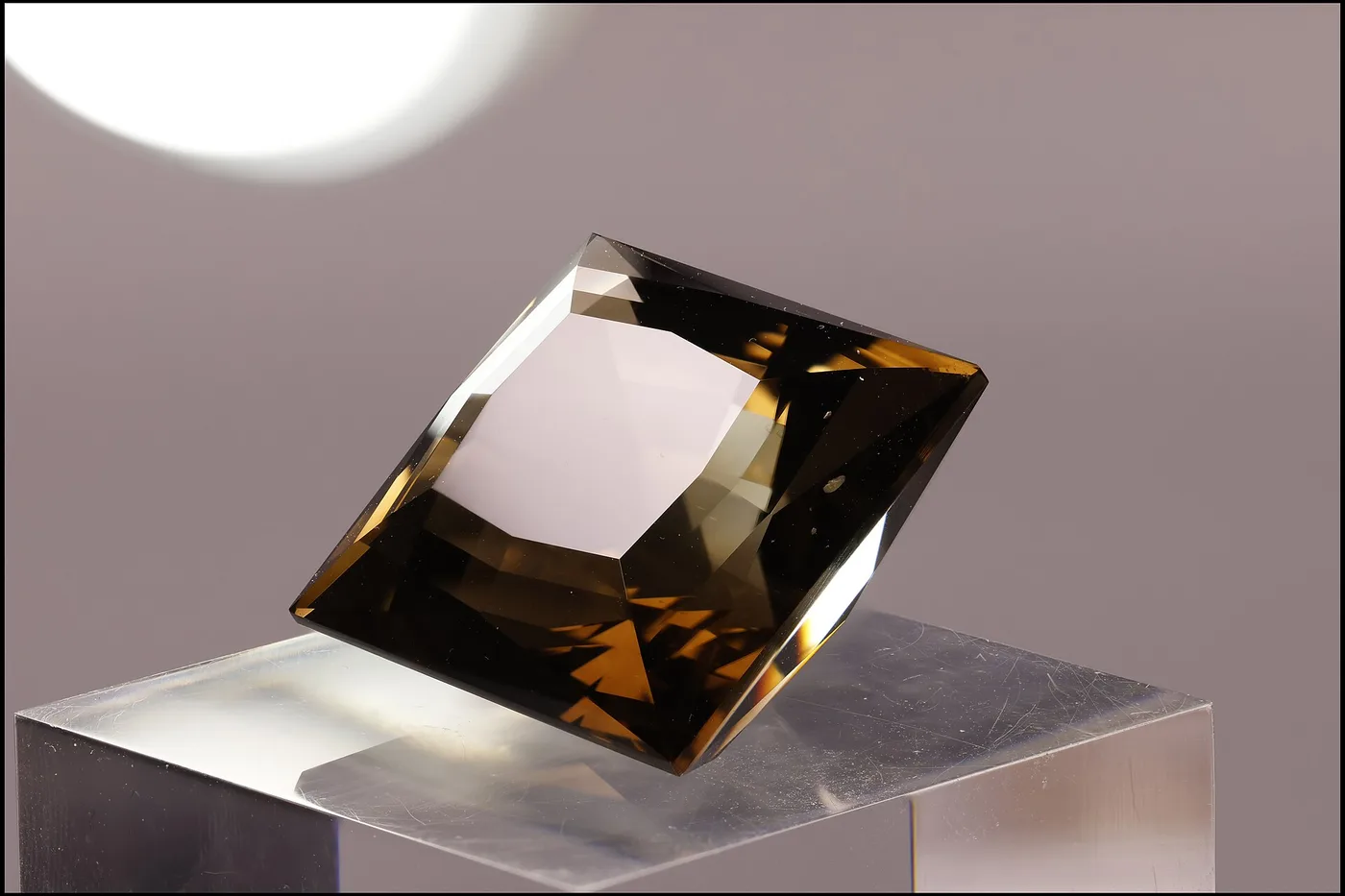
Colour – brown, dark brown, greySmoky quartz is a variety of quartz: the same mineral as amethyst and citrine, only brown, grey or nearly black. The colour comes from natural irradiation — traces of aluminium in the crystal take on colour under radiation. The darkest, black version is called morion.
In Scotland the stone is considered national and sacred, and the traditional "Cairngorm" jewellery made there is centuries old. In China smoky quartz was ground for medicinal powders; Roman engravers cut seals from it, and the Sumerians used morion for the same purpose.
Today smoky quartz is one of the most affordable good-quality stones: price follows size, transparency and depth of colour.
Deposits
Smoky quartz is mined all over the world. Especially large quantities come from Brazil, Madagascar, Australia, Sweden, Scotland and the USA. The darkest, cleanest crystals usually come from Brazil and Madagascar.
Properties
Esoteric practitioners hold smoky quartz to be one of the strongest protective and grounding stones. It is said to give both physical and spiritual protection, and to be especially useful when you have to work in a negative environment.
As a root-chakra stone it is said to strengthen survival instincts and help you reach a goal. Tradition also links it with dreams coming true and with the soundness of everyday decisions.
The stone is said to smooth out character, clear a low mood and protect its owner from the evil eye.
Traditional healing properties
Lithotherapists use smoky quartz for a range of purposes. In tradition it is linked most of all with the kidneys, the pancreas and the reproductive organs. Healers also turn to it for sleep, and say it helps with nightmares and hyperactivity.
This describes traditional practice, not medical advice. A stone does not replace a doctor.
Chakras
Associated with the first, root chakra – muladhara.
Which zodiac sign it belongs to
In tradition smoky quartz belongs first of all to Capricorn, the earth sign of patience and long plans.
It also suits Scorpio, where the themes of protection and depth meet naturally, and Taurus, the sign of stability.
In Charcho jewellery
Smoky quartz is an easy stone to wear: the soft brown goes with almost any colour, so we often choose it for minimal designs where the stone stays the subject. Our catalogue has necklaces.
Real or fake
- Heated amethyst is often sold as "smoky quartz" — the colour is too even.
- In a natural stone the colour is zoned and lightens towards the edges.
- Glass gives itself away with bubbles and excessive clarity.
- "Smoky topaz" is usually just smoky quartz — topaz is a different mineral.
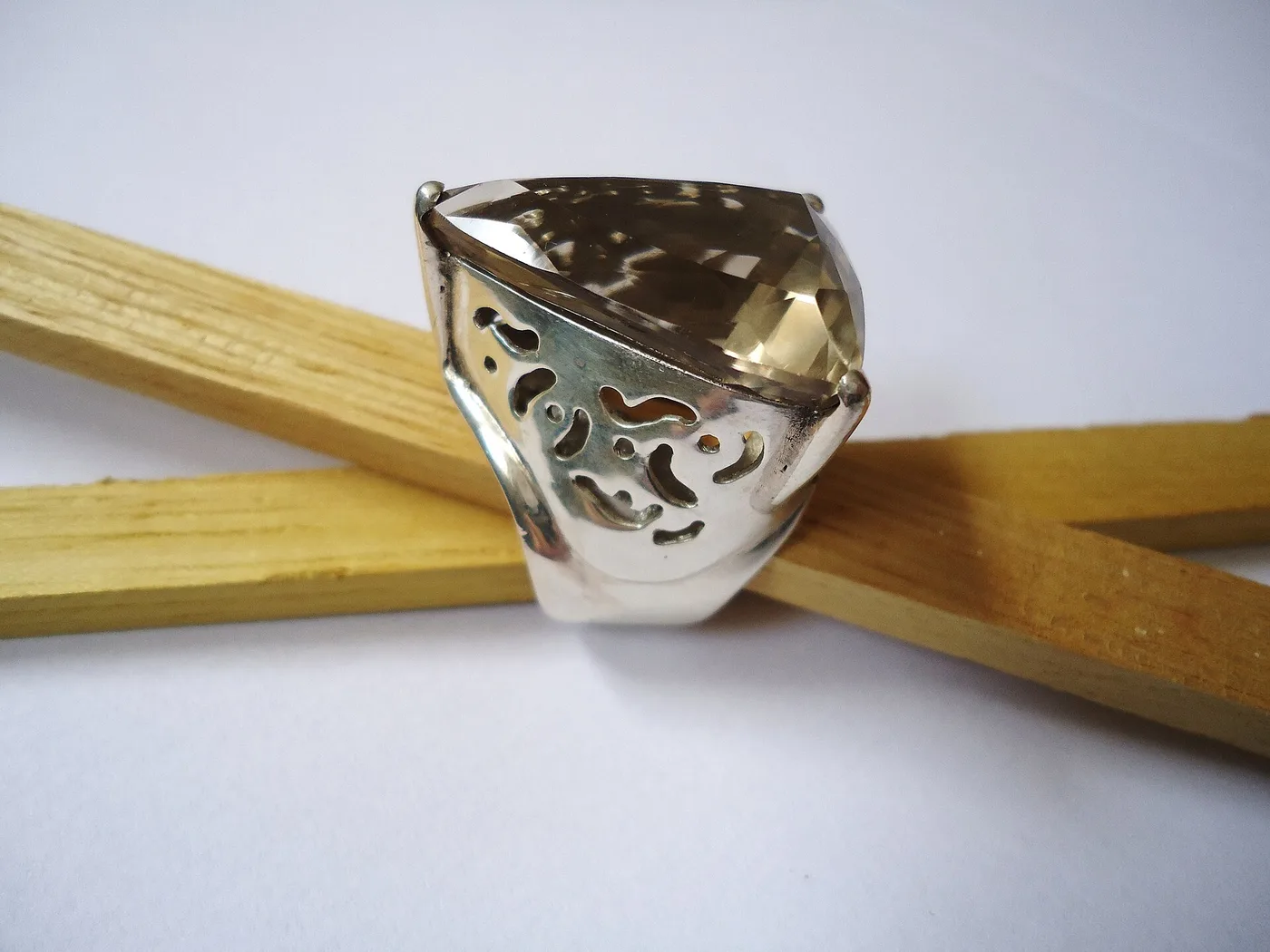
Care
Hardness 7 means everyday wear is no problem. One warning: long exposure to sun and strong heat fades the colour, so do not leave the stone on a windowsill. Warm water and a soft cloth are enough.
See also
-
Jasper
Chemical formula – SiO₂
Hardness – 6.5–7
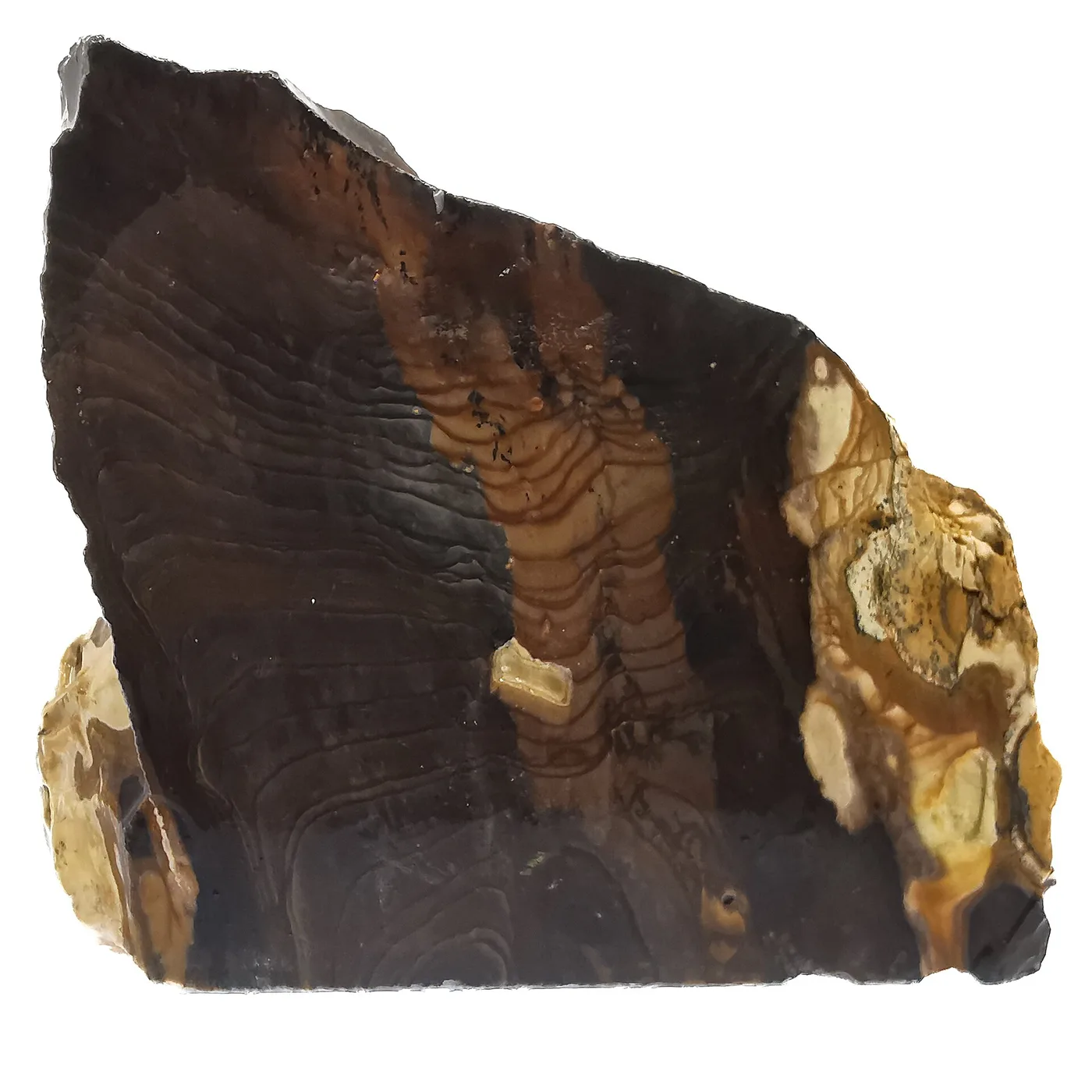
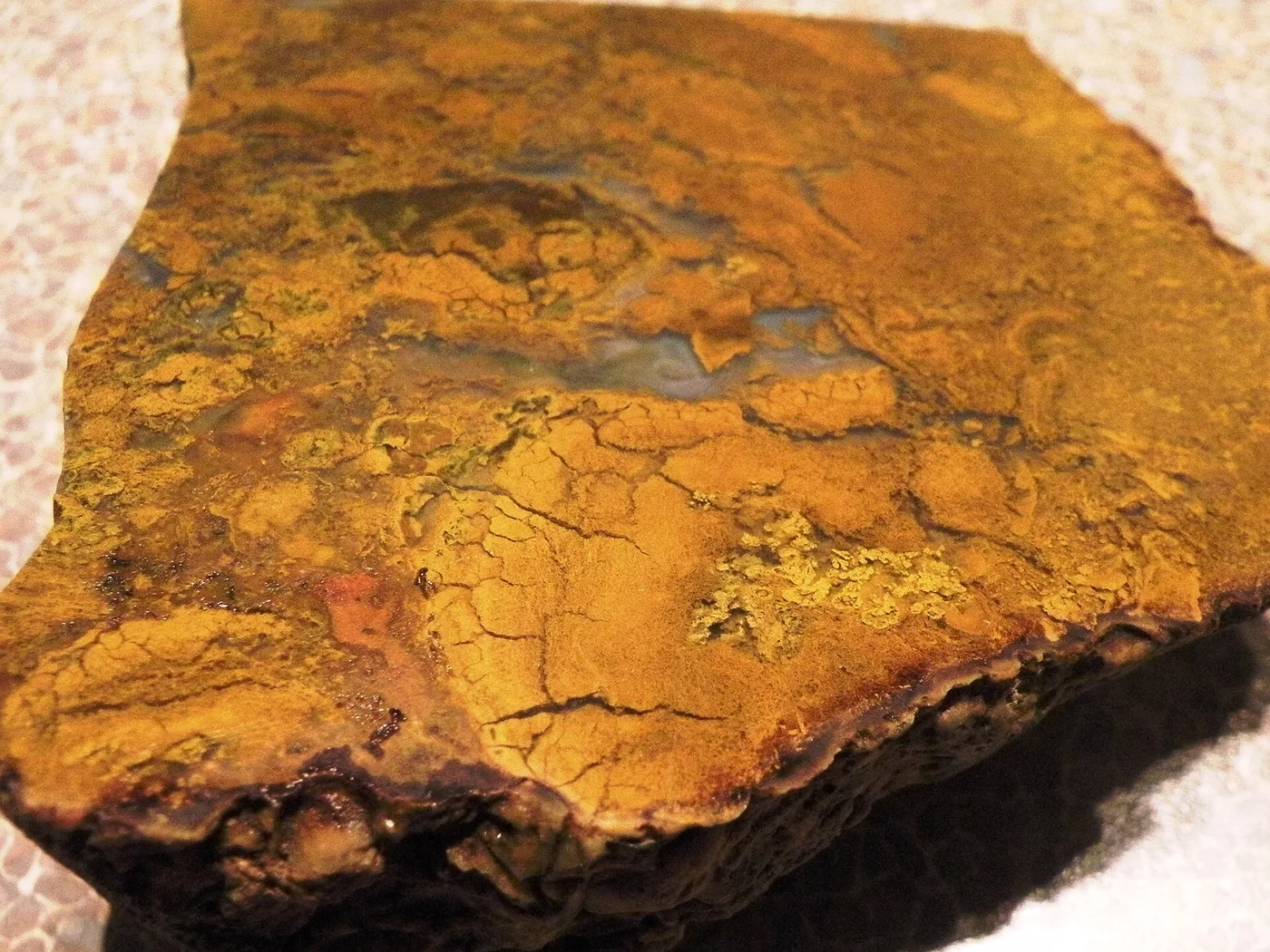
Colour – any colour, with bands and spotsJasper belongs to the chalcedony family: a cryptocrystalline form of quartz in which no single crystal is visible to the eye. Its defining feature is colour and pattern — it is hard to find two jaspers that look alike. Some researchers give jasper a family of its own because of its particular structure, but in practice it is treated as chalcedony.
The name is Greek, and old sources explain it as "spotted stone", after the spots and bands on its surface. In nature jasper often grows beside agate and opal, so one piece can show traces of all three.
In Sakartvelo jasper has been recorded in several places — near Tskaltubo, in Bolnisi, Dmanisi, Tsageri and Kaspi. Colour follows the location: red, yellowish, orange, green and bluish varieties all occur.
Deposits
Jasper is mined in many countries. The largest suppliers are Australia, Brazil, Canada, Egypt, India, Indonesia, Kazakhstan, Madagascar, Mexico, Russia, Uruguay, Venezuela and the USA. Egyptian jasper is especially old: the stones worked in the age of the pharaohs came from there.
Properties
In tradition jasper is the stone of comfort, energy and willpower. It has long been treated as a strong amulet, said to bring calm, beauty and confidence into its owner's life.
Curiously, jasper is called both the stone of energy and the stone of harmony. The explanation is simple: it is said to direct inner strength towards creativity and useful work rather than towards tension.
The varieties each have a character. Red jasper is the stone of courage and endurance, green jasper of calm sleep and working on habits, brecciated jasper of grounding and focus. Bloodstone, or heliotrope, is a story of its own, and we have given it a separate article.
Traditional healing properties
In traditional lithotherapy jasper is the stone of circulation and general tone. Healers used it for fatigue, insomnia and nervous strain, and recommended green jasper for settling a child's sleep.
This describes traditional practice, not medical advice. A stone does not replace a doctor.
Chakras
Associated with the first, root chakra – muladhara. In some traditions, with the second, sacral chakra.
Which zodiac sign it belongs to
It is the traditional stone of March, so it belongs first of all to Aries: energy and the wish to move forward are shared traits.
It also suits Leo, who needs confidence and ease of expression, and Virgo, the sign of practicality and order.
In Charcho jewellery
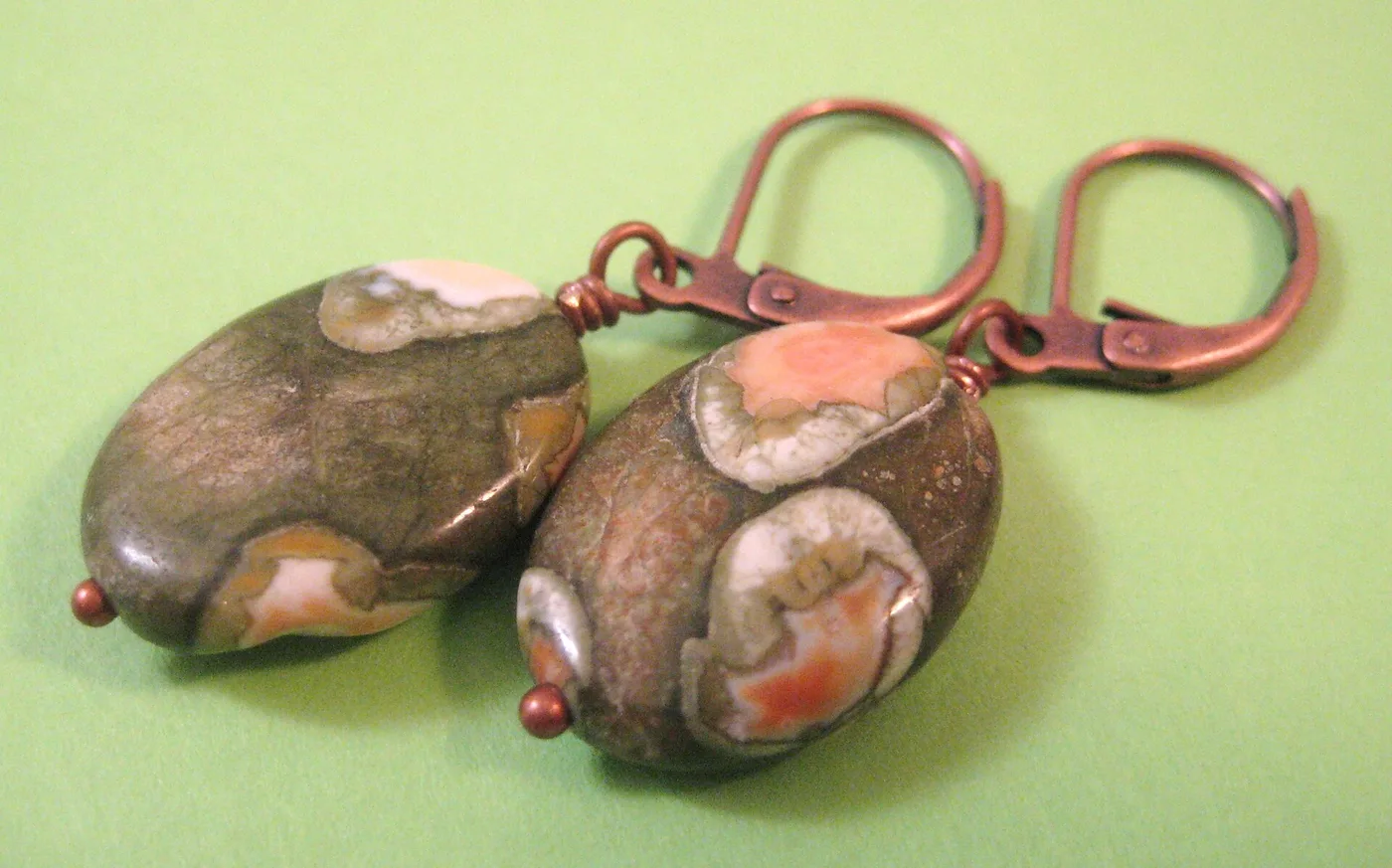
Jasper works well for everyday pieces: there is enough hardness, and the colour sits easily with many styles. Our catalogue has necklaces, and a stone can also be chosen for a custom order.
Real or fake
- Jasper is often dyed — especially when the colour is unusually bright and even.
- Natural jasper never repeats its bands and spots perfectly.
- Glass and plastic show air bubbles; plastic warms in the hand, stone does not.
- Worth knowing: plain dyed chalcedony is often sold under the name "jasper".
Care
Hardness is 6.5–7, which is enough for a ring. If the stone has been dyed, skip the ultrasonic cleaner, steam and hot water: warm water, a soft cloth and mild soap are enough. Acids and perfume dull the surface.
See also
-
Iolite
Chemical formula – Mg₂Al₃[AlSi₅O₁₈]
Hardness – 7–7.5
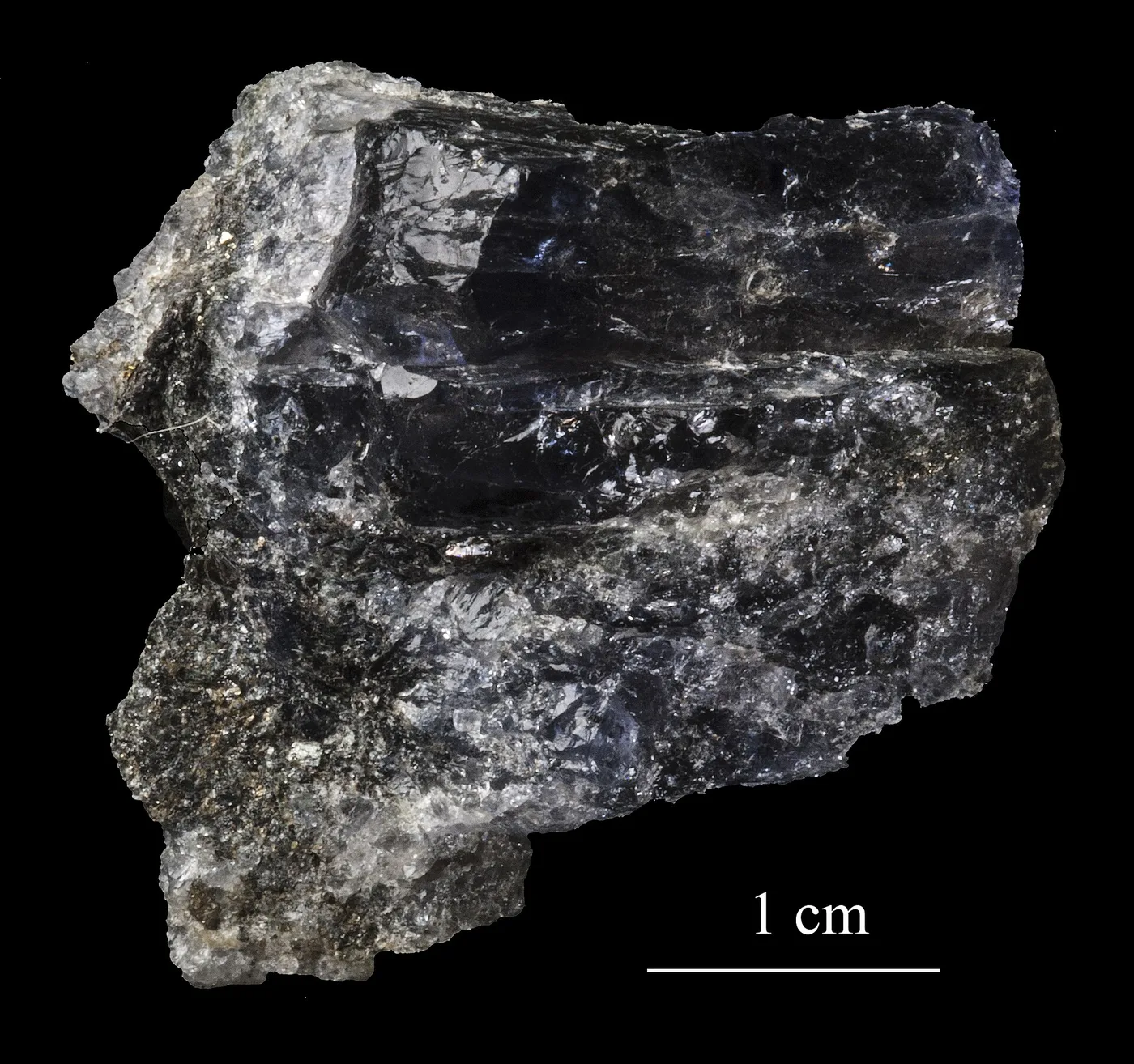
Colour – violet, blue-violetIolite is a silicate of magnesium, aluminium and silicon. Mineralogists know it as cordierite; in jewellery it travels under the name iolite. The colour is usually violet or blue-violet, and that is where the name comes from: Greek "ios" means violet.
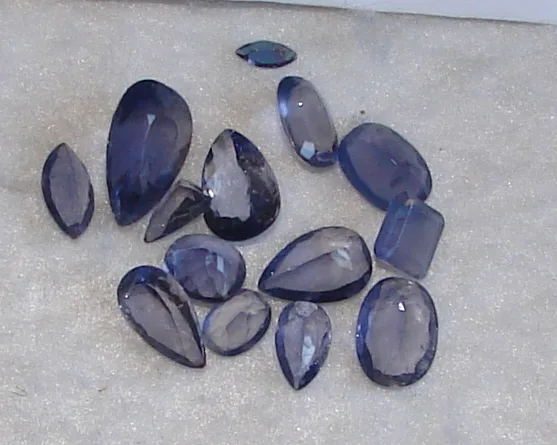
Iolite is often called "water sapphire". The reason is optical: the stone is pleochroic, meaning it changes colour with the angle of view. From one side it is deep violet, from another almost colourless or yellowish. That is why the angle at which the stone is set matters so much in a piece of jewellery.
In 1996 a crystal of 24,000 carats was found in Wyoming, USA — still the largest iolite known.
Deposits
Iolite is mined in many countries. The main suppliers are India, Australia, Brazil, Canada, Madagascar, Burma, Namibia, Tanzania and the USA. Jewellery-grade material comes mostly from India and Tanzania.
Properties
Esoteric practitioners treat iolite as a stone of meditation and "astral travel". It is said to support spiritual growth and to sharpen inner attention.
The second theme is relationships: tradition calls iolite a stone that helps mend them and keeps you calm in an argument.
It is also credited with waking curiosity, making it easier to start learning something new.
Traditional healing properties
In traditional lithotherapy iolite is the stone of working with habits, alcohol and cigarettes among them. Healers also linked it with cleansing processes in the body.
This describes traditional practice, not medical advice. A stone does not replace a doctor.
Chakras
Associated with the third eye and the crown chakra.
Which zodiac sign it belongs to
In tradition iolite belongs first of all to Sagittarius: both are drawn to knowledge and to what lies far away.
It also suits Libra, for whom harmony and relationships come first, and Taurus, the sign of stability and beauty.
In Charcho jewellery
Iolite's deep violet plays well with silver, so we set it in an open setting where the stone catches light and the colour shift is visible to the eye. Our catalogue has necklaces.
Real or fake
- Dyed quartz and glass are often sold as iolite.
- Real iolite shifts colour as you turn it; glass does not.
- Natural stones carry inclusions and fine cracks — a perfectly clean iolite is rare.
- It is confused with tanzanite, which is a stronger blue and far more expensive.
Care
Hardness 7–7.5 is enough for everyday wear, but the stone is brittle and dislikes sharp knocks. Skip the ultrasonic cleaner and steam, especially if the stone is glued in. Warm water and a soft cloth are enough.
See also
-
Calcite
Chemical formula – CaCO₃
Hardness – 3
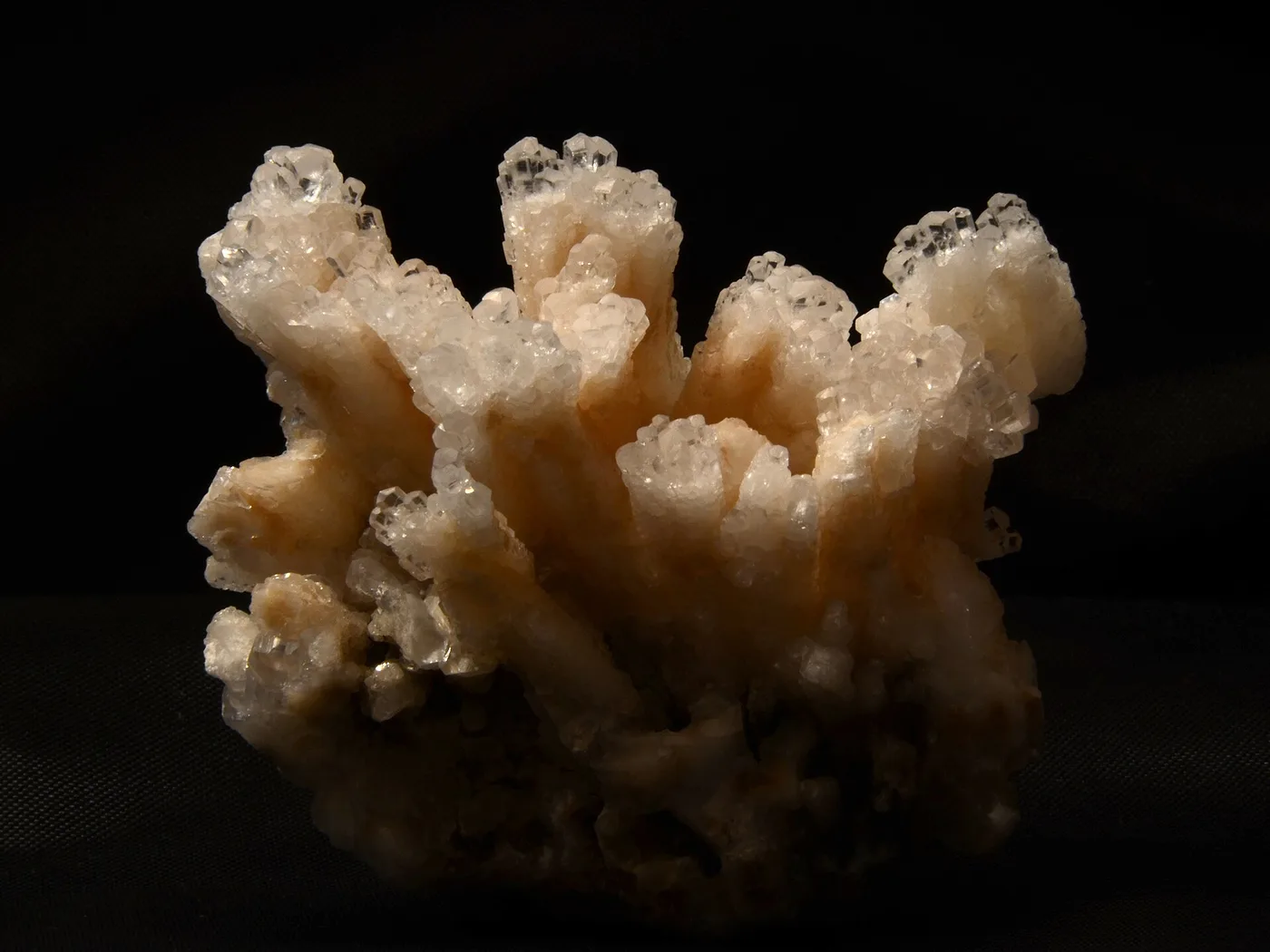
Colour – colourless, yellow, orange, golden, blue, pinkCalcite is one of the most common minerals on earth: the base of limestone, marble and chalk. Next to other gemstones it is soft, brittle and crumbles easily, which is why it is called a collector's stone — most varieties are hard to use in jewellery. Even so, the colours and the history mean calcite pieces do exist.
Calcite has a rare optical property: double refraction. A line placed under colourless calcite — Iceland spar, as it is known — appears twice, because the stone splits light into two rays. That effect is what drew the attention of early researchers in optics.
Calcite is also common in organic formations such as ammonites and coral, both of which are built from it or from its particles.
Deposits
Calcite is found all over the world, but the largest deposits are in Mexico and the USA (Kansas). It is mined in Oklahoma, New Jersey, New York, Tennessee, Texas and Missouri. Iceland, several African countries, Germany and Czechia are big suppliers too.
Properties
Esoteric practitioners say calcite amplifies the owner's energy. It is said to help anyone who struggles to concentrate and gather their attention, and to support creativity and imagination.
In older tradition calcite was called the spiritual and wise stone. Today each colour carries its own character: blue calcite is linked with calm, pink with gentle feeling, golden with confidence and green with closeness to nature.
Traditional healing properties
In old China calcite powder, mixed with other ingredients, was used to bring down fever. Lithotherapists still use calcite for digestion, hormonal imbalance and stress.
This describes traditional practice, not medical advice. A stone does not replace a doctor.
Chakras
The chakra depends on colour: colourless — the seventh (crown), blue — the fifth, pink and green — the fourth (heart), golden and orange — the second, red — the first.
Which zodiac sign it belongs to
In tradition calcite belongs first of all to Cancer, the water sign for whom calm and a warm home come first.
It also suits Taurus, who values earth stones and stability, and Leo, whose energy matches golden calcite.
In Charcho jewellery
Hardness 3 rules calcite out for a ring, but it works well in a necklace or earrings, where the stone takes fewer knocks. We use an open setting so the colour and depth stay visible. Catalogue: necklaces.

Real or fake
- Calcite is often dyed; a very bright pink or blue is a reason to look closer.
- Hardness 3 means an ordinary knife or a copper coin scratches it — glass does not.
- Vinegar or lemon juice produces a faint fizz on calcite, a natural carbonate reaction.
- In the trade, "Mexican onyx" is usually banded calcite.
Care
Calcite is soft, so store it separately to keep other stones from scratching it. Acids — vinegar, lemon, some cleaners — damage the surface. No ultrasonic cleaner, no steam. A dry or slightly damp soft cloth is enough.
See also

Have an idea? We will make it.
Write or call us - together we will choose the material, colour and size, and make the piece to order.