 Free Delivery in Batumi


Blog
From the workshop: materials, care, gifts and the stories behind the pieces.
-
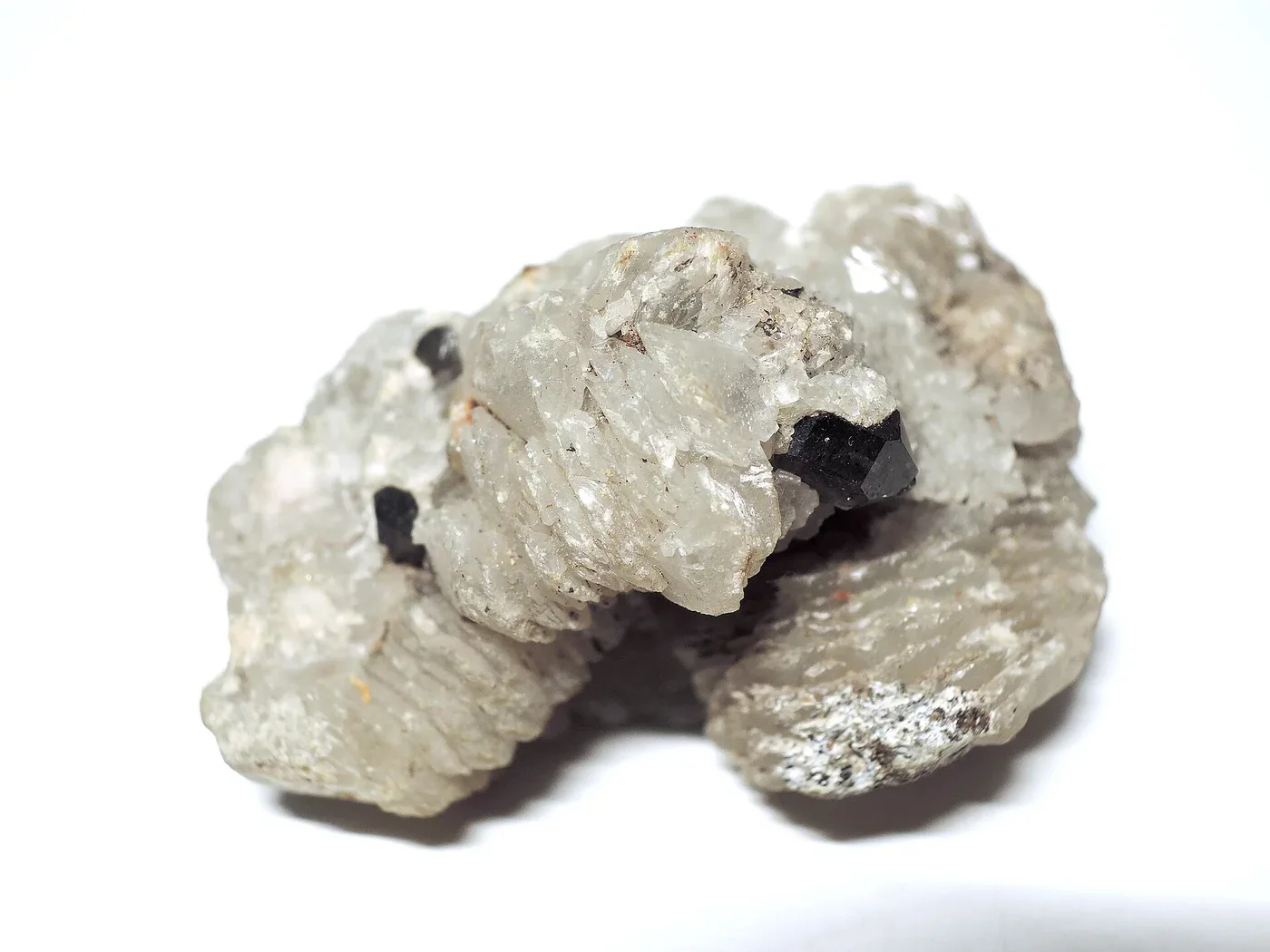
Morion — Black Quartz
Chemical formula – SiO₂
Hardness – 7
Colour – dark brown, blackMorion is the black variety of quartz. It is often confused with smoky quartz, though the difference is easy to see: smoky quartz is mostly transparent and brown, while morion is nearly opaque and black.
The colour comes from natural irradiation — impurities in the crystal darken over time. A natural morion is therefore not always fully black: in good light it shows a dark brown undertone.
Much of what is sold today is artificially darkened quartz. That does not make it fake: the material is still quartz, only the colour was produced in a lab, and the price is lower accordingly.
Origins
Morion is mined in Russia, Ukraine, the United States, Canada and Brazil.
Properties
In the Middle Ages morion was considered the stone of magicians, witches, healers and sorcerers. In older times it was placed with the dead, in the belief that the soul would find eternal peace with its help.
Although morion belongs to the quartz family, esoteric practitioners hold that it is better stored and worn separately. In practical esotericism it is treated as one of the strongest protective stones.
Traditional healing properties
Folk medicine holds that morion acts well on circulation and on cardiovascular conditions. It is also said to be good for joints and bones.
Lithotherapists advise against using this stone on your own. This describes traditional practice, not medical advice — a stone does not replace a doctor.
Chakras
Root chakra – muladhara.
Muladhara governs the sense of safety and stability, which is exactly why morion is linked with protection.
Which zodiac sign it suits
Morion is considered the stone of Scorpio and Capricorn. The same tradition holds that frequent wear suits no sign particularly well — the stone is strong and does not ask to be an everyday piece.
In Charcho jewellery
A black stone works best in a strict, graphic design: silver or a dark metal, minimal decoration. We have no ready piece yet, but make it to order. Catalogue: necklaces.

Real or fake
- Natural morion shows growth lines, fine cracks and a dark brown undertone in good light.
- Black glass is uniform and bubbly; obsidian is softer (hardness 5–5.5) and breaks with a glassy, conchoidal fracture.
- Agate onyx has bands; morion does not.
- Dyed quartz gathers colour in its cracks — obvious under a loupe.

Care
Hardness 7 means warm water and mild soap are fine. Keep it away from strong heat: prolonged heating weakens the colour. Store a ring separately so harder stones cannot scratch it.
See also
-
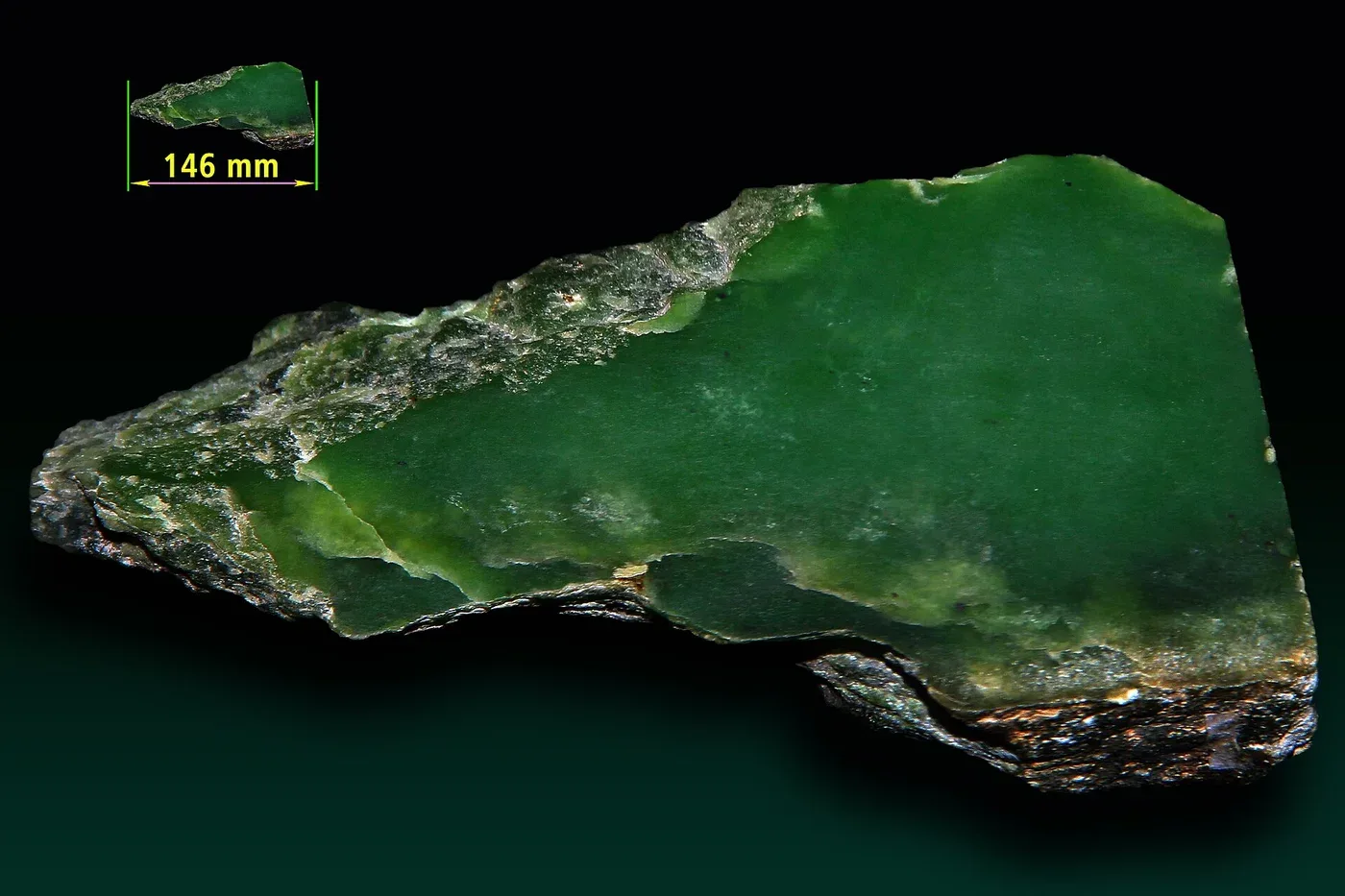
Nephrite
Chemical formula – Ca₂(Mg,Fe²⁺)₅[OH|Si₄O₁₁]₂
Hardness – 6–6.5
Colour – pale green, green, brownish greenNephrite is one of the oldest stones people have ever worked — its history runs back roughly seven thousand years. Chinese and Latin cultures held it in particular honour, at times valuing it above gold.
The name comes from the Greek "nephros", kidney. The old belief was that the stone helped with kidney disease, and the name stayed.
Nephrite is an amphibole mineral with a fibrous, interlocking structure. That is why it is far tougher than its hardness suggests — traditionally it went into knife and weapon handles as well as ornaments. Because the colour is so close, nephrite is often confused with chrysoprase and aventurine.
Origins
One of the largest deposits is in New Zealand today. Nephrite is also mined in Australia, Brazil, China, Canada, Russia, Taiwan, Zimbabwe and the United States.
Properties
Nephrite is said to awaken a sense of freedom and fairness and to help absorb knowledge. Courage is attributed to it as well.
It is considered helpful for good contracts and for bringing the right people into your life. Esoteric practitioners say it draws its owner out of dead ends, helps attract money and develop a business. It has long been treated as a guard against the evil eye.
Traditional healing properties
It has long been believed that nephrite acts well on various organs. Lithotherapists say it regulates blood pressure and improves the work of the lungs and heart.
This describes traditional practice, not medical advice. A stone does not replace a doctor.
Chakras
Heart chakra – anahata.
Tradition wears nephrite close to the heart — on a necklace or as a bracelet that rests against the chest.
Which zodiac sign it suits
Tradition most often links nephrite to the earth signs, first of all Taurus, for whom stability and tangible results matter.
It also suits Libra, who take fairness personally, and Cancer, drawn to home and warmth.
In Charcho jewellery
We mostly use nephrite as a cabochon or in beads: the fibrous lustre reads best on a flat, smooth surface. We have no ready piece yet, but make it to order. Catalogue: necklaces.
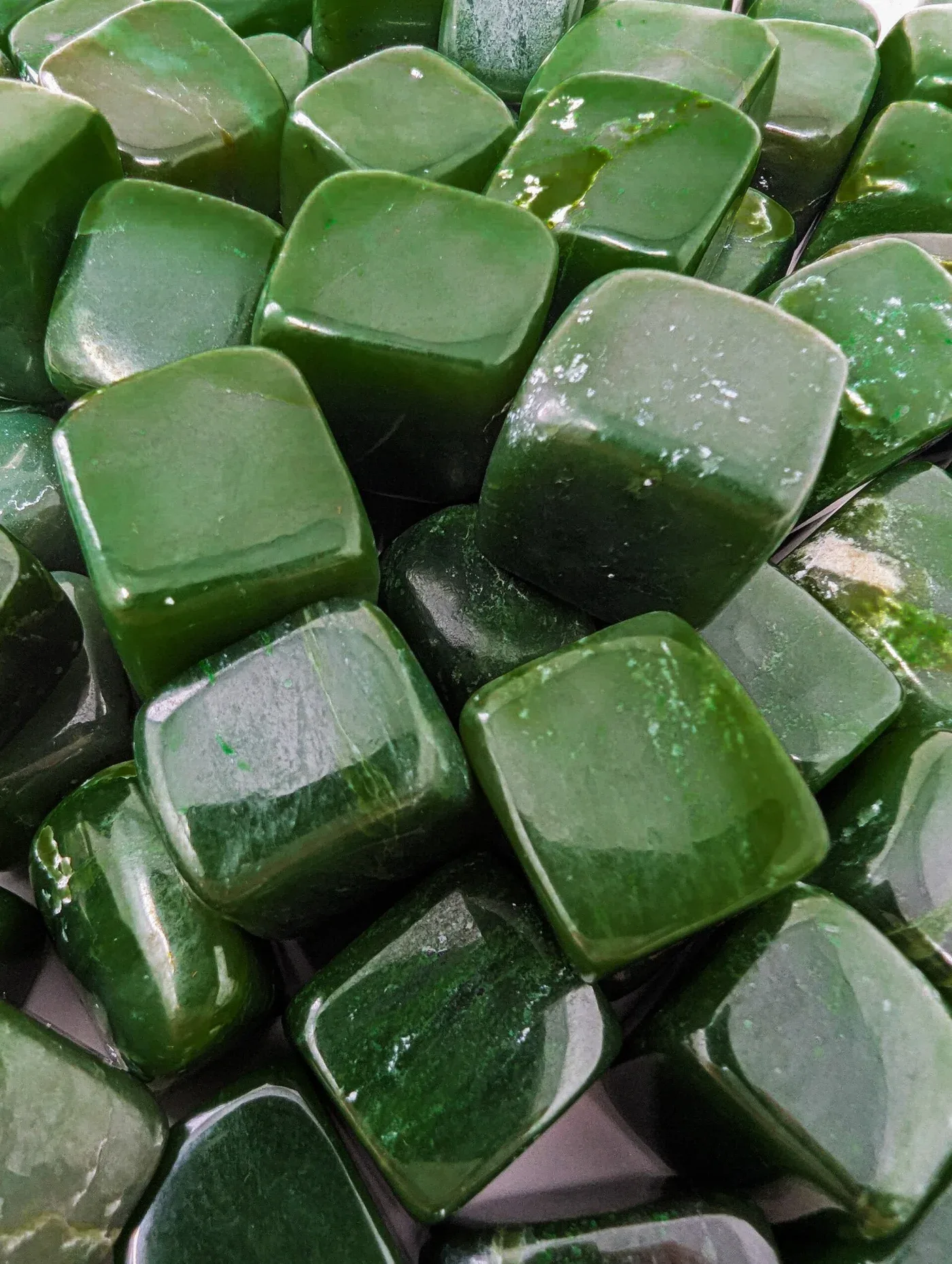
Real or fake
- The name "jade" covers two different stones: nephrite and jadeite. Jadeite is a pyroxene, harder (6.5–7) and more translucent.
- Nephrite has a greasy lustre and feels warm to the touch; jadeite looks more glassy.
- Serpentine and bowenite are much softer — a careful scratch test leaves a mark.
- Dyed nephrite gathers colour in cracks and pores; plastic warms quickly in the hand and weighs almost nothing.
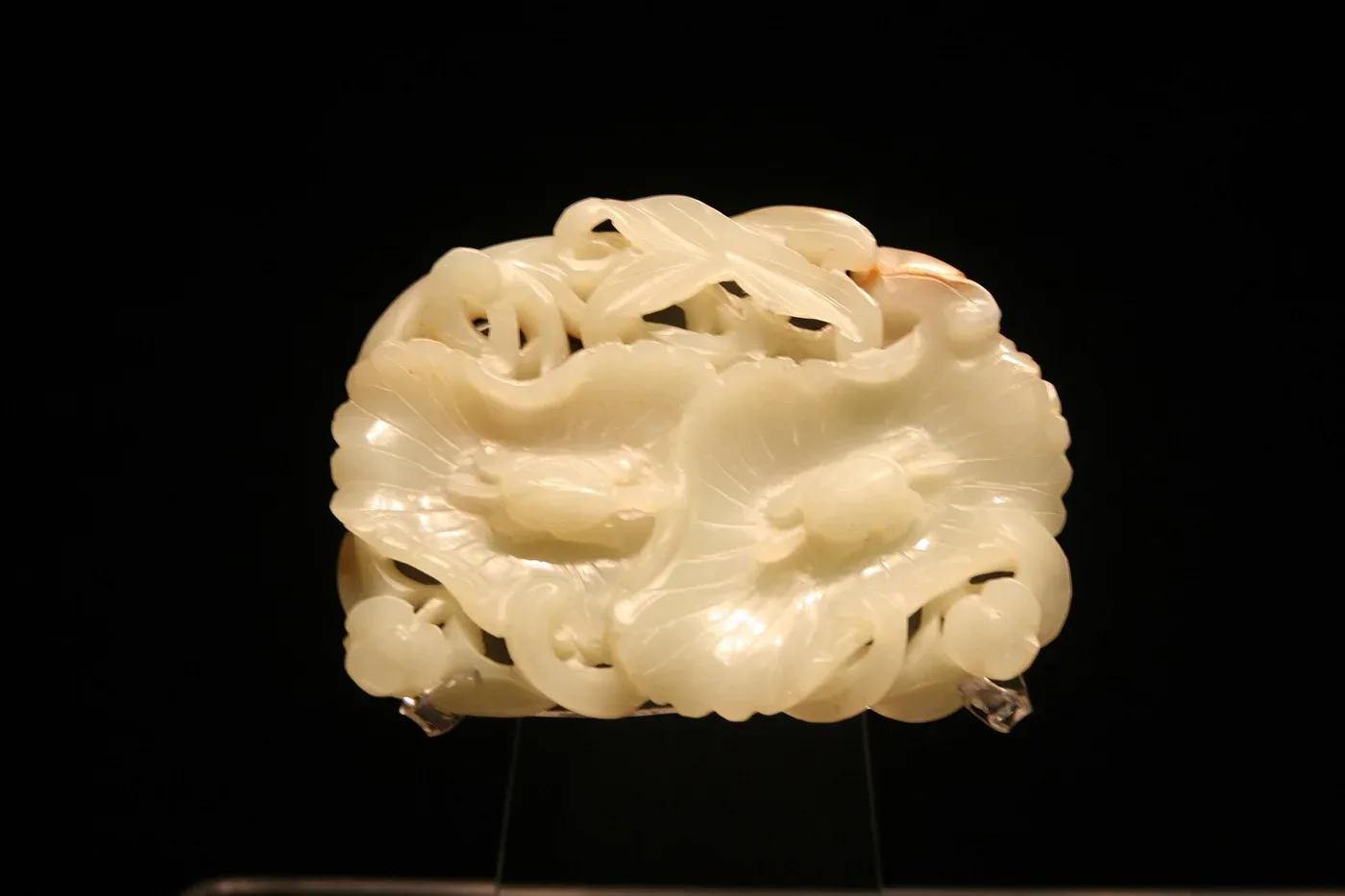
Care
Nephrite is tough but soft compared with other gems, so store it separately. Warm water and mild soap are enough; avoid acids, chlorine and prolonged heat, especially if the stone is dyed or waxed.
See also
-
Moonstone
Chemical formula – KAlSi₃O₈
Hardness – 6–6.5
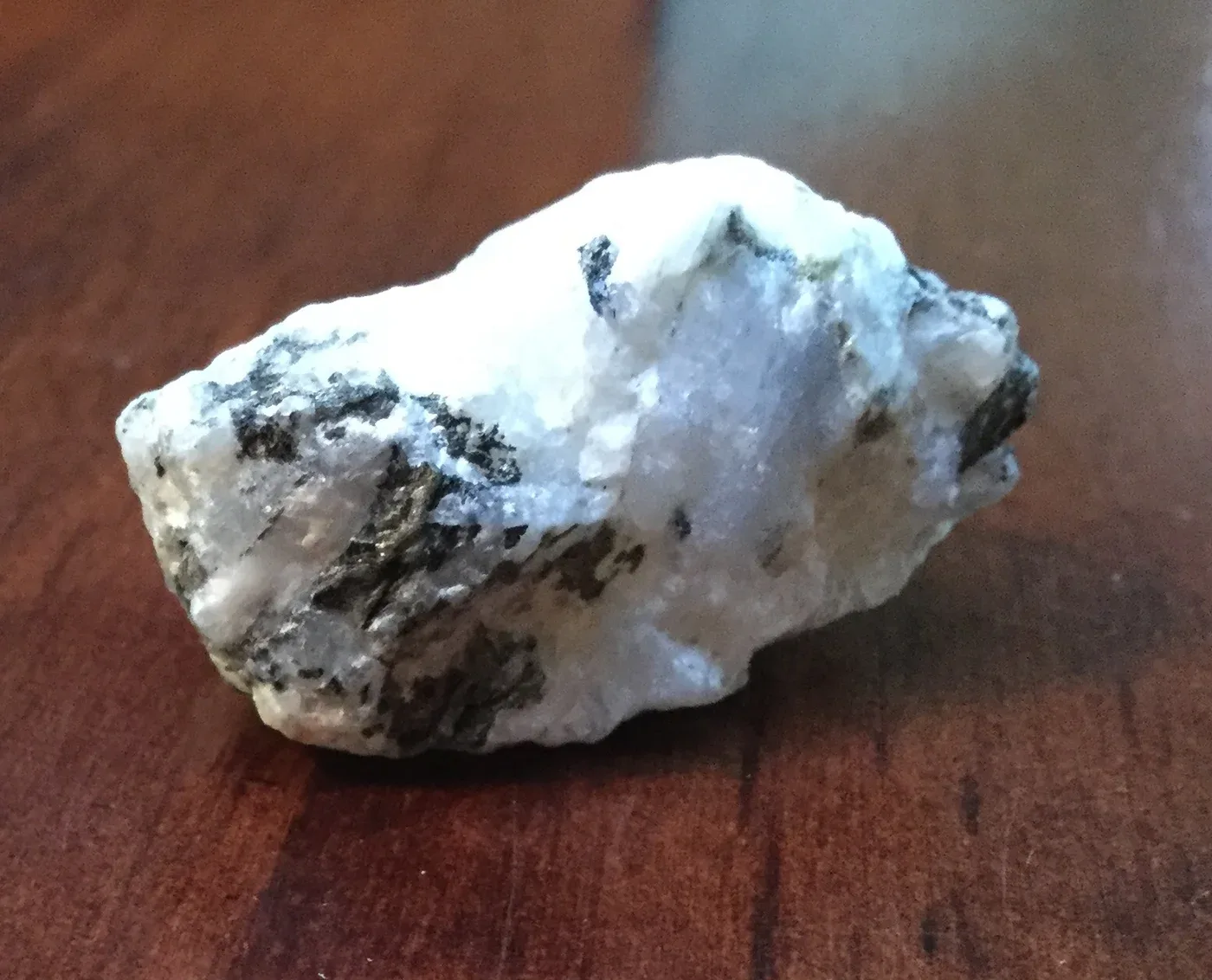
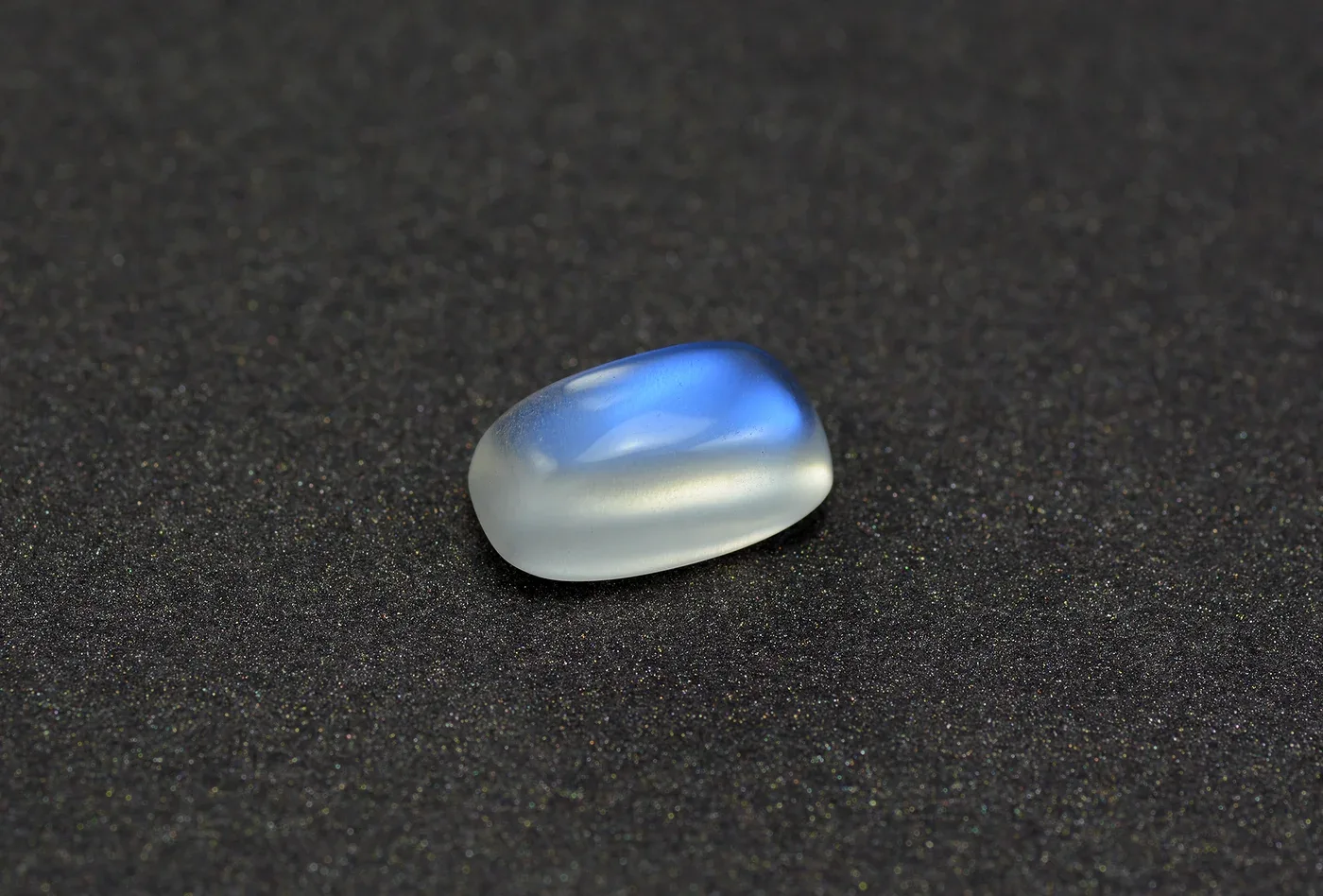
Colour – white, milky, blue and pink sheenMoonstone belongs to the feldspar family, specifically to the variety called adularia. Its signature is adularescence: a soft, wave-like blue light travels inside the stone and shifts as you turn it. That effect is why it reads as frozen moonlight rather than as a coloured gem.
The name needs no explaining. The history is more interesting: the stone became genuinely fashionable during Art Nouveau, about a century ago, when jewellers were looking for soft, semi-translucent tones. Before that it was a traditional wedding stone, and betrothal rings were often set with it.
Price today rests on three things: how strong the sheen is, how transparent the body is, and how evenly the light spreads across the surface. Stones with the blue glow gathered in the centre rather than at the edges command the most.
Origins
Most supply comes from Sri Lanka, Canada and India. The stone is also found in Australia, Brazil, Germany, Madagascar, Mexico, Norway, Sweden, Tanzania and the United States.
Properties
It is said that moonstone carries feminine energy and balances an overly aggressive masculine principle. That is why people who feel they lack inner steadiness often choose it — and so do people who are excessively hard on themselves.
Esoteric practitioners describe a strong vibration: the stone is said to sharpen mental capacity and help uncover hidden talent. For women it is associated with inner strength; for men, with better memory and emotional balance.
Traditional healing properties
Tibetan medicine used moonstone for nervous conditions, including epilepsy and nervous attacks. Tradition also links it with the kidneys, liver and gallbladder.
This describes traditional practice, not medical advice. A stone does not replace a doctor.
Chakras
Third eye and crown chakra – ajna and sahasrara.
Moonstone is one of the few stones tied to two centres at once: ajna governs inner sight, sahasrara the spiritual connection. That is why it is often chosen for meditation.
Which zodiac sign it suits
In astrological tradition moonstone belongs naturally to the signs ruled by the Moon. First among them is Cancer, for whom emotion and home come first, and Pisces, whose intuition often answers faster than logic does.
It also sits well with Libra — people who look for harmony in relationships and avoid sharp edges.
In Charcho jewellery
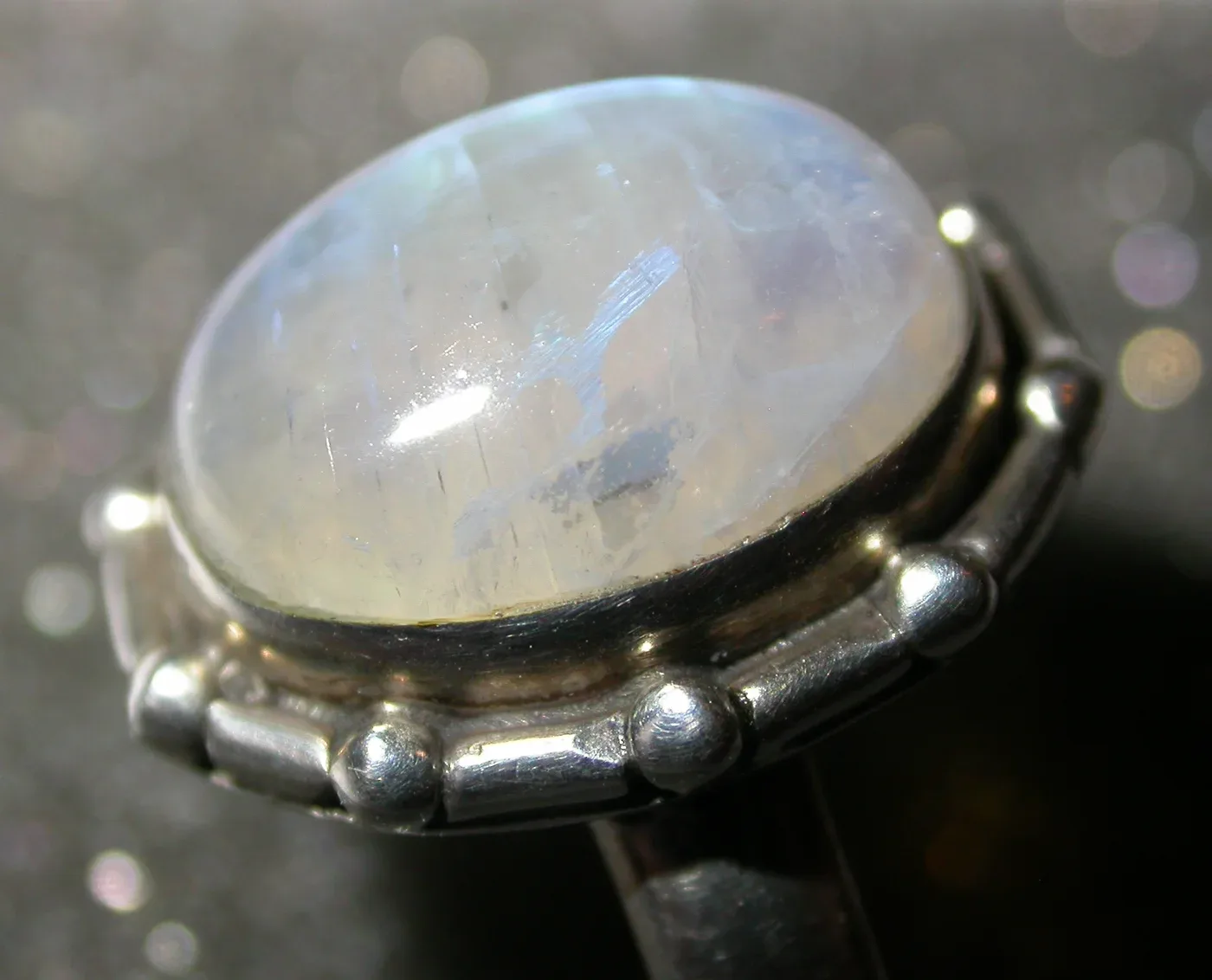
Because the colour is soft, moonstone is cut en cabochon: the flat rounded shape shows the sheen best. It is not in our ready collection yet, but we make it to order, setting it in silver or a muted gold so the coolness of the stone survives. Catalogue: necklaces.
Real or fake
- A real moonstone reflects light so that the gleam moves as you tilt the stone — this is the main test.
- The most common substitute is opalite, an opalescent glass. It looks attractive, but the glow is static and the body is uniformly cloudy.
- Glass usually shows tiny bubbles and seams.
- Faking it is genuinely hard, but bonded doublets do reach the market — ask for a certificate if anything looks off.
Care
Hardness 6–6.5 means the stone will not survive rough daily wear. Keep a ring in its own box and take it off for housework. Clean with warm water, mild soap and a soft cloth only; skip ultrasonic cleaners and steam.
See also
-
Rock Crystal
Chemical formula – SiO₂
Hardness – 7
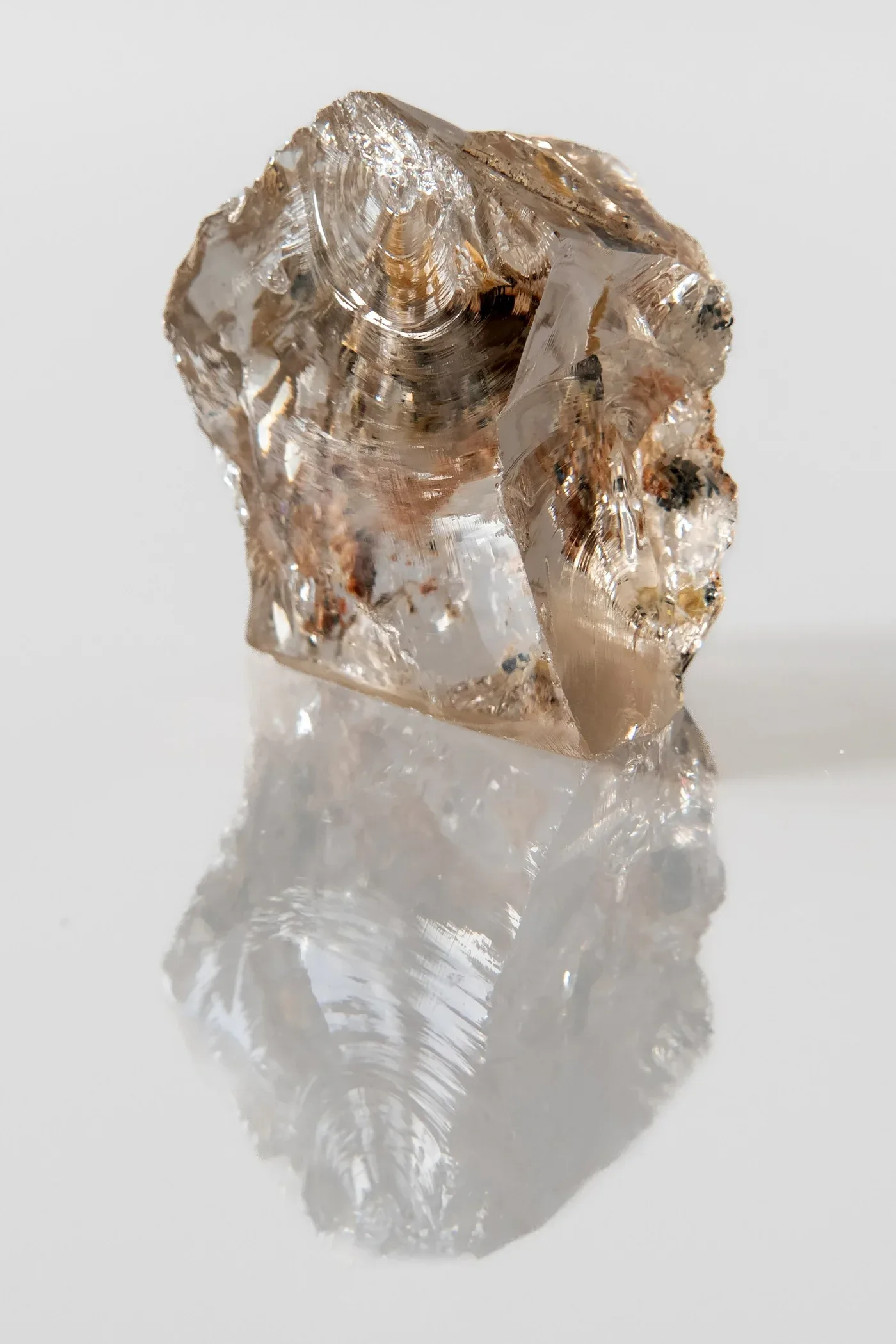
Colour – colourless, transparent, sometimes milkyRock crystal is the purest form of quartz. In everyday speech "quartz" and "rock crystal" are used interchangeably, though strictly quartz is the name of a whole mineral group and rock crystal is its colourless, transparent variety.
In nature it grows as six-sided prisms, often in clusters — several crystals rising from one rough base. Silicon dioxide is one of the most common compounds in the earth's crust, so rock crystal is not a rare stone. Price still swings hard: a clean, large crystal without cracks or inclusions is expensive, while an ordinary specimen costs very little.
Origins
Rock crystal is mined worldwide. The largest deposits are in Brazil, Madagascar and the United States. In Sakartvelo it has been known for a long time, and it can be found in the high mountain districts.
Properties
Esoteric practitioners say the vibration of rock crystal matches a human's, which is why anyone can wear it regardless of star sign. The stone works first on the crown chakra, but tradition holds that it clears the whole body and the entire energy system.
It is considered helpful for keeping calm and balanced, and for strengthening concentration and memory. It is also said that wearing it makes people speak their mind more freely and lose the shyness that comes with expressing an opinion.
The third and most practical property is cleansing and recharging other stones: keeping a crystal or cluster, by tradition, helps discharge accumulated energy.
Traditional healing properties
Lithotherapists say rock crystal relieves headaches, copes with stress, regulates body temperature and blood pressure, and helps people troubled by insomnia. Healers use it for scattered attention and confusion.
This describes traditional practice, not medical advice. A stone does not replace a doctor.
Chakras
Crown chakra – sahasrara. In practice it acts on all chakras.
That is why rock crystal is often treated as a neutral stone: it does not occupy a specific colour and works comfortably alongside others.
Which zodiac sign it suits
Rock crystal belongs on the list of universal stones — any sign can wear it, and there is no astrological restriction. If you pick stones by sign and want a list with no limits at all, this is the one.
In Charcho jewellery
There is no rock crystal in the ready collection yet, but we make it to order, and it is our favourite starting point: a colourless crystal in silver almost disappears, so the attention stays on the stone rather than the setting. Catalogue: necklaces.
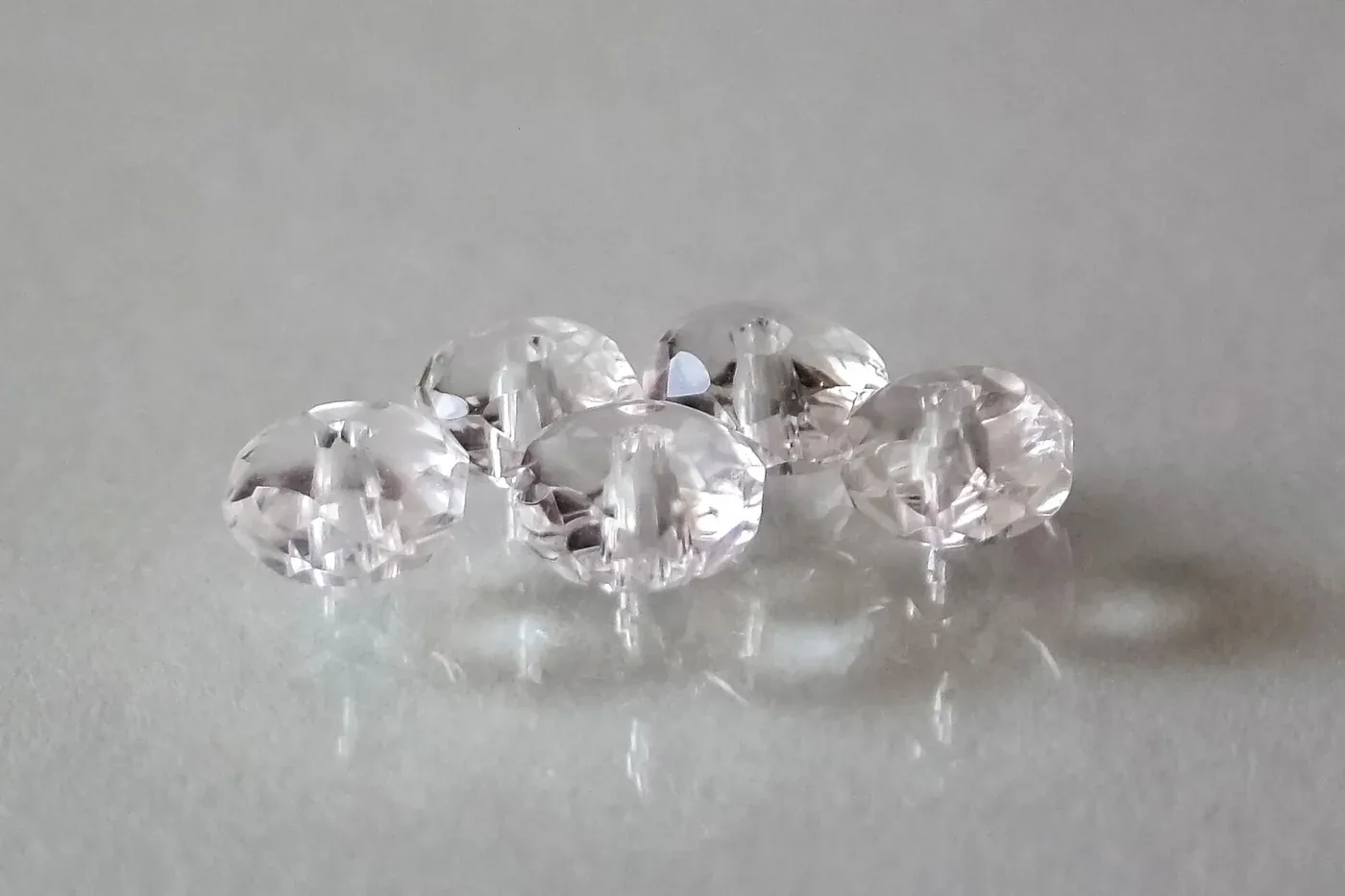
Real or fake
- A natural crystal almost always shows something: fine cracks, growth lines, occasionally inclusions.
- Glass is too clean and often holds tiny bubbles.
- A natural stone feels cold in the hand and warms up slowly; glass takes on body temperature fast.
- Lab-grown quartz is chemically the same SiO₂, so it is cheap — natural origin is what carries the value.
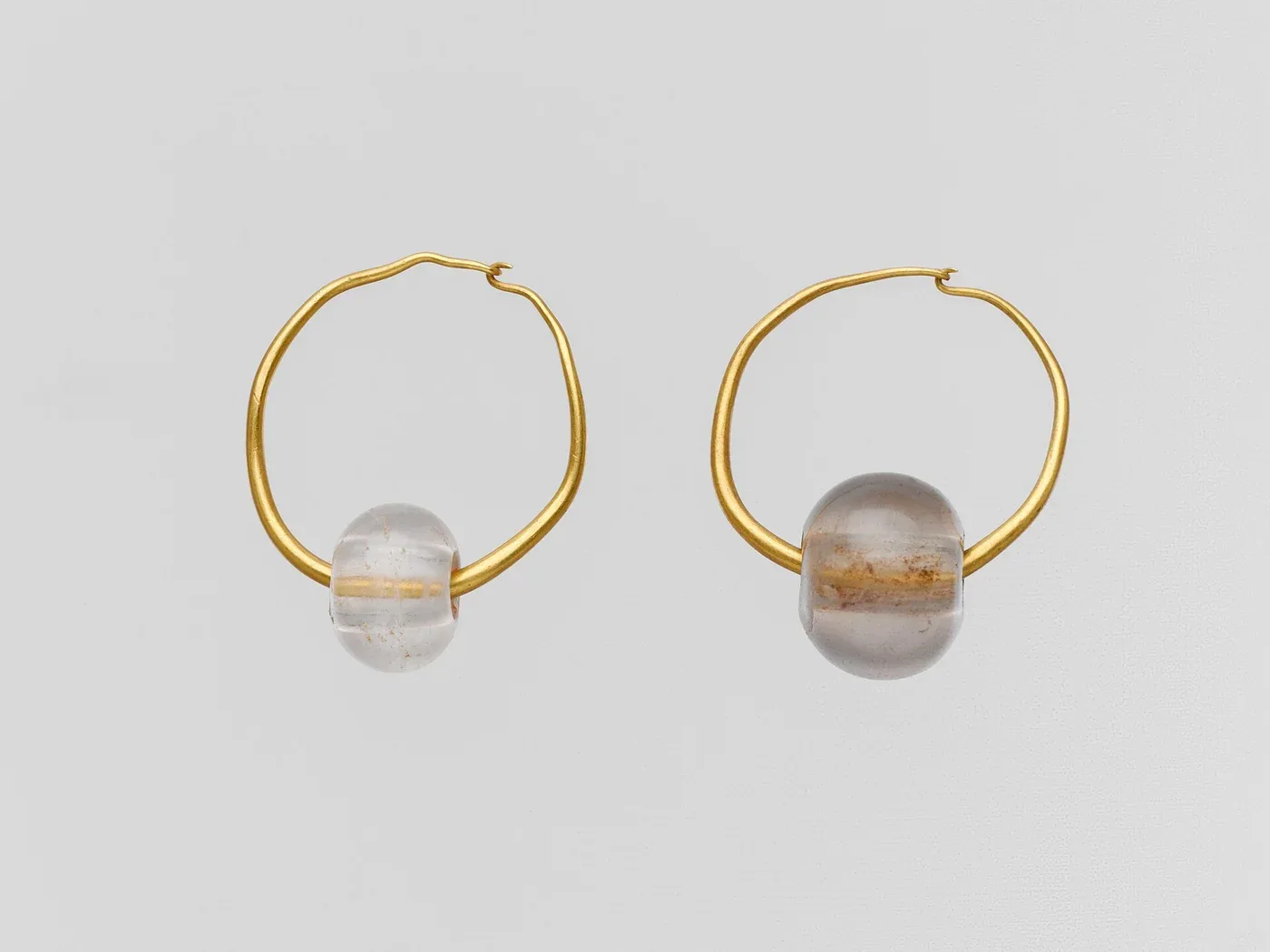
Care
Hardness 7 means you can clean it with warm water and mild soap; ultrasonic is usually safe unless the crystal has a large fracture. Avoid sudden temperature changes — hot water on a cold stone cracks it. Store a ring separately so harder stones cannot scratch it.
See also
-
Moldavite
Chemical formula – SiO₂ (+Al₂O₃)
Hardness – 5.5–6
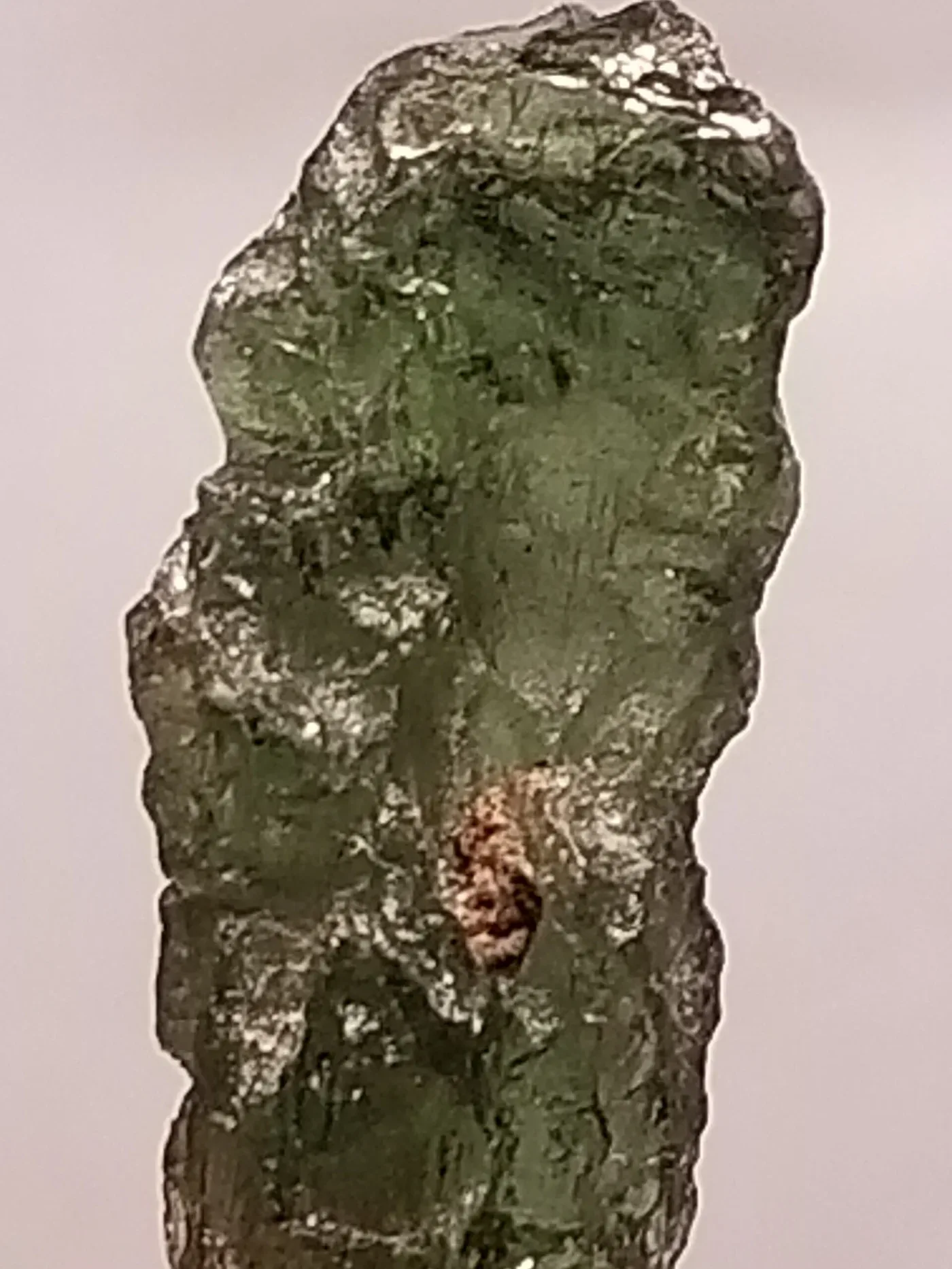
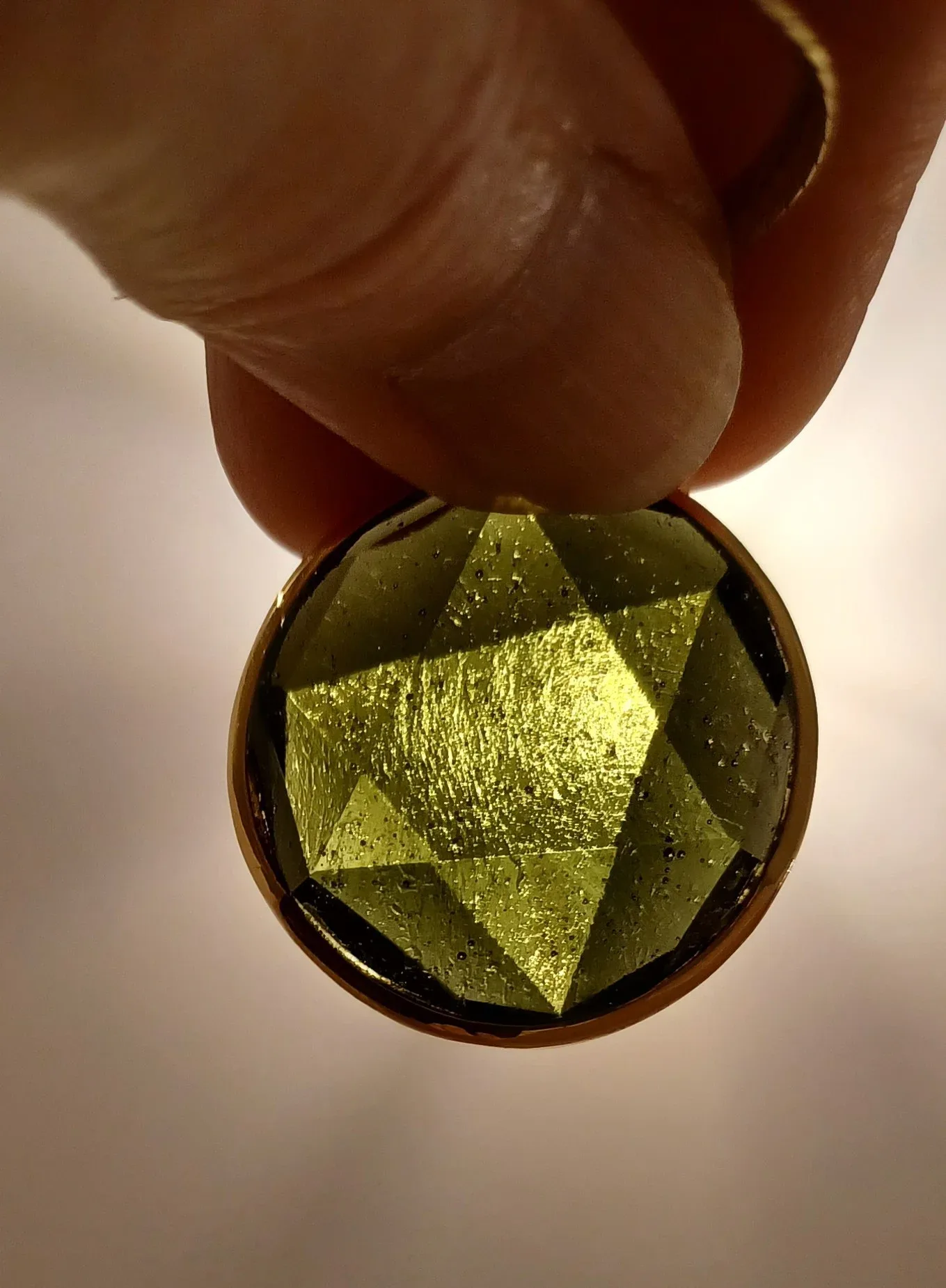
Colour – dark brown, grades of greenMoldavite is a tektite — natural glass formed by a meteorite impact. The heat and pressure of the strike are high enough to melt the local rock, and the melt is thrown into the air where it cools. That is why it is called the stone born of stars.
For a long time it was thought to be man-made, or a variety of obsidian. It was presented as a mineral in its own right by Josef Mayer, a professor at the University of Prague. The name comes from the river Moldau.
Moldavite rarely grows larger than a few centimetres. The surface of a natural piece is wrinkled and pitted — the record of its flight through the air. Many collectors therefore leave the stone untouched.
Origins
Moldavite is found in Germany, Austria and Czechia. The Czech deposits are the best known, and most stones on the market come from there.
Properties
Moldavite is said to hold the secrets of the cosmos and to be an amulet carrying unusually strong energy. People describe it as holding the energy of the earth and the atmosphere at once, felt the moment the stone touches the skin.
Esoteric practitioners hold that it turns its owner away from negative thoughts and towards success and happiness. Luck, general health and success in life are also attributed to it.
Traditional healing properties
Lithotherapists say moldavite calms the nervous system, helps people cope with stressful situations and restores healthy sleep. It is also said to be helpful with fears and phobias.
This describes traditional practice, not medical advice. A stone does not replace a doctor.
Chakras
Heart chakra – anahata.
Tradition therefore favours wearing it close to the heart, on a chain or in a pocket.
Which zodiac sign it suits
Most modern astrologers hold that any sign can wear moldavite. In that sense it is universal, and the choice does not depend on your sign at all.
In Charcho jewellery
Moldavite is rarely faceted, and we keep its natural shape too: the setting is built so the surface of the stone stays open. We have no ready piece yet, but make it to order. Catalogue: necklaces.
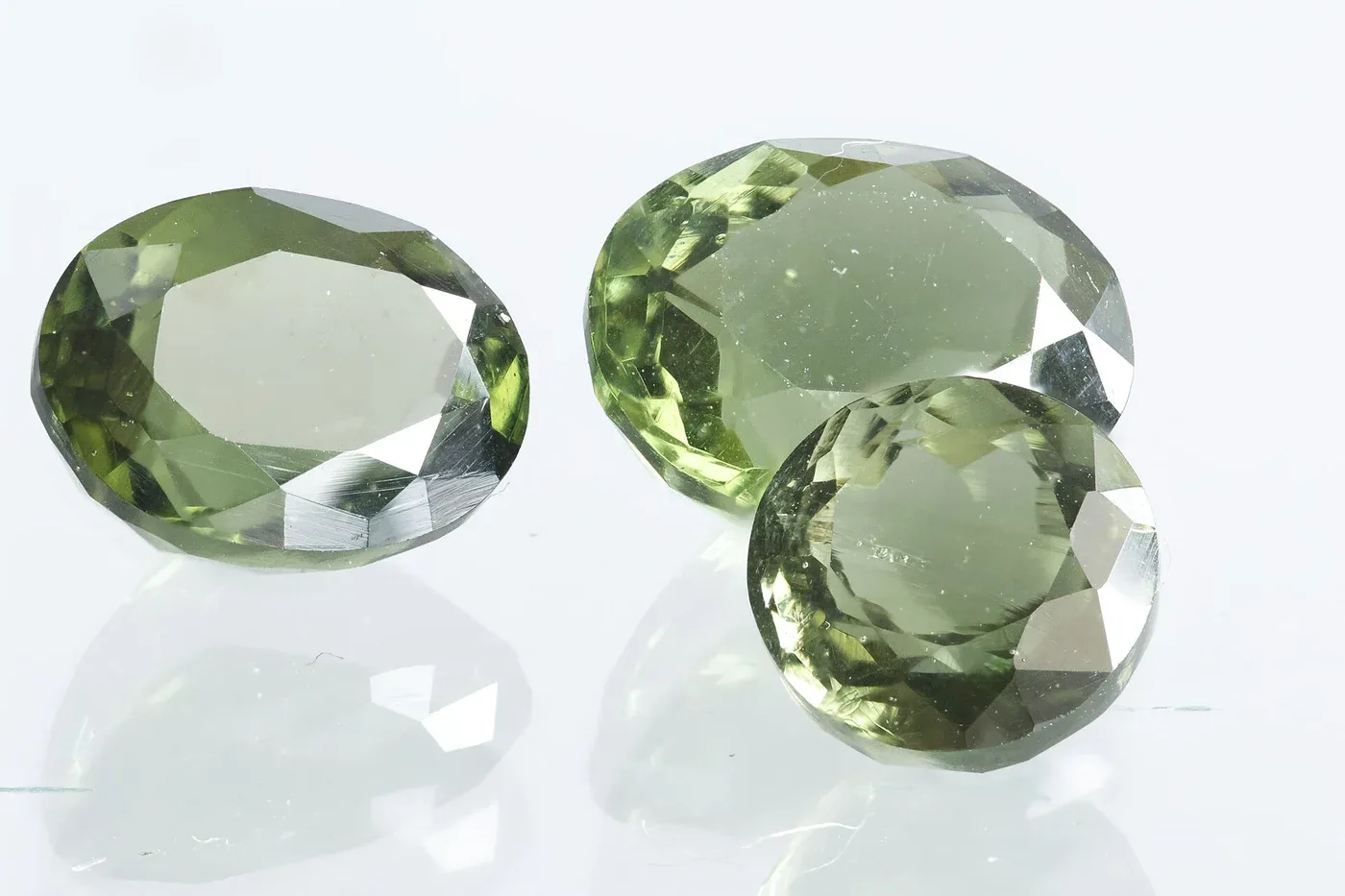
Real or fake
- A real moldavite has a wrinkled surface and soft, irregular edges — the trace of its flight.
- Fakes are usually green bottle glass: smooth surface, colour too even.
- Genuine pieces show elongated, spindle-shaped bubbles and internal flow lines; in glass the bubbles are round.
- The stone is dense and feels comparatively heavy; plastic or resin warms quickly in the hand and weighs almost nothing.
Care
Hardness 5.5–6 means moldavite is much softer than quartz and cracks easily on impact. Do not use an ultrasonic cleaner — fractures can open up. Keep it away from hot water and sudden temperature change, since glass handles thermal shock badly. A soft dry cloth is enough.
See also
-
Coral
Chemical formula – CaCO₃
Hardness – 3–4
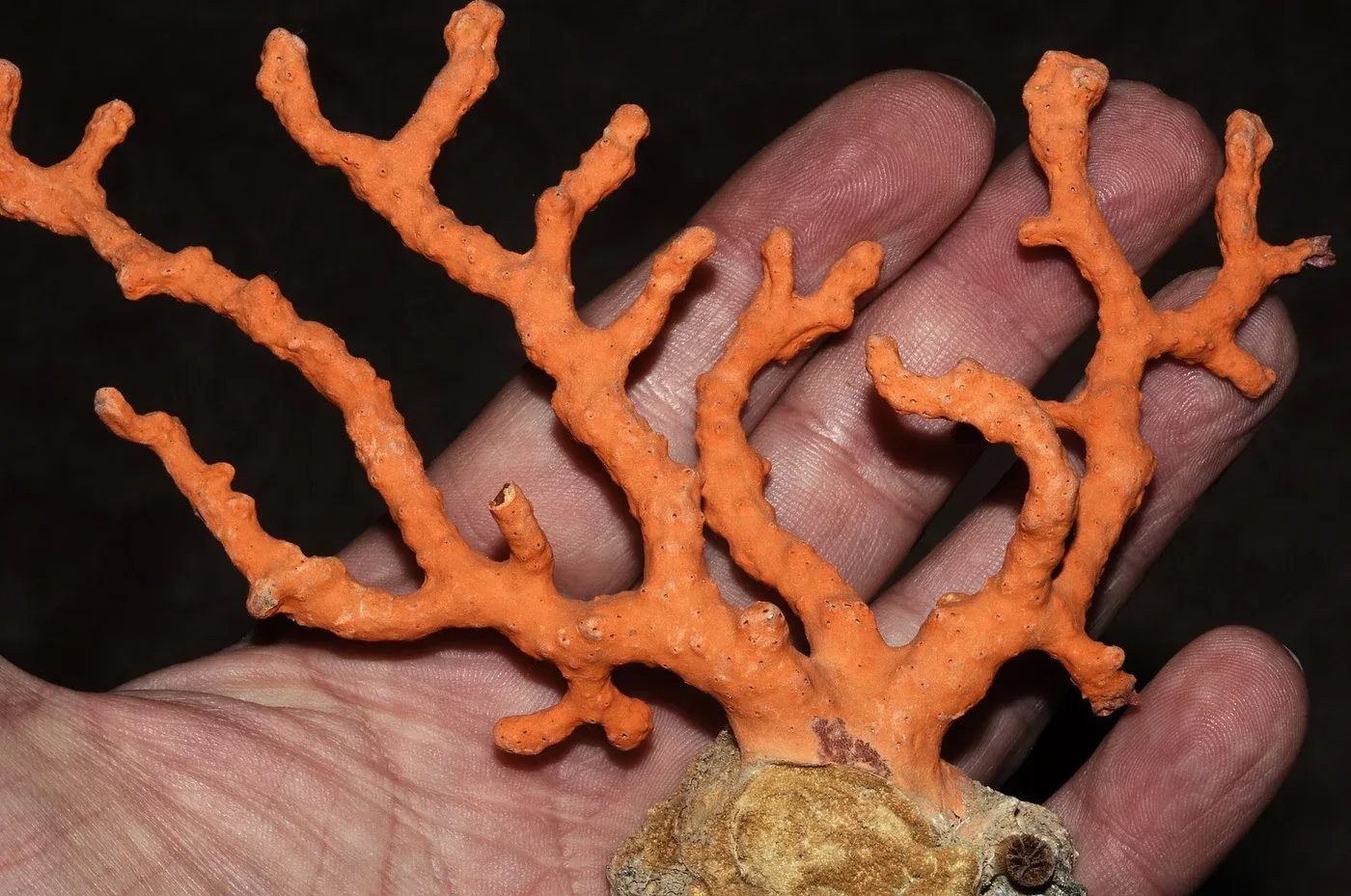
Colour – red, pink, white, yellow, blueCoral belongs to the group of "organic stones" and in fact is not a mineral at all. It is the skeleton of a colony — what remains of a living organism. Natural coral grows very slowly, roughly a millimetre a year.
More than 2,500 species of coral exist in nature, though only a few are used in jewellery. To this day nobody knows where the name itself came from — a rare case of a stone whose naming history is lost.
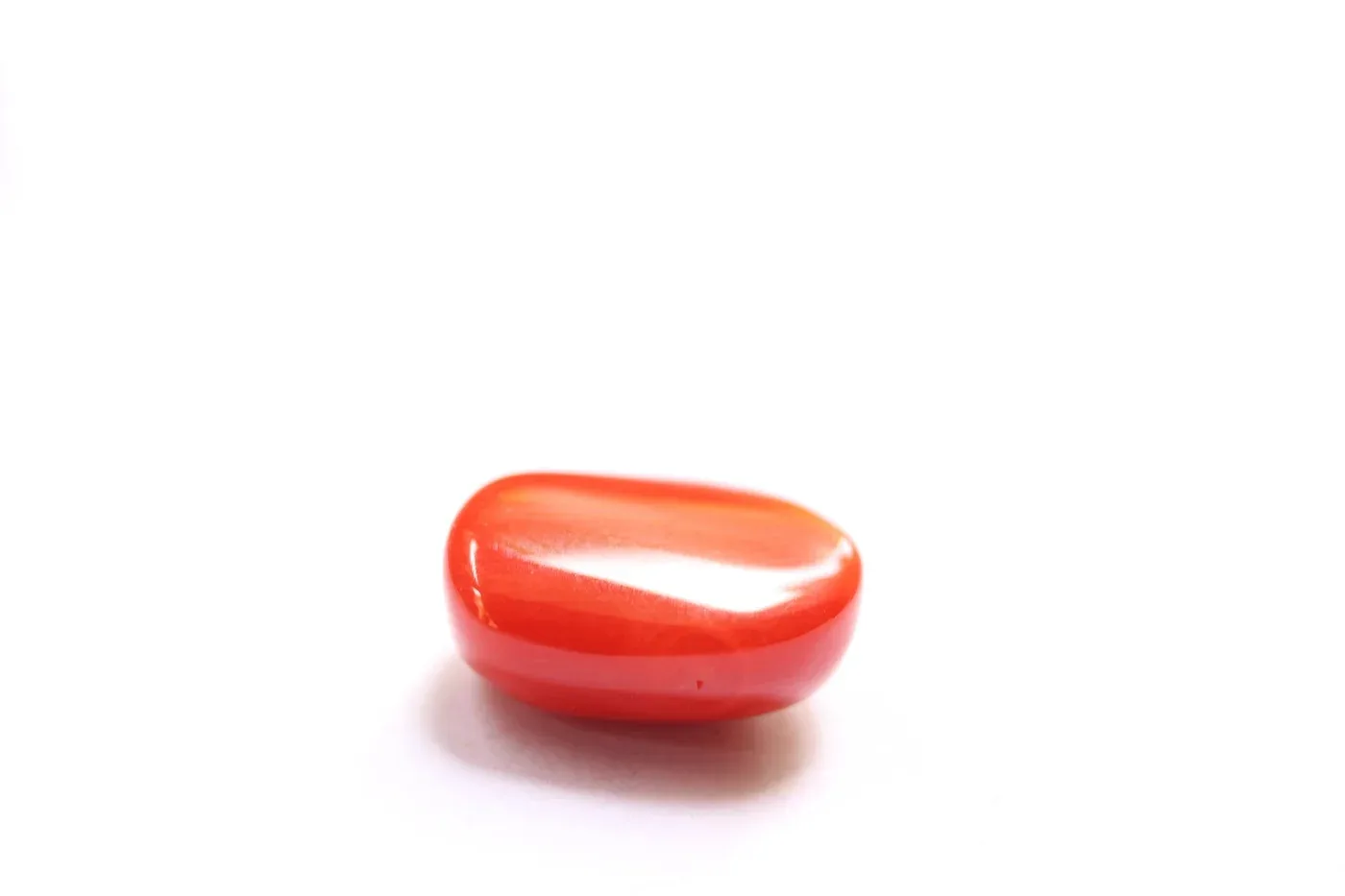
In colour, deep red and dark pink cost the most; white and yellow are more accessible, and blue is a rarity. Value is set by evenness of colour and the absence of cracks: one black dot or white patch lowers the price noticeably.
Origins
Coral is gathered all over the world, but Italy supplies about three quarters of the global volume. It is also found in Japan, Taiwan, Australia and Hawaii.
Properties
Coral has long been used to draw love and income. It is said to connect a person with their own nature. Coral is a symbol of passion and strength.
It is also said to help creative people — specifically to finish what they have already started. The stone is considered especially useful for those with many ideas and few completed projects.
Traditional healing properties
In the old days coral was used to improve the blood and the circulation. It is also counted a stone of general health. It is said to be good for the kidneys, for epilepsy, for bones, eyes, the respiratory system and the bladder.
According to lithotherapists, making an elixir from coral or charging water with it is not advisable.
This describes traditional and alternative practice, not medical advice. A stone does not replace a doctor.
Chakras
Associated with the root and heart chakras – muladhara, anahata.
Which zodiac sign it belongs to
Coral is a sea stone, so tradition links it with the water signs. Pisces first — the sign that owns the sea and emotion. It suits Cancer, especially in matters of family and love, and Scorpio, who is given coral as a stone of passion.
In Charcho jewellery
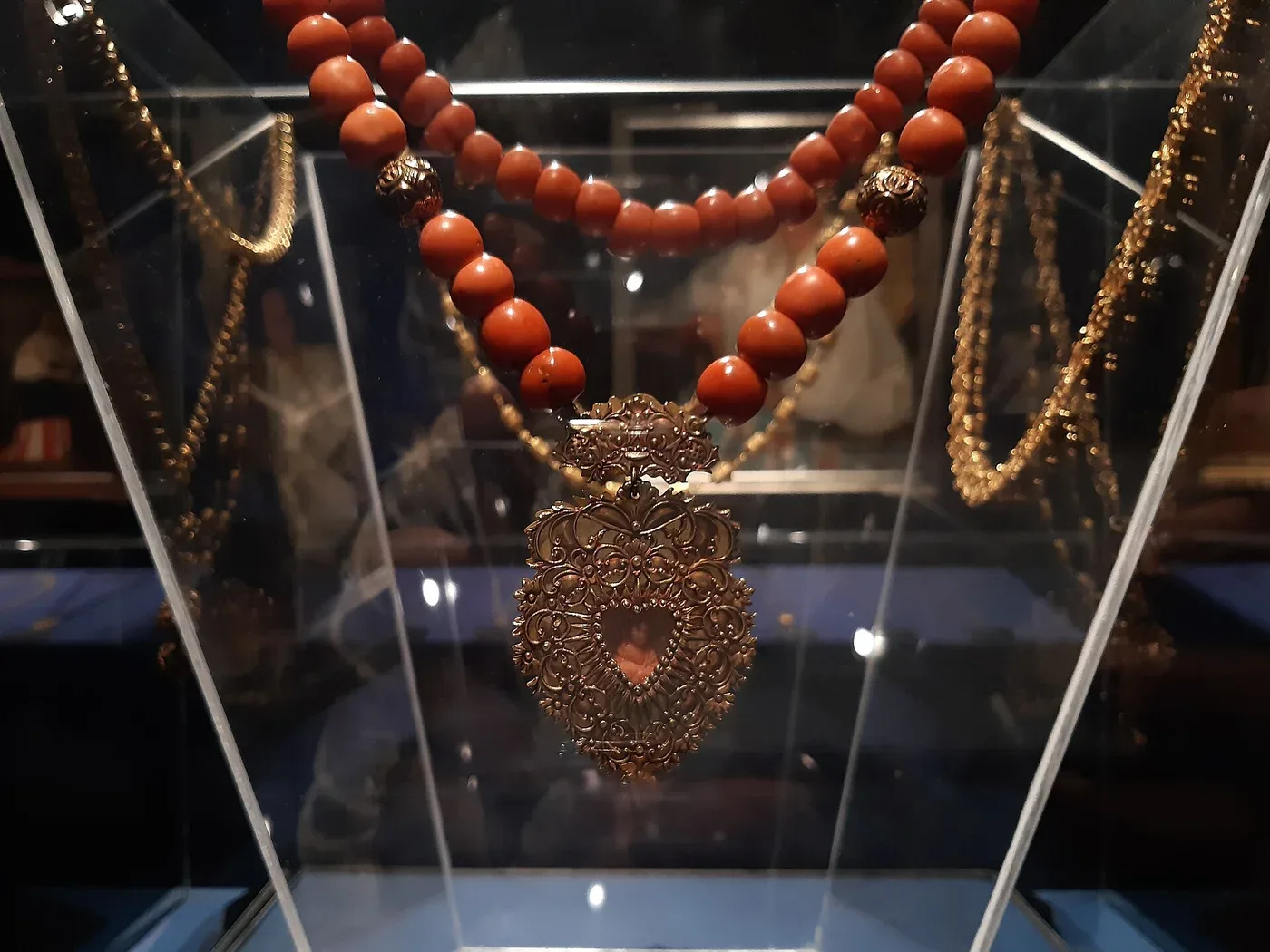
Coral is a soft material, so we use it in necklaces: there the stone meets fewer hard objects and the colour stays clean for longer. See our necklaces.
Real or fake
The coral market is one of the most frequently faked. The usual substitute is dyed bamboo coral — cheap material given a red colour.
- Natural coral shows growth lines and fine pores; in dyed material the colour collects in cracks and forms darker stripes.
- Colour is rarely perfectly even.
- Coral is cool and dense; plastic is light.
- Price. Large coral without cracks and with even colour is never cheap.
Only a lab gives a final answer.
Care
Hardness 3–4 puts coral among the most delicate stones. Water, soap, perfume, sprays and ultrasonic cleaning all damage it. A soft dry cloth is enough. Store it separately so harder stones cannot scratch it.
See also
-
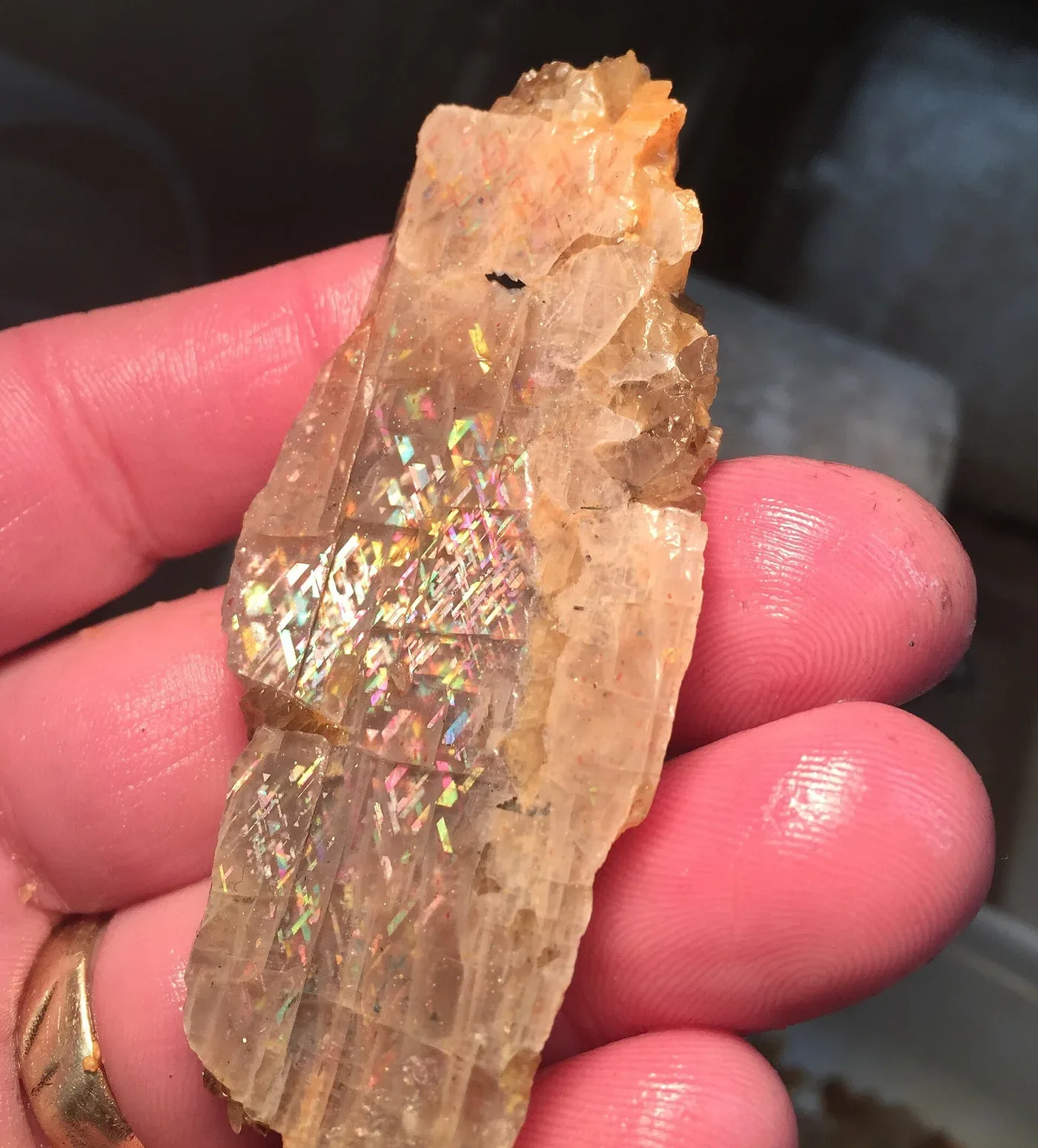
Sunstone
Chemical formula – (Ca,Na)[(AlSi)₂Si₂O₈]
Hardness – 6
Colour – yellow, red, orangeSunstone belongs to the feldspar group and stands out for an unusual optical effect: it seems to glow from inside. The effect comes from tiny hematite inclusions — light reflects off them and gives the stone a warm, golden shimmer.
The colour is mostly orange-red and really does recall sunlight, which is where the name comes from. Less bright varieties exist too, and they are mostly cream in tone.
Sunstone is the official stone of the US state of Oregon. In the jewellery trade the pieces that fetch the most are those where the shimmer spreads evenly across the face; a dull stone, or one with no shimmer, costs far less.
Origins
Sunstone can be found in many places. India is the largest supplier; it is mined also in Madagascar, Canada, Norway, Russia and the United States.
Properties
Sunstone is believed to carry fairly strong energy. Traditionally it is counted a stone of luck, success and wealth. In antiquity it was also used as a stone for barter.
There are accounts that the Vikings carried sunstone on voyages to find their way. In ancient Greece it was held to be the stone of the sun god. Many believed that wearing it brought warmth, cheer and love into a life. It is also considered a stone of leaders.
Traditional healing properties
Sunstone is used for fears and phobias. According to lithotherapists this bright stone is good for lifting depression and stress.
This describes traditional and alternative practice, not medical advice. A stone does not replace a doctor.
Chakras
Associated with the solar plexus chakra – manipura.
Which zodiac sign it belongs to
Sunstone is a stone of the fire signs, and it belongs to Leo first of all: the sign of the sun, to which tradition assigns it. It suits Aries well, because it does not dampen energy but gives it direction, and Sagittarius, for whom luck and travel are the main themes.
In Charcho jewellery
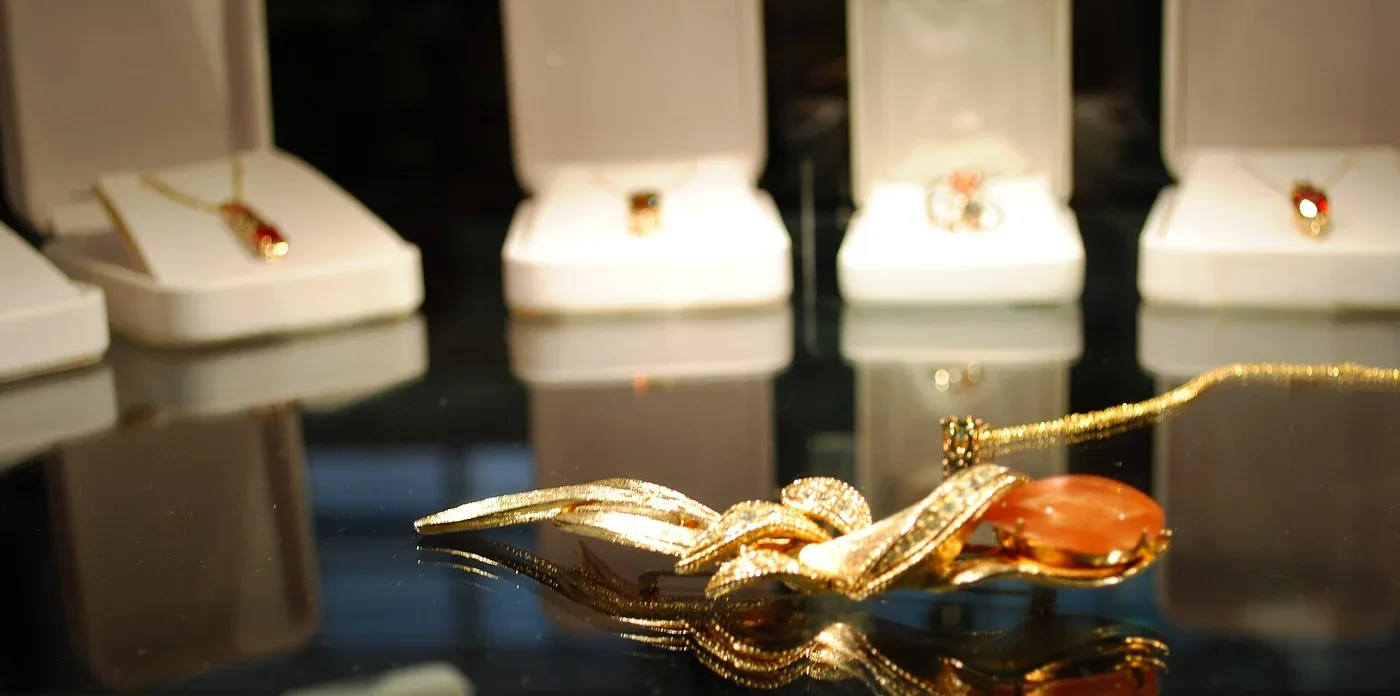
The shimmer is sunstone's virtue, so we set it in necklaces, where the stone catches light and the golden glow reads clearly. See our necklaces.
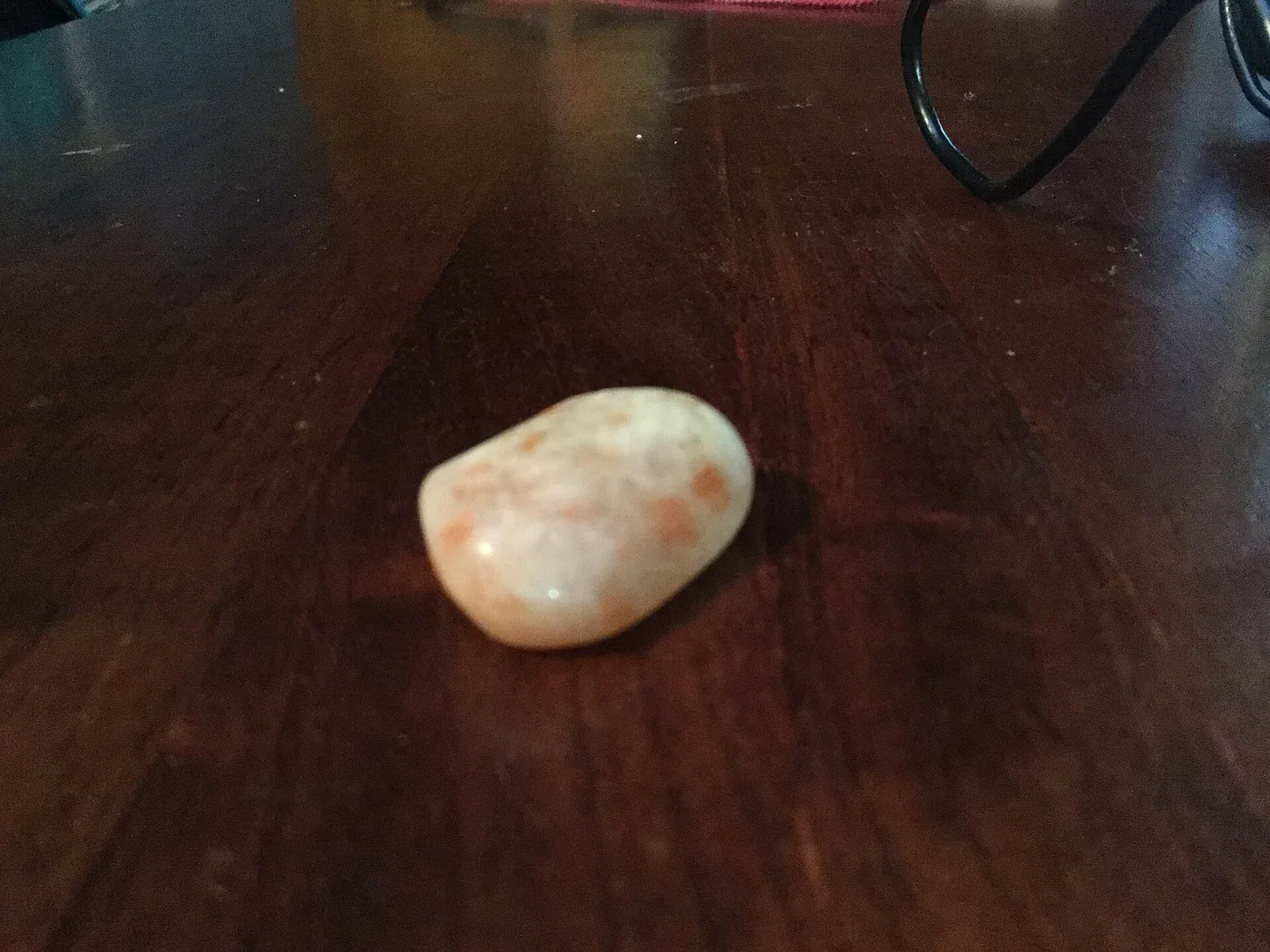
Real or fake
The best-known substitute is goldstone: glass with copper flakes stirred into it. It sparkles from outside, but it is a different material altogether.
- In natural stone the shimmer comes from within and shifts as you turn it; in glass the flakes sit at the surface and glitter the same from every side.
- Glass and resin show air bubbles.
- Sunstone has hardness 6 and scratches glass.
- Price. A large stone with even shimmer is never cheap.
Only a lab gives a final answer.
Care
Hardness 6 is middling: the stone works in a ring but will not take a sharp knock. Do not use ultrasonic cleaning, especially if the stone has a crack. A soft cloth and lukewarm water are enough. Avoid long sun and hot air.
See also
-
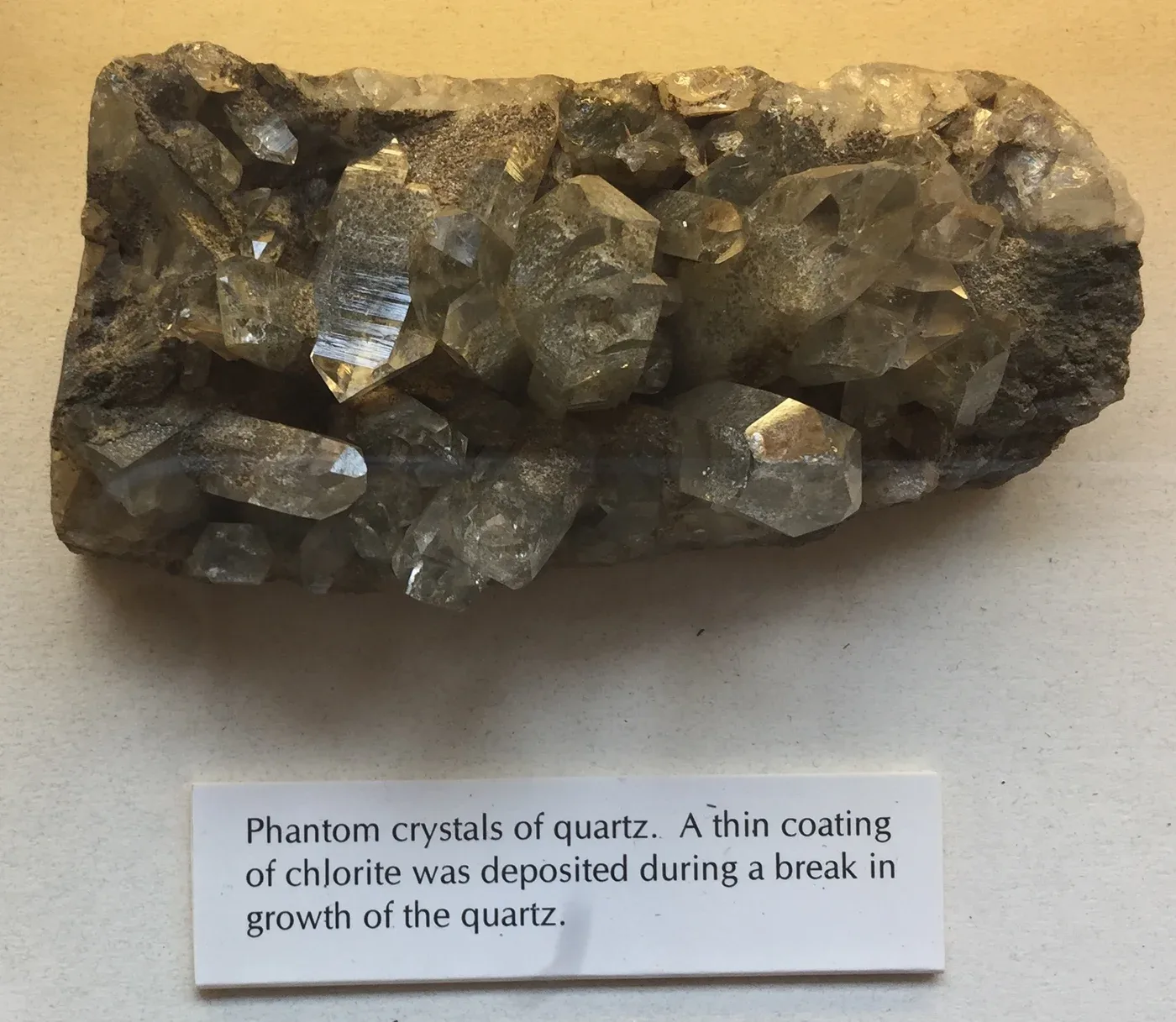
Lodolite — Garden Quartz
Chemical formula – SiO₂
Hardness – 7
Colour – colourless or grey, with coloured inclusionsLodolite is a variety of quartz with inclusions. From outside it is an ordinary, unremarkable stone; inside it holds a whole little scene: green thickets, red and brown hills, lines that look like branches. That is why it is called garden quartz — every stone is a picture of its own, and no two are alike.
It has many names: lodolite quartz, lodalite, garden quartz, landscape quartz, shadow quartz, artistic quartz. The variety is a tribute to its look; no single name ever won.
The inclusions are usually chlorite and iron oxides. The sharper and more contrasty the scene, the more expensive the stone, while a clean transparent background is considered rare. Most lodolite on the market is cut as a cabochon, where the picture reads best.
Origins
Lodolite comes mainly from Brazil. Smaller amounts are found in other countries, but most of the jewellery material on the market is Brazilian.
Properties
Esoteric practitioners say lodolite helps its owner come to terms with past trauma, including memories stuck in childhood that still pull us back. The stone is said to make those memories easier to carry and then easier to let go.
Garden quartz is mostly used for meditation and concentration. It is believed to strengthen spiritual energy and to return a sense of love and tenderness to its owner.
On the whole lodolite is treated as a spiritual stone: it is said to clear the aura, calm the nerves, help put life and goals in order and open the mind to more shades of a situation.
Traditional healing properties
Lithotherapists use lodolite to ease pain — headaches, joints, throat and eyes. It is often chosen for the nervous system and for better sleep.
This describes traditional and alternative practice, not medical advice. A stone does not replace a doctor.
Chakras
Associated with the crown chakra – sahasrara.
Which zodiac sign it belongs to
Quartz is considered a universal stone, and lodolite is no exception: it is recommended for every sign. Still, tradition singles out three.
Virgo — as a stone of order and detail, exactly what lodolite is credited with; Pisces — the scenes inside the stone speak to the imagination; Capricorn — for putting goals in order.
In Charcho jewellery
The drawing is lodolite's main virtue, so we set it in necklaces, where the stone catches light and the inclusions show clearly. See our necklaces.
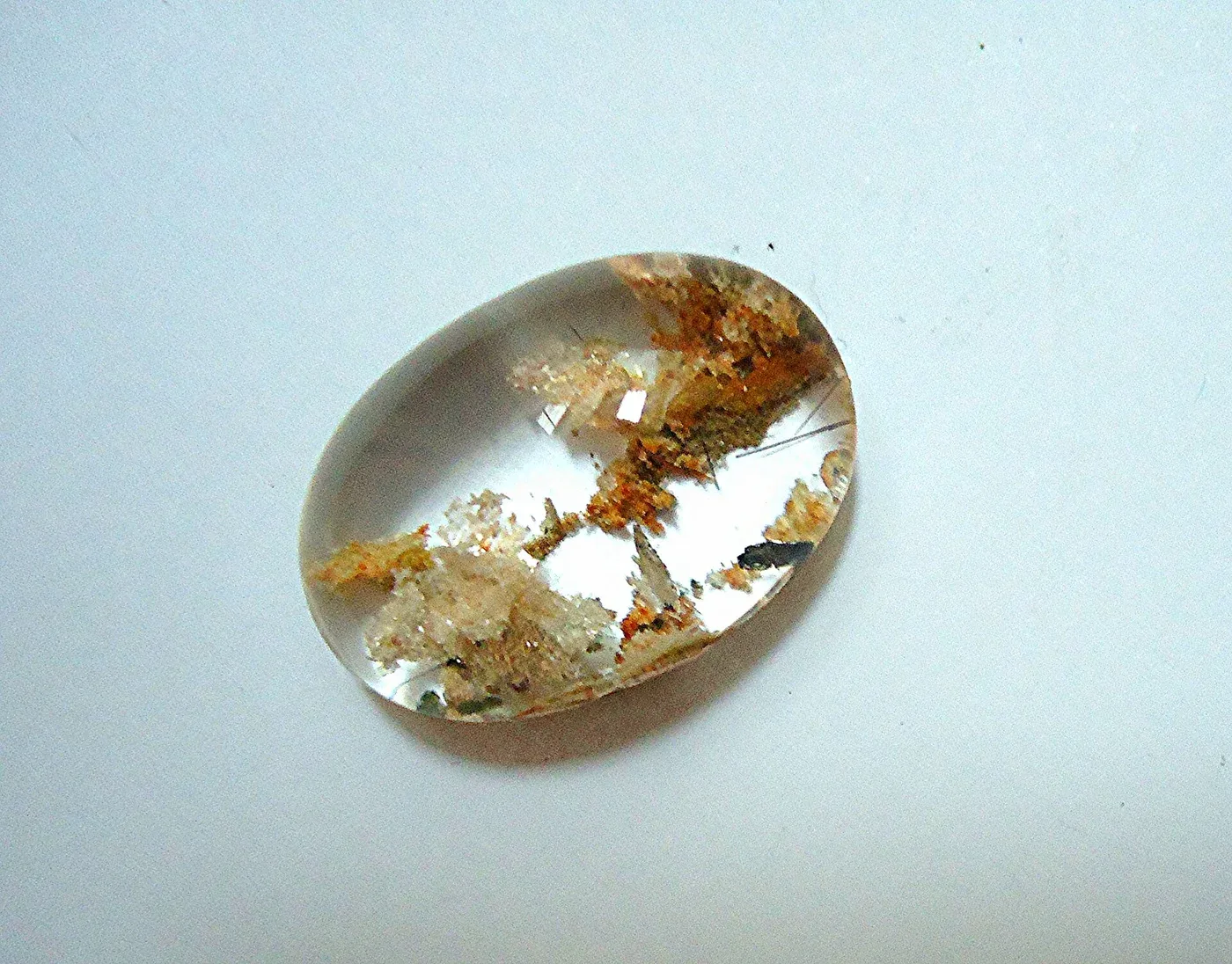
Real or fake
Lodolite is often imitated: moss is glued into glass or resin, layers are painted on, and dyed quartz is sold as garden quartz.
- In natural stone the inclusions sit deep and look different from every angle; in an artificial piece they are glued to the surface.
- Glass and resin show air bubbles.
- Quartz (hardness 7) scratches glass; resin and plastic do not.
- Price. A large stone with a sharp scene is never cheap.
Only a lab gives a final answer.
Care
The quartz itself is tough, but the inclusions are far softer and they fail first. No ultrasonic cleaning, no long sun, no hot water, no chemicals. A soft cloth and lukewarm water are enough.
See also
-
Malachite
Chemical formula – Cu₂(CO₃)(OH)₂
Hardness – 3.5–4
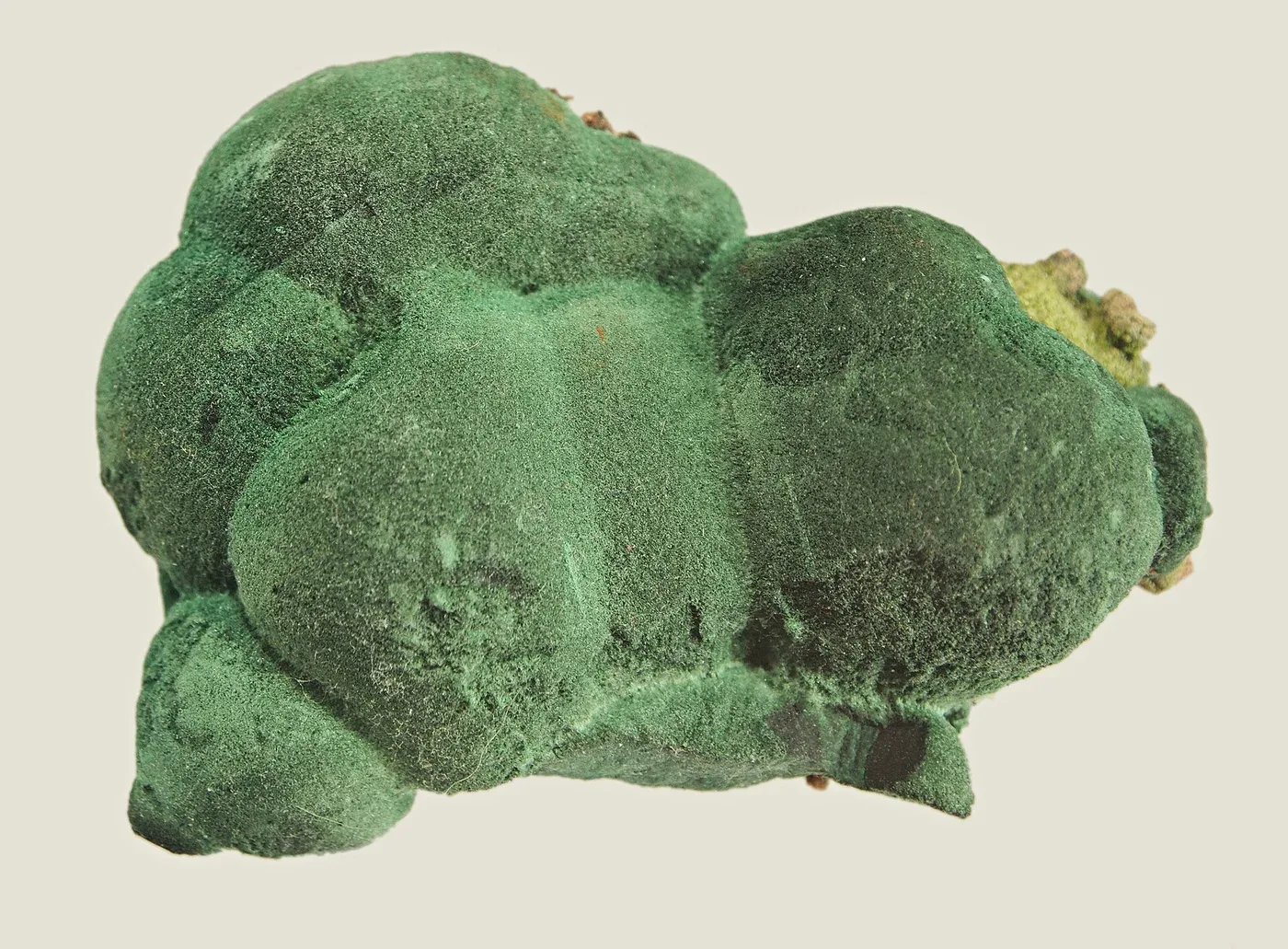
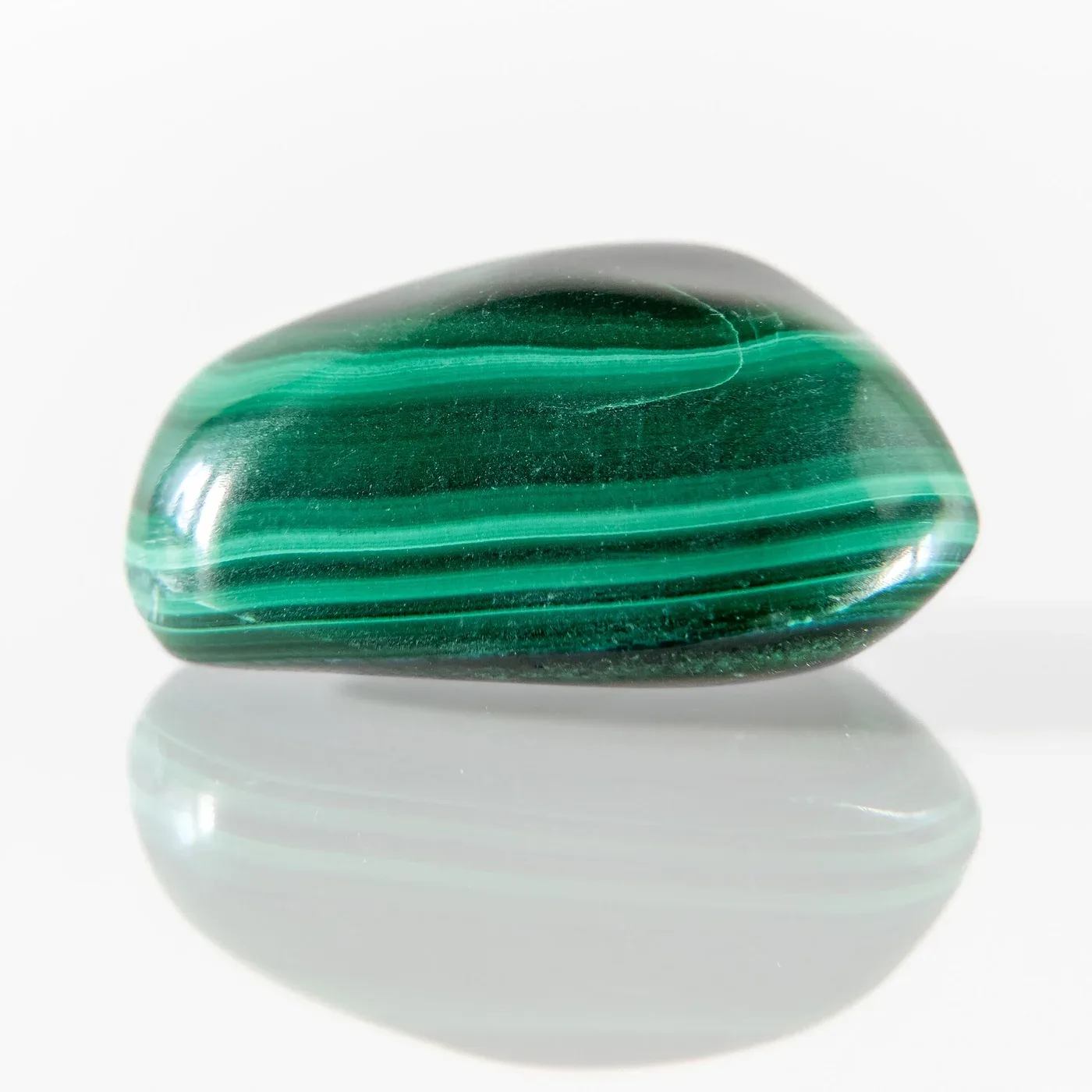
Colour – green, from pale to deep, with banded patternsThe name comes from the Greek "malache", the mallow plant. The colour does look like a mallow leaf. There is a second version too: "malakos", meaning soft — and that one is just as logical, because malachite really is one of the softest stones in our catalogue.
Malachite has been known since the time of ancient Egypt, Greece and Rome. It was cut into amulets and jewellery. Egyptians ground it into powder and used it as eye paint; archaeologists have confirmed that malachite also served as a green pigment for dyeing cloth.
The most famous malachite is Russian. Russia once produced it by the ton and used it for rooms and arches — that is where the idea of malachite halls comes from. Material on that scale is rare today, so clear banded slices are what the jewellery trade values.
Origins
Russia was once the main supplier, but the stone has grown scarce there and Africa is now considered the leading source. Malachite is also mined in Australia, Chile, Namibia, Zimbabwe and Arizona in the United States.
Properties
In the old days malachite was held to protect against evil spirits and the evil eye. It is considered a very good talisman for children. People say it brings harmony and love into a life and helps its owner think quickly and sharply.
Malachite is also called a stone of opportunity. That is exactly why it is linked to money: the stone, they say, does not let a person miss a chance.
Traditional healing properties
Today's lithotherapists, like the healers before them, used malachite for pain, rheumatism, asthma, heart and lung complaints, pancreas problems, tissue regeneration and the nervous system.
This describes traditional and alternative practice, not medical advice. A stone does not replace a doctor. Malachite is a copper ore, so no elixir should ever be made from it.
Chakras
Associated with the heart chakra – anahata.
Which zodiac sign it belongs to
Tradition links malachite with Taurus, an earth sign close to value and stability. It also suits Libra, since it is counted a stone of harmony, and Scorpio, to whom deep, protective stones are traditionally given.
In Charcho jewellery
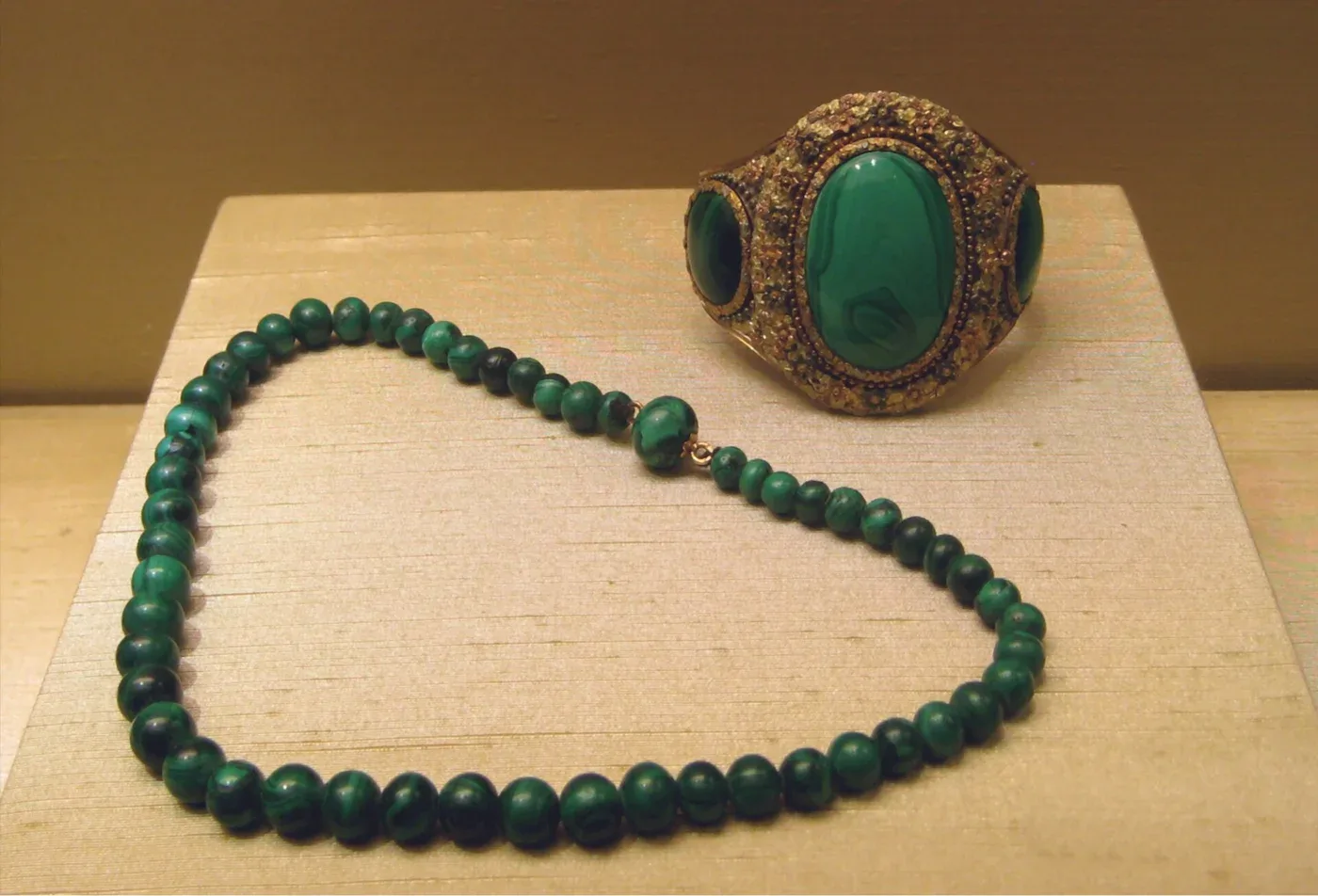
Malachite is soft and porous, so it does not belong in an everyday ring: it shows best in a necklace, where the stone meets fewer hard surfaces. See our necklaces.
Real or fake
Natural malachite is becoming scarcer, so imitations are everywhere — plastic and glass sold at the price of the real thing.
- The bands in natural malachite never repeat and follow the shape of the stone; in an artificial piece the pattern is schematic.
- Malachite is heavy and cold; plastic is light and warms at once.
- Glass and resin show air bubbles.
- "Malachite" pressed from powder and resin looks uniform and has no natural depth.
Only a lab gives a final answer.
Care
Malachite will not tolerate water, acid, perfume or ultrasonic cleaning. A dry soft cloth after wearing is enough. Do not leave it in the bathroom and do not keep it in direct sun.
See also
-
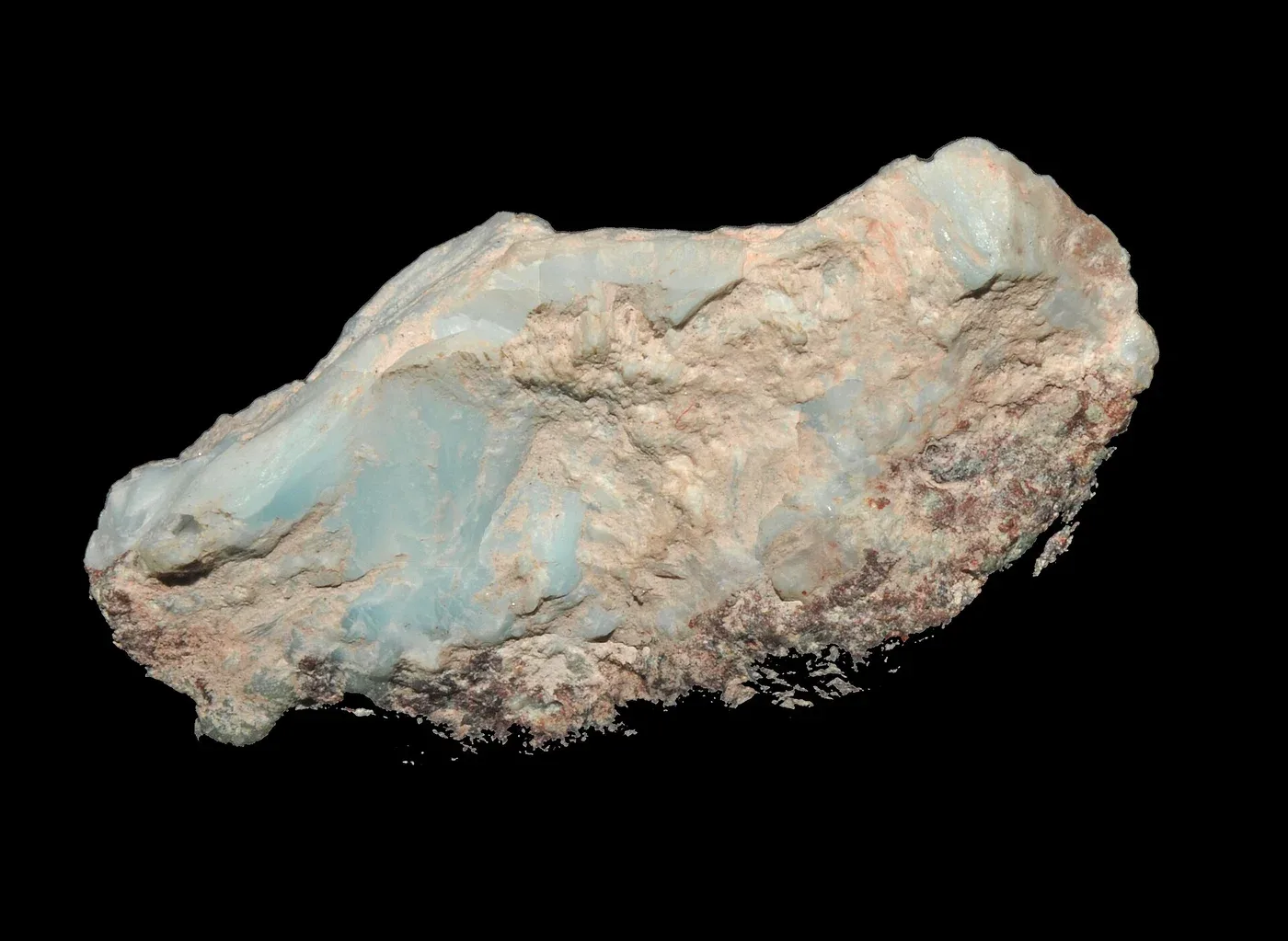
Larimar
Chemical formula – NaCa₂Si₃O₈
Hardness – 4.5–5
Colour – blue, from pale blue to greenish blueLarimar is the blue variety of pectolite, and the jewellery world treats it as a young stone: its story is a little over a century old. That is exactly what makes it interesting — a gem about which little is still known, yet one that already carries its own legends.
The story starts in 1916. Father Miguel Domingo Fuertes Loren found the stone in the Dominican Republic, and the discovery was soon forgotten. The second find came in 1974, made by Miguel Méndez and Norman Rilling. The name joins two parts: the beginning of Larisa, Miguel's daughter, and the Spanish "mar" — the sea.
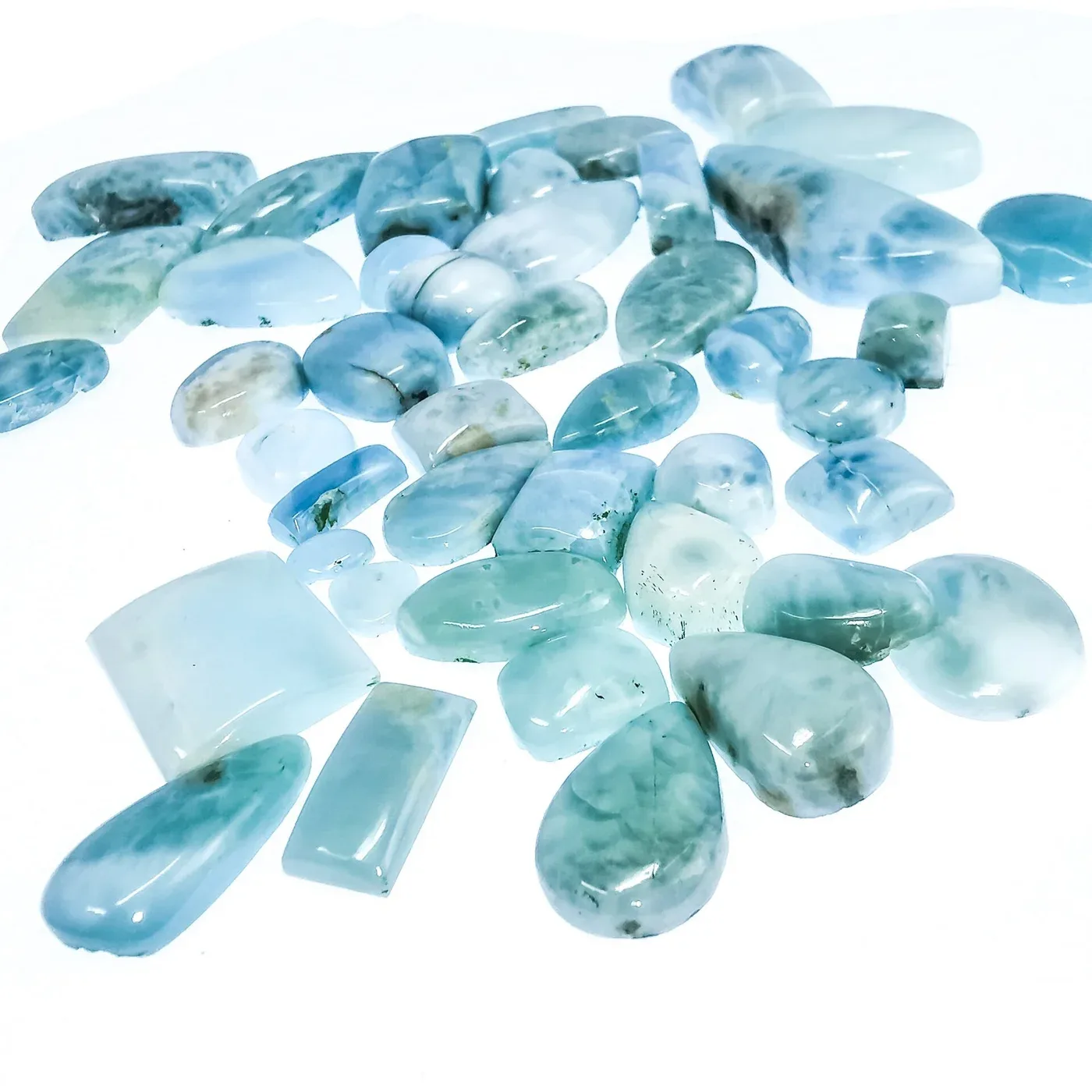
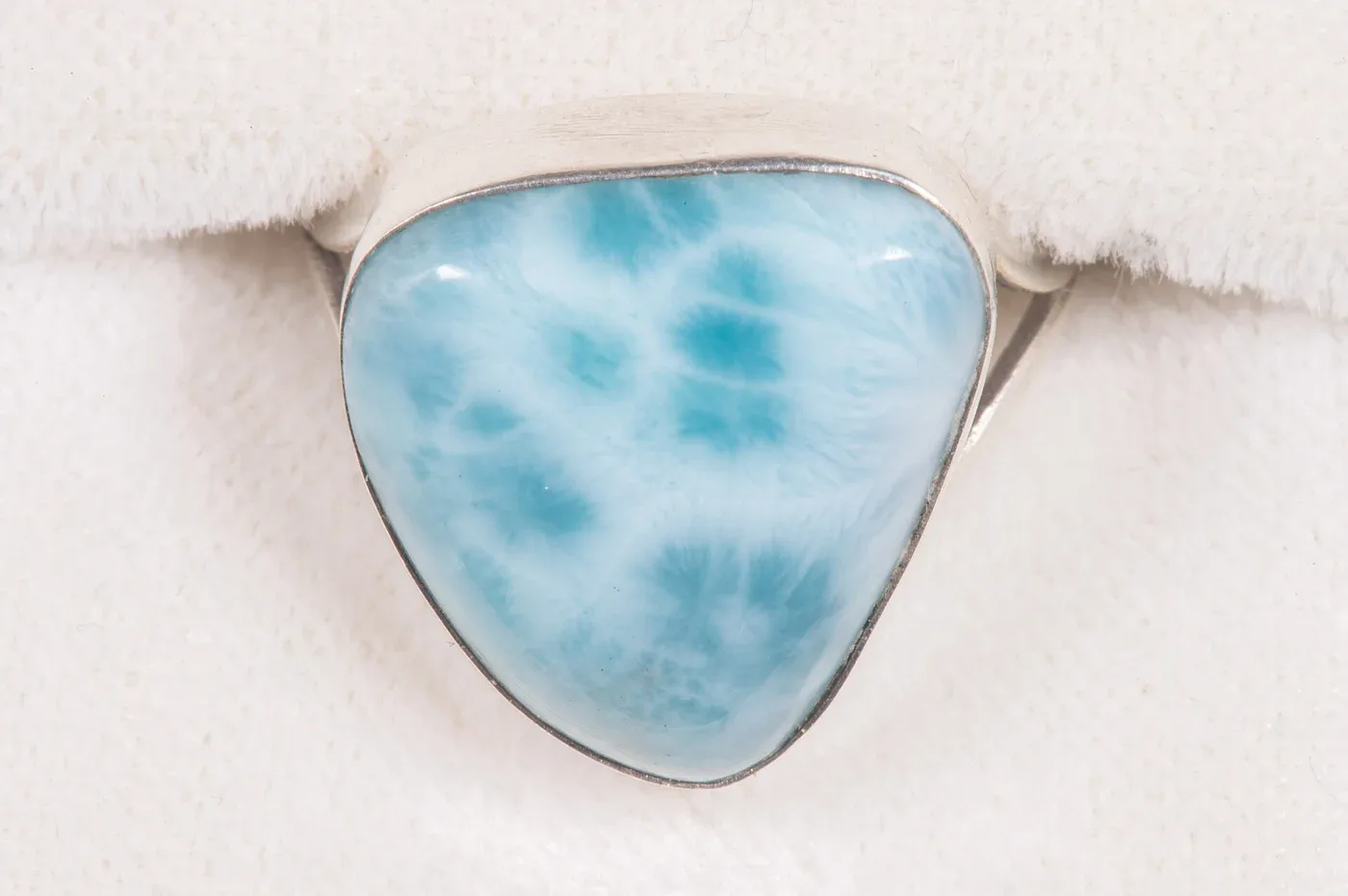
The colour range is wide: from a pale, almost chalky blue to a deep volcanic one. Dark stone with even colour costs the most; pale material crossed by white lines is far cheaper. Those white clouds are larimar's natural signature — a stone with perfectly even colour is rare.
Origins
Larimar is mined in one place only, in the Dominican Republic, in the Barahona mountains. There is no second deposit, and that explains the rest: limited supply, a high price and a market full of imitations.
Properties
Larimar is considered a stone of communication, calm and harmony. Esoteric practitioners say that in moments of tension it brings quiet back, so both wearing it and keeping it at home soften the atmosphere. As a stone of the water element it is said to soothe people with a quick temper.
It is also called the sea stone. Legend has it that for anyone who spends a lot of time near water, larimar guards against accidents. It is said to suit people who have to speak and express themselves a great deal: vocalists, public speakers, singers.
Traditional healing properties
Lithotherapists use larimar for throat and respiratory problems. It is said to be good for the lungs, for a lost voice and for thyroid complaints.
This describes traditional and alternative practice, not medical advice. A stone does not replace a doctor.
Chakras
Associated with the fifth chakra – vishuddha.
Which zodiac sign it belongs to
Tradition links larimar with the water signs, and Pisces first of all: a sea stone for a sea sign. It also suits Cancer and Scorpio, who need calm and a way to express what they feel.
For Gemini larimar works as a stone of communication — the very quality most often attached to that sign.
In Charcho jewellery
Larimar is a soft stone, so we set it in necklaces: there it meets fewer hard surfaces and the colour reads better. See our necklaces.
Real or fake
Imitations are common, because natural material is scarce. The usual substitute is dyed howlite or quartz, along with glass and ceramic.
- In natural stone the white lines and clouds flow into one another; in an artificial piece the pattern is too neat.
- Glass and resin show air bubbles.
- Larimar is cool in the hand and warms slowly; plastic warms at once.
- Price. Dark, evenly coloured larimar is never cheap.
Only a lab gives a final answer.
Care
Hardness 4.5–5 means the stone needs gentle wear. No ultrasonic cleaning, no chemicals, no perfume, no long sun. A soft, slightly damp cloth and quick drying are enough. Store it separately in a small pouch so harder stones cannot scratch it.
See also

Have an idea? We will make it.
Write or call us - together we will choose the material, colour and size, and make the piece to order.