 Free Delivery in Batumi


Blog
From the workshop: materials, care, gifts and the stories behind the pieces.
-
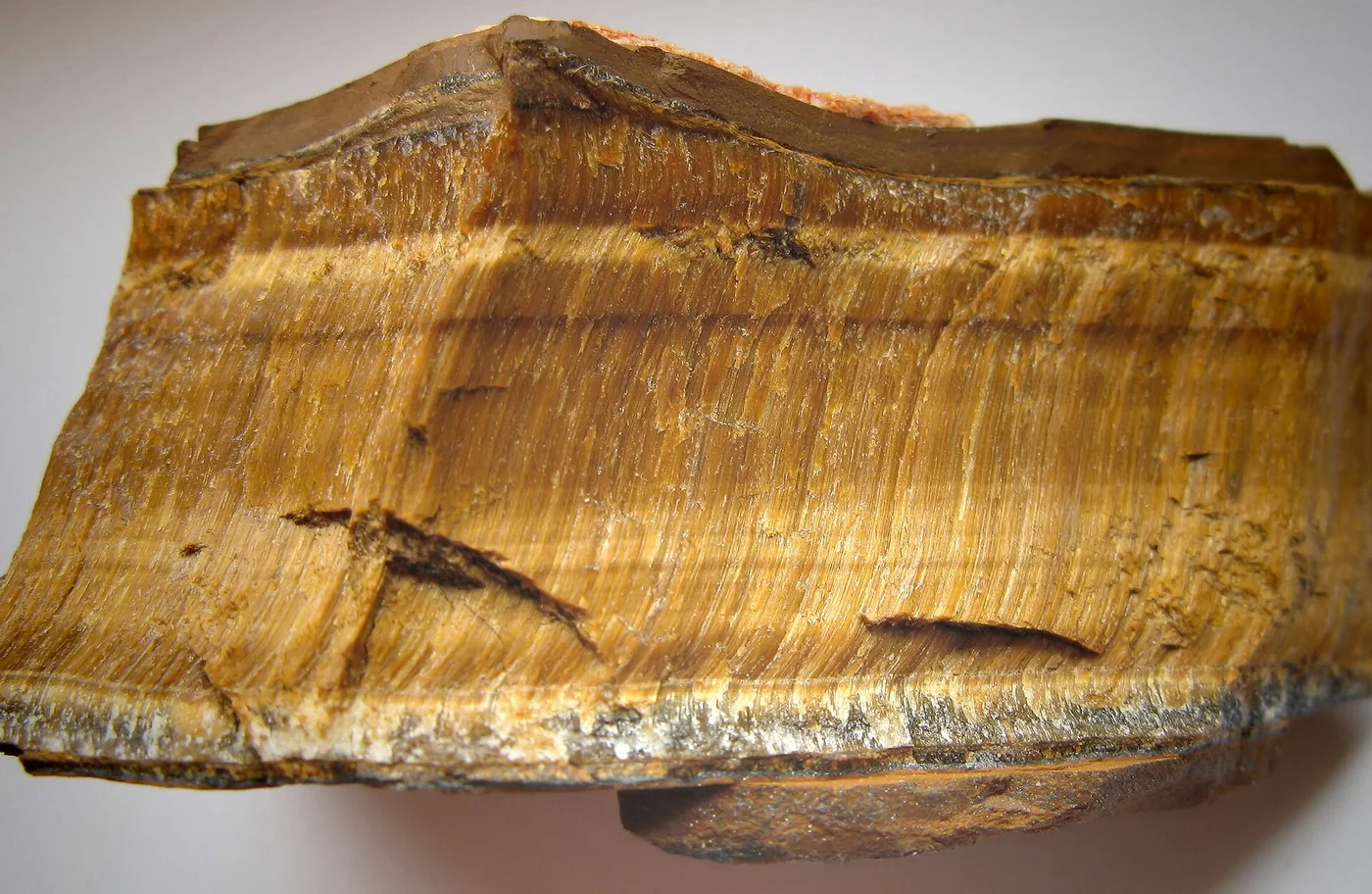
Tiger
Chemical formula – SiO₂
Hardness – 6.5–7
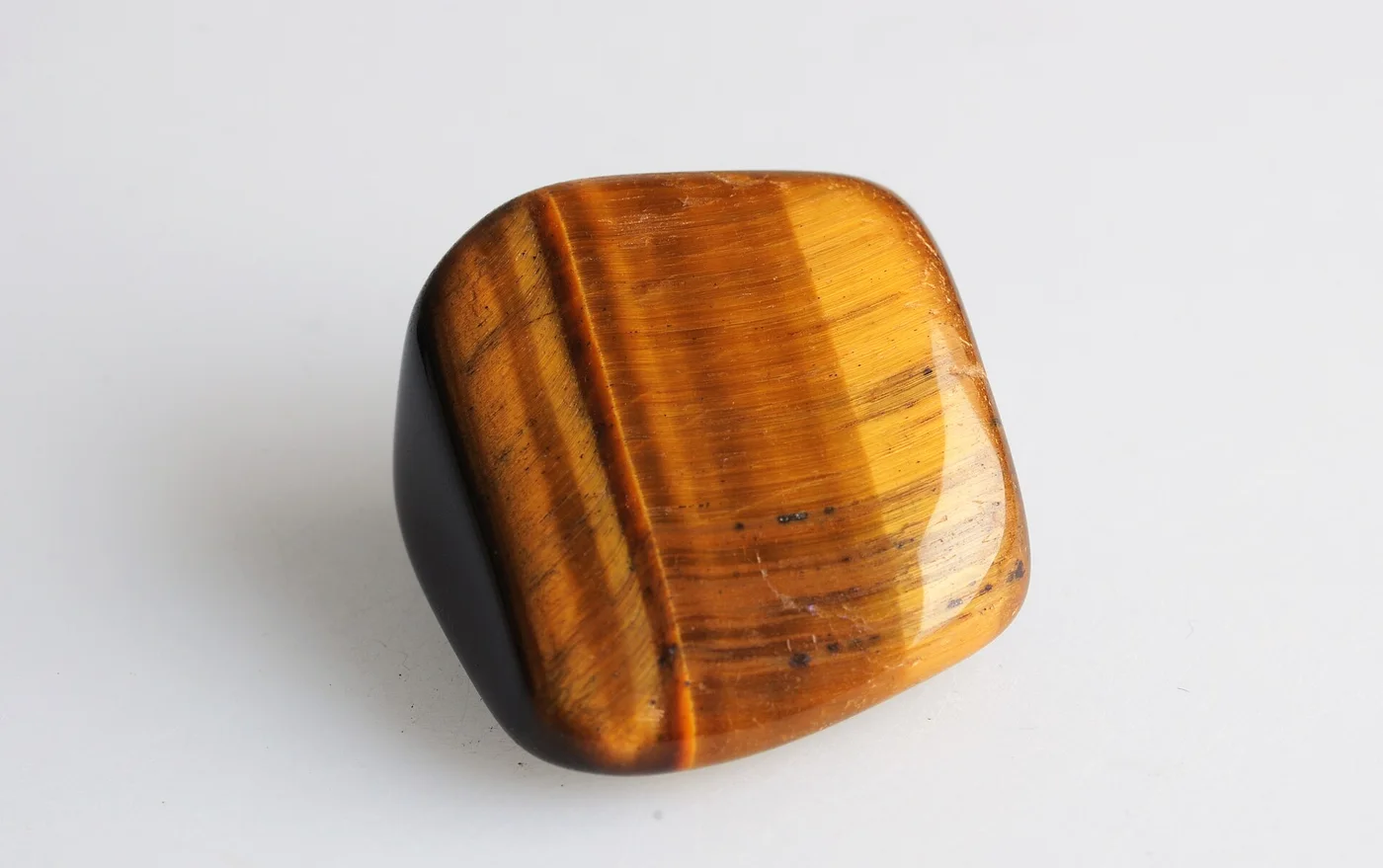
Colour – brown, golden, yellowTiger's eye is a fibrous, microcrystalline variety of quartz in a golden-brown tone. It is also called a pseudomorphic quartz: the stone formed when quartz kept the fibrous structure of the original mineral, crocidolite, and replaced it with iron oxides. Those fibres are what produce the cat's eye effect.
Tiger's eye is a common stone and therefore rarely faked: the market mostly offers natural material at a reasonable price.
Colour names deserve attention: tiger's eye is only ever golden. The reddish variety is called bull's eye, the blue one hawk's eye. Green, red and blue "tiger's eye" on the market is almost always dyed.
Origins
The two largest suppliers are Thailand and South Africa. The stone is also mined in Australia, Brazil, Canada, China, India, Korea, Myanmar, Namibia and Spain.
Properties
Esoteric practitioners say tiger's eye helps those who lack energy, feel tension and are troubled by stress. It is treated as a universal stone of luck.
Tradition links it with career progress and financial wellbeing for hard-working people. It is said to help finish what has been started — a book, a song, a project — and to strengthen creativity. Because of its golden look it is also considered a stone of willpower, purpose and self-worth.
Traditional healing properties
Lithotherapists say tiger's eye helps the body recover after surgery. Tradition links it with joint inflammation, asthma, a weak heart, depression, chronic fatigue and fears. Where women's conditions are concerned, it is treated as a preventive stone.
This describes traditional practice, not medical advice. A stone does not replace a doctor.
Chakras
Associated with the solar plexus chakra – manipura.
Which zodiac sign it belongs to
Traditionally tiger's eye is the stone of Leo and Taurus: for Leo it strengthens confidence and leadership, for Taurus patience and financial steadiness.
It also suits Sagittarius, who needs protection on frequent journeys.
In Charcho jewellery
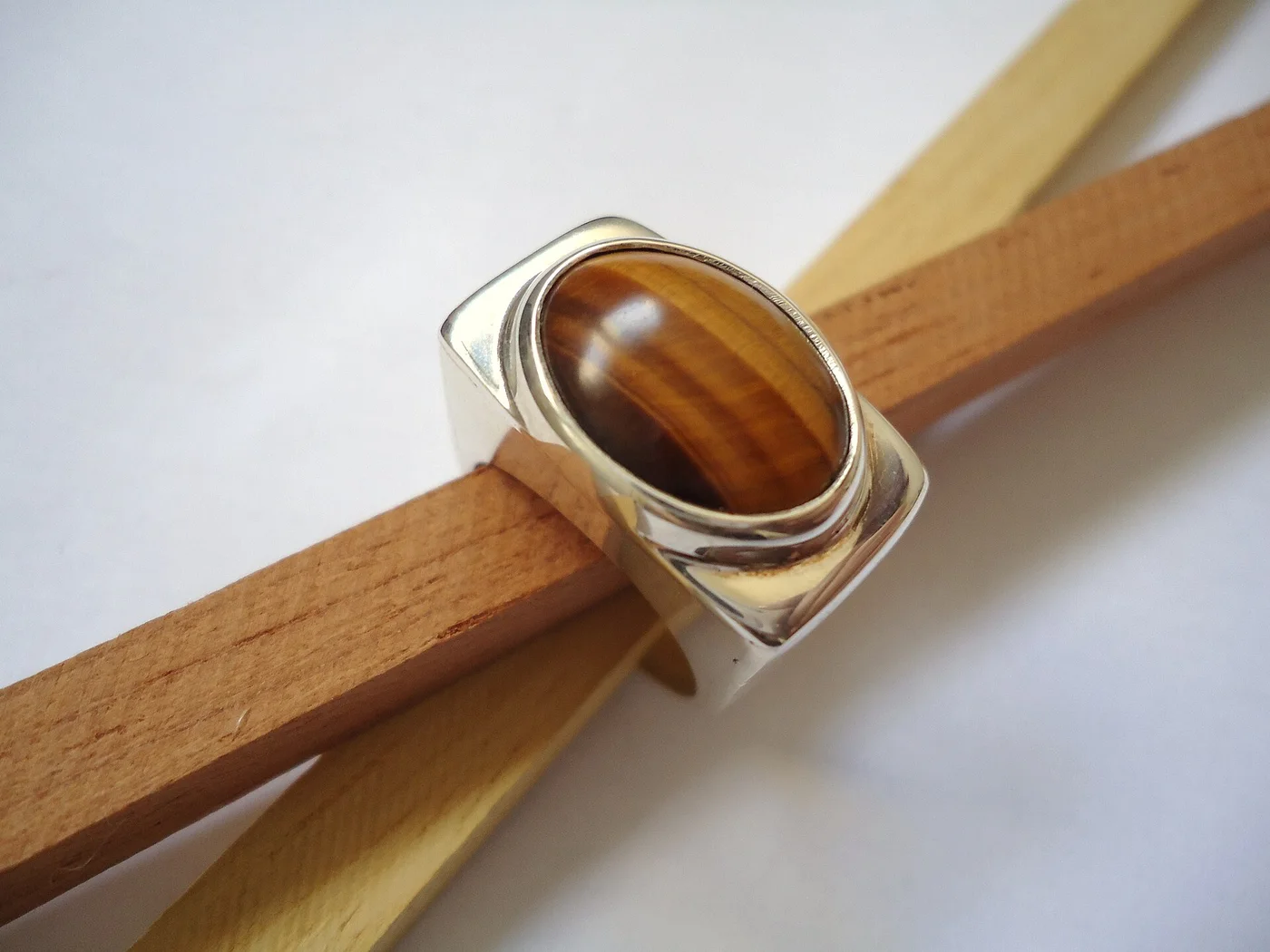
Tiger's eye works well in minimal, geometric forms: the bronze tone contrasts with silver and sits naturally in men's jewellery. Catalogue: necklaces.
Real or fake
- In a real stone the cat's eye line moves as you turn it and breaks into fibres.
- A dyed stone is even in colour and its fibres look blurred.
- "Iron tiger's eye" with hematite inclusions often lacks the characteristic effect.
- Glass gives itself away with bubbles and a flat shine.
Care
Hardness 6.5–7 allows daily wear. Keep it from long sun and chemicals so the colour does not fade. Clean with warm water and a soft cloth.
See also
-
Rutilated quartz
Chemical formula – SiO₂·TiO₂
Hardness – 7
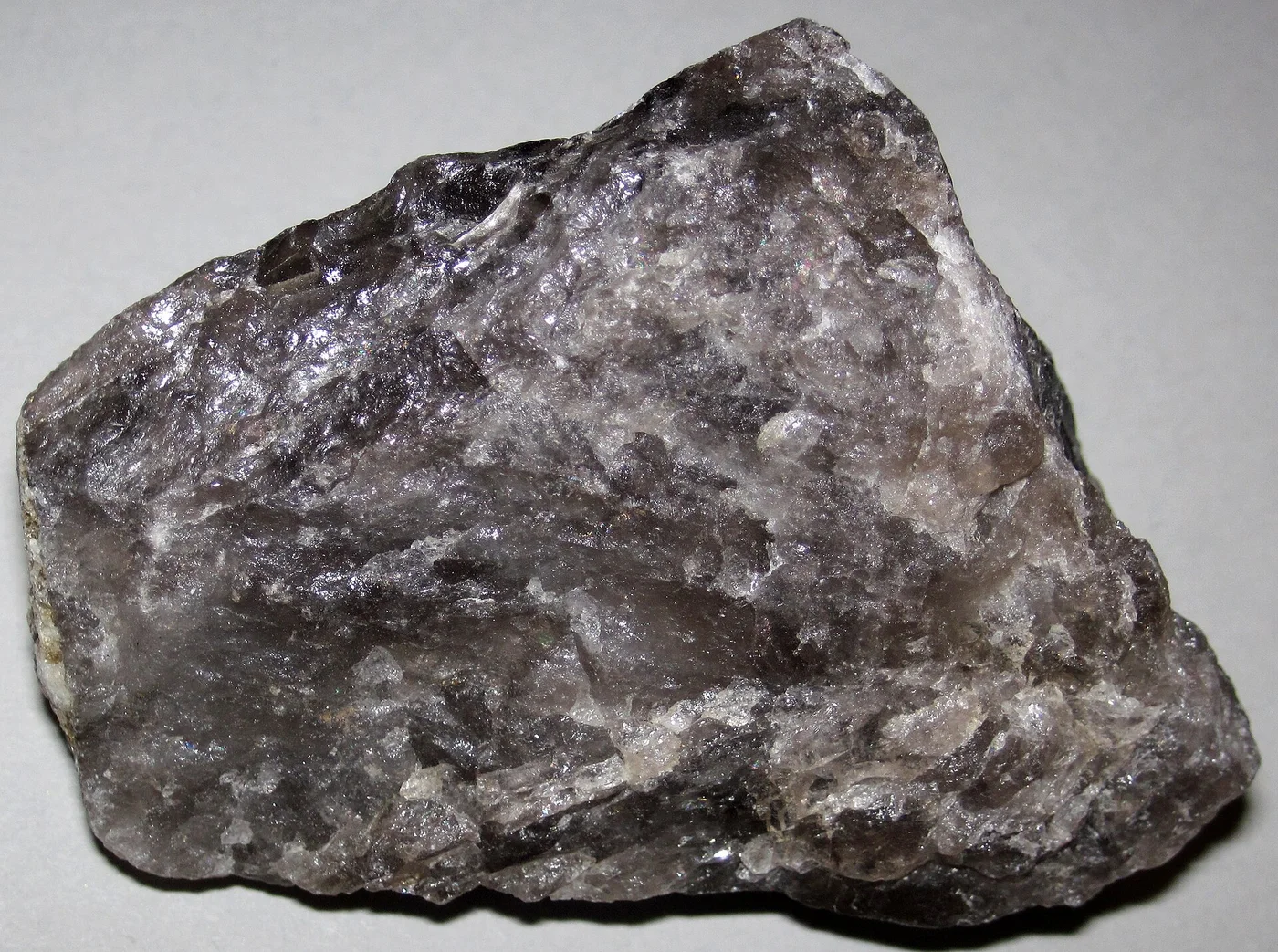
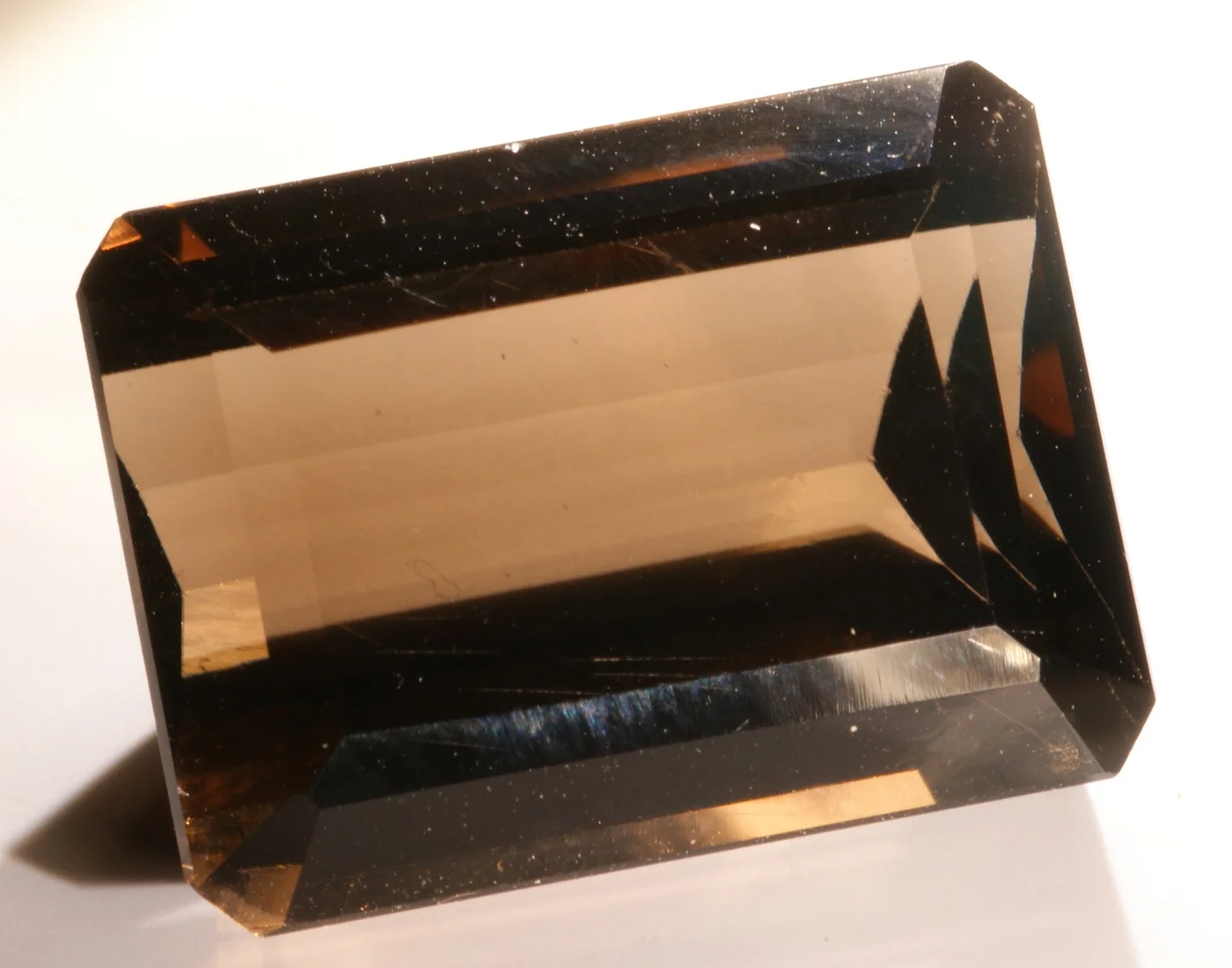
Colour – clear golden, with black or red inclusionsRutilated quartz has no official name — the trade often calls it "Venus hair". The name describes the look exactly: fine golden or black needles are locked inside a clear crystal.
Those needles are titanium dioxide, rutile. When the base is rock crystal the result is bright and sparkling; when it is smoky quartz the tone is darker and warmer. Tourmaline appears among the inclusions too, and such a stone is called tourmalinated quartz.
No two pieces of rutilated quartz look alike. Inclusions may be golden, black, red or yellow, fine or thick, arranged in symmetry or in complete disorder. That is why collectors prize the stone so highly.
Origins
This type of quartz turns up all over the world, but the largest quantities come from Madagascar and Brazil.
Properties
It is held that, like any quartz, rutilated quartz carries a strong vibration, and the inclusions amplify it. Esoteric practitioners say the stone supports creativity and the realisation of different ideas and goals.
Golden rutilated quartz is considered especially strong: it is said to help its owner move forward quickly in life. It is treated as a stone that strengthens energy, self-confidence and willpower.
Tradition also knows it as a strong protector: it is said to draw out negative energy accumulated in a person and to guard against taking more in from outside. Some claim the stone especially adds confidence and charm to women.
Traditional healing properties
Traditionally, healers say rutilated quartz supports longevity and strengthens immunity. In their account, wearing it raises the energy of the whole body and brings it into harmony — particularly during fatigue and a lack of strength.
This describes traditional practice, not medical advice. A stone does not replace a doctor.
Chakras
It is held that rutilated quartz can be used with every chakra, but it suits the solar plexus – manipura – best.
Which zodiac sign it belongs to
Modern astrologers say rutilated quartz belongs to any sign: it is a universal choice. It is especially recommended to those who lack energy and self-confidence, and to anyone starting something new.
In Charcho jewellery
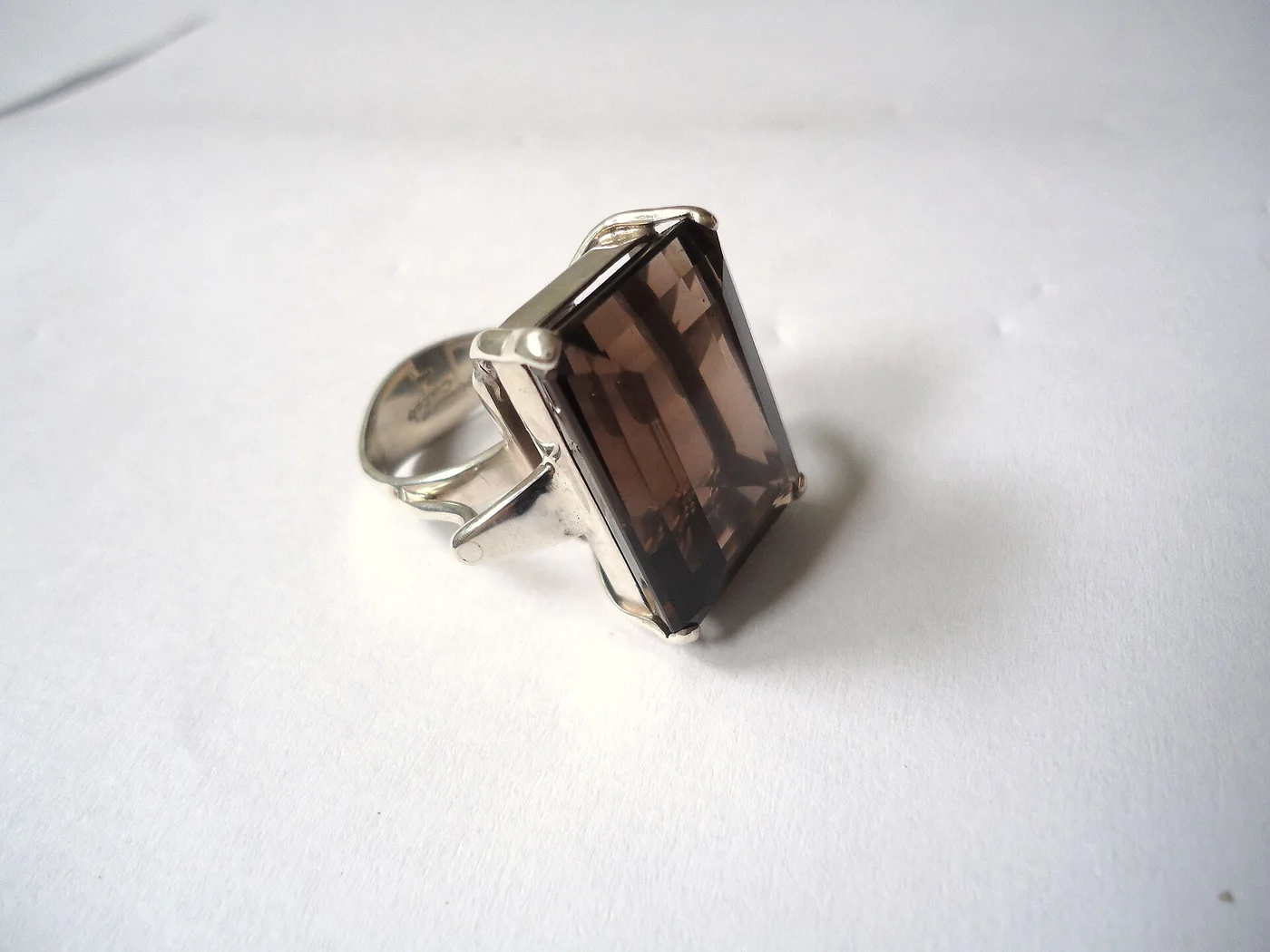
Rutilated quartz interests us precisely because each stone is unique: no two necklaces are the same. Catalogue: necklaces.
Real or fake
- In a real stone the inclusions are three-dimensional: changing the angle reveals depth.
- In glass the needles are flat and look drawn onto the surface.
- Bubbles and an even shine are signs of glass.
- A too-clean, "perfect" piece is often synthetic.
Care
Hardness 7 allows daily wear. Keep it from sharp temperature swings and knocks: the lines of inclusion are a weak point. Clean with warm water and a soft cloth, and skip the ultrasonic cleaner.
See also
-
Enstatite
Chemical formula – Mg₂Si₂O₆
Hardness – 5.5
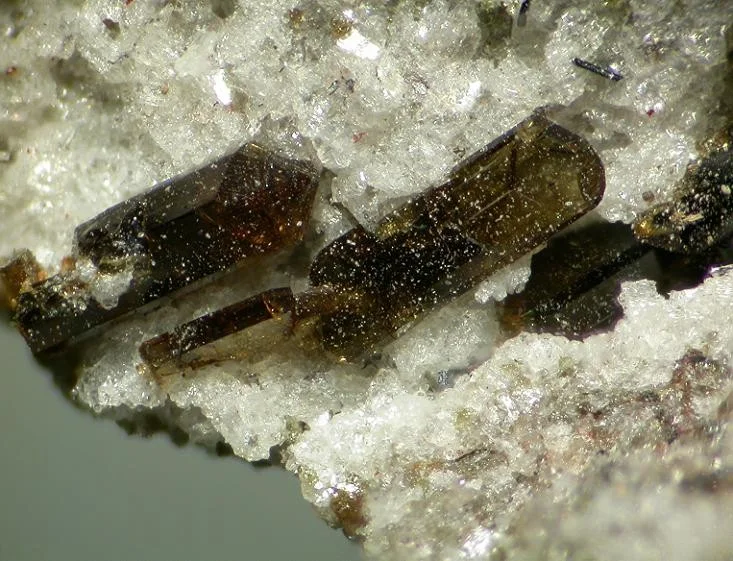
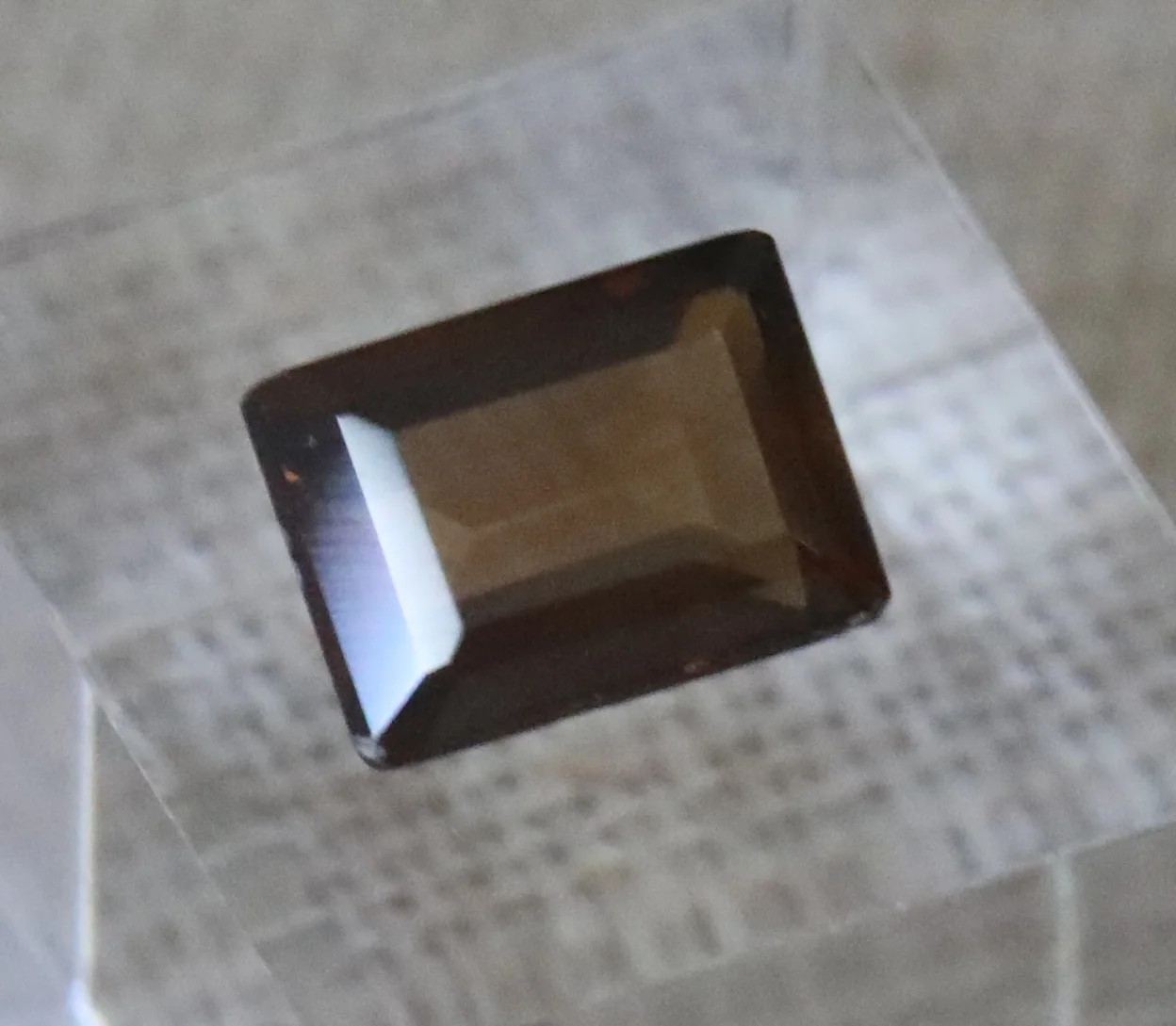
Colour – brown, golden, greenEnstatite is a silicate from the pyroxene family. It was first described in 1855 by the German mineralogist Gustav Adolf Kenngott, who named it from the Greek "enstates" — an opponent, or something that stands firm. The name suits the stone: it resists breaking and holds up under high temperatures.
Colour depends on iron content and runs from pale green-brown to deep bronze. Now and then an enstatite turns up with a cat's eye effect. The stone is not rare, but fully transparent pieces are expensive, which is why collectors value it more than the mass jewellery market does.
Origins
It is mined in Australia, Brazil, Canada — Labrador in particular — France, Germany, India and the USA. African deposits tend to give darker, olive-toned pieces.
Properties
Esoteric practitioners call enstatite an energy stone, which is why it is nicknamed the source of energy. It is said to help the owner reach goals and establish a place in the world.
It is said to work especially well for shy people who fear speaking their mind and showing themselves. The stone is credited with dissolving complexes and gradually adding confidence. Its vibration is considered fairly strong, so some suggest wearing it in moderation rather than all day.
Traditional healing properties
Lithotherapists say enstatite has a good effect on the urinary and digestive systems. Tradition links it with balanced function of the stomach, liver, gallbladder, bladder and pancreas.
This describes traditional practice, not medical advice. A stone does not replace a doctor.
Chakras
Associated with the solar plexus chakra – manipura.
Which zodiac sign it belongs to
Traditionally enstatite suits every sign. It is said to work especially well for those who lack the fire element — that is, everyone except Aries, Leo and Sagittarius.
It also suits Cancer, who often lacks energy and the habit of defending themselves, and Pisces, who tend to absorb other people's energy.
In Charcho jewellery
We have no finished piece with enstatite yet, but we take custom orders: a bronze cabochon sits well in a silver setting and works for a ring. Catalogue: necklaces.
Real or fake
- In a natural stone light and dark bands alternate unevenly; a perfectly even colour should raise questions.
- Glass gives itself away with bubbles and a flat shine.
- A cat's eye effect in natural stone is a thin, moving line, not a printed pattern.
- Hardness 5.5: ordinary glass scratches more easily.
Care
Hardness 5.5 allows daily wear if you protect the stone from knocks. Keep it away from ultrasonic cleaners, acids and perfume. Warm water, a soft cloth and natural drying are enough.
See also
-
Rose quartz
Chemical formula – SiO₂
Hardness – 7
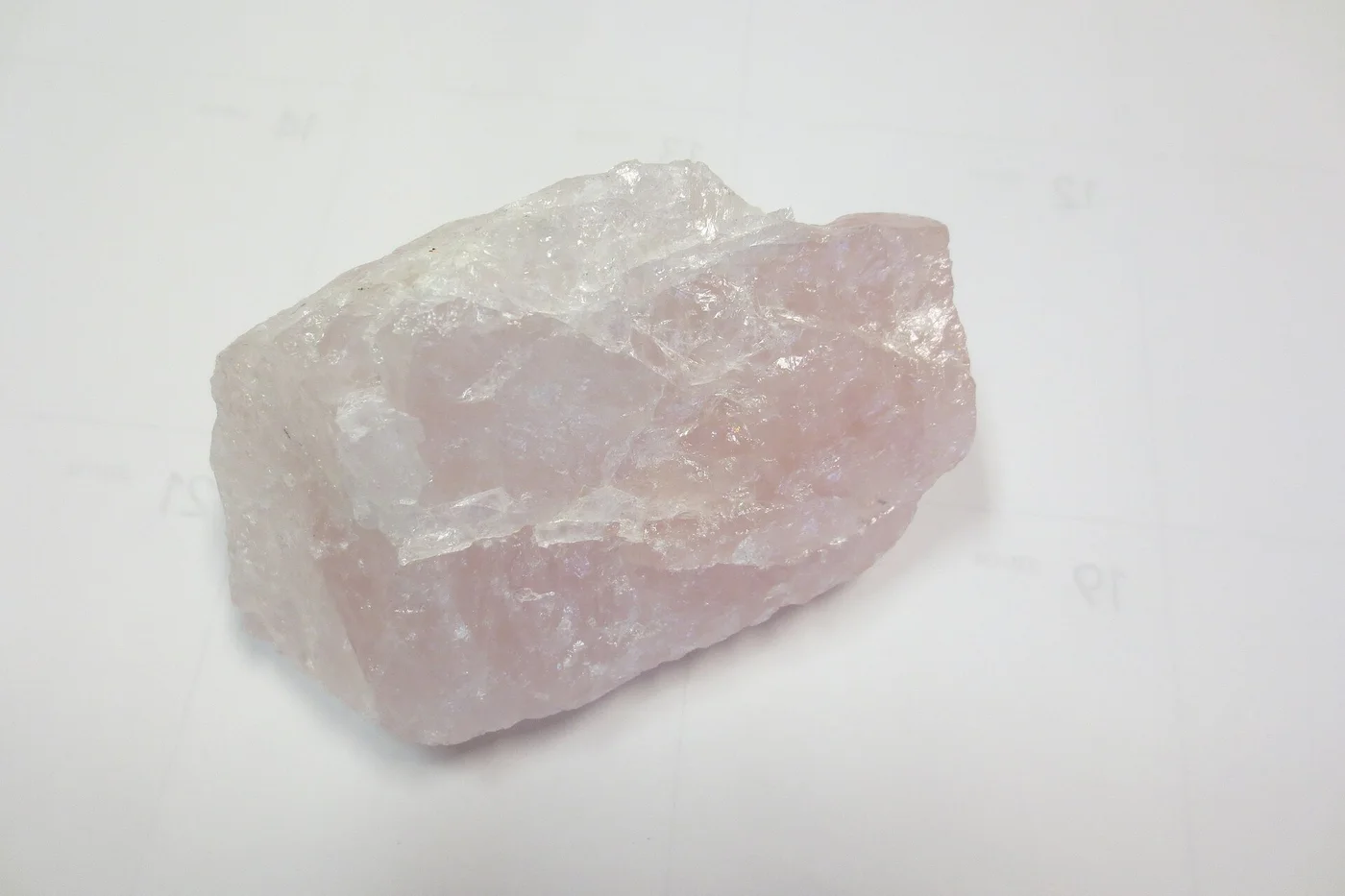
Colour – pale and deep pinkRose quartz is one of the most recognisable members of the quartz family. The colour runs from pale pink to a deep, almost pink-red tone, and appears in both transparent and cloudy pieces.
The shade comes from traces of titanium, iron and aluminium in the crystal lattice. That is exactly why the stone loses colour in sun and heat — it is a property, not a flaw.
Now and then rose quartz shows an asterism, a star effect. Such pieces are called star rose quartz; they barely reach the market and cost a great deal.
Origins
The largest deposits are in Brazil, where the stone is mostly a gentle pale pink. Madagascar yields clearer, cleaner pieces. Rose quartz is also mined in India, Germany and the USA.
Properties
Tradition treats rose quartz as the stone of love. It is said to strengthen a couple's relationship and to help those still looking for a partner. Esoteric practitioners call it the stone of tender feeling and warmth.
It is easy to wear: rose quartz suits almost everyone, especially people who struggle with communication and relationships. A piece kept at home is said, by tradition, to soften relations between those living together and to add warmth to a space.
Traditional healing properties
Lithotherapists say rose quartz has a good effect on the cardiovascular system and on the work of the heart and brain. Wearing it near the heart is linked with emotional stability and harmony. Tradition also knows it as a calming stone for the nervous system and recommends it for hyperactive children.
This describes traditional practice, not medical advice. A stone does not replace a doctor.
Chakras
Associated with the heart chakra – anahata.
Which zodiac sign it belongs to
Traditionally rose quartz is the stone of Taurus and Libra: Venus rules both signs, and the stone answers precisely to the theme of love and beauty.
It also suits Cancer, for whom emotional warmth is natural, and Pisces, who often need to protect their own boundaries.
In Charcho jewellery
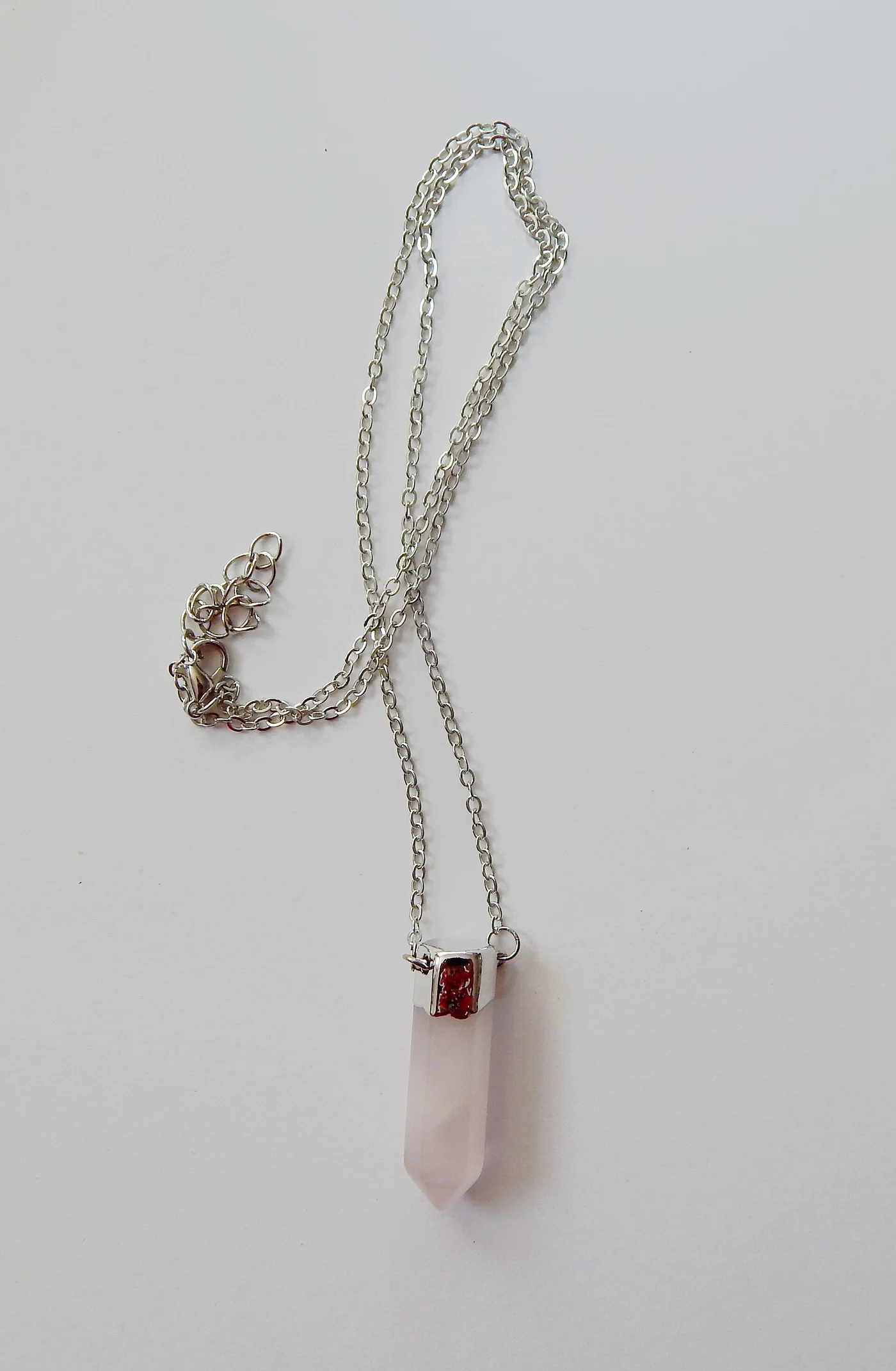
Rose quartz is one of our most requested stones: the soft colour sits well with silver and with minimal forms. Catalogue: necklaces.
Real or fake
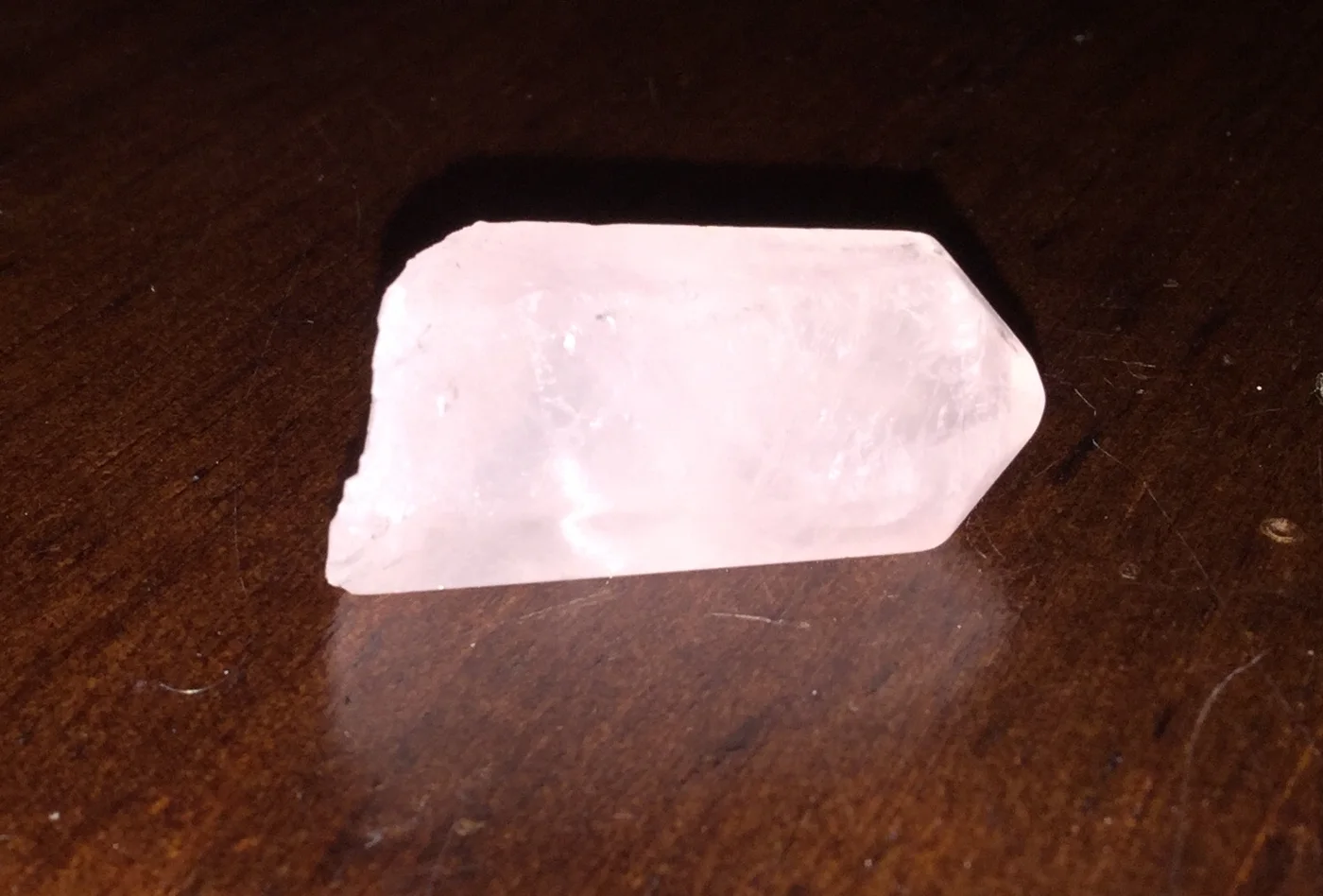
- Natural stone is often cloudy, with milky zones and uneven colour inside.
- Pink glass is perfectly uniform and contains bubbles.
- A dyed stone holds colour more densely at the edges and in cracks.
- Turning a natural stone does not change its colour — a shifting shade points to glass or a coating.
Care
Hardness 7 allows daily wear. The main rule is sun: long direct light weakens the colour. Keep it from ultrasonic cleaners and chemicals, and clean with warm water and a soft cloth.
See also
-
Variscite
Chemical formula – AlPO₄·2H₂O
Hardness – 4–5
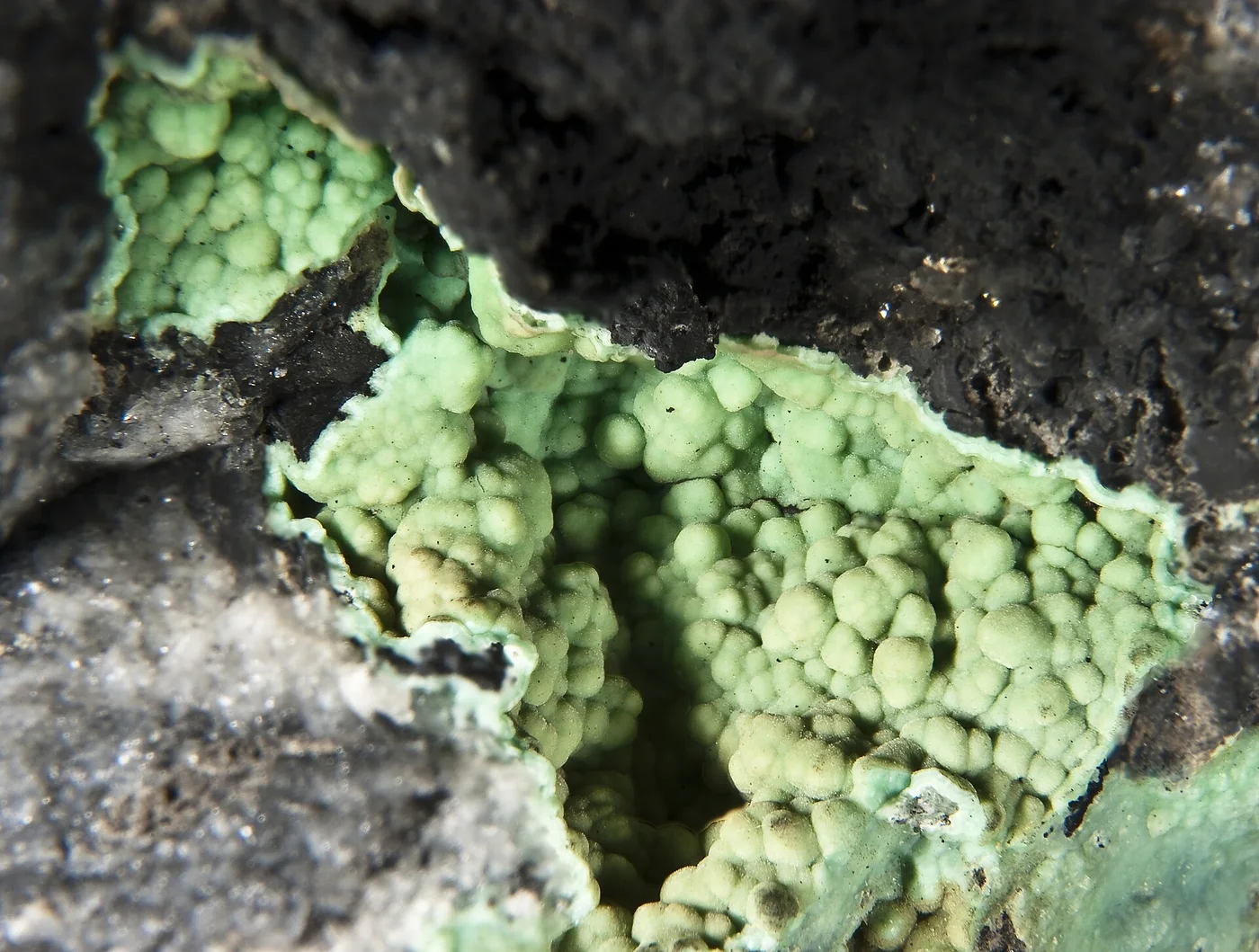
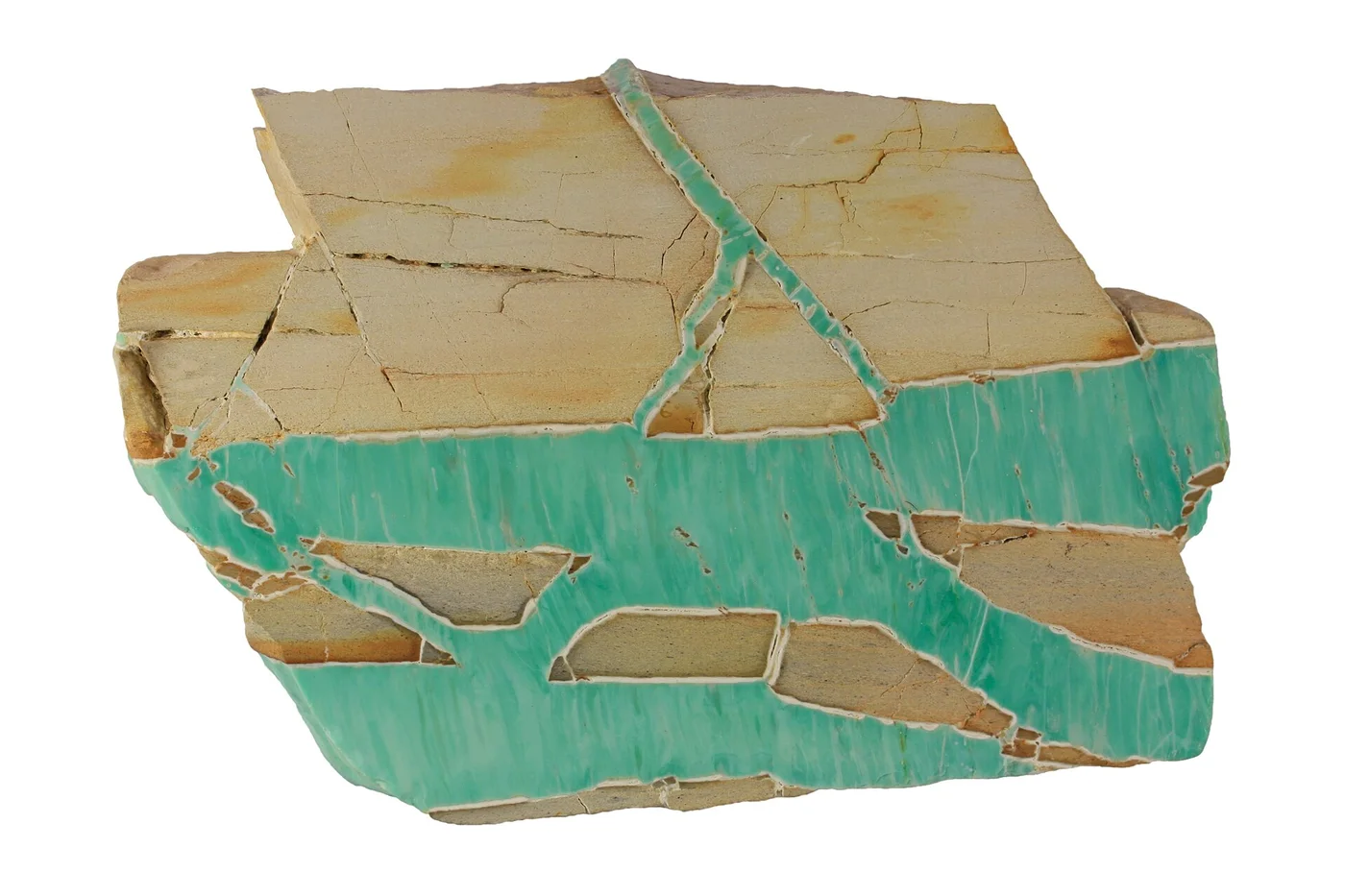
Colour – green, blue, yellow, mottledVariscite belongs to the rare phosphate minerals and today counts among the most expensive collector stones. The name comes from the Latin "Variscia", the historical name of Vogtland in Saxony, where the stone was first described in 1837.
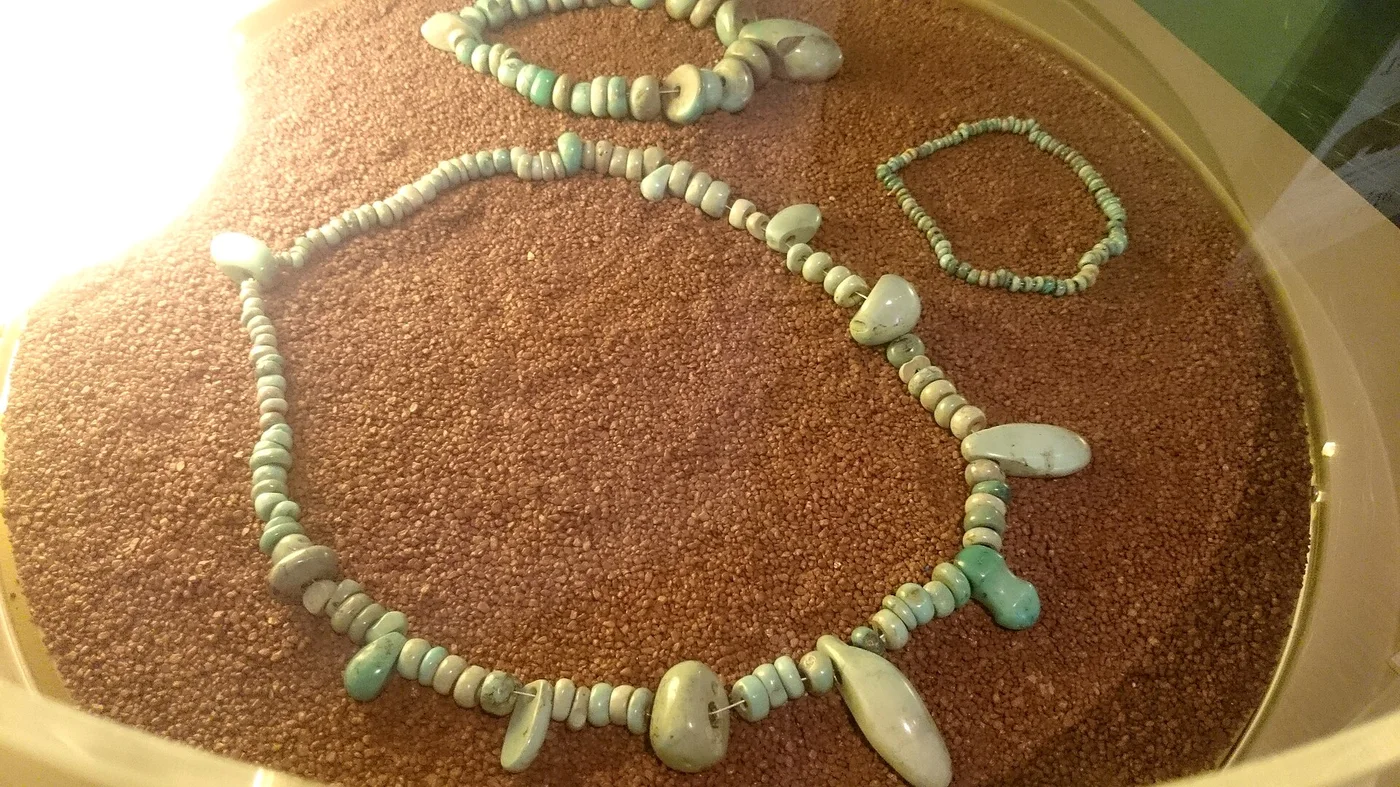
Visually variscite resembles turquoise, which is why the two are so often confused on the market. The difference lies in colour and hardness: variscite has a stronger green cast and is far softer.
Colour often spreads in patches, with yellow, blue or white zones appearing over a green ground. That mottled pattern is what turns a good piece into a collector's item and pushes the price up quickly.
Origins
It is mined in the USA — Utah above all — as well as Australia, Germany, France, Poland, Spain, Sweden, Russia and Brazil. The Utah deposits are known as "utahlite", a pale green variety of variscite.
Properties
Esoteric practitioners say variscite brings calm and harmony into life. Because of its link to the heart chakra it is treated as a stone of love — not passion, but quiet, accepting love.
It is said to be especially good for quick-tempered people who are prone to argument: the stone helps them pause before the word is spoken. Some keep a piece at home for peace around the family hearth.
Traditional healing properties
Lithotherapists say variscite is useful for problems with the heart, circulation and nervous system. Tradition links it with evening out heart rhythm and releasing emotional tension.
This describes traditional practice, not medical advice. A stone does not replace a doctor.
Chakras
Associated with the heart chakra – anahata.
Which zodiac sign it belongs to
Variscite suits every sign, but tradition especially recommends it to the fire signs — Leo, Sagittarius and Aries. They are the ones who most often need a stone that softens temperament.
In Charcho jewellery
We do not work with variscite yet: the stone is expensive and rarely available in steady quality. If you like the effect of a green phosphate, write to us and we will discuss a custom order. Catalogue: necklaces.
Real or fake
- Natural variscite carries dark veins and lines across the surface; a perfectly clean face is rare.
- Turquoise is denser and looks "drier", while variscite has a soft, waxy lustre.
- "Green regalite", often sold as variscite, is an artificial material: even colour and a porous surface.
- A real stone is cool in the hand and warms slowly.
Care
Hardness 4–5 is low: the stone is a poor choice for a ring and takes knocks easily. Keep it away from perfume, lacquer, ultrasonic cleaners and long contact with water. A soft, slightly damp cloth and natural drying are enough.
See also
-
Dioptase
Chemical formula – CuSiO₂(OH)₂
Hardness – 5
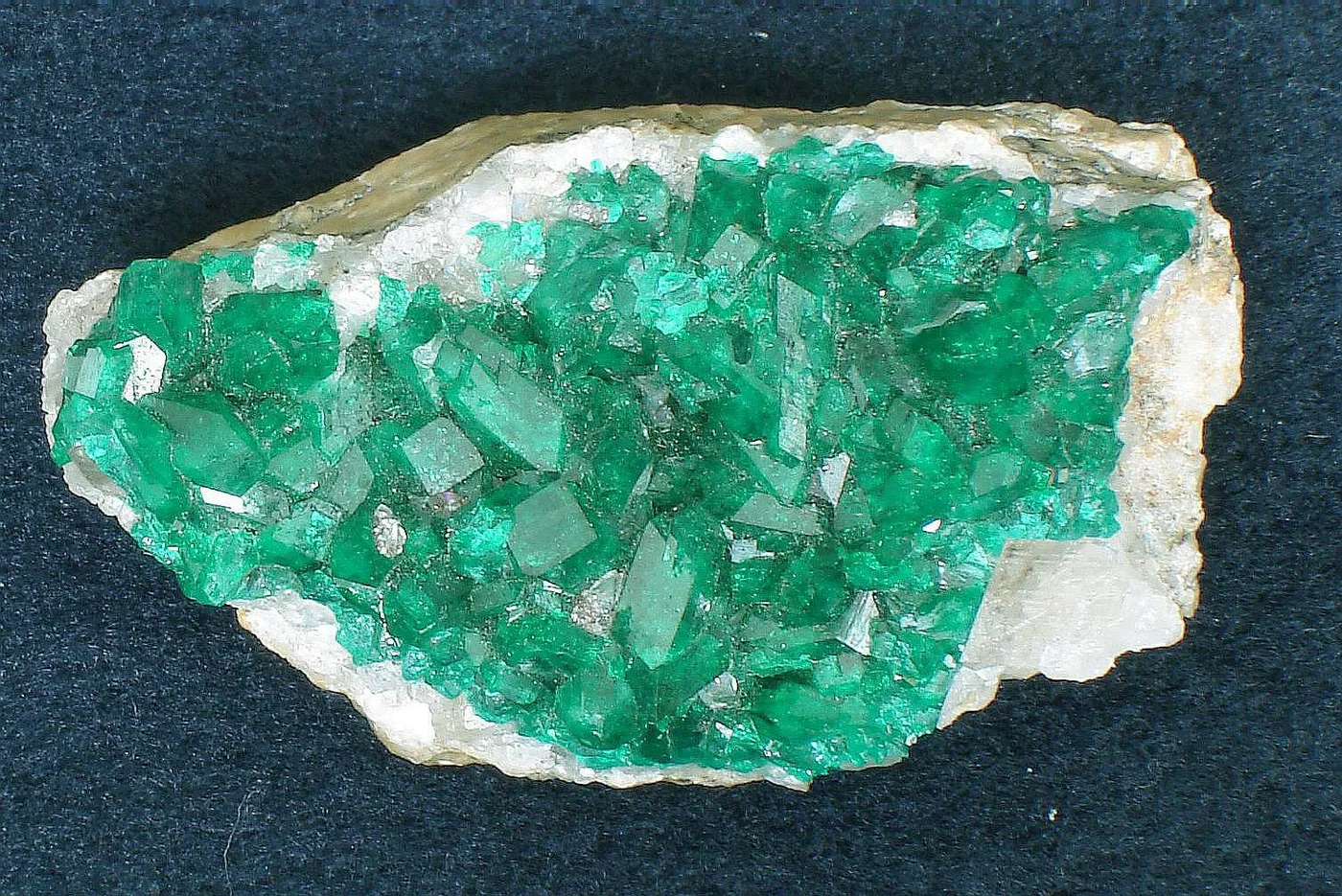
Colour – green, emerald greenIn the late eighteenth century Russian copper miners became convinced they had found an emerald deposit in the Ural Mountains, and sent samples to Moscow for testing. The laboratory found that the unfamiliar mineral was not emerald at all.
In 1797 a French mineralogist, after a detailed study, established that the green mineral was entirely new to science. He also built its name from Greek: dia, "through", and optos, "seen".
Dioptase is a fairly rare mineral and is often called the emerald's younger brother. That resemblance is exactly why you still find shops selling dioptase as emerald.
Origins
Dioptase is mined in Chile, Kazakhstan, Namibia, Peru, Arizona and Congo.
Properties
Esoteric writers hold that dioptase is used to restore energy and suits emotional people. It is said to take negative energy and stress off its owner.
Practitioners say that with dioptase a person can raise self-esteem and allow themselves to enjoy life.
Traditional healing properties
Lithotherapists say dioptase is good for heart problems and for nervous and panic attacks. It is credited with improving circulation, memory and concentration. On the whole dioptase is considered a stone of health.
This describes traditional practice, not medical advice. A stone does not replace a doctor.
Chakras
Associated with the heart chakra – anahata.
Which zodiac sign it belongs to
Dioptase is said to work well for Capricorn and Virgo.
Astrologers do not advise Aries to wear dioptase regularly: Aries should put it on only from time to time.
In Charcho jewellery
Hardness 5 means that in an everyday ring dioptase will scratch quickly. We therefore see it more in a pendant or earrings, where the stone meets fewer hard surfaces. We have no finished piece with dioptase yet, but we make to order. Catalogue: necklaces.
Real or fake
- Dioptase is often sold as emerald — the price gap can be tenfold.
- Natural dioptase is a deep, almost blue-green, with visible cracks; a flat, dead colour points to glass.
- Filled or dyed stones are cheaper but suffer quickly from moisture and heat.
- A suspiciously clean, cheap "dioptase" is almost always synthetic or glass.
Care
Hardness 5 makes the stone soft, so store it separately. Warm water, a soft cloth and mild soap are enough. Skip acids, ammonia and ultrasonic — they widen the cracks in dioptase.
See also
-
Diopside
Chemical formula – MgCaSi₂O₆
Hardness – 5.5–6.5
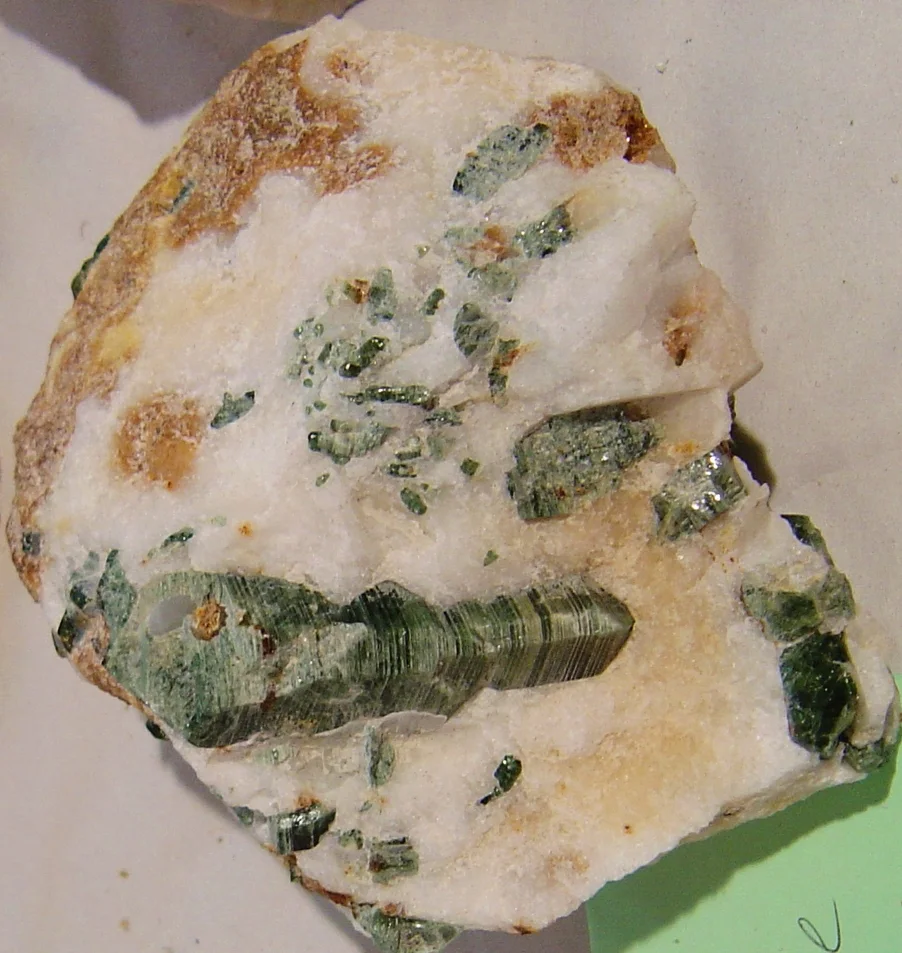
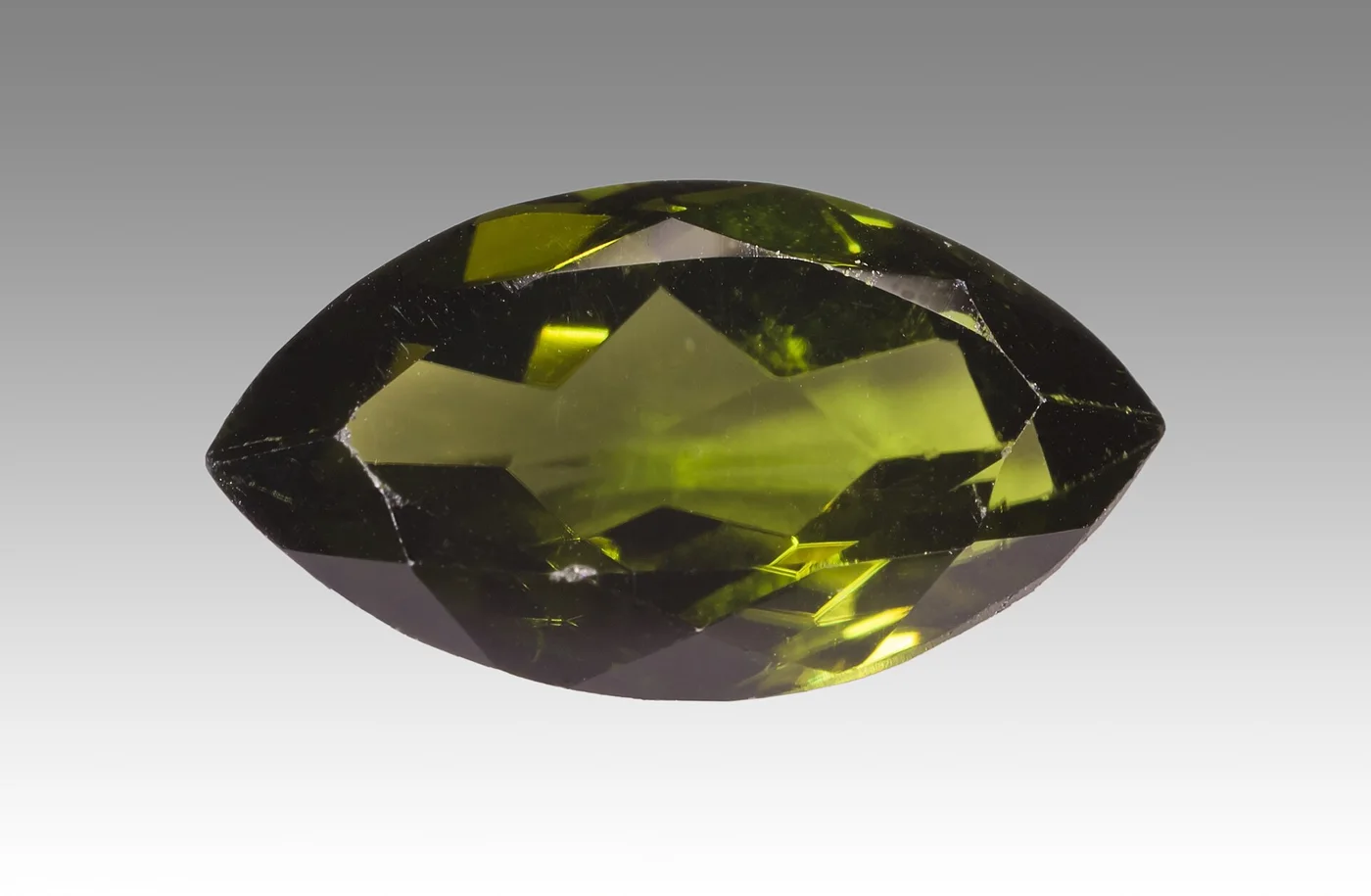
Colour – shades of greenDiopside belongs to the pyroxene group. Its best-known variety is chrome diopside: a vivid green crystal, usually used cut and polished as a "eye" stone.
To keep the colour saturated, diopside is cut mostly in small sizes — up to about two carats. The stone is not common on the market: its hardness makes jewellers wary, yet collectors prize the green and skilled makers still set it.
Diopside is among the rare stones that produce cat's-eye and asterism varieties, thanks to fine needle-like inclusions.
Origins
Most high-quality diopside comes from Russia, from Siberia. It is also found in Canada, Burma, Australia and Brazil.
Properties
Esoteric writers call diopside the stone of reconciliation and forgiveness. It is said to awaken a person's sensitive side — which is why it is often given to people who are harsh, cold, closed off or stubborn.
Diopside is said to bring happiness and joy. It suits especially those who struggle to find a purpose and their place in life.
Traditional healing properties
Lithotherapists use diopside to improve immunity, to support circulation, for faster recovery after illness and to lift the tone.
This describes traditional practice, not medical advice. A stone does not replace a doctor.
Chakras
Associated with the heart chakra – anahata.
Which zodiac sign it belongs to
Astrologers say diopside suits Pisces, Gemini and Virgo especially well.
Those signs are traditionally read as the emotional and the analytical types, and diopside works right where those two meet. No sign is barred from the stone, though.
In Charcho jewellery
A cabochon is the natural cut for diopside — all the more so when the stone shows a cat's-eye. Everyday wear in a ring is risky, so a pendant or earrings is the safer choice. We have no finished piece with diopside yet, but we make to order. Catalogue: necklaces.
Real or fake
- What traders call "Siberian emerald" is in fact diopside; the name is marketing and has nothing to do with emerald.
- Green chrysoprase, prehnite and glass are often sold as diopside.
- Natural stone carries fibrous inclusions and micro-cracks; a flawless cheap sample raises questions.
- A star in a natural stone is soft and moves in the light — a printed star gives the fake away.
Care
Hardness 5.5–6.5 means the stone scratches easily and needs separate storage. Warm water, a soft cloth and mild soap are enough. Skip ultrasonic, steam and acids, and take the piece off for sport.
See also
-
Grossular — Grossularite
Chemical formula – Ca₃Al₂(SiO₄)₃
Hardness – 6.5–7
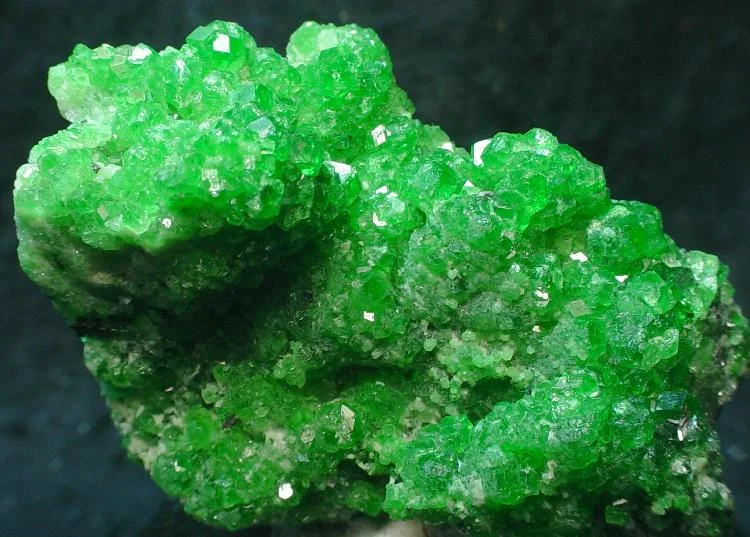
Colour – brown, yellowish orange, greenishGrossular is the most many-faced member of the garnet family. The name comes from Latin grossularia, gooseberry: the green variety has the colour of that berry. In Georgian the stone is usually just called "dzots", garnet.
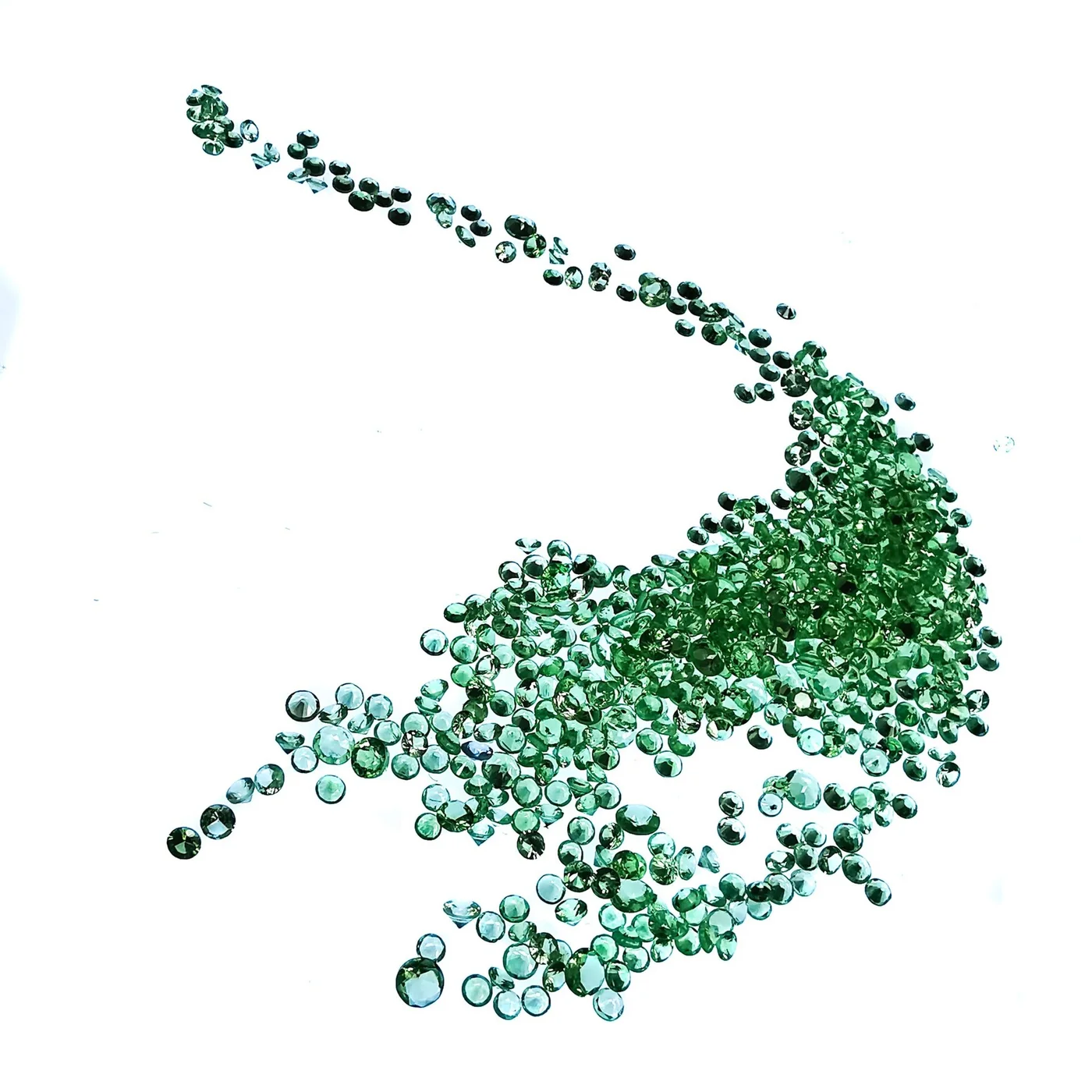
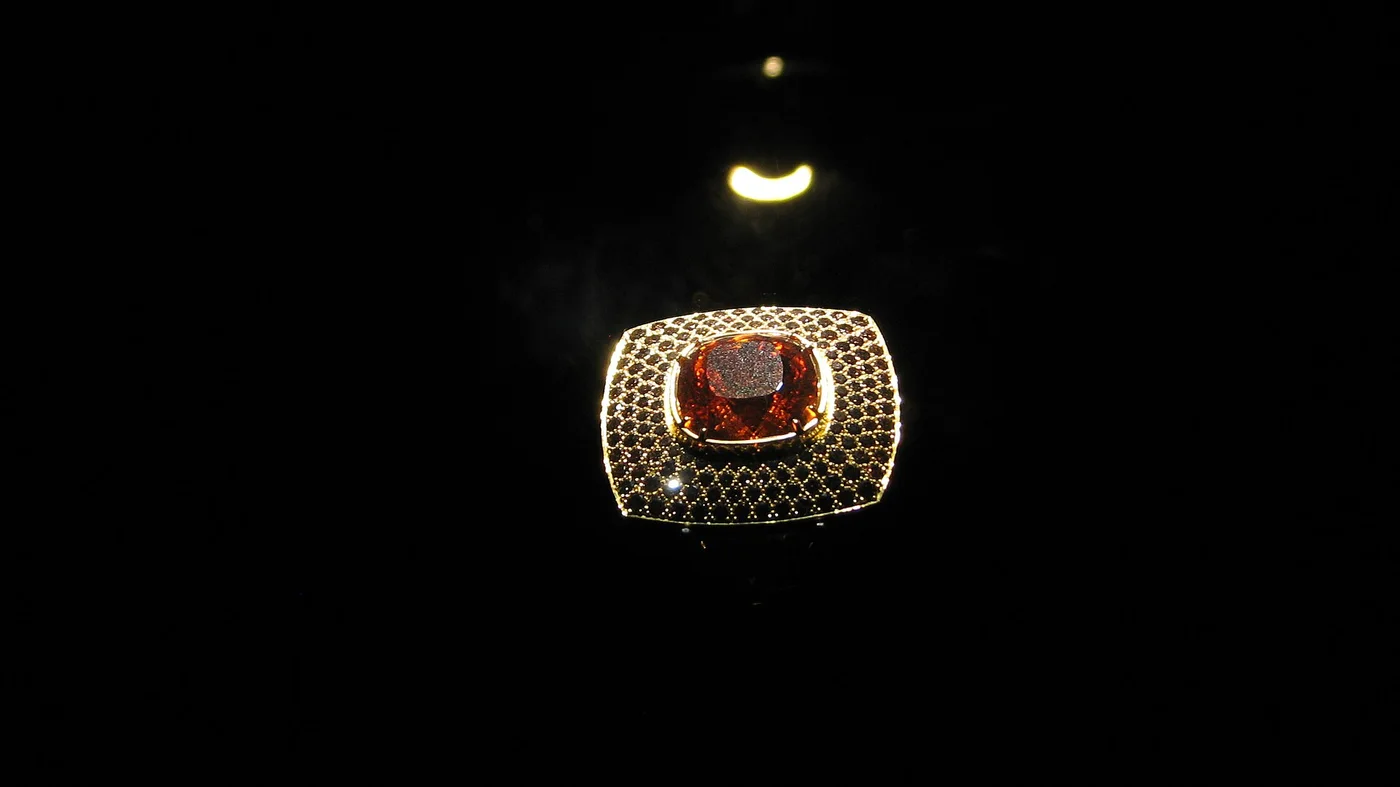
Most people picture grossular as a brown stone, yet two famous gems belong to this species: tsavorite — a transparent emerald-green — and hessonite, orange-red with a "cinnamon" tone.
Colour sets the price. Tsavorite is the most expensive and can cost no less than emerald; ordinary brown grossular is affordable and is usually cut as a cabochon.
Origins
Most grossular comes from Kenya and Tanzania. Rich deposits are also found in Italy, Siberia, the United States and Canada.
The main source of tsavorite is Kenya's Tsavo region, which gave the stone its name.
Properties
Esoteric writers say the charge of grossular depends on colour, though all varieties share a common core. It is considered a stone of hope, momentum, finance, abundance and success.
By the same tradition grossular works especially well for business people, creative professionals, researchers and scientists — those whose work begins with an idea and ends with a result.
Traditional healing properties
Modern lithotherapists use the colours differently: hessonite to lift the tone, tsavorite to calm and balance the nervous system. The shared list mentions metabolism and the circulation of fluid in the body.
This describes traditional practice, not medical advice. A stone does not replace a doctor.
Chakras
By colour: green grossular – the heart chakra, anahata; red – the first and second chakras, muladhara and svadhisthana.
Which zodiac sign it belongs to
Astrologers say grossular, like every garnet, is a stone of Aquarius, though other signs can wear it too.
If you trust the signs, Aquarius comes first; everyone else should choose by colour — green tsavorite and red hessonite have different characters and answer to different people.
In Charcho jewellery
Warm orange tones sit well with gold; green tsavorite with silver and white gold. We have no finished piece with grossular yet, but we make to order. Catalogue: necklaces.
Real or fake
- Tsavorite is often confused with emerald and chrome tourmaline — the price gap can be tenfold.
- Glass and synthetic garnet are the most common imitations on the market.
- Natural grossular has inclusions; a flawless stone at a low price is a question mark.
- Dyed quartz is often sold as "hessonite" — even colour and a low price give it away.
Care
Hardness 6.5–7 is enough for everyday wear. Warm water, a soft brush and mild soap will do. Keep it away from sharp temperature swings and steam; ultrasonic is fine only if the stone has no cracks.
See also
-
Demantoid
Chemical formula – Ca₃Fe₂(SiO₄)₃
Hardness – 6.5–7.5
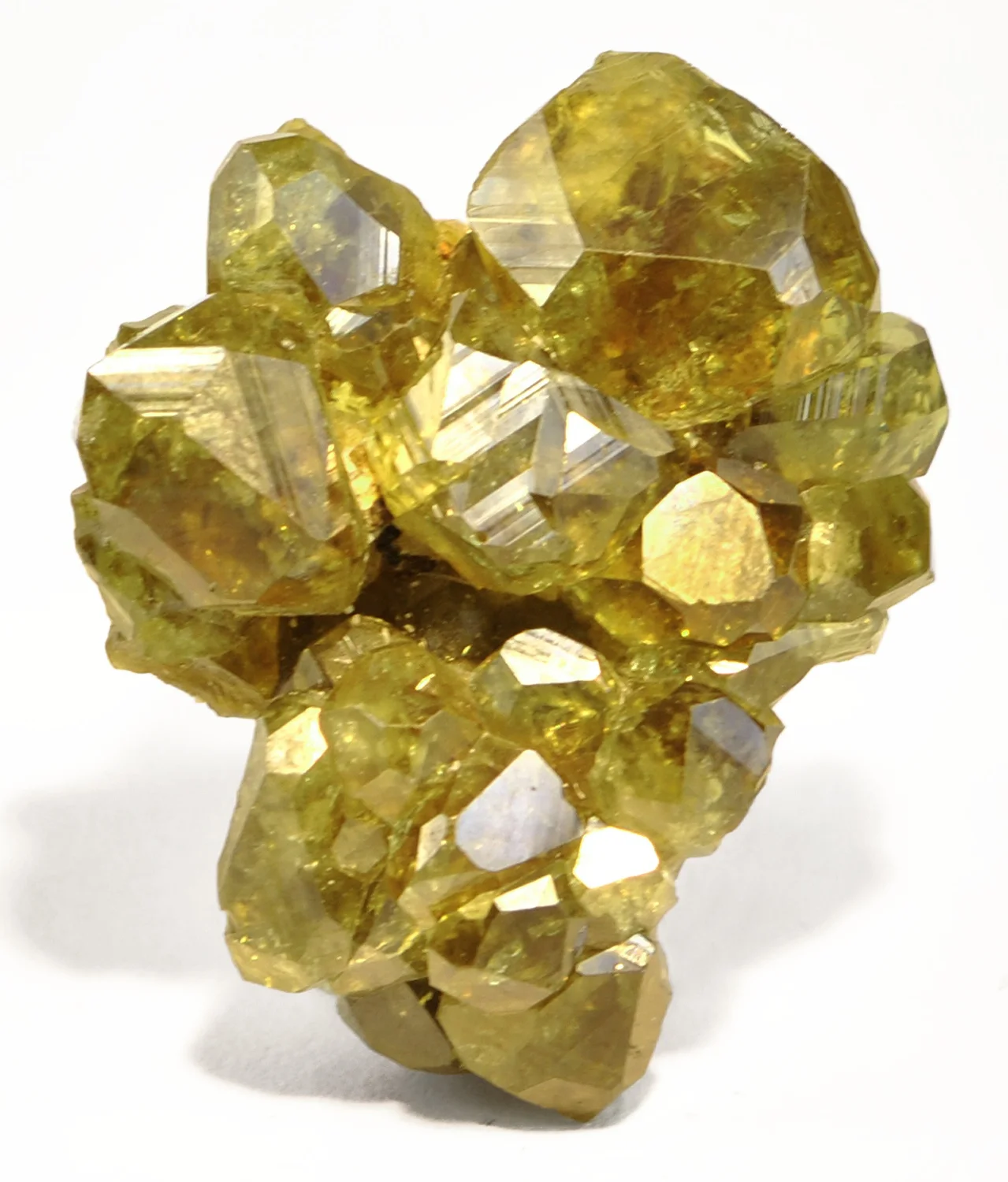
Colour – yellow-green, emerald greenDemantoid is the green variety of andradite, a garnet, and the rarest and most expensive member of that family. The name comes from the German Demant, diamond: the stone's brilliance and fire really do recall a diamond.
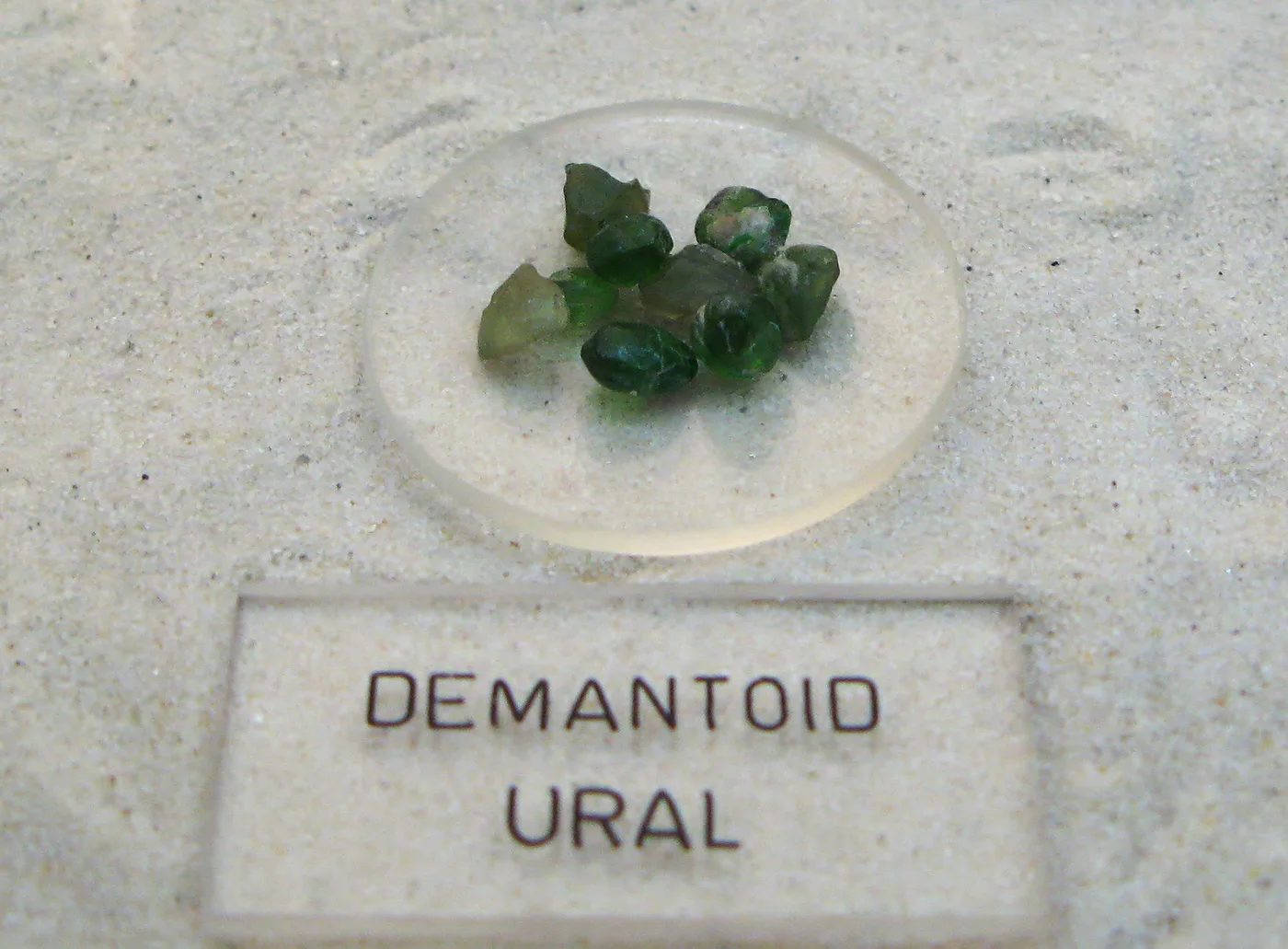
Garnet had been known for centuries, yet nothing was written about demantoid before 1853. It was found in the Ural Mountains, and Russian demantoid is still considered the rarest and most valuable.
It is recovered only in small sizes: two carats already counts as a large stone. That makes demantoid a collector's gem — big, clean examples rarely reach jewellery.
Origins
Until 1996 Russia was considered the only supplier of demantoid. That year a huge deposit was found in Namibia and named the Green Dragon. In 2003 a similar one turned up in Madagascar.
Properties
Demantoid is considered a stone of finance and success. It is said to help its owner stay focused on the work and on the goal, and to carry things through to the end.
The same tradition jokes that owners of demantoid are never late and never borrow money. Esoteric writers add that the stone helps to find love and harmony. On the whole it is a stone of success, joy and love.
Traditional healing properties
Demantoid is said to raise vitality. Lithotherapists claim that worn near the heart it works well on circulation and the respiratory system. It is also used to support eyesight and immunity.
This describes traditional practice, not medical advice. A stone does not replace a doctor.
Chakras
Associated with the heart chakra – anahata.
Which zodiac sign it belongs to
Astrologers say demantoid works especially well for the air signs — Aquarius, Gemini and Libra — and for Sagittarius.
In practice that means the stone answers more readily to people whose lives hold plenty of ideas and movement. It is not a strict rule, though: many wear demantoid simply for its colour and brilliance.
In Charcho jewellery
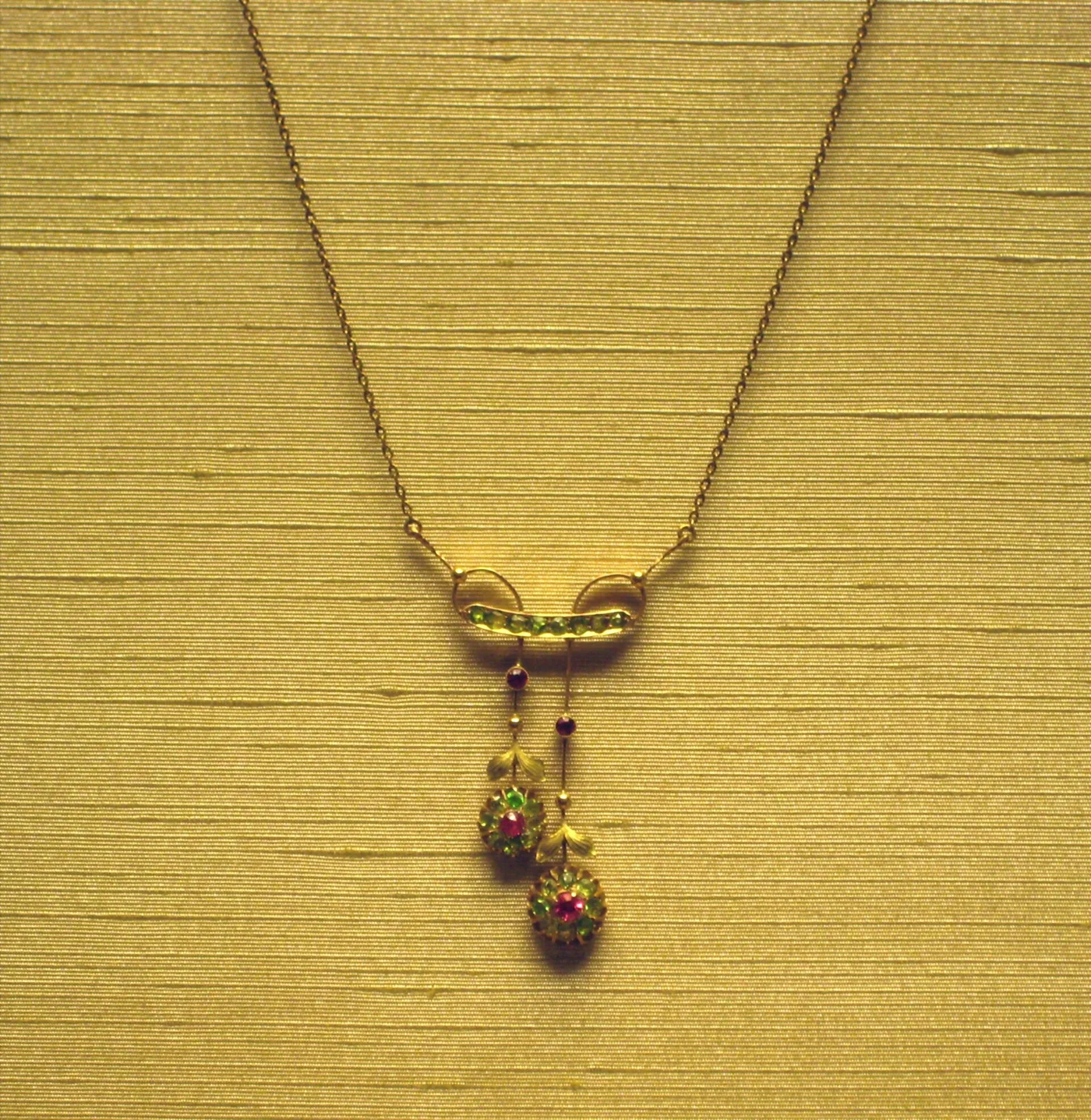
Given the small sizes, a ring or a pair of earrings is the most natural setting for demantoid. To show the fire it needs an open setting — the stone should catch the light. We have no finished piece with demantoid yet, but we make to order. Catalogue: necklaces.
Real or fake
- Green tsavorite, emerald and diopside are often sold under the name demantoid.
- The characteristic mark of demantoid is the fibrous "horsetail" inclusion, though not every stone has one.
- Glass and synthetic andradite are cheap imitations and lack that fire.
- A purely blue-green hue is unusual for demantoid and points to a different stone.
Care
Hardness 6.5–7.5 is enough for everyday wear, but natural stones often carry cracks. Warm water and a soft cloth will do. Use ultrasonic only if the stone is free of fractures; skip steam and sharp temperature changes.
See also
-
Bronzite
Chemical formula – (Mg,Fe)SiO₃
Hardness – 5–5.5
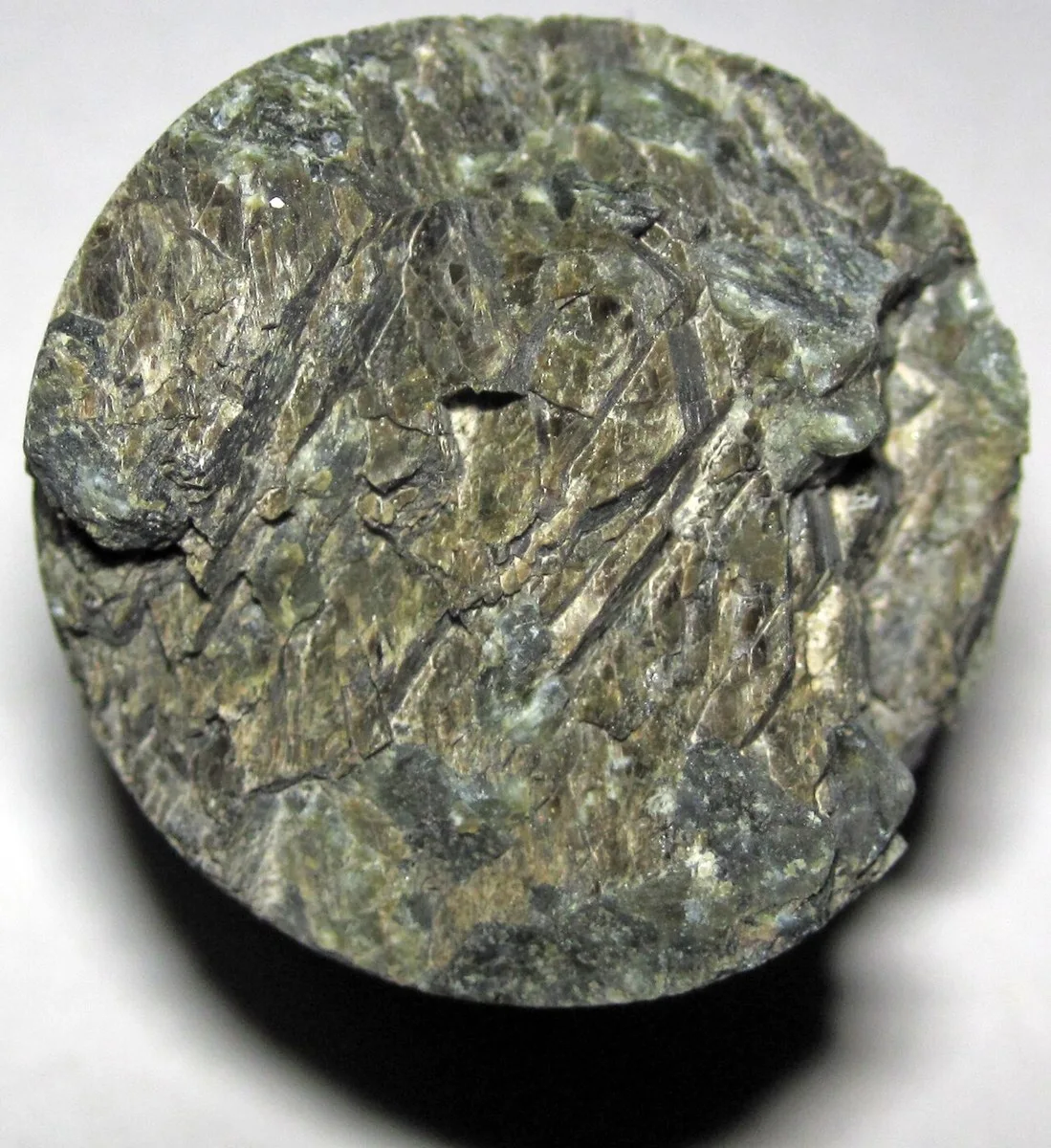
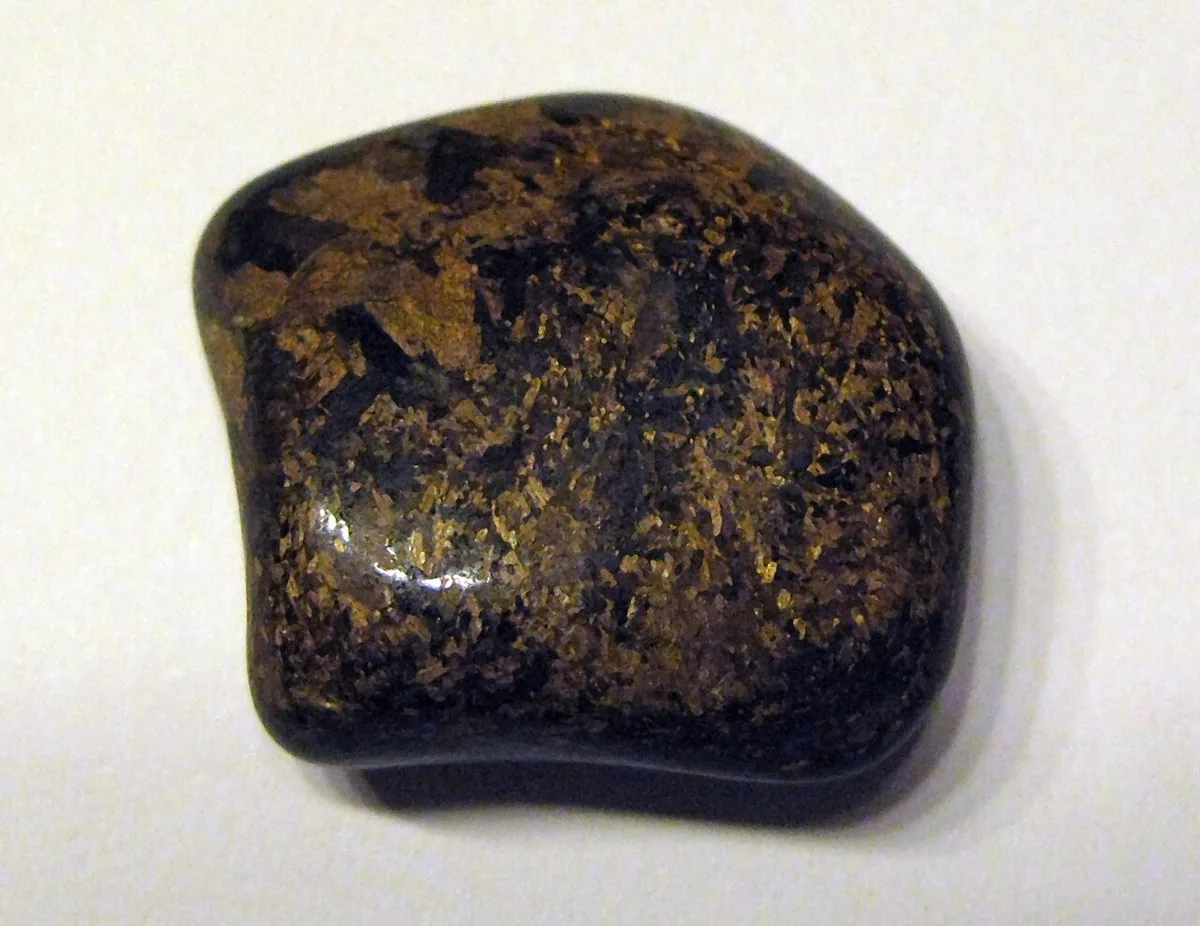
Colour – brown, orange-brown, metallicBronzite belongs to the pyroxene group: a magnesium silicate and the iron-bearing variety of enstatite. Before polishing it looks like an ordinary, unremarkable stone; afterwards a bronze metallic sheen rises on the surface. That is where the name comes from.
Not much has been written about bronzite. There are only a few notes from ancient civilisations that it was used as a healing powder. Demand has grown noticeably in recent years, partly because good bronzite is genuinely striking to look at.
Origins
Bronzite is mined all over the world. Commercially important deposits are in India, Brazil and South Africa.
Properties
Bronzite is called the courtesy stone. Modern esoteric writers hold that it balances, clears the mind and adds resolve. Because of its sheen it is said to give the owner energy and lift self-esteem.
It is said to suit shy and bewildered people especially: bronzite strengthens courage and the wish to be seen, while courtesy and tact stay intact.
Traditional healing properties
Modern lithotherapists use bronzite for the nervous system. In their account it calms and steadies a person during panic attacks and heightened phobias.
This describes traditional practice, not medical advice. A panic attack belongs to a specialist; a stone only keeps company.
Chakras
Bronzite is linked to the root and second chakras — muladhara, svadhisthana.
Which zodiac sign it belongs to
Astrologers say bronzite suits Leo especially — the sign that wears a bronze shine and open self-esteem naturally.
Other signs wear it too: for people who shy away from being seen, bronzite often becomes their first public stone.
In Charcho jewellery
Hardness 5–5.5 lets us set bronzite in necklaces, earrings and pendants; in a ring it slowly scratches, so we do not recommend it for daily wear. Catalogue: necklaces.
Real or fake
- Bronzite is often confused with hypersthene; they are related minerals of the same series, and even a specialist finds them hard to separate.
- Natural bronzite has a directional sheen: it shifts with the angle of light instead of freezing into one flat colour.
- A resin or painted imitation feels warm in the hand and shines the same from every side.
- A real stone feels noticeably heavy.
Care
Bronzite contains iron, so acids and harsh cleaners do not suit it. Do not soak it, and skip the ultrasonic bath if the stone has a crack. Warm water, a soft cloth and a dry place are enough.
See also

Have an idea? We will make it.
Write or call us - together we will choose the material, colour and size, and make the piece to order.