 Free Delivery in Batumi


Blog
From the workshop: materials, care, gifts and the stories behind the pieces.
-
Galaxite
Chemical formula – Mn²⁺Al₂O₄
Hardness – 7–7.5
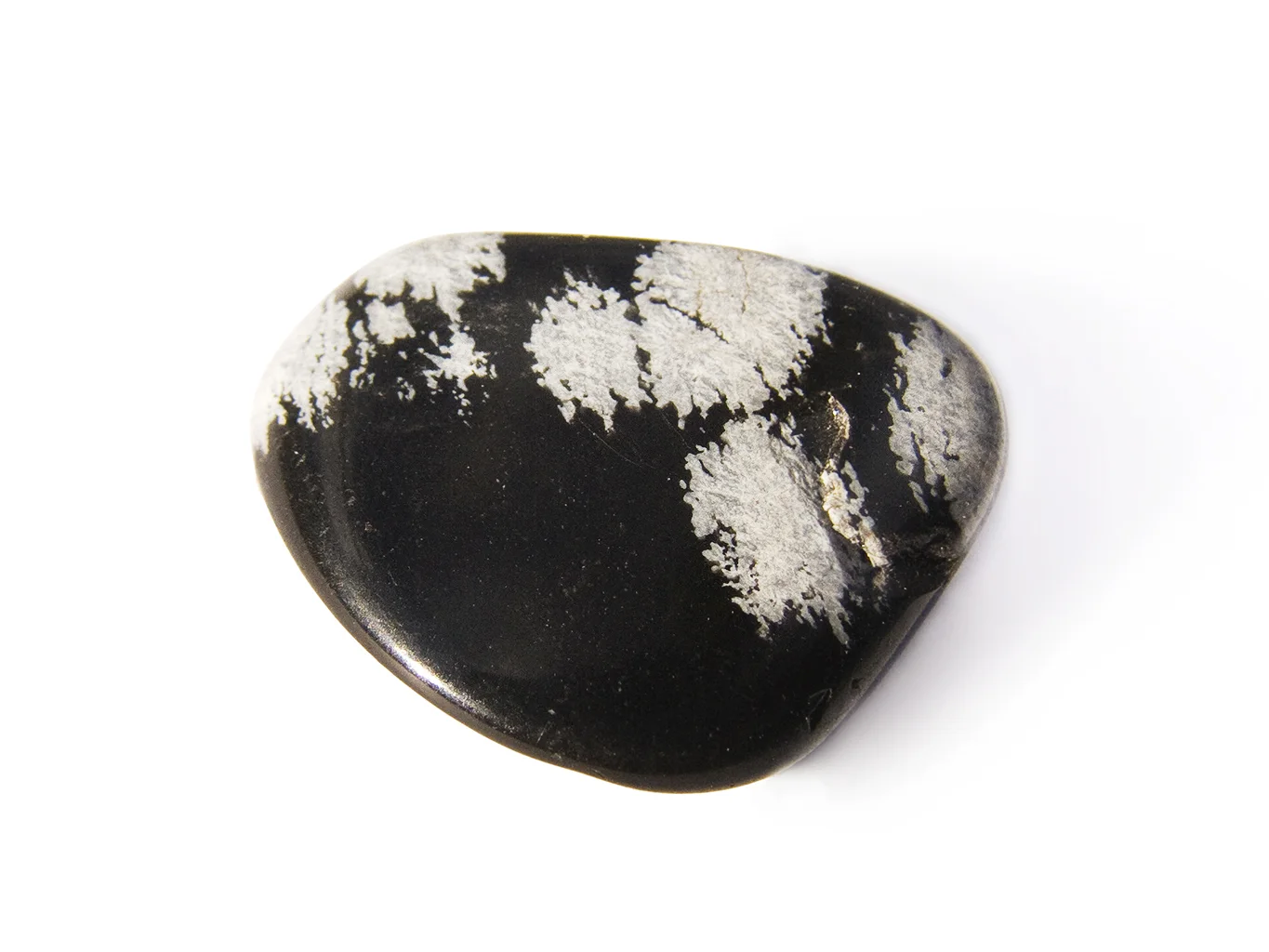
Colour – dark grey, black, deep brown, sparklingGalaxite is an isometric mineral of the spinel group: a manganese aluminate that usually appears in dark, almost black tones. Fine metallic sparks sit on its surface, as though someone had locked the night sky inside a stone.
Many assume the name comes from the galaxy. In fact it comes from the American state of Virginia, where a flower called Galax urceolata grows — the mineral took its name.
Hardness 7–7.5 means galaxite is perfectly usable in jewellery: it keeps its looks for years, even in a ring. The real caution belongs to the market, where the so-called love stone is often offered in its place. Do not be fooled: galaxite sparkles far more sharply.
Origins
The largest supplier of galaxite is the United States. It is a rare mineral with few deposits; it usually occurs in manganese ore, often beside other minerals in small pockets.
Properties
Galaxite is considered a spiritual stone. Esoteric writers say that in meditation it helps deepen concentration, and practitioners hold that with its help one can find calm, balance and harmony.
Galaxite is said to connect a person with their own spiritual and creative world, which is why people who need silence and focus for their work are drawn to it.
Traditional healing properties
Lithotherapists use galaxite mainly for the nervous system. In their account this sparkling stone helps the anxious and withdrawn, and those troubled by fears and phobias.
This describes traditional practice, not medical advice. Anxiety and phobias belong to a specialist.
Chakras
Galaxite is linked to the root and crown chakras — muladhara, sahasrara.
Which zodiac sign it belongs to
Astrologers say any sign may wear galaxite; it does not demand a zodiac of its own. That is exactly why it is often chosen when the recipient's sign is unknown.
In Charcho jewellery
A dark stone works both as a single accent and in contrast with paler stones. Thanks to its hardness galaxite suits a ring as well as a pendant. Catalogue: necklaces.
Real or fake
- The love stone is often offered instead of galaxite — it is an imitation, and its sparkle is much duller.
- A natural stone has small, uneven sparks; an artificial coating looks flat and varnished.
- Galaxite is hardness 7–7.5, so an ordinary steel blade leaves no mark — if it does, the stone is something else.
- A stone unusually light for its size points to a resin imitation.
Care
Warm water, a soft cloth and ordinary mild soap are enough. Harsh chemicals and long soaking are unnecessary. Store it apart only so that it does not scratch softer stones itself.
See also
-
Jet
Chemical formula – none: an organic stone, carbon-based
Hardness – 2.5–4
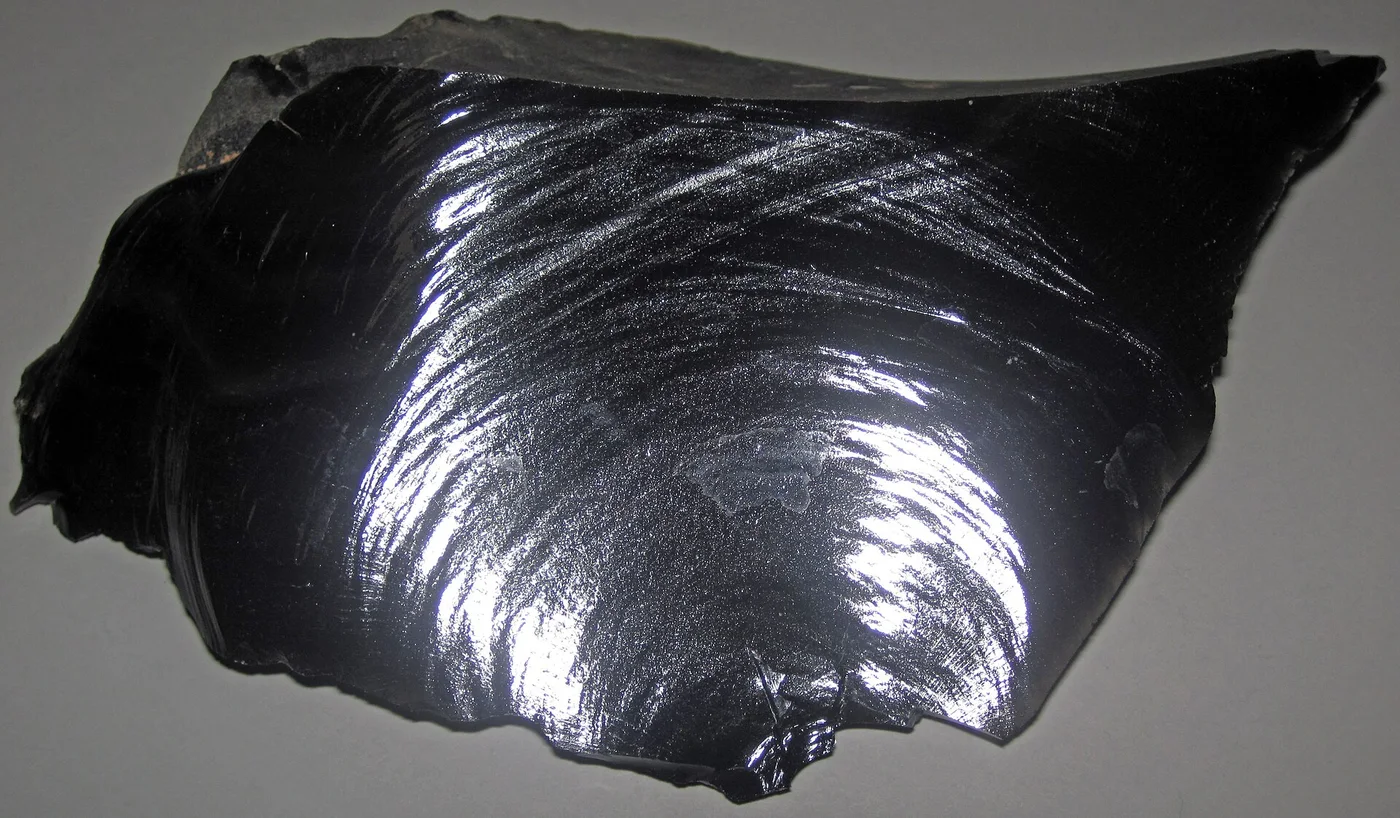
Colour – blackJet sits in the list of stones but it is not a mineral. It is petrified wood — fossil coal compressed over millions of years into a smooth black stone with a silky sheen. That places it among organic gem materials, alongside amber, coral, pearl and mother-of-pearl. In Georgian it has a second name: "sati".
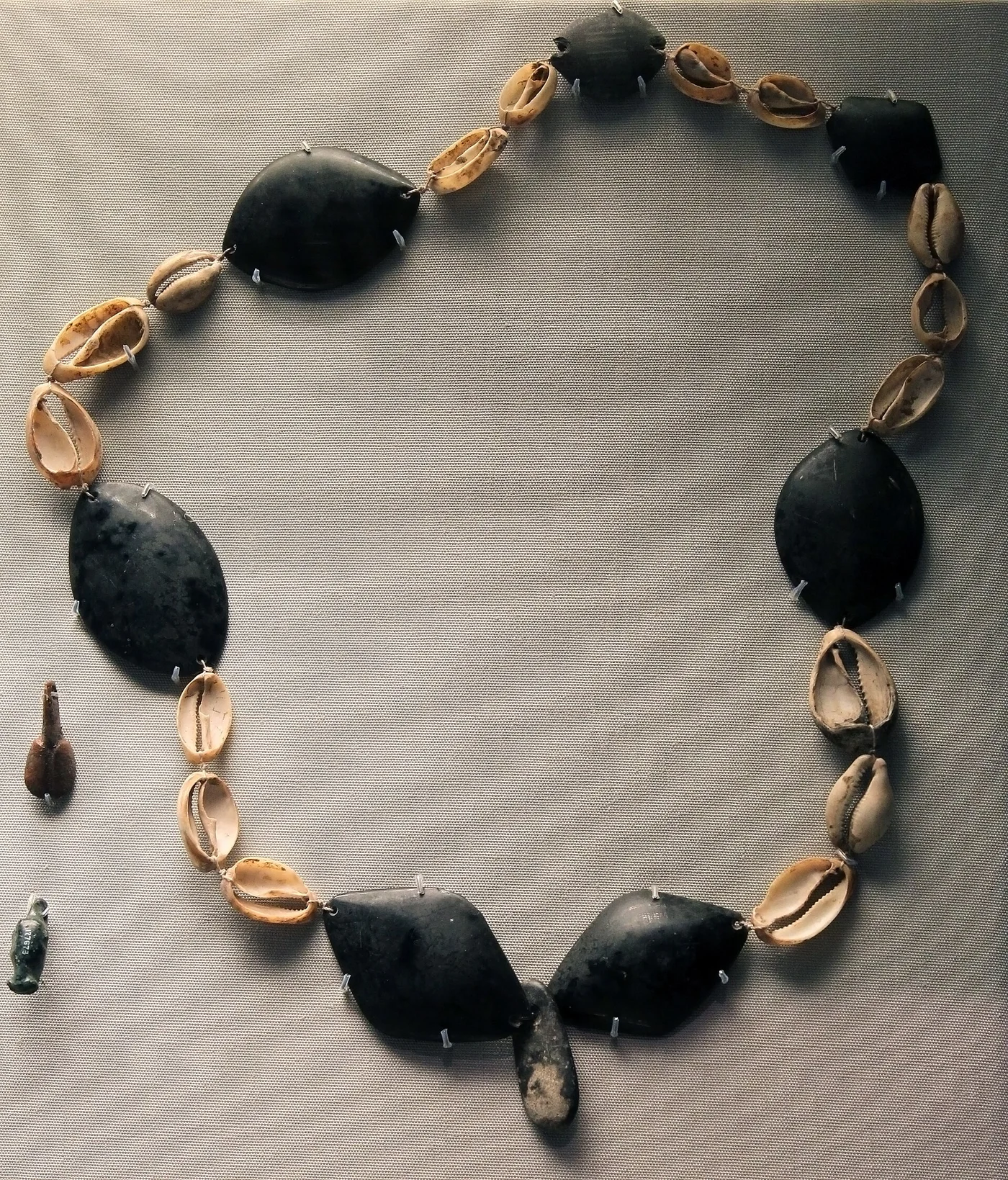
On the world market jet is not widely known; in Sakartvelo it has long been traditional and in demand. Archaeology shows that jet beads were already mass-produced in the Bronze Age, and in antiquity Georgian jet and jetwork were exported far beyond the country.
Today jet is mostly made into bracelets, prayer beads and crosses. The classic form is still a pendant set in silver.
Origins
Some 180 years ago jet was mined in England, around Whitby; earlier it was popular in Rome. Today one of the main suppliers is Scotland.
Sakartvelo is rich in jet as well. The best-known deposits are in the Kazbegi district, in Upper Svaneti and on Mount Shoda.
Properties
Esoteric writers say jet carries cleansing energy: its vibration brings calm and clarity into a life. Since ancient times it has been used as protection from the evil eye and harm, and it was credited with financial stability.
It is said that while worn, jet cleanses its owner and takes negative energy onto itself — which is why the stone needs regular cleaning. Jet often cracks in half; folk tradition calls this "the eye being taken". Scientists put it down to the stone's brittleness and its sensitivity to temperature.
Traditional healing properties
In traditional lithotherapy jet was used to dull pain — for migraine, fever and epilepsy. It was also linked with the blood vessels, heart, liver, kidneys and glands.
This describes traditional practice, not medical advice. A stone does not replace a doctor.
Chakras
Associated with the first, root chakra – muladhara.
Which zodiac sign it belongs to
In astrological tradition jet is a stone of Saturn, so it suits Capricorn and Aquarius best — Saturn rules both signs.
Jet is also a good choice for anyone who needs protection, calm and clear boundaries. The zodiac is only a traditional pointer here: a stone suits whoever likes it.
In Charcho jewellery
Black jet works best with silver: a strict, quiet, almost timeless pairing. We have no finished piece with jet yet, but we make to order. Catalogue: necklaces.
Real or fake
- Real jet is light — glass or plastic imitations feel noticeably heavier in the hand.
- Jet is cool to the touch and warms slowly; plastic takes on body temperature quickly.
- Black onyx and black agate are often sold as jet — both are cheaper and heavier.
- Do not test the stone with a hot needle at home: the surface will be ruined. If in doubt, go to a lab.
Care
A hardness of only 2.5–4 puts jet among the soft stones. Store a bracelet separately so metal and other stones do not scratch it. Warm water, a soft cloth and mild soap are enough. Skip ultrasonic, steam and solvents. Keep it away from prolonged heat and direct sun — that is what opens cracks.
See also
-
Bornite
Chemical formula – Cu₅FeS₄
Hardness – 3
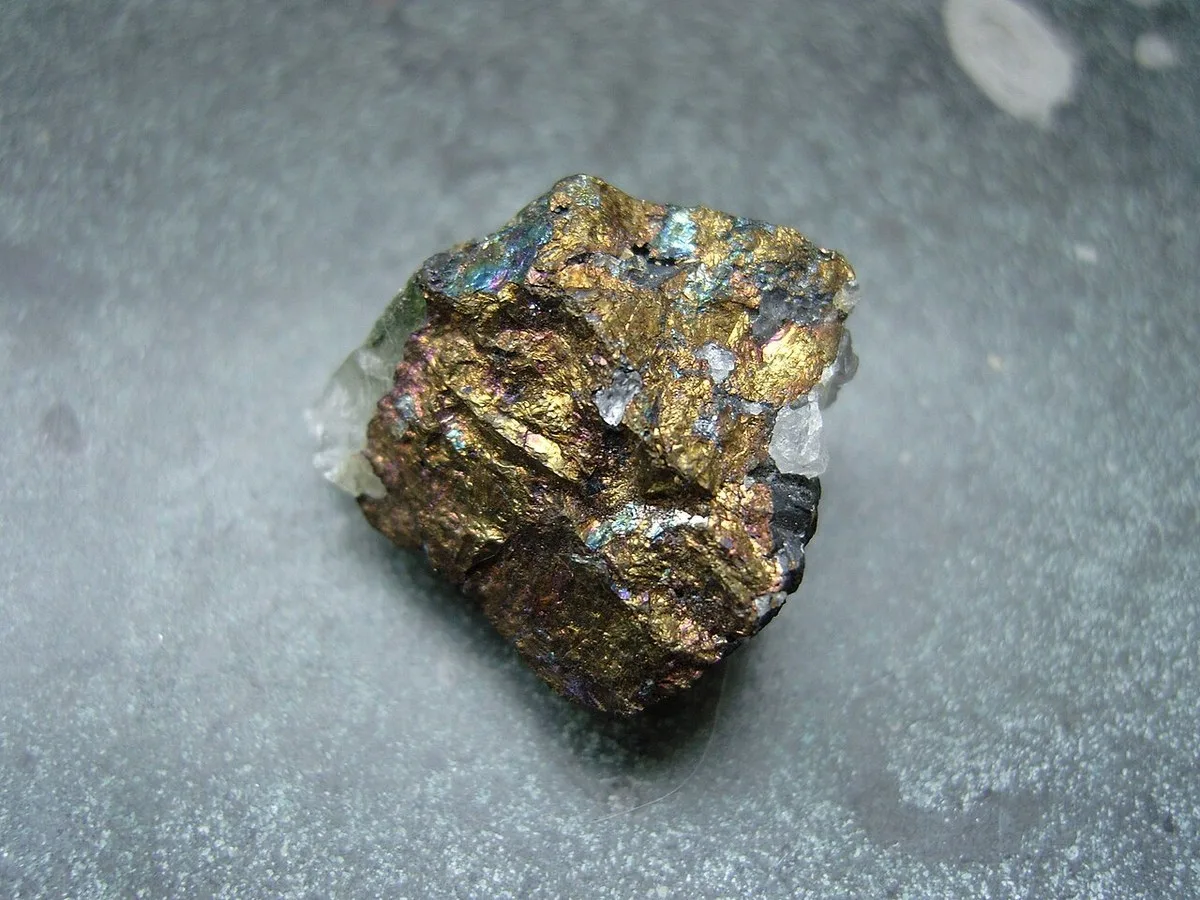
Colour – iridescent, metallicBornite is a copper iron sulphide and one of the main copper ores. On a fresh break it is bronze, but air lays a thin oxide film over it and the stone begins to play in purple, blue, green and gold patches. That is why it is called peacock ore, or variegated copper ore.
The name honours the Austrian mineralogist Ignaz von Born. Hardness is only 3 — even a fingernail leaves a mark — so jewellery uses it as cabochons or beads, never as a ring.
Bornite is often confused with aura quartz, and that is a real mistake. Bornite is a natural mineral; aura quartz is quartz or agate with metals artificially deposited on its surface. One is nature all the way through, the other is a coating.
Origins
Most bornite comes from the United States, Chile and Peru. As a copper ore it appears in many deposits around the world, including Mexico, Zambia and South Africa.
Properties
Esoteric writers call bornite the merry stone. It is said to bring cheer, happiness and joy into life, to help a person flourish and to turn the mood in a positive direction.
Bornite is said to suit creative people especially, because it can push their gift forward. By the same accounts, though, it can colour anyone's life.
Traditional healing properties
Lithotherapists use bornite for high fever, various pains, fears and panic attacks.
This describes traditional practice, not medical advice. Fever and pain belong to a doctor; a stone does not replace treatment.
Chakras
Bornite is linked to the root, solar plexus and throat chakras — muladhara, manipura, vishuddha.
Which zodiac sign it belongs to
Bornite is the stone of Cancer. Astrologers add that anyone may wear it: the link with Cancer is simply natural, since both speak of warm, family energy.
In Charcho jewellery
At hardness 3 bornite will not survive an everyday ring. Its place is a necklace, earrings or a pendant, where the stone never meets the hand. Catalogue: necklaces.
Real or fake
- "Peacock ore" is often chalcopyrite treated with acid. Its colour sits on the surface and rubs off on a scratch.
- The bornite rainbow is a thin oxide film too: bronze shows underneath a scratch.
- A resin or painted imitation is light and shines the same from every angle.
- Natural bornite usually carries small cracks and inclusions.
Care
Store it apart, because it is soft and scratches easily. Do not soak it, keep acids and harsh cleaners away, and skip the ultrasonic bath. A dry soft cloth is enough.
See also
-
Diamond
Chemical formula – C
Hardness – 10
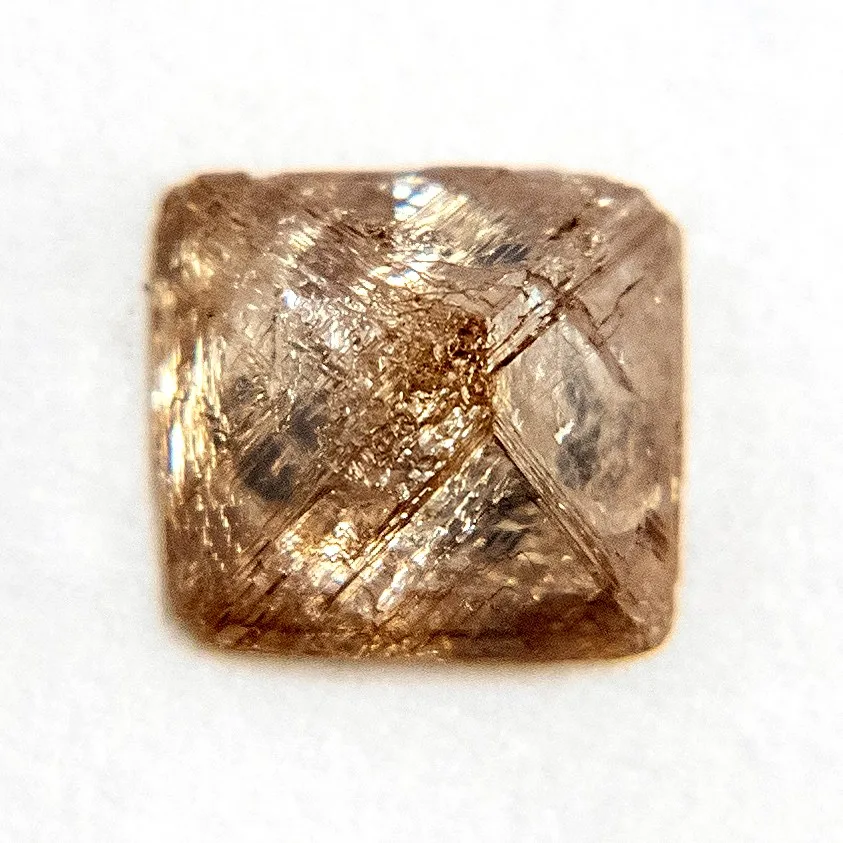
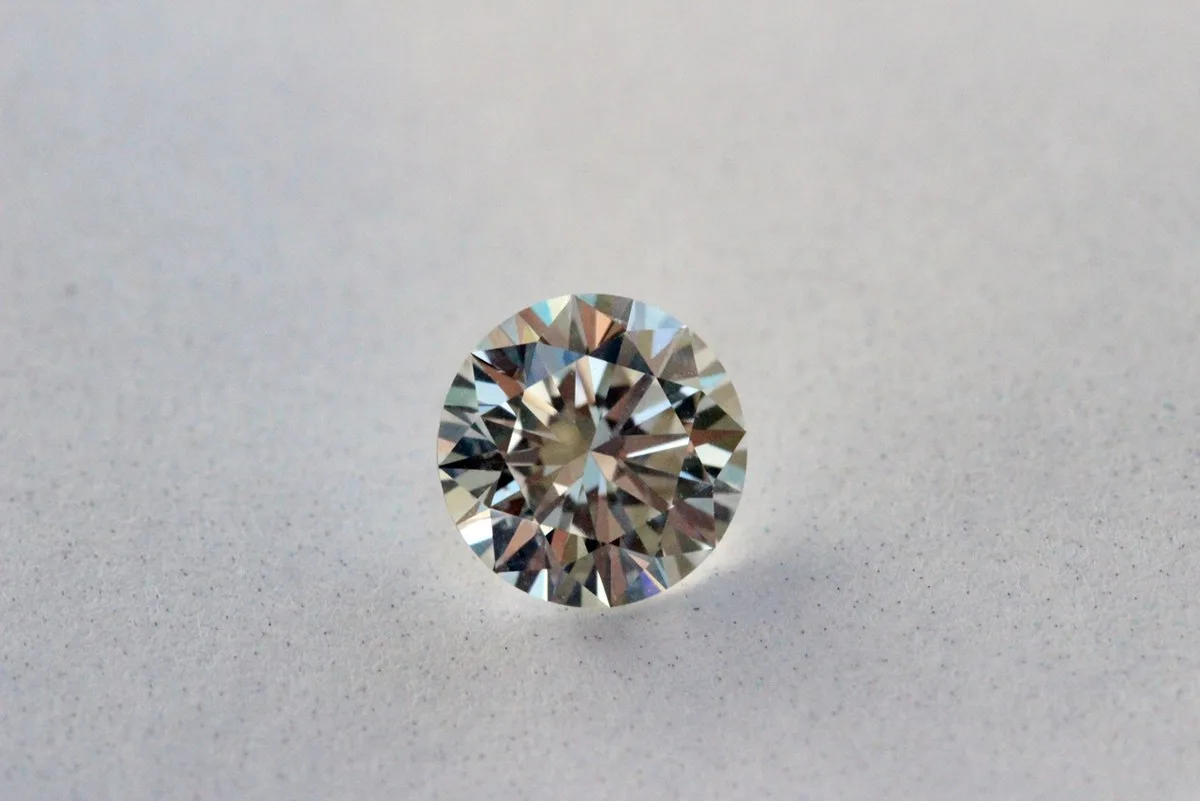
Colour – colourless, yellow, brown, blue, red, golden, blackA diamond is a crystal of pure carbon and the hardest natural substance on Earth. Strictly speaking, the mineral is the raw stone and the brilliant is its cut form: everyday speech blurs the two, though the difference is simple — one comes out of the ground, the other out of a workshop.
Diamond forms in the Earth's mantle, some 140 kilometres down, under enormous pressure and heat, and the process takes between 1 and 3.3 billion years. It reaches the surface through kimberlite pipes during volcanic eruptions.
Today the diamond is a symbol of wealth, and for its perfect structure it is called the queen of gems. Yellow and brown stones are the most common; red is the rarest of all.
Origins
At least half of the world's diamonds have been mined in South Africa. Other suppliers include Russia, Botswana, Congo, Angola, Namibia, Australia, Brazil, India and Canada.
Properties
Esoteric writers call the diamond a stone of light, its high-frequency energy tied to the Sun. It is described as a spiritual stone and a symbol of perfection and radiance.
The diamond is said to sharpen inner vision, imagination and creativity, which is why people who need to see their own ideas clearly are drawn to it.
Traditional healing properties
Lithotherapists hold that diamond works well on the brain, the nerves and the sense organs. The same tradition advises against wearing one during depression or paranoid states.
This describes traditional practice, not medical advice. Mental health belongs to a specialist.
Chakras
The diamond is associated with the crown chakra — sahasrara.
Which zodiac sign it belongs to
The diamond is the stone of April, so traditionally it belongs first of all to Aries, the sign that takes naturally to beginnings and first steps.
April also covers Taurus, which gives the stone a second natural home: the sign that values worth, stability and things made to last.
In Charcho jewellery
We have no diamond piece in the catalogue yet, but we take custom orders. In a necklace a diamond works either as the single main stone or as a small accent beside another stone. Catalogue: necklaces.
Real or fake
- Cubic zirconia and moissanite are the usual stand-ins; moissanite throws a stronger fire.
- Lab-grown diamonds have been made in the USA since 1999. Chemically they are identical to natural ones, and only a professional can tell them apart.
- A suspiciously cheap large stone is almost always glass or synthetic.
- Trust a certificate from an independent laboratory more than a seller's word.
Care
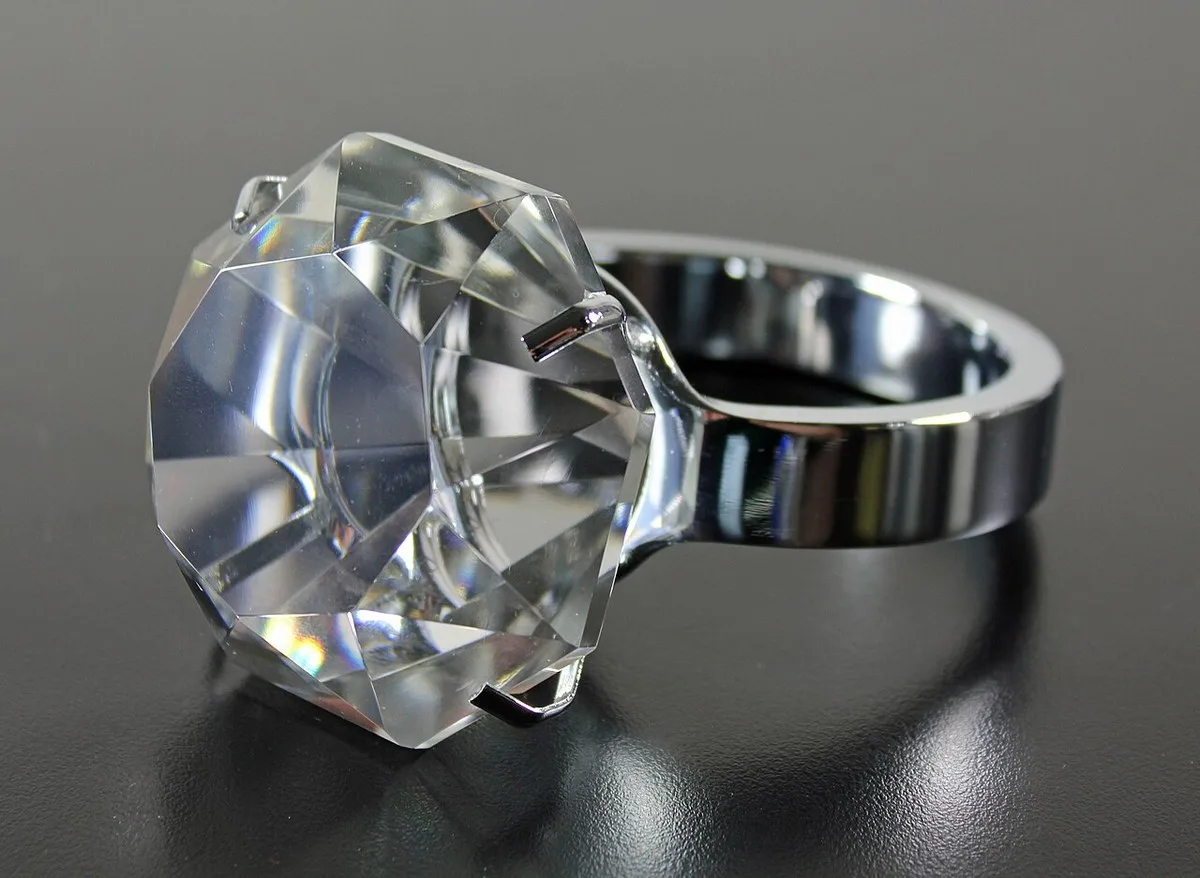
Hardness 10 means nothing will scratch a diamond, but it has a plane of cleavage and a hard knock can split it, especially at the edge. Store it separately so it does not scratch other stones. Warm water, a soft brush and a dry cloth are enough.
See also
-
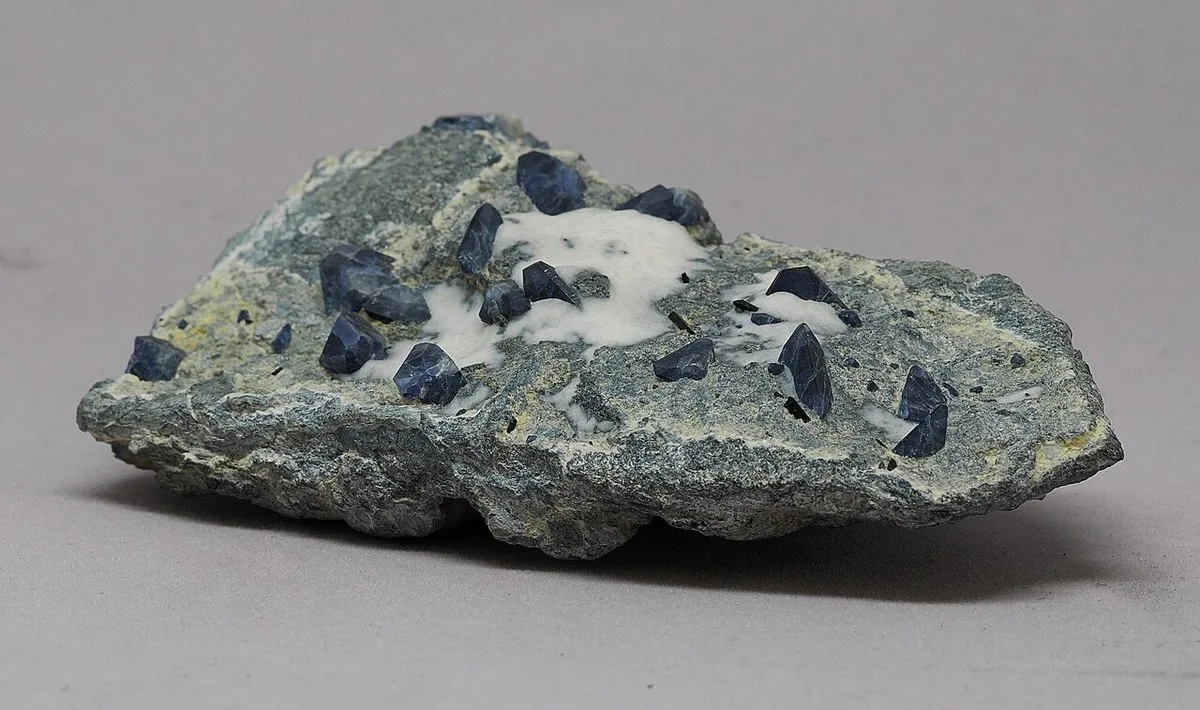
Benitoite
Chemical formula – BaTiSi₃O₉
Hardness – 6–6.5
Colour – blue, sky blue, with a violet tintBenitoite is a rare blue mineral found in California, in the San Benito river valley, and named after that place. Today it is the official state gemstone of California.
Its brilliant blue makes benitoite easy to mistake for sapphire, though the two stones are unrelated — and benitoite is far rarer.
Natural supply is thin, so its use in jewellery stays limited. For collectors it is one of the most desirable stones there is.
Deposits
Benitoite is mined in California, Montana and Arkansas, and in small amounts in Romania, Czechia, Australia and Japan.
The only serious source in the world remains the San Benito deposit; every other location yields just a few specimens.
Properties
Benitoite is said to be a stone of communication: it helps a shy, reserved person say what needs saying and hear their own inner voice.
Esoteric writers link it with concentration, intuition, memory and creativity, and say it connects mind and soul.
Healing properties
Lithotherapists use benitoite for problems of the throat, speech and thyroid gland.
This describes a traditional practice, not medical advice. A stone cannot replace a doctor.
Chakras
The third eye and the throat chakra – ajna and vishuddha.
Which zodiac sign
Benitoite is considered a stone of the water element — Cancer, Pisces, Scorpio. Its cool blue seems to answer the nature of those signs.
In Charcho jewellery
When a client brings us benitoite we choose a closed, protective setting: the stone is brittle and a daily-wear ring is a risk. A pendant is safer. Catalogue: necklaces.
Real or fake
- Benitoite glows bright blue under ultraviolet light — one of its most reliable signatures. Sapphire and tanzanite show no such fluorescence.
- The stone has strong fire, meaning high dispersion: it flashes like a diamond.
- Benitoite is usually lighter and bluer; a deep violet-blue tone is extremely rare.
- A suspiciously cheap "benitoite" is almost always cut glass or blue topaz.
Care
Hardness 6–6.5 plus clear cleavage make the stone soft and brittle. A ring for everyday wear is not advisable. No ultrasonic cleaner, steam or acids; warm water and a soft cloth are enough.
See also
-
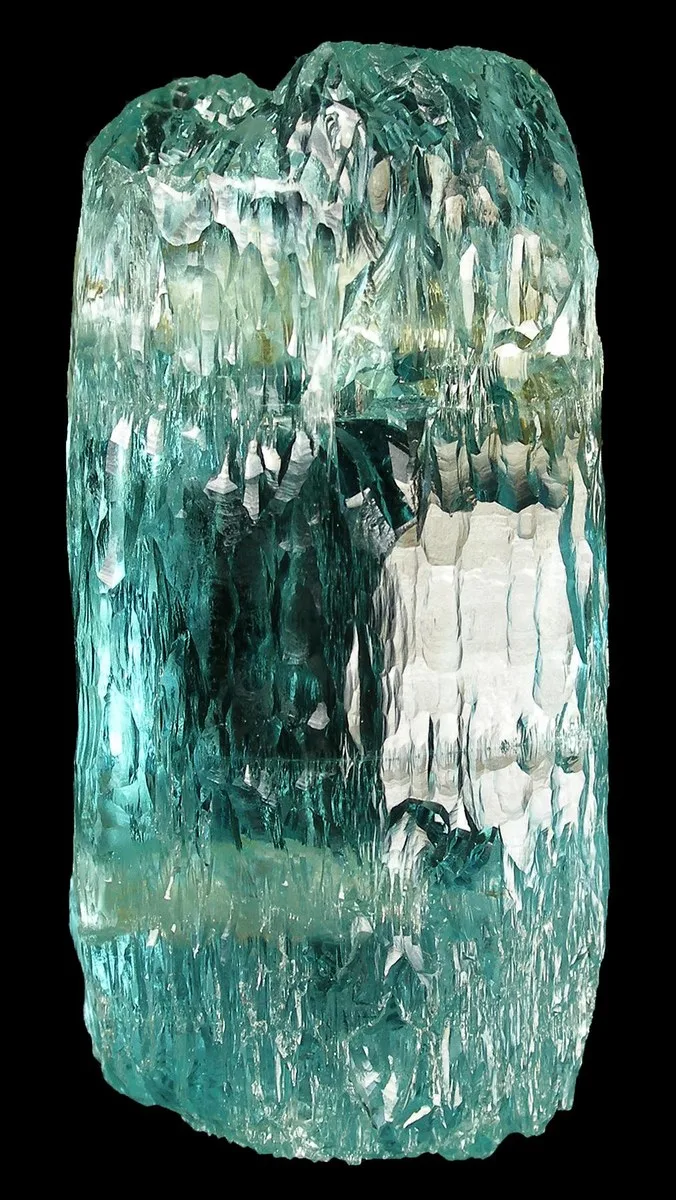
Beryl
Chemical formula – Be₃Al₂(Si₆O₁₈)
Hardness – 7.5–8
Colour – colourless, green, blue, yellow, pink, redBeryl is one of the most important mineral families. Its transparent varieties are called precious beryl; the best known is emerald, followed by blue aquamarine.
Colour depends on trace elements: chromium and vanadium give green, iron gives blue and yellow, manganese gives pink. Pure colourless beryl is known as goshenite.
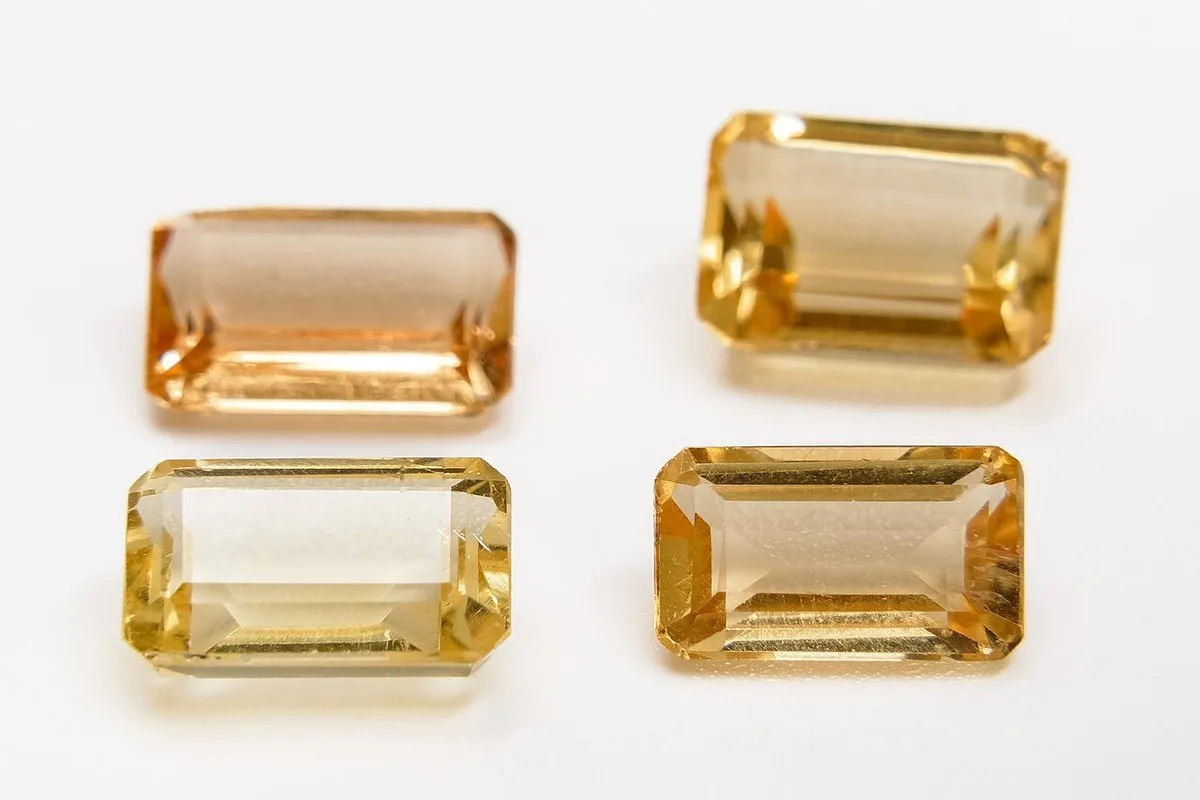
The family also includes heliodor, a golden yellow, and morganite, the pink variety often called "pink emerald". The rarest and most expensive is bixbite, the red beryl.
Deposits
The main source of beryl is Brazil, whose specimens are of the highest quality. It is also mined in Madagascar, Namibia, Sri Lanka, Nigeria and Zimbabwe.
Heliodor comes most often from Madagascar, while the only significant source of red bixbite is the state of Utah in the United States.
Properties
In tradition beryl is a stone of clarity and candour: it is said to settle the thoughts and to take the edge off excess emotion.
Each variety carries its own energy — emerald is tied to the heart and to loyalty, aquamarine to calm and to communication.
Healing properties
In lithotherapy beryl is linked with calming the nervous system and with the organs of breathing: emerald with the heart, aquamarine with the throat and thyroid.
This describes a traditional practice, not medical advice. A stone cannot replace a doctor.
Chakras
The heart chakra – anahata; aquamarine is also connected to the throat chakra – vishuddha.
Which zodiac sign
Beryl is a family rather than a single stone, so its astrological links change with the variety. Traditionally emerald is the stone of May and of Cancer, aquamarine of March and of Pisces. For the other varieties the astrological pairing is far less established.
In Charcho jewellery
Beryl is a generous stone for us: a hardness of 7.5–8 lets it serve for years in a necklace or a ring. We choose clean, well-polished pieces — necklaces.
Real or fake
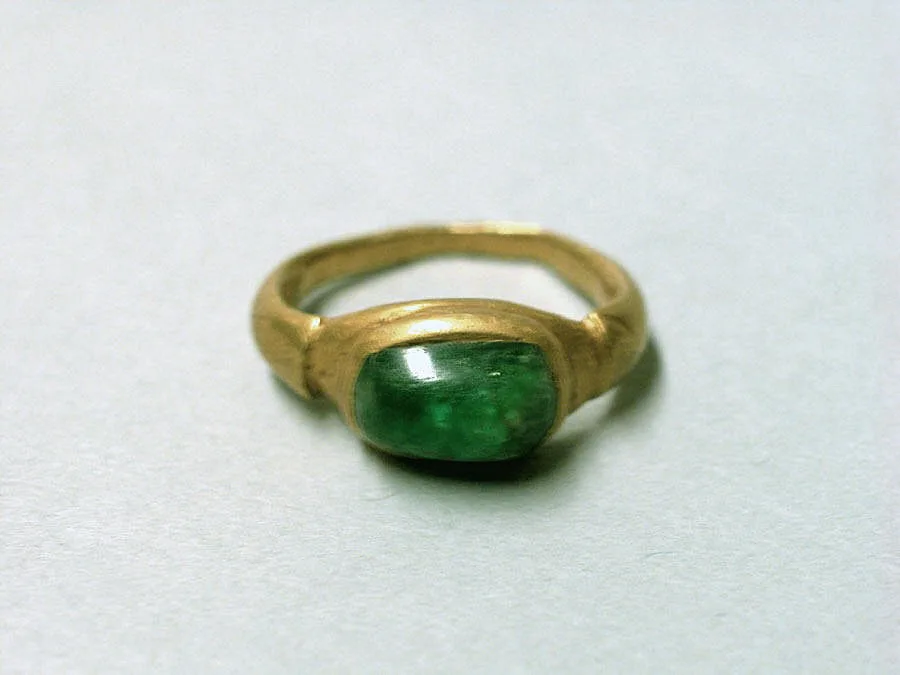
- Beryl is hard to imitate, but emerald fakes — glass and glued doublets — are widespread.
- Natural emerald almost always carries inclusions; an emerald that is too clean raises questions.
- Dye and oil collect in fractures, so a loupe shows colour pooled along the cracks.
- Beryl feels cold and scratches glass easily; a light, "warm" stone is a warning sign.
Care
Warm water and a soft cloth are enough. Emerald does not tolerate ultrasonic cleaning, steam or acids — its fractures are often filled with oil. Long exposure to sun weakens the colour.
See also
-
Bismuth
Chemical formula – Bi
Hardness – 2–2.5
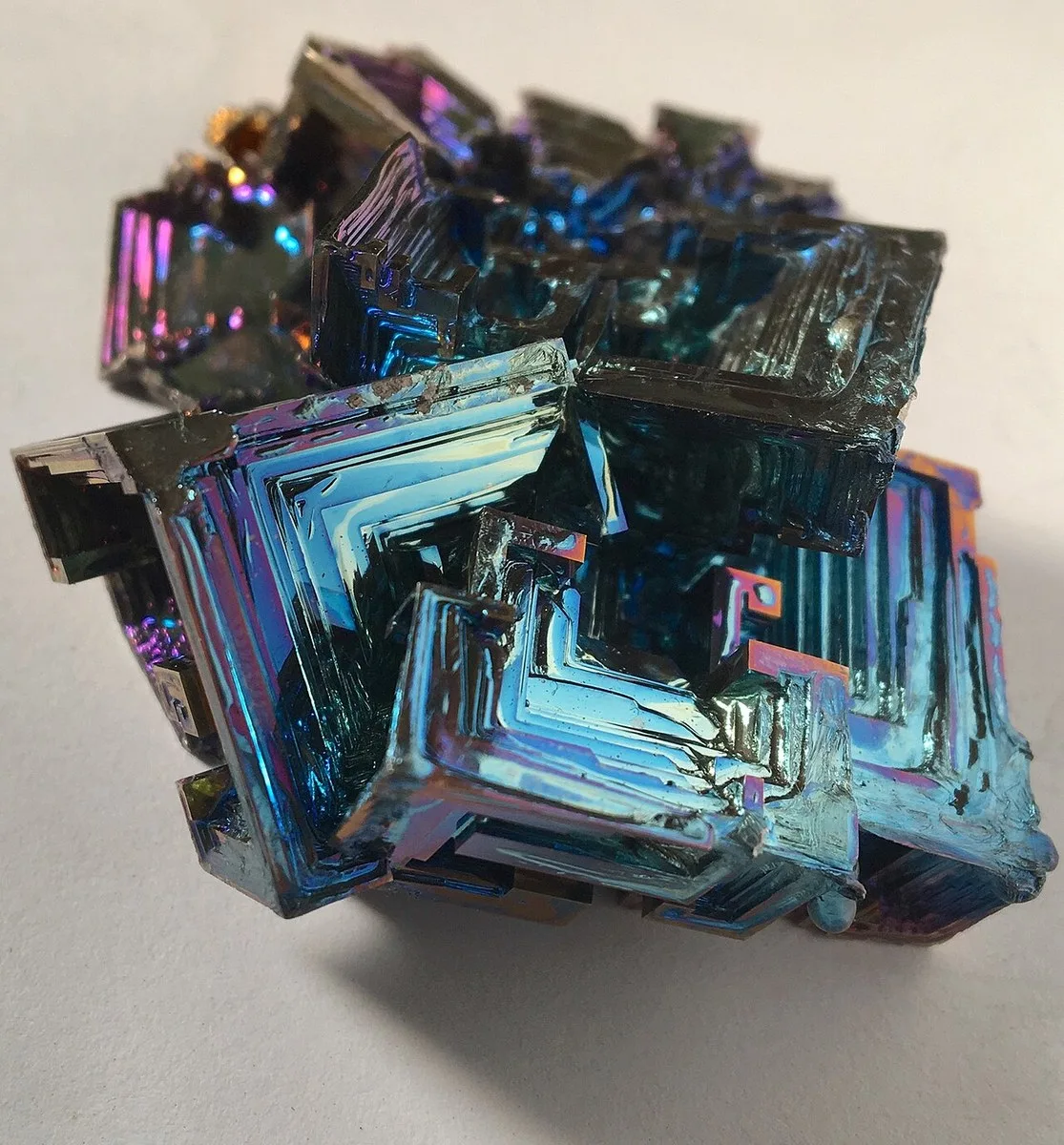
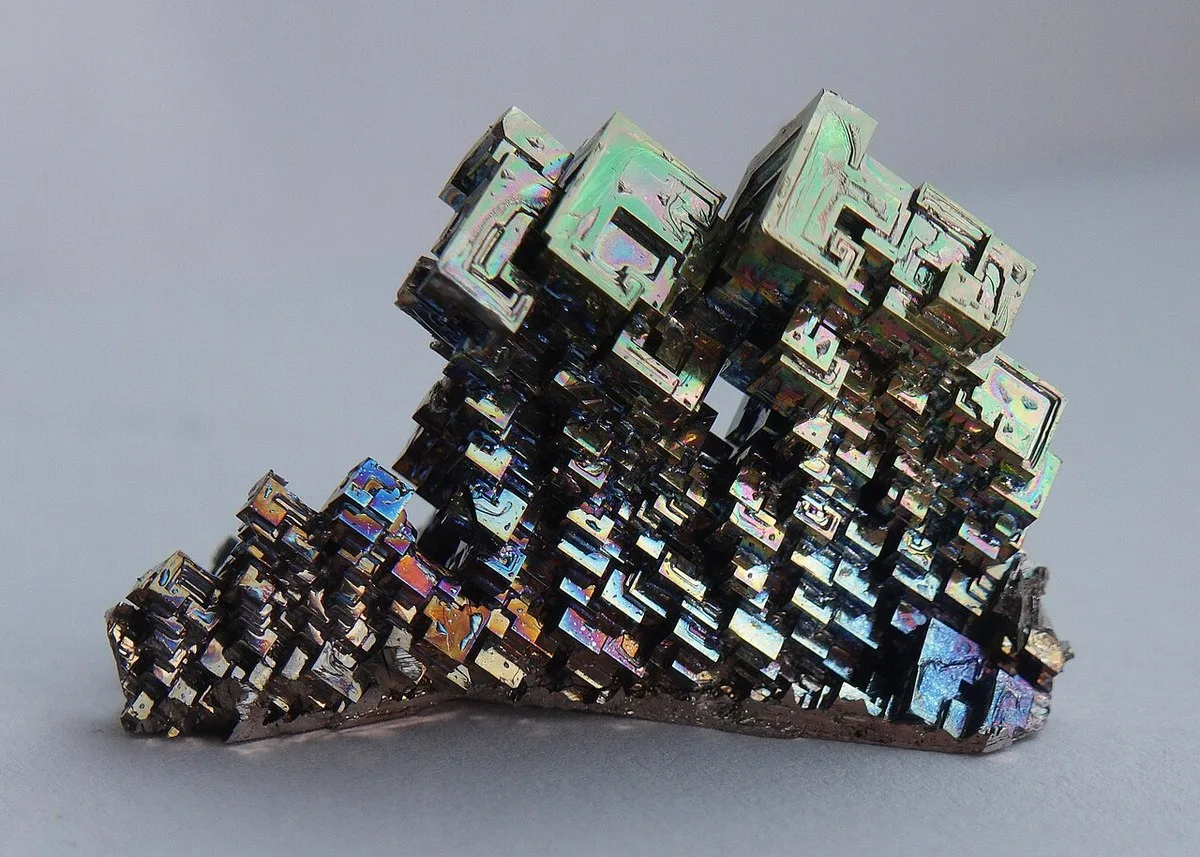
Colour – silvery, under a rainbow oxide filmBismuth is a metal, yet its crystals look as if they had fallen out of a mineral catalogue. It sits at number 83 in the periodic table, in group 15, next to tin and lead. In ordinary conditions it is a silvery metal with a faint pink cast; in air a thin oxide film forms and it starts to play in blue, pink, green and gold.
The name comes from the Latin bisemutum, "white mass". Bismuth does occur in nature in native form, but the crystals you see in shop windows are usually grown from a melt: bismuth melts at about 271 °C, so the stepped crystals can be made on a kitchen hob.
In jewellery bismuth is a rare guest — it is far too soft. Its colour, though, has no rival among stones.
Origins
The largest amounts of native bismuth come from Bolivia. Most of what reaches the market is a by-product of refining lead, copper and tin ores; China, Mexico and Peru are the main suppliers.
Properties
Esoteric writers treat a bismuth crystal as a source of energy: they say it adds direction, willpower and the wish to move forward. Because metal and crystal are fused in one body, people look for the qualities of both natures in it.
Rainbow bismuth is said to help its owner through sudden change, so that the shift arrives without extra stress or obstacles.
Traditional healing properties
In traditional lithotherapy bismuth is used for strong pain — headaches, eyes, joints — and is credited with a calming, pain-relieving effect.
This describes traditional practice, not medical advice. Pain belongs to a doctor; a stone only keeps it company.
Chakras
Bismuth is said to answer to every chakra, especially the first (muladhara) and the seventh (sahasrara).
Which zodiac sign it belongs to
Astrologers consider bismuth best suited to Aquarius, the sign that takes change and new ideas in its stride. Other signs may wear it too, but for them it is decoration rather than a stone of their own.
In Charcho jewellery
We do not set bismuth in rings: at hardness 2–2.5 the shine would be gone within a month. Its place is a cabochon in an open setting, or a keepsake piece where the stone is protected. Catalogue: necklaces.
Real or fake
- Most crystals sold today are grown from melted bismuth. It is the same element, only the shape is lab-made — a seller should say so plainly.
- Natural crystals are smaller and more irregular, often still embedded in rock.
- A plastic or painted imitation is light and does not feel cold in the hand; metal takes heat quickly.
- A perfectly smooth, mirror-like surface is unusual for a natural crystal.
Care
Keep it apart from other jewellery, because it scratches at the slightest contact. Skip the ultrasonic cleaner; acids and household chemicals damage it. A dry soft cloth is enough.
See also
-
Actinolite
Chemical formula – Ca₂(Mg,Fe)₅Si₈O₂₂(OH)₂
Hardness – 5.5–6
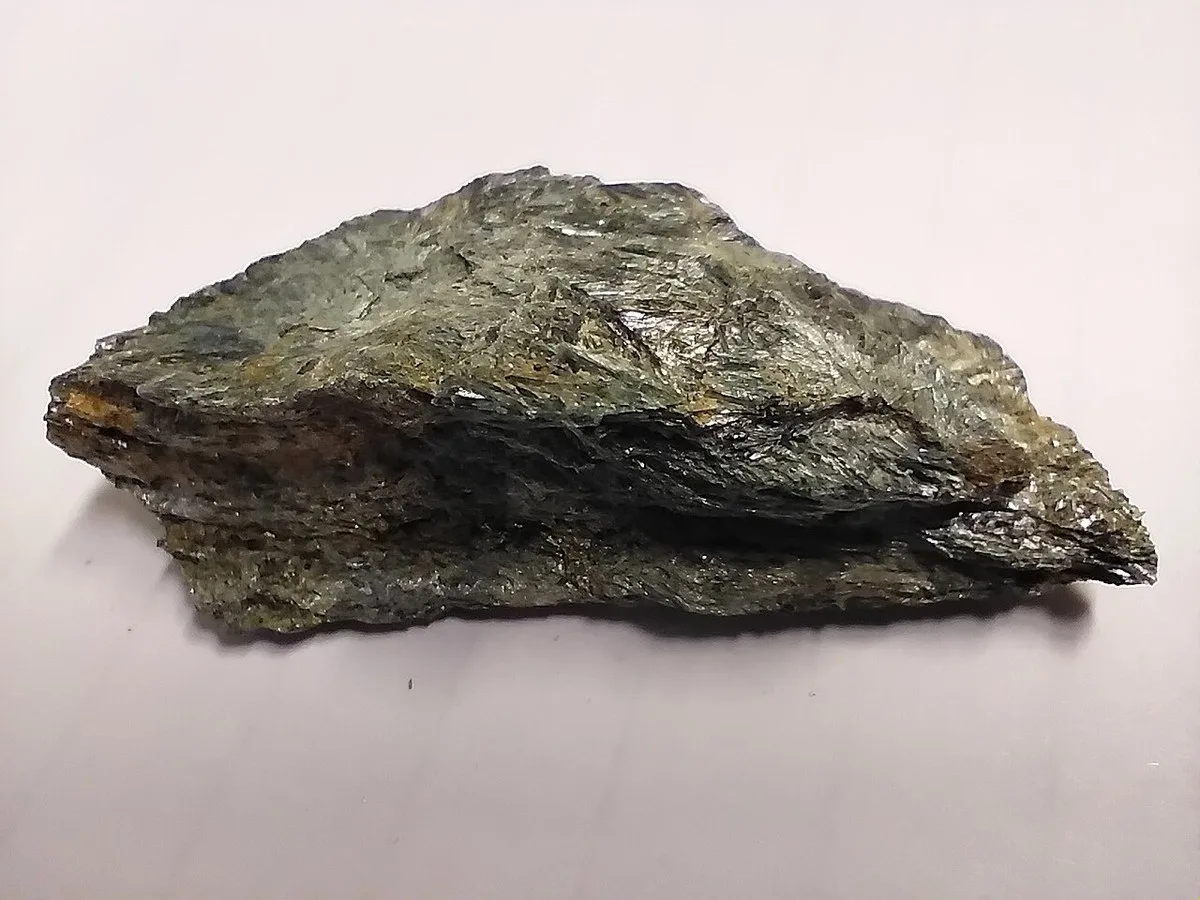
Colour – pale green, grey, dark green, blackActinolite is a mineral of the amphibole group, built from fine, needle-like crystals. The name comes from exactly that: in Greek aktinos means ray, lithos means stone.
Colour depends on iron content. The more iron in the structure, the darker the stone — from pale green almost to black. Needles enclosed in clear quartz create the well-known "Venus hair" effect.
The most prized form is actinolite with a cat's eye effect, a rare variety often sold as "cat's eye jade", which misleads buyers. Usually the effect appears only under strong light.
Deposits
Actinolite is a common mineral, but dense, jewellery-grade pieces are rare. The main suppliers are Taiwan and Canada.
It is also found in Australia, Brazil, Russia, Madagascar, Tanzania and the United States. Beautiful clear specimens with inclusions come from Pakistan.
Properties
In esoteric circles actinolite is considered a protective stone. It is said to turn accidents, the evil eye and stress away from its owner, and to balance body, mind and spirit.
Tradition held that the stone helps its owner out of a difficult, dead-end situation and lifts self-esteem.
Healing properties
Lithotherapists link actinolite with releasing stress, supporting immunity and the condition of skin and hair. It is said to act well on the liver, kidneys and the cardiovascular system.
This describes a traditional practice, not medical advice. A stone cannot replace a doctor.
Chakras
The fourth, heart chakra – anahata.
Which zodiac sign
Actinolite suits any sign; there is no strict astrological pairing. Tradition says the stone should be bought by its wearer: a gifted or borrowed actinolite loses its strength.
In Charcho jewellery
Because of its fibrous texture actinolite is demanding in everyday jewellery, so we select only dense, well-sheened pieces and set the stone in a closed frame. Catalogue: necklaces.
Real or fake
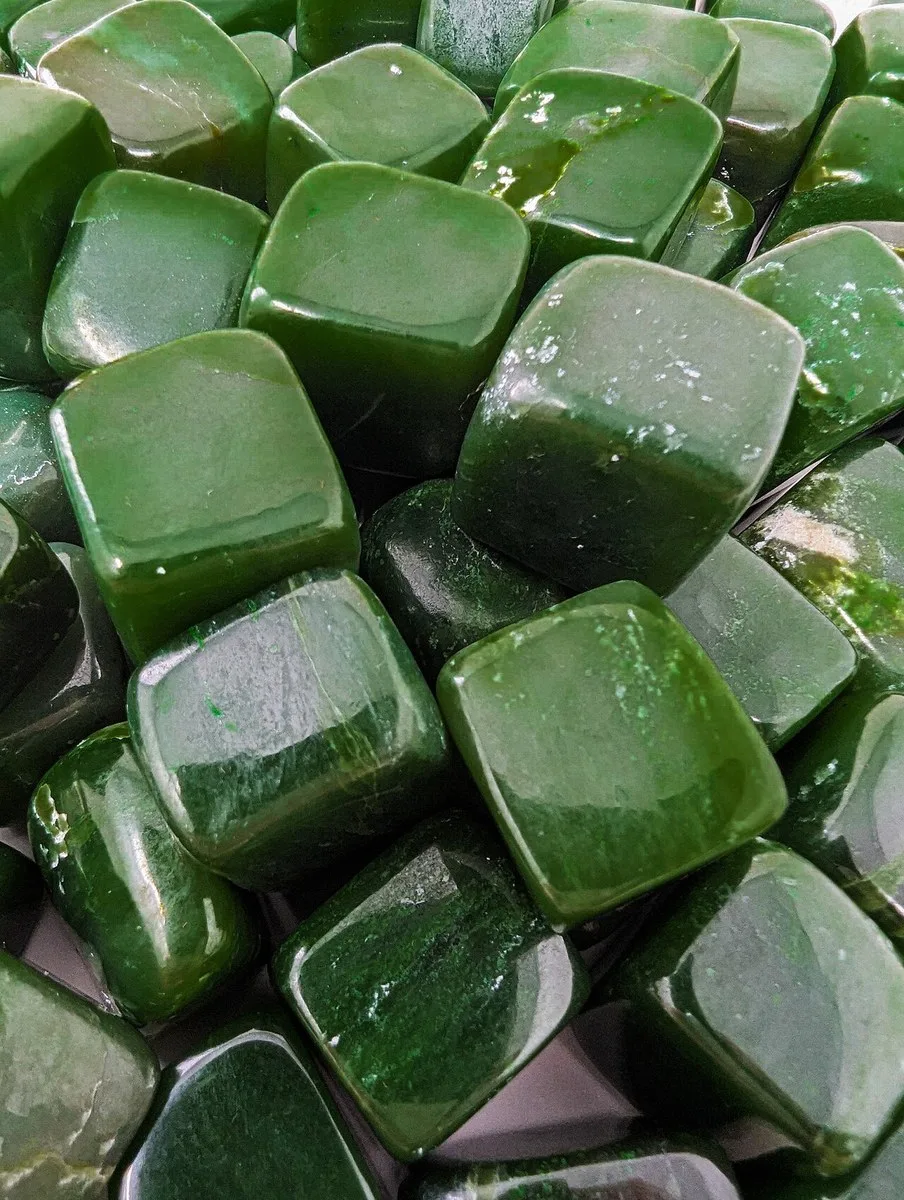
- Actinolite is often confused with jade: jade is denser, has a greasy lustre and no obvious fibres.
- The cat's eye band should appear under strong light; a line that runs constantly is often artificial fibre.
- A suspiciously cheap dark green "actinolite" is usually dyed quartz.
- Fibrous, loose actinolite belongs to the asbestos group — dust from such a specimen is dangerous.
Care
With a hardness of only 5.5–6 the stone is not ideal for a ring worn daily. Keep it from knocks and scratches and skip the ultrasonic cleaner. Warm water and a soft cloth are enough; keep a fibrous specimen dry.
See also
-
Barite
Chemical formula – BaSO₄
Hardness – 3–3.5
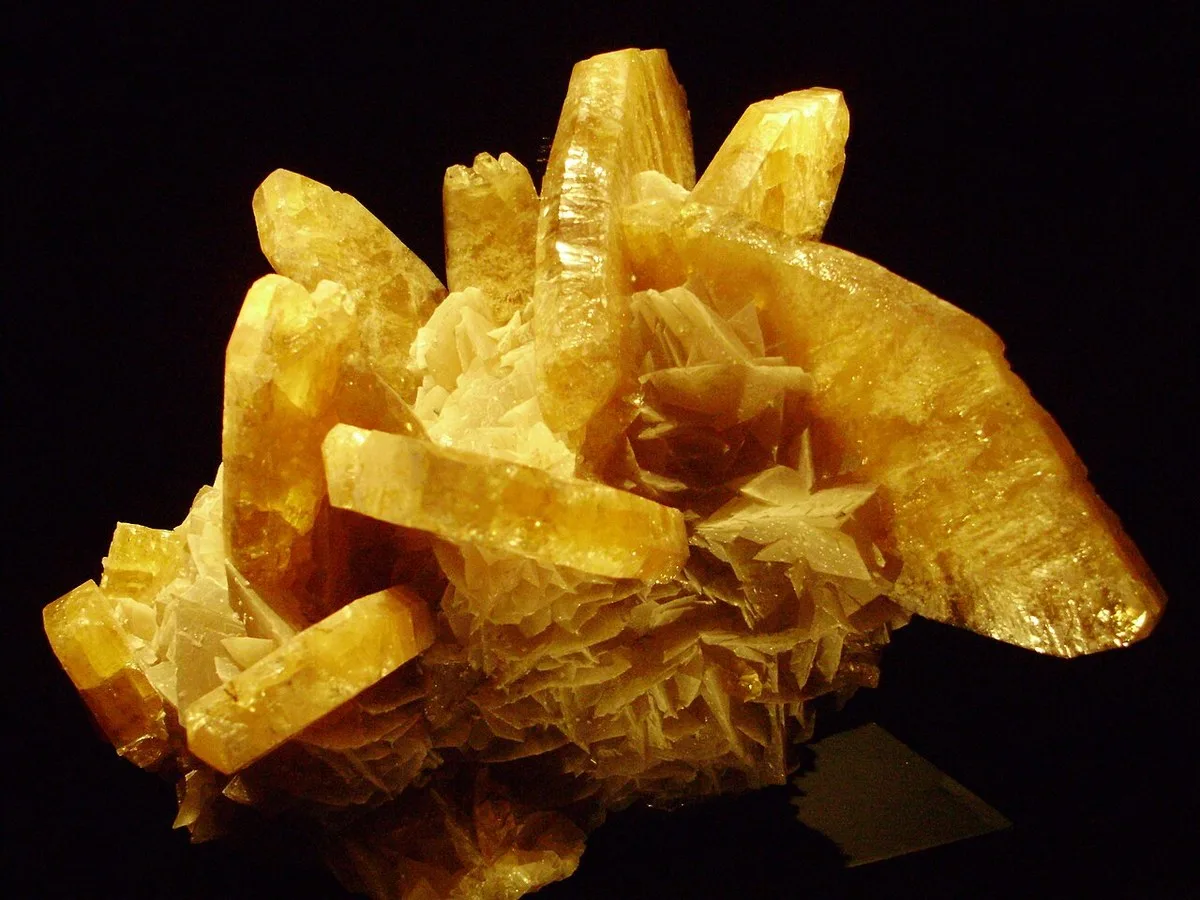
Colour – transparent, white, greyishBarite is barium sulphate and one of the heaviest non-metallic minerals. The name comes from the Greek barys, "heavy" — the stone really does pull at your hand unexpectedly.
In nature barite often grows in sandy sediments, forming rosette-shaped aggregates. These are called "barite roses" or desert roses; single flat crystals are common too.
In jewellery barite is a rare guest: its hardness is only 3–3.5. It is mostly a collector's stone, while industry uses it in drilling muds and as an X-ray contrast agent.
Deposits
The main suppliers of barite are the United States, China, India and Morocco.
Good crystal specimens come from Germany and Britain, where old mine workings preserved a great many examples.
Properties
In esoteric work barite is not an everyday stone, but it has its loyal practitioners. It is said to be good in meditation and concentration, to wake intuition and to push its owner towards study.
Esoteric writers say it helps especially those whose work demands long thought and critical thinking — researchers, historians, archaeologists.
Healing properties
In the past a piece of barite was placed under the pillow to invite good sleep and dreams. Modern lithotherapists use it for insomnia, headaches and poor memory.
This describes a traditional practice, not medical advice. A stone cannot replace a doctor.
Chakras
The third eye and the crown chakra – ajna and sahasrara.
Which zodiac sign
Astrologers say barite works especially well for the air signs — Gemini, Libra, Aquarius. Anyone else can wear it too; the effect is simply less pronounced.
In Charcho jewellery
Because of its softness we do not use barite in everyday jewellery: it belongs in a pendant or an open setting where the natural shape stays visible. Catalogue: necklaces.
Real or fake
- Density is about 4.5 — a glass or quartz imitation feels noticeably lighter in the hand.
- Barite is soft enough to mark with a fingernail. If the "barite" scratches glass, it is not barite.
- Natural crystals have sharp angles and flat faces; cast glass is smooth and full of bubbles.
- "Barite roses" are often confused with gypsum roses: gypsum is even softer and slowly dissolves in water.
Care
A very soft stone: store it separately and keep it from knocks and acids. No ultrasonic cleaner, no steam. A dry or barely damp soft cloth is enough.
See also
-
Aragonite
Chemical formula – CaCO₃
Hardness – 3.5–4
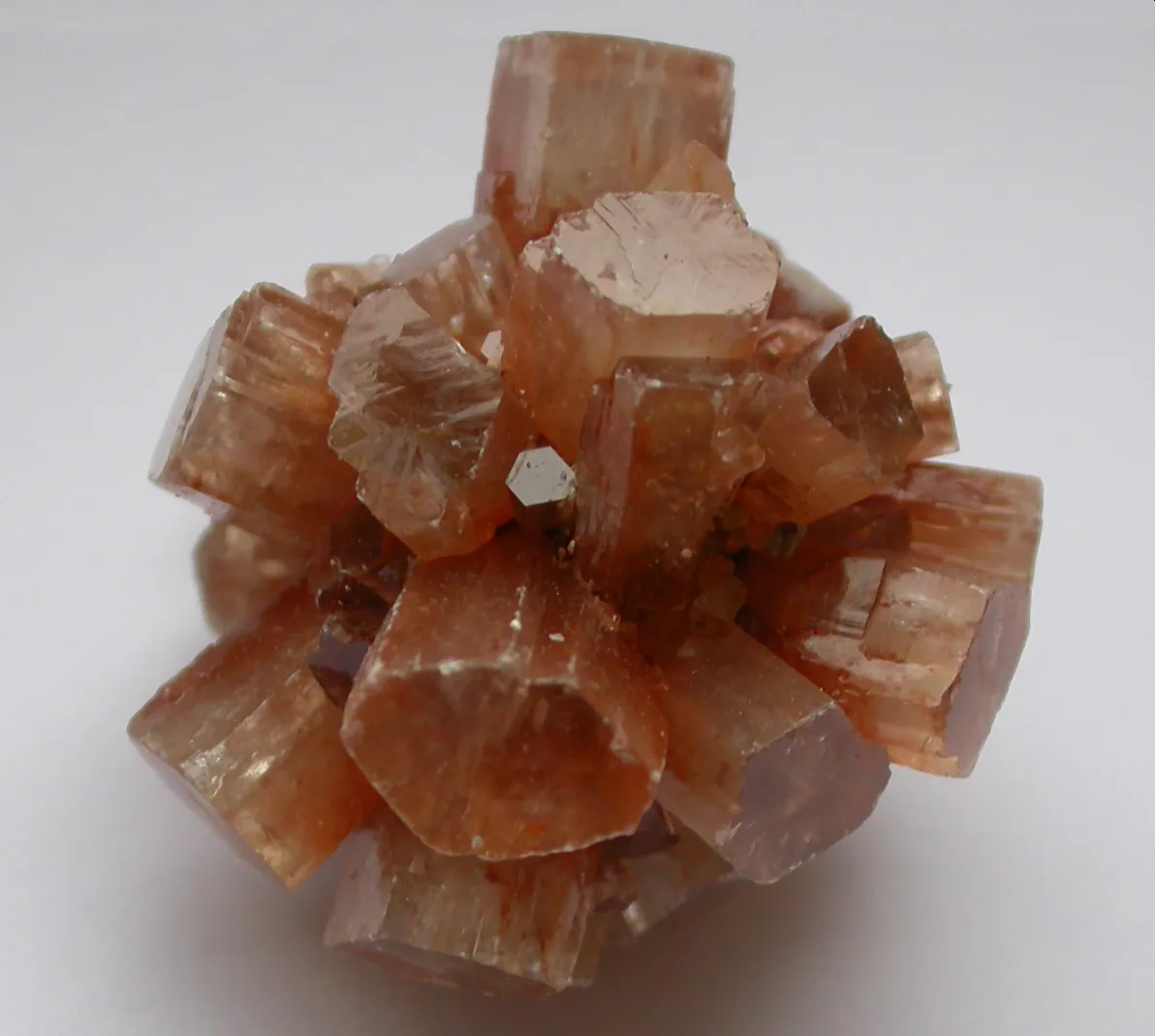
Colour – white, grey, yellow, green, orange, brownAragonite is calcium carbonate — the same substance as calcite, but with a different crystal structure. That gives it another shape and a higher density. Its crystals are often needle-like, or radiate from a centre like a star.
Aragonite is the base of many organic things: pearl, nacre, coral and the shell of an ammonite are all built from it. Living organisms lay it down in thin layers, which is why natural aragonite often shows banding on the surface.
The name was given in the early nineteenth century by the Saxon geologist Abraham Gottlob Werner, after the Spanish town of Aragón, where the mineral was first described. Geologically, aragonite is an unstable form: over time it turns into calcite.
Origins
Most aragonite comes from Spain. It is also found in the Czech Republic, Russia, Slovakia, Mexico, Morocco, Namibia and the USA. Moroccan pieces often form star-shaped clusters and are the easiest to recognise on the market.
Properties
Esoteric writers say aragonite works especially well on scattered, distracted people: it eases stress and fatigue and sharpens concentration. That is why it is recommended to students, schoolchildren and researchers.
Aragonite is often called a house stone: it is said to clear the aura of a home and to help family members keep peaceful relations. On the whole it is treated as a stone of calm and harmony.
Traditional healing properties
Lithotherapists use aragonite to speed the healing of broken bones. As a strong grounding stone it is said to release stress and to guard against complications — spasms, restlessness and insomnia.
This describes traditional practice, not medical advice. A stone does not replace a doctor.
Chakras
Associated with the first and second chakra – muladhara and svadhisthana.
Which zodiac sign it belongs to
Aragonite is said to suit any sign. It is recommended above all to owners with a family, since the stone stands for home and relationships.
In Charcho jewellery
Aragonite rarely goes into a ring — it is too soft and cracks quickly. We use it in necklaces and pendants, where the stone does not touch the body. A star-shaped crystal suits an open setting: the metal holds only the base and leaves the form uncovered.
We have no finished piece with this stone yet, but we take custom orders. Catalogue: necklaces.

Real or fake
- Aragonite is often confused with calcite. The difference is density: aragonite of the same size is noticeably heavier.
- Blue and green "aragonite" on the market is almost always dyed.
- Resin copies cannot reproduce the surface banding; on a real stone it looks like layers laid one on another.
- Both minerals fizz in vinegar, so an acid test at home is not worth the risk.
Care
Hardness 3.5–4 makes the stone soft and porous. Do not leave it soaking; acid (vinegar, lemon) and ultrasonic cleaning are out. A dry or barely damp soft cloth and a separate place in the box are enough.
See also

Have an idea? We will make it.
Write or call us - together we will choose the material, colour and size, and make the piece to order.