Free Delivery in Batumi


Pearl — the living stone
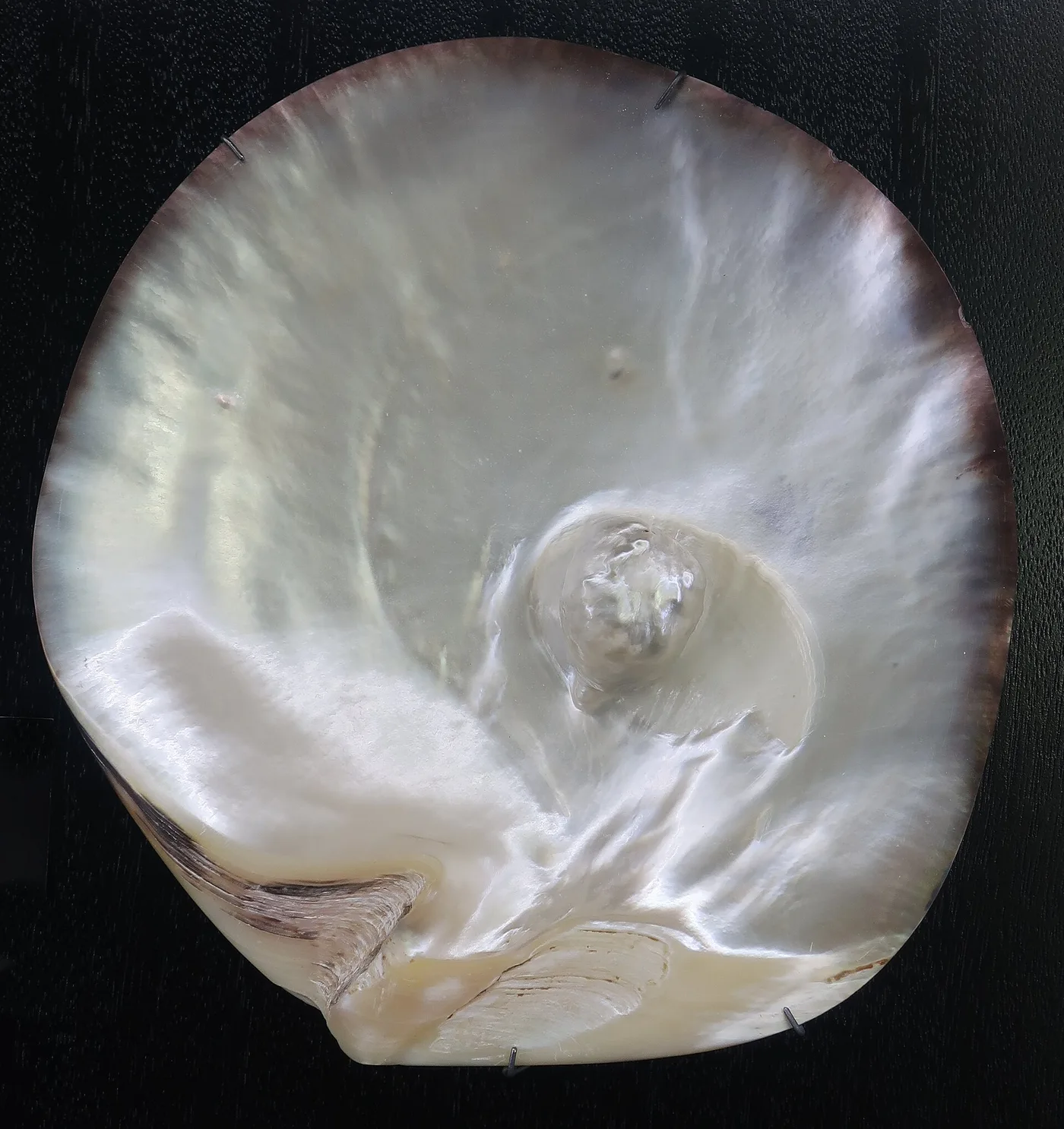
Chemical formula – CaCO₃ (aragonite) + conchiolin
Hardness – 2.5–4.5
Colour – white, cream, pink, gold, grey, black
Pearl is the only gemstone born inside a living organism. That gives it properties other stones simply do not have: it is soft, warm in the hand, and it changes over time.
A pearl grows inside the shell of a mollusc. Something foreign gets in, and the mollusc builds nacre around it, layer upon layer, like growth rings in wood. Three years at minimum, sometimes five. The name comes from the Latin "perna", a leg, after the shape of the bivalve.
Natural pearl, grown without human help, is rare, expensive and small today. Almost everything on the market is cultured, and cultured is not fake: the mollusc still builds real nacre, the difference is that people start the process. The oldest written record of a pearl is about 7,500 years old.
Origins
Pearl is harvested in almost every warm sea. Natural pearls turn up in Australia, Japan, Central America, Madagascar, the Philippines and South America; historically the Persian Gulf beds were the most prized of all.
Today the market is supplied by cultured farms: Japan (Akoya), Australia and Indonesia (South Sea), French Polynesia (Tahitian black) and China (freshwater). Origin shapes quality to a degree — water temperature and salinity affect how thick the nacre grows.
Properties
For centuries pearl has been the stone of purity and sincerity. Tradition gives it a calm, settling character: it is said to smooth out emotional swings and to help a person be more honest with themselves.
In energy work pearl is said to push away negativity and stress, and to bring truth and loyalty into relationships. It is also said to help a person find themselves.
There is a charming older belief too: a pearl grows attached to its owner very quickly, so it should not be given away. Once it is yours, it stays with you.
Traditional healing properties
Lithotherapists say pearl balances the body's natural rhythm and restores hormonal balance.
In traditional practice it was used for lung complaints, asthma, bronchitis and tuberculosis. It is said to quiet headaches and allergies and to soothe the skin.
This describes traditional practice, not medical advice. A stone does not replace a doctor.
Chakras
Linked to the fifth and seventh chakras – vishuddha and sahasrara.
Zodiac
It is the stone of June, which makes it Cancer first of all, and the fit is exact: Cancer is about emotion, family and care, and pearl works on those very themes.
It also suits Pisces, a water sign living on intuition, and Gemini, as a stone that eases inner division. Libra wears it well for its quiet elegance.
In Charcho jewellery
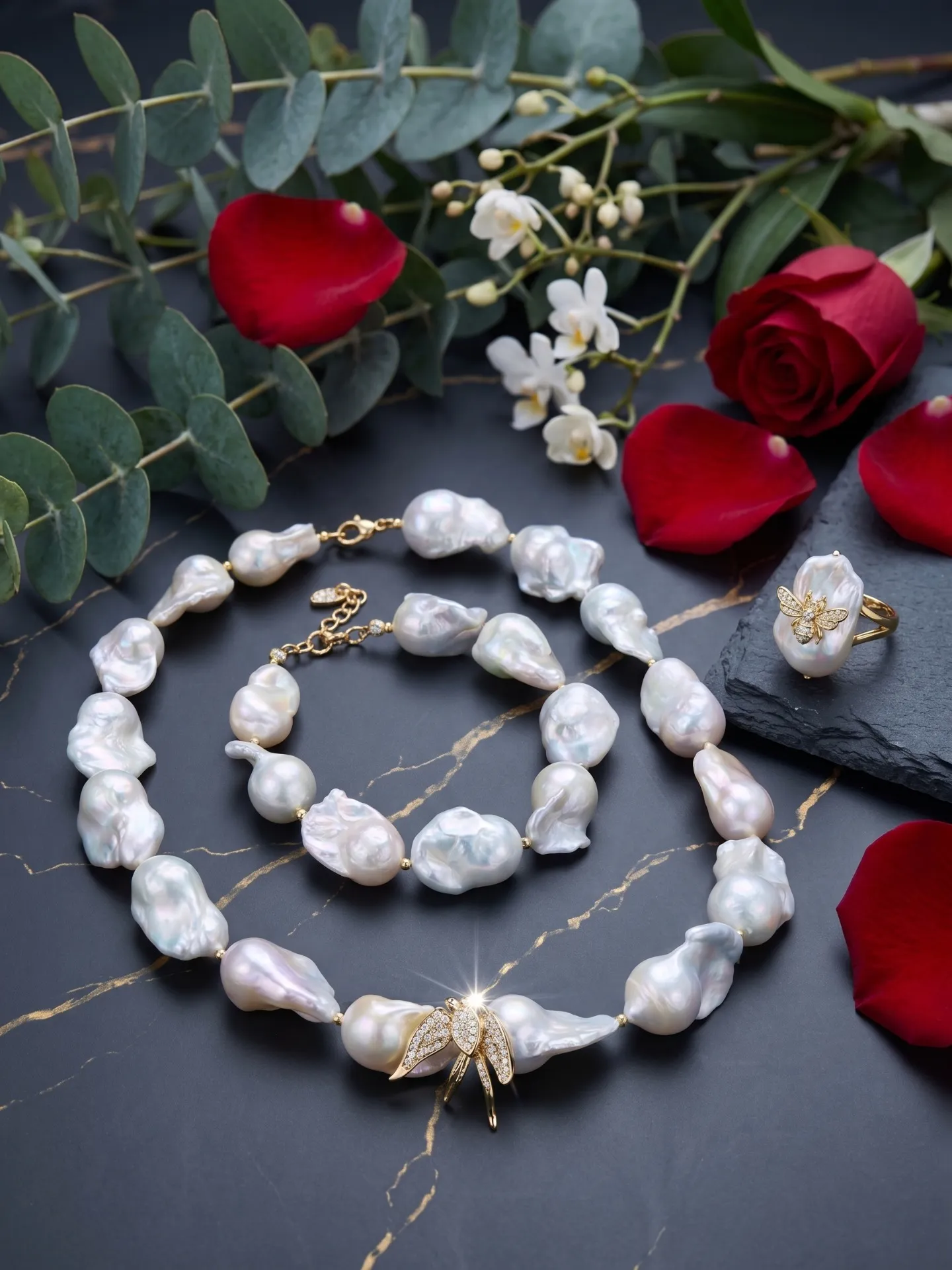
Baroque pearl is our bestseller: the irregular, living shape makes every necklace different. See the baroque pearl necklace and the heart-shaped earrings.
Pearl reads best close to the skin, so for necklaces we choose larger but light beads that stay comfortable all evening.
Real or fake
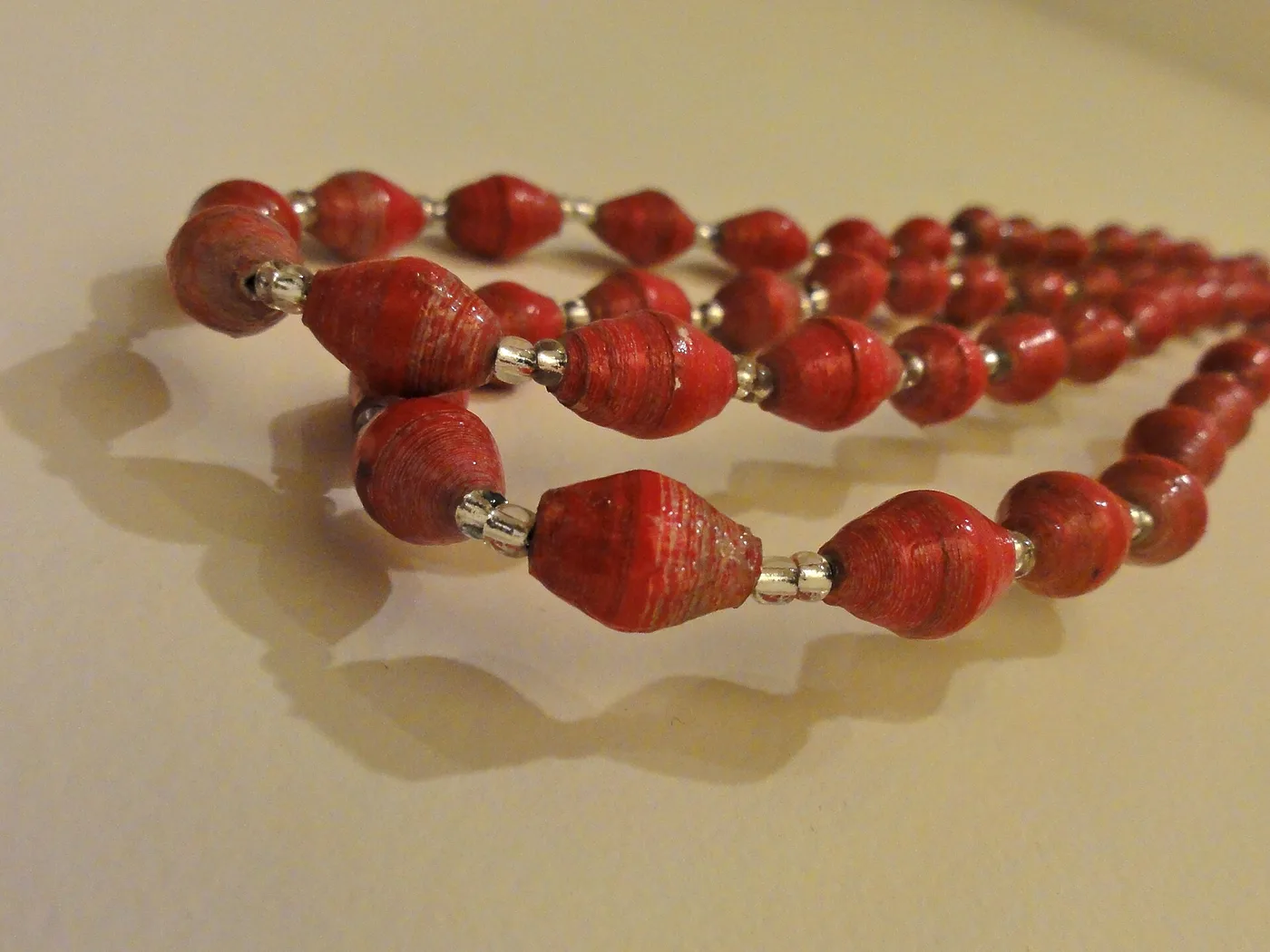
A fake is glass, plastic or coated beads. Three quick tests:
- Rub the pearl gently against a tooth. Real feels slightly rough, fake slides.
- In the hand real warms slowly; plastic takes on body heat immediately.
- Rub two pearls together. Real ones squeak, plastic sounds dull.
Look at the edge of the drill hole too: on a real pearl it is clean and layered, on a fake you often see a line of dye. Dyed pearls are common enough — sellers usually admit the colour, but they should not charge natural prices for it.
Care
- Perfume, hairspray and cream damage nacre and are the pearl's enemies. Perfume first, jewellery after.
- No ultrasonic cleaning, no steam.
- Wipe with a soft, slightly damp cloth after wearing, then dry.
- Store separately in soft cloth, never in plastic.
- If you wear it often, restring every year or two. The thread always breaks first.