Free Delivery in Batumi


Amethyst — the purple quartz
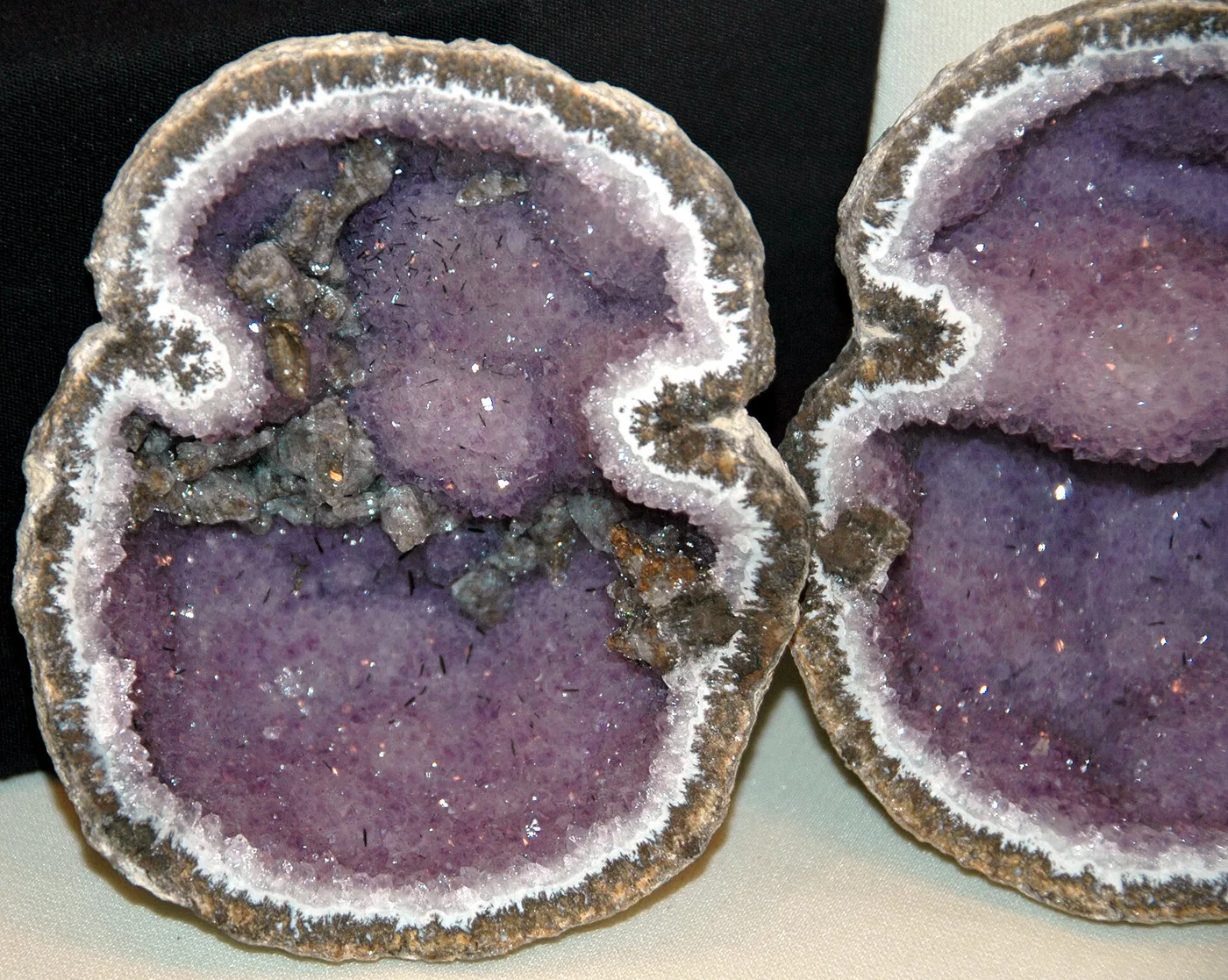
Chemical formula – SiO₂
Hardness – 7
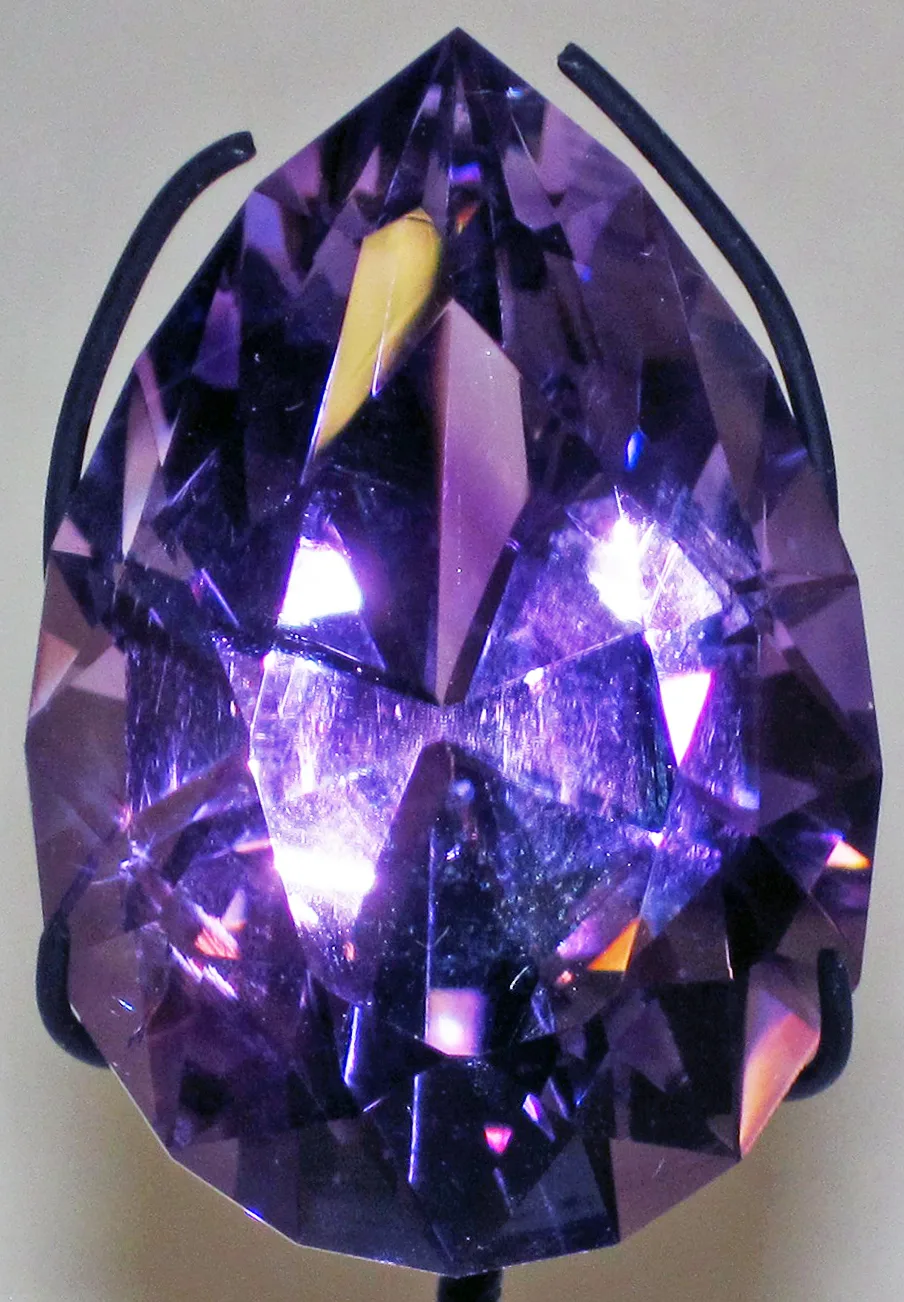
Colour – pale to deep violet, sometimes with a pink cast
Amethyst is the purple variety of quartz and one of the best known stones in that family. It belongs to the large-crystal branch, hardness 7, more than enough for daily wear. The one thing that genuinely harms it is sunlight.
The colour comes from iron impurities and natural irradiation; without them the stone would be plain clear quartz. The shade is often uneven — a dark core, lighter edges — and that zoning is a good sign the stone is natural.
The name is Greek: "amethystos" means "not drunk". People once believed the stone kept them sober, and not only from wine but sober in thought. It is still called the stone of sobriety.
Grades are simple: opaque pale stone is affordable, while transparent and deeply coloured pieces cost noticeably more. Amethyst is common enough that buying a real one is easy — the attention belongs on treated stones, not fakes.
Origins
The largest deposits are in Brazil, where the stone runs lighter and cleaner. Uruguay produces dark, saturated violet, and Uruguayan material commands the highest prices.
It is mined too in Bolivia, Canada, Mexico, Madagascar, Burma, Namibia, Russia, Sri Lanka, Zambia and the United States (Arizona). Zambian amethyst has gained real ground on the market over the past decade.
Properties
Tradition treats amethyst as the stone that clears away noise and brings a person back to themselves. For centuries it was held to help people let go of addictions and bad tendencies.
A stone kept in the bedroom is said to bring calm sleep and good dreams, which is why amethyst was long linked to sleep. Esoteric writers call it a strong but undemanding protector: anyone can use it, and it asks for no special preparation.
More broadly, amethyst is counted as the stone of the mind, creativity, calm and balance. In various cultures it has also stood for love and fidelity.
Traditional healing properties
Lithotherapists say amethyst supports metabolism and the immune system. It is said to ease headaches and relieve migraine.
Traditionally it was used to curb dependence. Amethyst is believed to improve circulation and to help with speech problems.
This describes traditional practice, not medical advice. A stone does not replace a doctor.
Chakras
Linked to the sixth, third-eye chakra – ajna.
Zodiac
It is the stone of February, which makes it Pisces first of all: a water sign that lives on intuition and often rides emotional waves, exactly what amethyst evens out.
It also suits Aquarius, whose subject is independent thought and a clear head, and Sagittarius, who often needs focus. Aries wears it well too — the stone takes the edge off a fire sign's hurry.
In Charcho jewellery
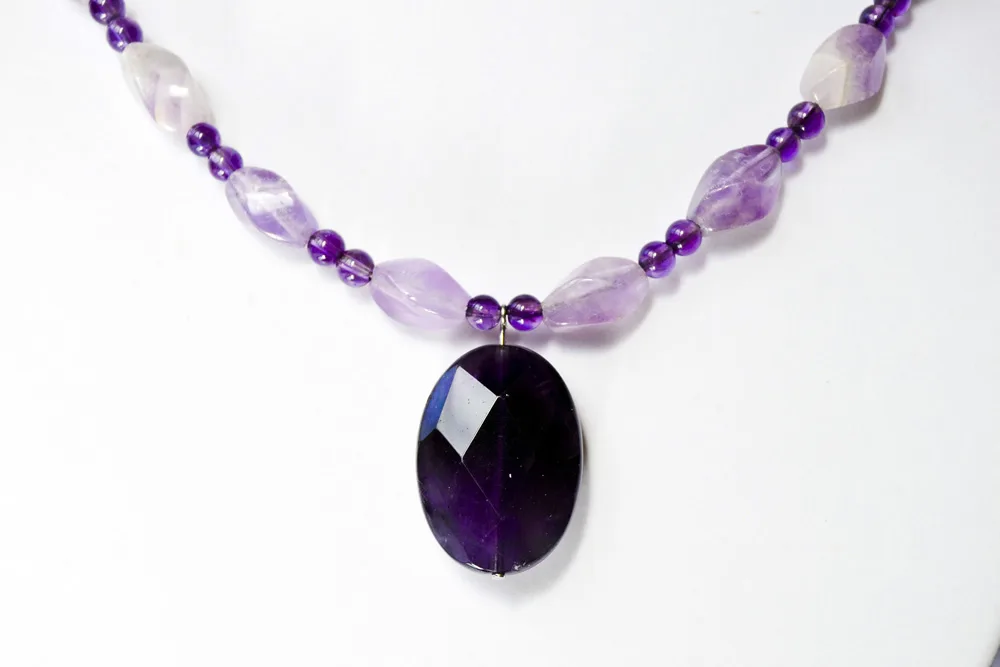
Amethyst necklaces are in the catalogue: necklaces. If you want a particular shape, write to us. The work is handmade and we take custom orders.
The stone is hard enough and holds its colour, so it works confidently in rings and earrings. In necklaces we favour the lighter tones, which sit more naturally against the skin.
Real or fake
Amethyst is inexpensive, so fakes are rare. Treated stones are more common:
- Heated. At around 500 °C the colour leaves and the stone becomes citrine. That is legal and widespread.
- Irradiated. Produces a darker colour than nature would.
- Dyed. Rare, but it happens, and a scratch shows it.
Glass imitations give themselves away with perfectly even colour and bubbles. In natural stone the colour is always distributed in zones — if you cannot see a transition of shade, you are most likely looking at glass.
Care
- Sun. Long direct sun dulls the colour, so a windowsill is a bad home for it.
- Ultrasonic and steam are usually safe, but skip them on a stone with a crack.
- Warm water and a soft cloth are enough; it needs no heavy chemicals.
- Store it dark and in its own pouch, and the colour stays unchanged for years.