Free Delivery in Batumi


Lapis lazuli — the stone of truth and quiet
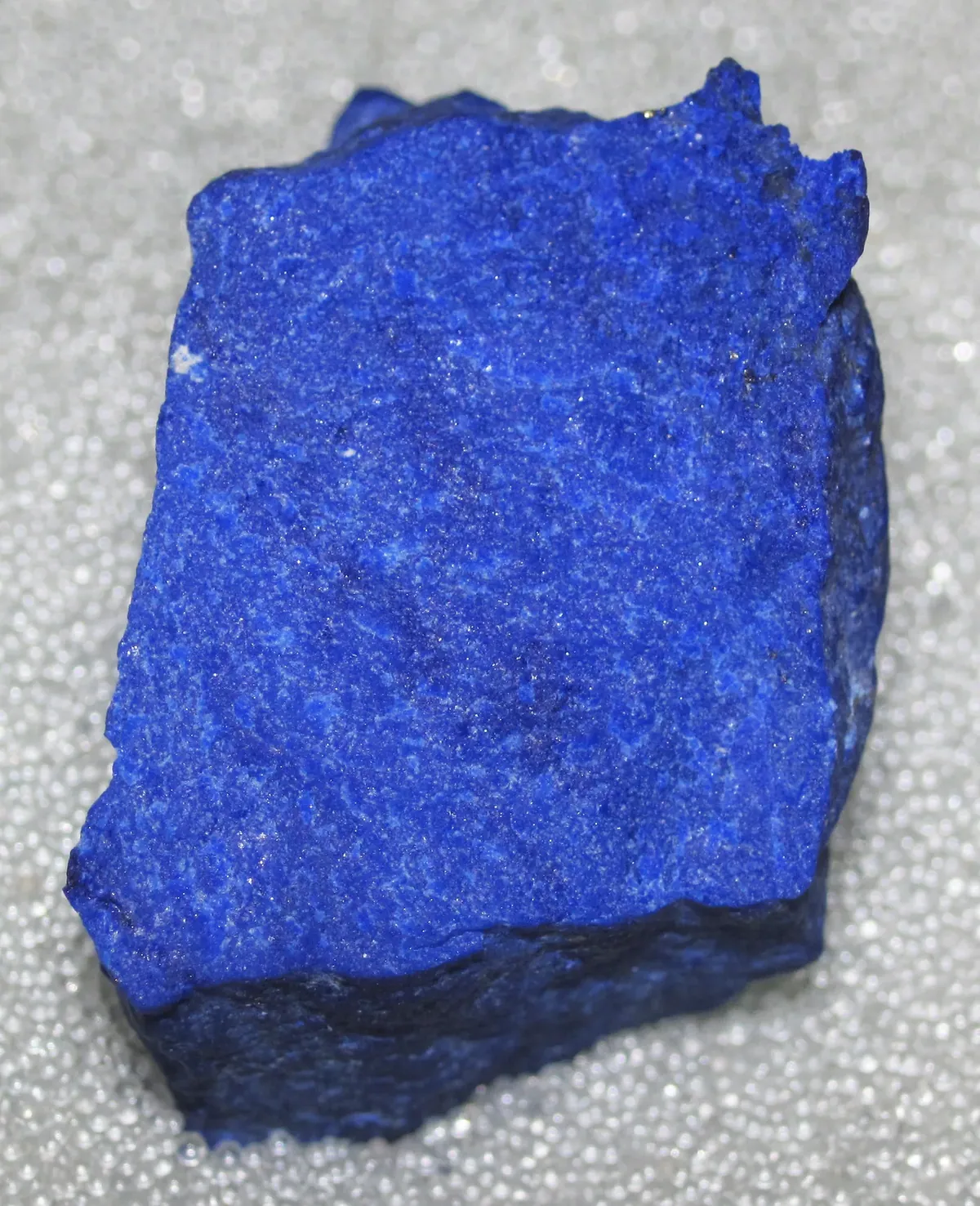
Chemical formula – (Na,Ca)₈(AlSiO₄)₆(S,SO₄,Cl)₂
Hardness – 5–6
Colour – pale blue to deep blue
Lapis lazuli is the deep blue around the eyes on Tutankhamun's burial mask. For centuries it was called the royal stone, and not only in Egypt: excavations in the Caucasus turned up lapis beads in burial sites there too.
One detail worth knowing up front: lapis is not a single mineral but a rock. It has three parts — blue lazurite grains, white calcite and golden pyrite. That trio is what gives the stone its familiar look.
The name comes from two languages: Latin lapis means "stone", Arabic lazaward means "blue". The Georgian name for it, ლაჟვარდი, comes from the same Arabic root.
Price follows colour and clarity. An even light blue costs the most, a greenish tint the least. Gold pyrite flecks raise the price when they sit evenly and attractively.
Origins
The oldest lapis deposit is Sar-e-Sang in Afghanistan's Badakhshan mountains, roughly 6,000 years old. Afghan stone is still considered the best: dark, clean and dense.
Chile, Argentina, Canada, India, Italy, Russia and the United States come close on quality. Chilean lapis tends to be paler and richer in calcite, while African material sometimes shows a reddish or violet cast.
Properties
Tradition treats lapis as the stone of truth and calm. It is said to help you say what you actually think, and to settle the mind when thoughts refuse to line up. That is why it is often named one of the best stones for meditation.
Esoteric writers count lapis as a strong protector: they say it turns away "energy vampires" and hostile attention. Put more practically, it is called the stone of communication — useful for organising the day, for business conversations, and for finding the right word at the right moment.
It is also credited with mental and emotional courage, depth of intuition and a creative streak. In older sources lapis was said to keep a person in touch with their guardian angel; today that reads more simply as inner quiet and hope that hardens into confidence over time.
Traditional healing properties
In the past lapis was used for headaches, general weakness, poor sleep and eyesight.
Modern lithotherapists link it to the nervous system, speech problems, low mood, immunity, bones, eyes and the reproductive organs. Tradition holds that the stone releases tension held in the throat.
This describes traditional practice, not medical advice. A stone does not replace a doctor.
Chakras
Linked to the fifth, throat chakra – vishuddha.
Zodiac
It suits Sagittarius first of all, a sign built around truth and the search for a wider horizon, which is exactly what lapis emphasises.
It also works for Libra, whose subject is balance and fairness, and for Aquarius, which values independent thought. Pisces suits it too, since it sharpens intuition.
In Charcho jewellery
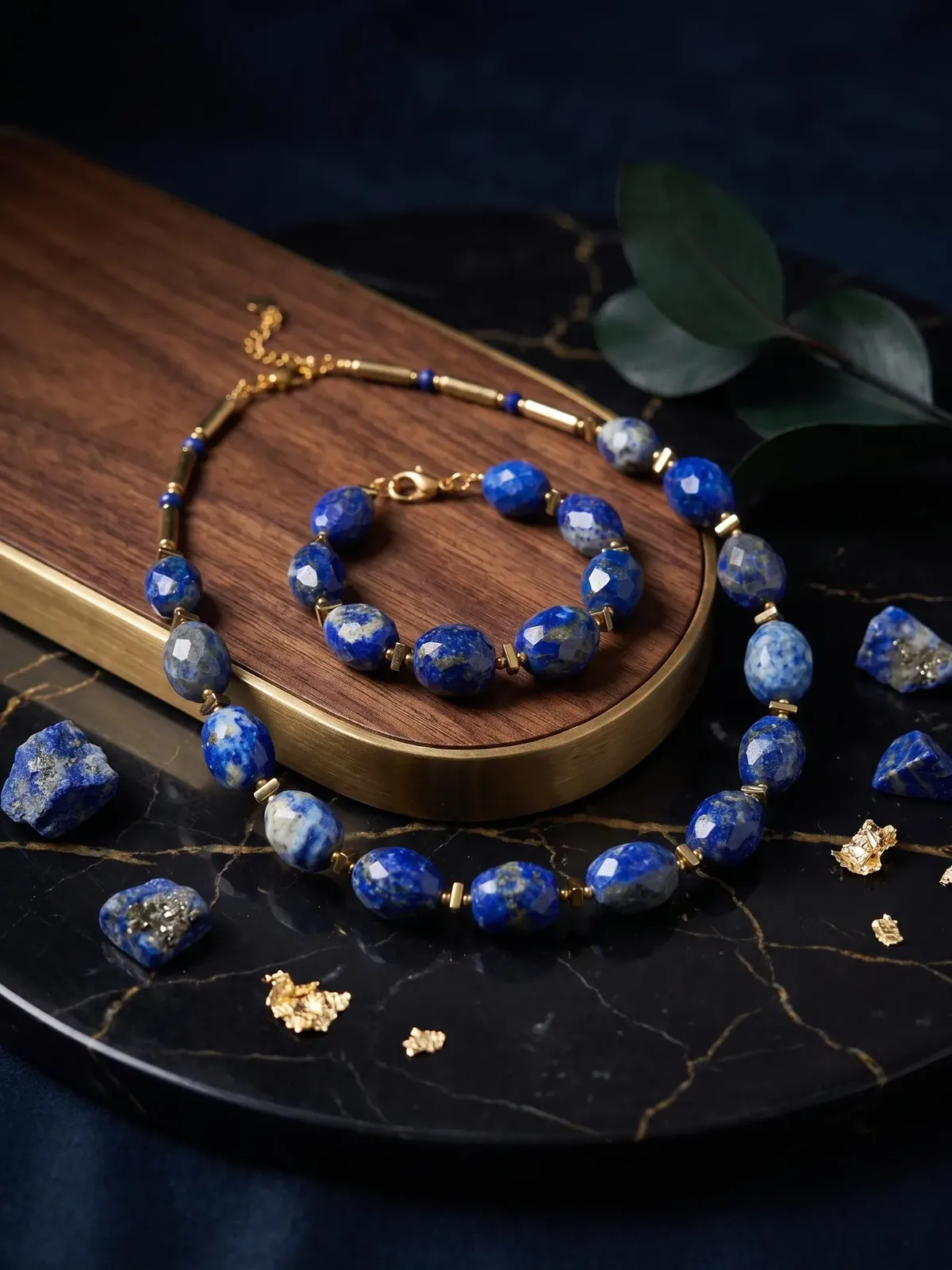
Our lapis necklace is set with natural pyrite inclusions; deep blue with gold flecks looks remarkably alive. See the lapis lazuli necklace; other lengths and shapes are made to order.
Real or fake
The most common fake is dyed jasper, sold as "Swiss lapis" though it has nothing to do with Switzerland. What to check:
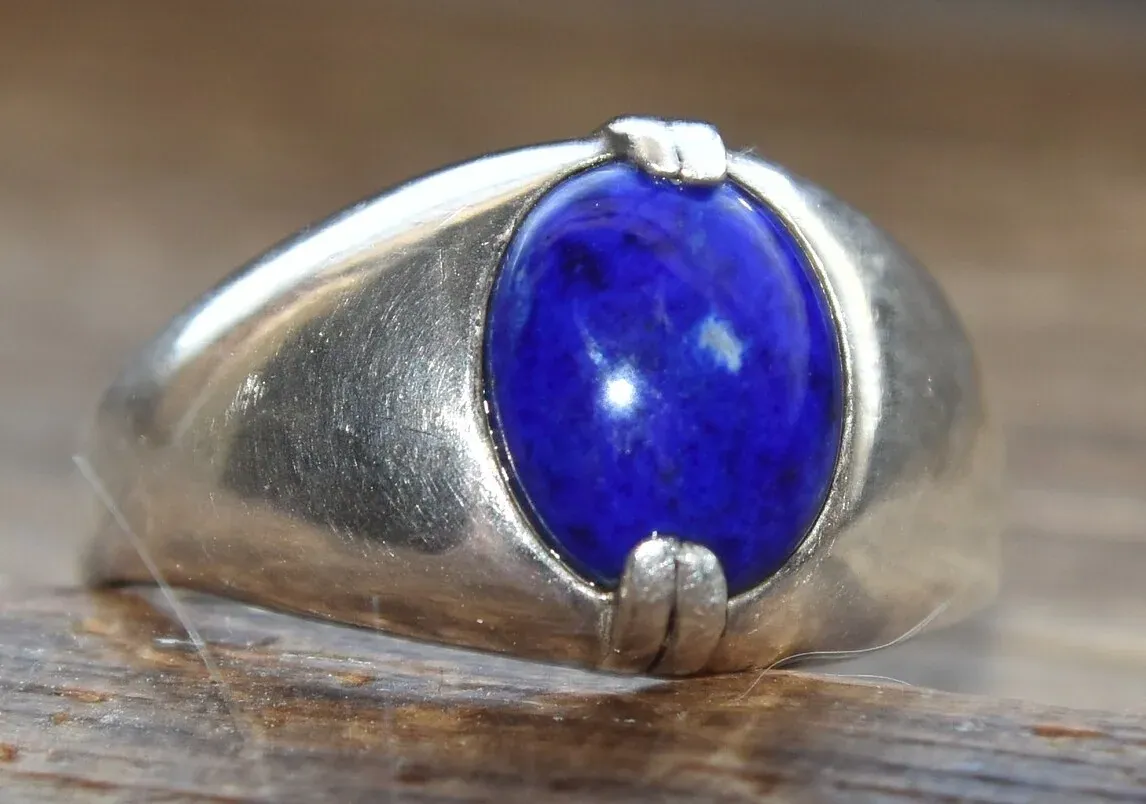
- Natural pyrite flecks are gold and sparkle. In dyed stone they are blue as well.
- White patches are calcite, and in natural stone they sit unevenly, not in clean bands.
- A scratch on dyed stone shows a lighter colour underneath.
- Price. Real dark lapis is never cheap.
Care
Lapis is porous. Water, soap and alcohol get inside, and pyrite oxidises over time, turning the gold flecks greenish-brown. So do not wash or soak it, and skip the ultrasonic cleaner.
A dry soft cloth after wearing is enough. Keep perfume and hairspray away from the stone. Store it in its own soft pouch — lapis scratches softer stones such as pearl.