-
← Leather
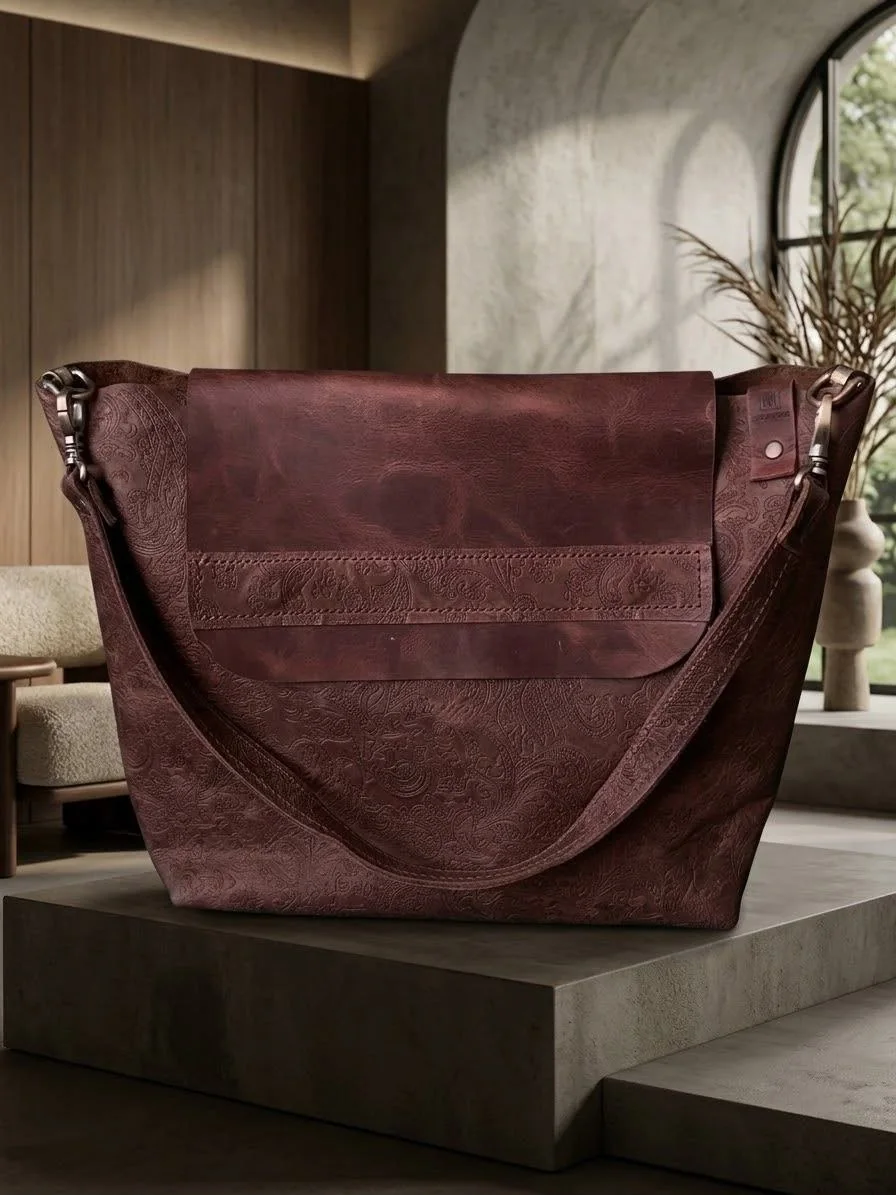
In Batumi, Sakartvelo, the air is damp for most of the year, and in summer the coastal moisture is joined by heat. Leather is a living material: it breathes and takes moisture from its surroundings. That is why a leather piece here needs different care than in a dry climate, not more frequent care but more attentive care.
What humidity does to leather
Leather absorbs moisture at fibre level. From outside it is barely visible, but the piece becomes heavier and softer. When there is plenty of moisture and the air does not move, the fibres stay wet for a long time. In that period leather is at its most vulnerable: it stretches easily, creases easily and picks up smells easily.
On the other hand, humidity protects leather from drying out. The difficulty of the Batumi climate is not the damp itself, but that a piece often sits in a closed, unventilated place.
Mould: how it starts
Mould spreads by spores and looks for moisture and darkness. The first signs are a whitish or greenish bloom in the folds and near seams, and a smell you notice the moment the bag opens.
What to do: take the piece into the air, in the shade, without a hairdryer, and let it dry. Then lift the bloom carefully with a soft dry cloth, outdoors, so the spores do not stay in the house. The surface can be wiped with slightly diluted vinegar, and afterwards a colourless conditioner goes on, because vinegar adds dryness.
What not to do: no brush, no bleach-based products, no hot air. If mould has gone into the leather or the colour has turned patchy, show the piece to a craftsman.
Deformation: leather stretches
Wet leather takes a shape more easily than anything. A bag soaked in the rain and left hanging by its handle will stretch over time; a belt always fastened at the same hole creases exactly there. An overfilled wallet loses its corners.
The answer is simple: a wet piece always dries flat or in its natural shape, with paper inside, never hanging.
Daily habits
- Never keep a bag in the bathroom, where humidity is highest.
- When you get home, open the bag and leave it open for an hour.
- Rotate your bags: leather needs rest.
- In the cupboard, a moisture absorber and cotton bags, not polythene.
- Direct airflow from an air conditioner dries leather, but ventilating the room is good.
The long rains
In Batumi, days of steady rain are ordinary. A bag comes home wet and there is not always a chance to leave it open all day. Two things are enough: paper inside, and a window open overnight. By morning the leather is dry.
Once a month, look the bag over: seams, corners, where the handle attaches. An early sign is easy to correct; a late one is already a repair.
See also
-
← Leather
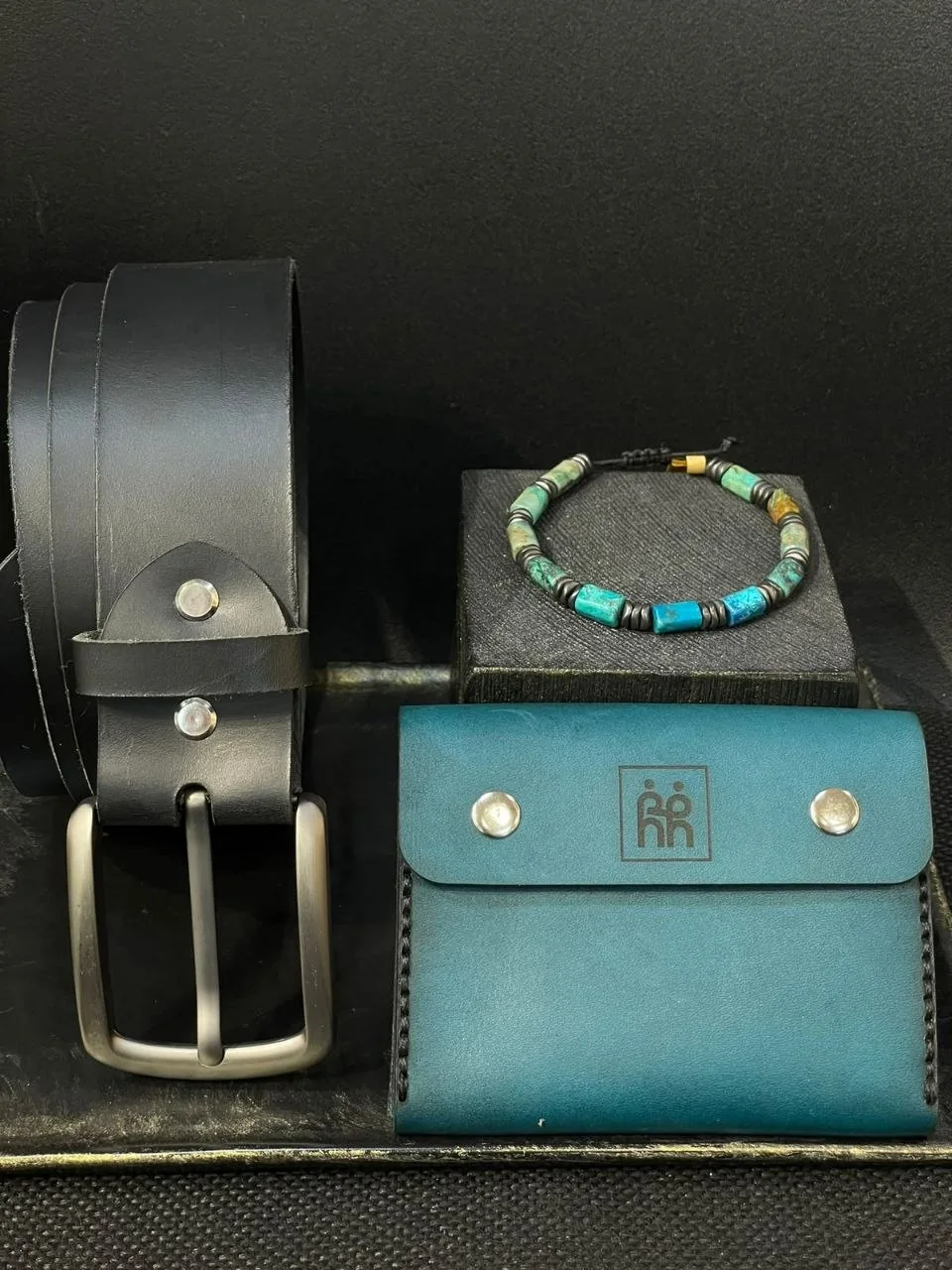
Leather is older than the wheel and older than writing. For most of its life it was a cheap, rough material: it kept thorns out of a foot, held water on a journey, made a strap that did not snap. It reached the display case fairly recently, and the price tag is now explained by hand-stitching rather than by usefulness. Between those two points the road has a few clear bends.
The oldest trace
A hunter found in the Alps — known today as Ötzi — lived around 3300 BCE. His cap, coat and shoes were leather: bearskin soles, uppers laced with lime bast. Those pieces have held their shape for more than five thousand years. It is the strongest argument leather has, and we have never found a better one.
Earlier still, in the Stone Age, hides were worked with smoke, fat and brains. In ancient Egypt leather became sandals, bags and waterskins, and alum was already used to dress skins. Excavations at Pompeii uncovered workshops where hides were processed — by the first century CE this was a city trade, not a household chore.
A craft kept outside the walls
In medieval Europe the tanner and the shoemaker sat in different guilds, with different prices and different standing. Tanning happened by the river, outside the town wall: it needed water, and the smell was not welcome indoors. Hides soaked in oak-bark liquor for months. That slow process produced the material we now call vegetable-tanned leather — and it is why old leather ages the way it does.
Chrome and the sewing machine
In 1858 Friedrich Knapp patented chrome tanning in Germany; in the 1880s Augustus Schultz worked out the two-bath process. Tanning fell from months to days. At the same time the sewing machine, spreading through the 1850s, took over part of the stitching. Together they turned a craft good into a product almost anyone could buy.
How it became luxury
In the second half of the nineteenth century, houses in Paris and Florence turned craft into brand. Hermès began in 1837 as a harness workshop, Louis Vuitton in 1854 with travel trunks, Gucci in Florence in 1921. Railways, then aircraft, made travel ordinary, and the trunk became a sign of who you were. Leather stopped being only a tool and started being a statement.
Our place in that story
Two families work in our workshop in Batumi, Sakartvelo — Chartolani and Chogovadze — and we have been cutting and stitching side by side for eighteen years. We invented nothing here. We keep the principle the medieval workshop kept: slow work, honest material, and a piece made to be handed on. There is nothing luxurious about that. It is simply the norm.
See also
-
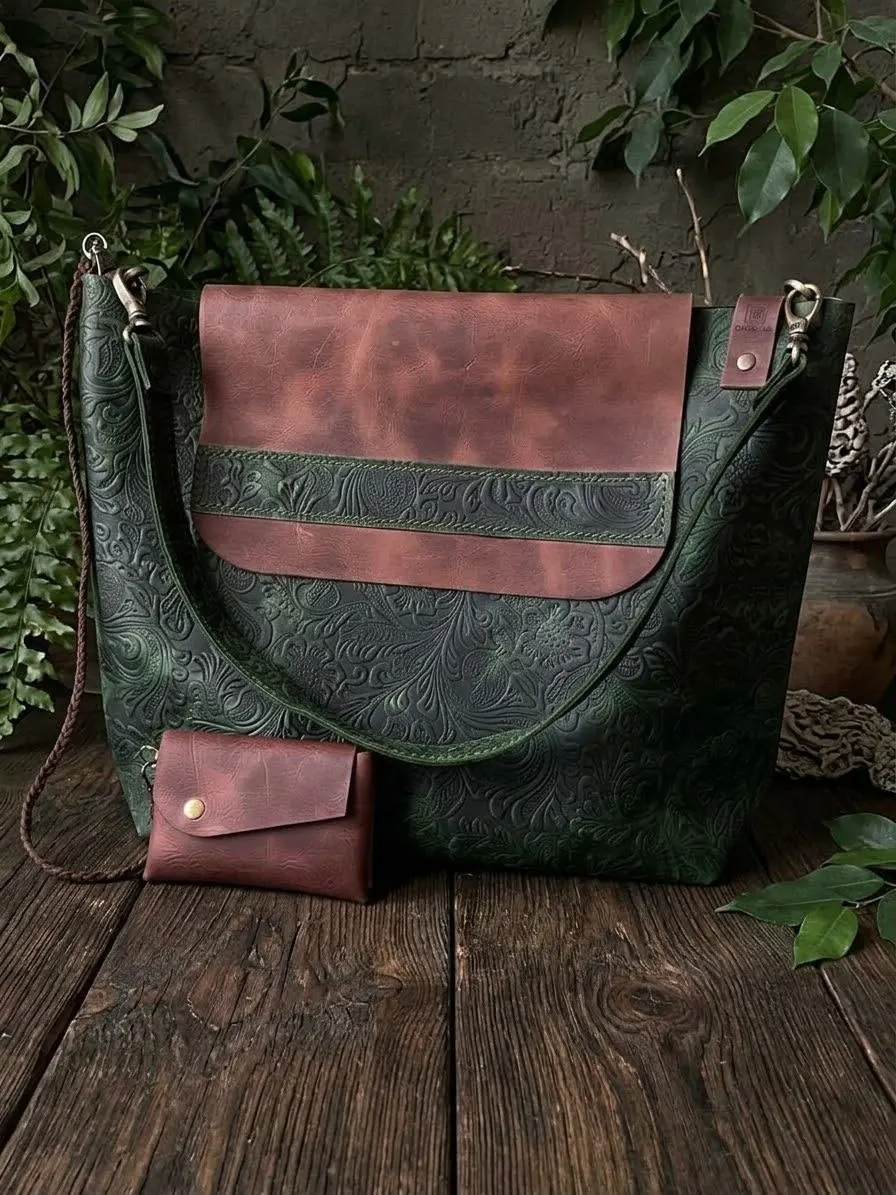
← Leather
Two opposite sentences get said about leather: "it's a by-product of the meat industry, so it's fine" and "it's an animal's skin, so it's not". Both hold half a truth, and those halves are exactly what stops people making a sensible decision.
A by-product — but not a free one
Leather is a companion product of meat and dairy. Cattle are not raised for their hides. If the raw material is not processed, it becomes waste: buried, burned or stockpiled. Seen that way, tanning is genuinely a smaller loss than throwing hides away.
But "by-product" does not mean "no cost". Tanning needs water, chemicals and energy; transport needs fuel. The price paid for a raw hide is a small share of what the animal is worth, so leather production does not fund livestock farming. That argument is usually overstated — it only sounds clean if you stop looking at the whole chain.
Chromium, water and tannins
Most of the world's leather is tanned with chromium salts. Trivalent chromium itself is not the danger; the trouble starts where the process is badly run and hexavalent chromium forms, or where wastewater is not treated at all. Tanneries working under regulation clean their water. Informal workshops often do not.
Vegetable tanning uses tannins from bark and needs no chromium. In exchange, the process runs for weeks, uses a lot of water, and produces effluent heavy with organic load. So "vegetable equals green" is too simple an equation: the shape of the problem changes, its existence does not.
Are synthetics actually cleaner?
Polyurethane and PVC come from petrochemicals. They do not break down the way leather does, they shed microparticles under hard wear, and they often fail within two or three years. Plant-based "vegan leather" usually binds its fibre with a polyurethane binder — so the plastic is still there. The impact is different, not absent.
What genuinely works
- Longevity. One leather bag carried for fifteen years beats three cheap replacements.
- Repair. A handle, a clasp and a seam can all be fixed, and that adds years to a piece.
- Transparency. Some tanneries submit to independent audit (LWG), so asking "where is this leather from?" is always fair.
- Care. In Batumi's humidity leather drifts toward mould; a dry, ventilated place and occasional conditioning are enough.
What we say
We do not call ourselves an eco-brand and we do not sew on a green label. We say only what we can stand behind: we buy hides as a by-product, we ask suppliers questions, we do not throw offcuts away — small pieces become small goods — and we build a bag so that it can be repaired. That is not a sustainability certificate. It is simply our rule.
See also
 Free Delivery in Batumi